
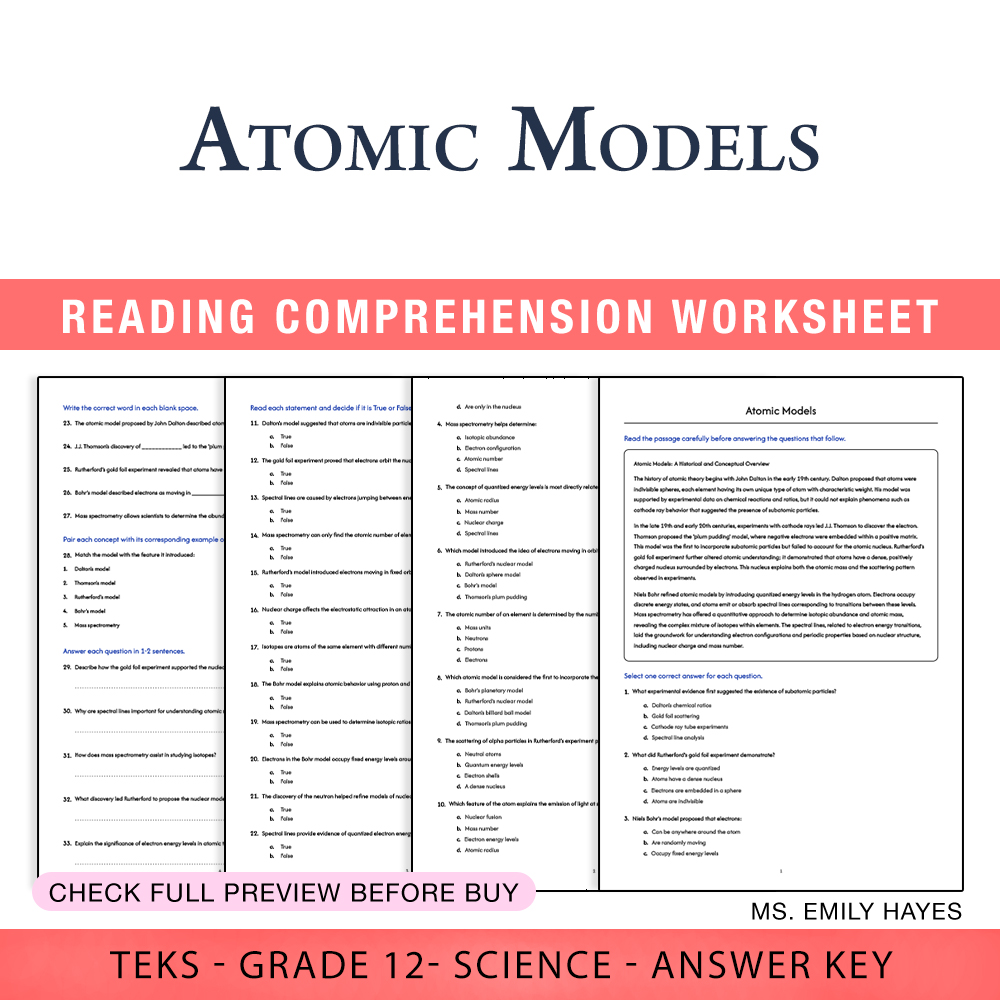


12th Grade Science | Atomic Models Worksheet (PDF+ Answer Key)
$3.00
Copper Leaf Classroom
New·2 followers·8 sales
SubjectScienceGradeGrade 12
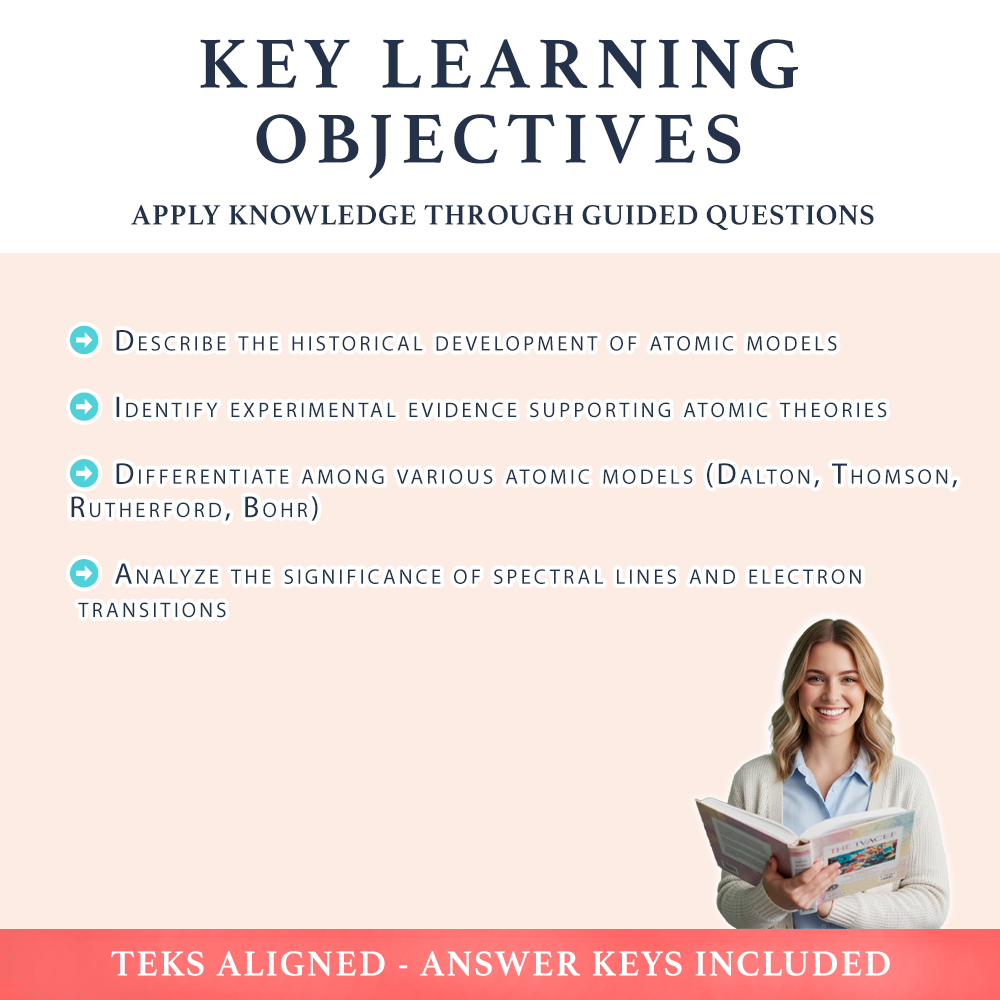
Learning Objectives
Trace the development of atomic models from Dalton to Bohr with emphasis on empirical evidence.
Explain how cathode ray experiments and gold foil scattering led to new atomic theories.
Understand properties such as nuclear charge, mass number, and isotopic abundance, including mass spectrometry.
Reviews & Feedback
Loading reviews...
Questions & Answers
Loading questions…
About this worksheet
Related categories
Frequently asked questions
Who is 12th Grade Science | Atomic Models Worksheet (PDF+ Answer Key) designed for?
12th Grade Science | Atomic Models Worksheet (PDF+ Answer Key) is designed for Grade 12 students and Science learners and can be used in classrooms, homeschool, or independent practice.
How do I download 12th Grade Science | Atomic Models Worksheet (PDF+ Answer Key)?
Add it to your cart and complete checkout. After payment, you can download immediately from your account, and you'll also receive a download link by email.
What type of worksheet is this?
12th Grade Science | Atomic Models Worksheet (PDF+ Answer Key) is a worksheet worksheet for Science, suitable for Grade 12 level.
Similar Products

12th Grade Science | Modeling Systems Worksheet with Short Notes (Printable PDF)
$2.00

12th Grade Science | Integrated Modeling Worksheet & Answer Key (Printable PDF)
$2.00

12th Grade Science | Climate Modeling Worksheet(PDF) Aligned with TEKS Standards
$3.00

Grade 12 Science | Atomic Models Worksheet | AP Aligned
$3.00

12th Grade Science | Atomic Models Assessment Worksheet (PDF+ Answer Key)
$3.00