
Grade 6 Worksheets
8,578 grade resources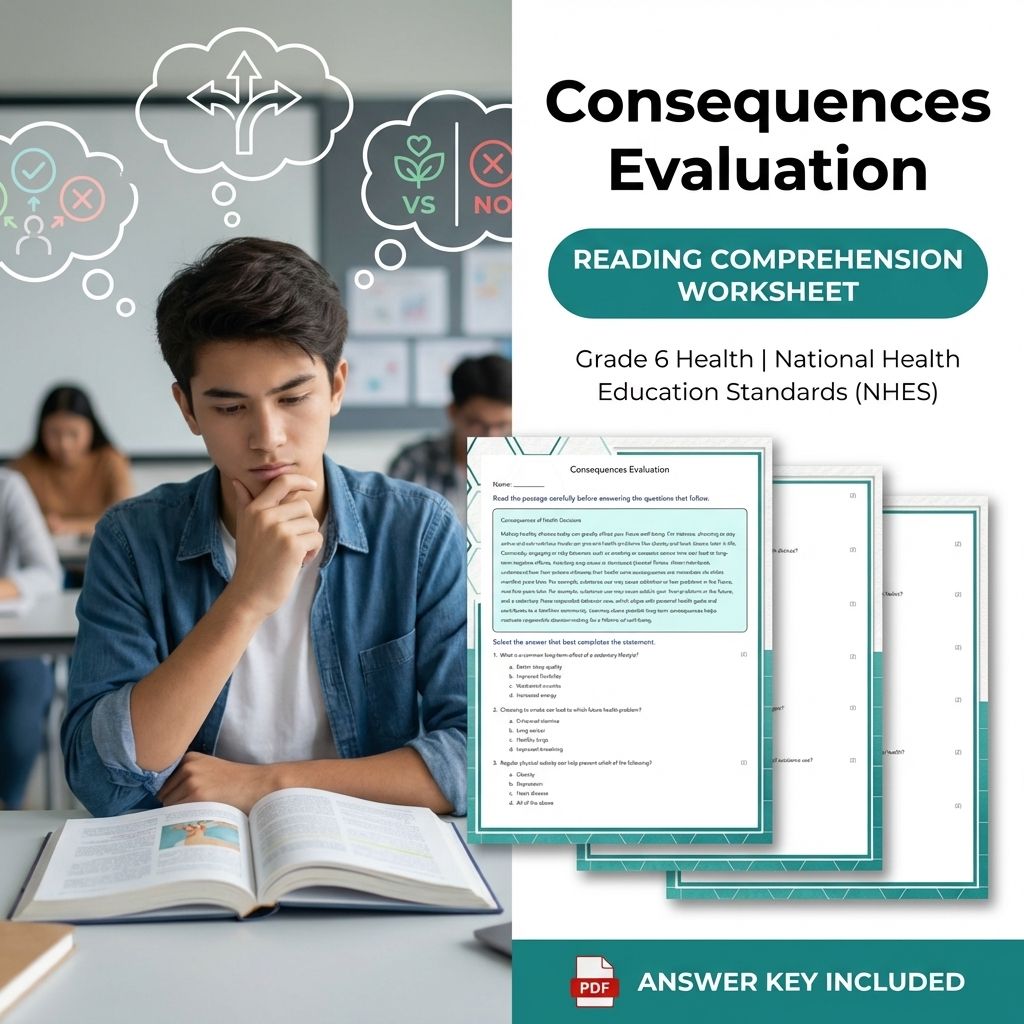
6th Grade Health | Consequences Evaluation Worksheet Standards-Based Assessment
 Created bySkylark Worksheets
Learning Objectives
- Understand how current health decisions can impact future physical, emotional, and social well-being.
- Identify long-term effects of health behaviors such as substance use and inactive lifestyles.
- Analyze the potential outcomes of different health choices to promote responsible decision-making.
Also included in: Grade 6 Health Unit Bundle – Decision Making & Risk Assessment Worksheets +1 more
Instant download
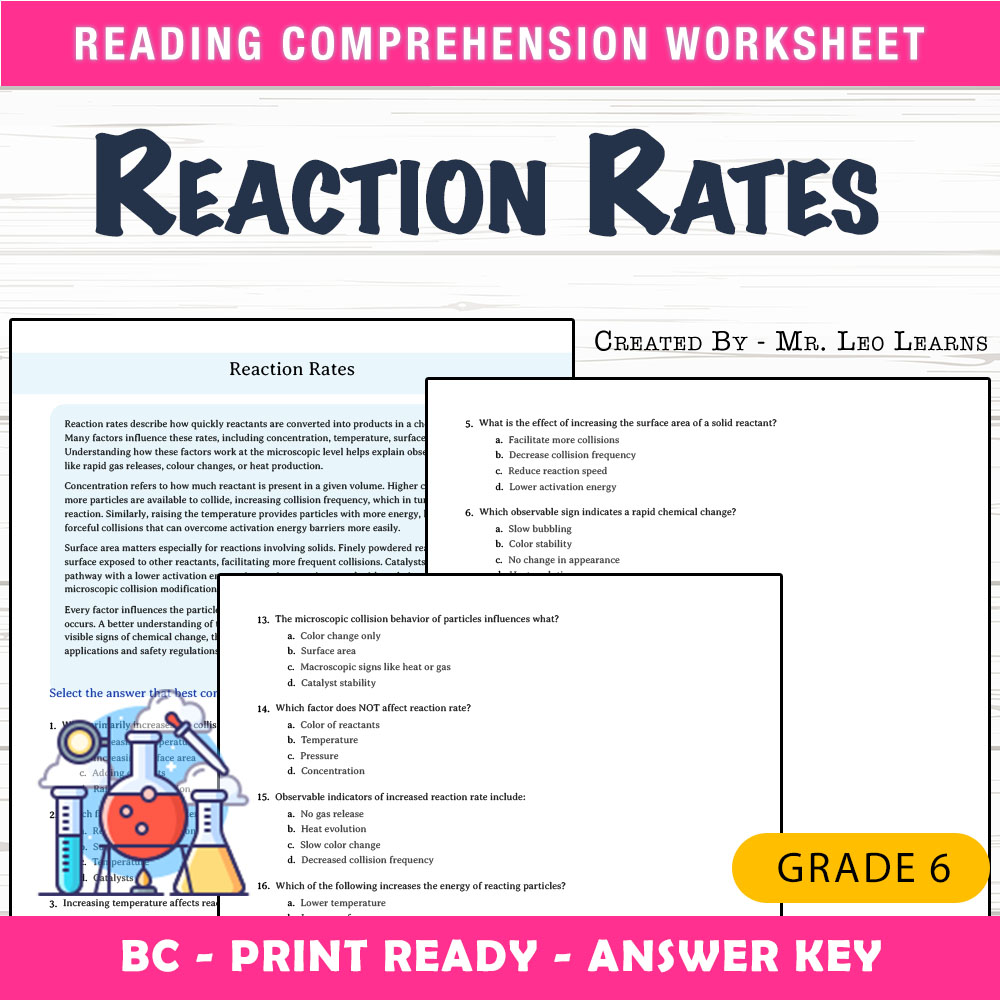
Grade 6 Science — Reaction Rates Worksheet for Mastery
 Created byThe Resource Hub
Learning Objectives
- Understand the factors that influence the speed of chemical reactions.
- Identify how concentration, temperature, surface area, and catalysts affect reaction rates.
- Link microscopic collision behaviors to observable changes during reactions.
Also included in: Grade 6 Science | Matter, Properties & Change Worksheet Bundle (BC Framework) +1 more
Instant download
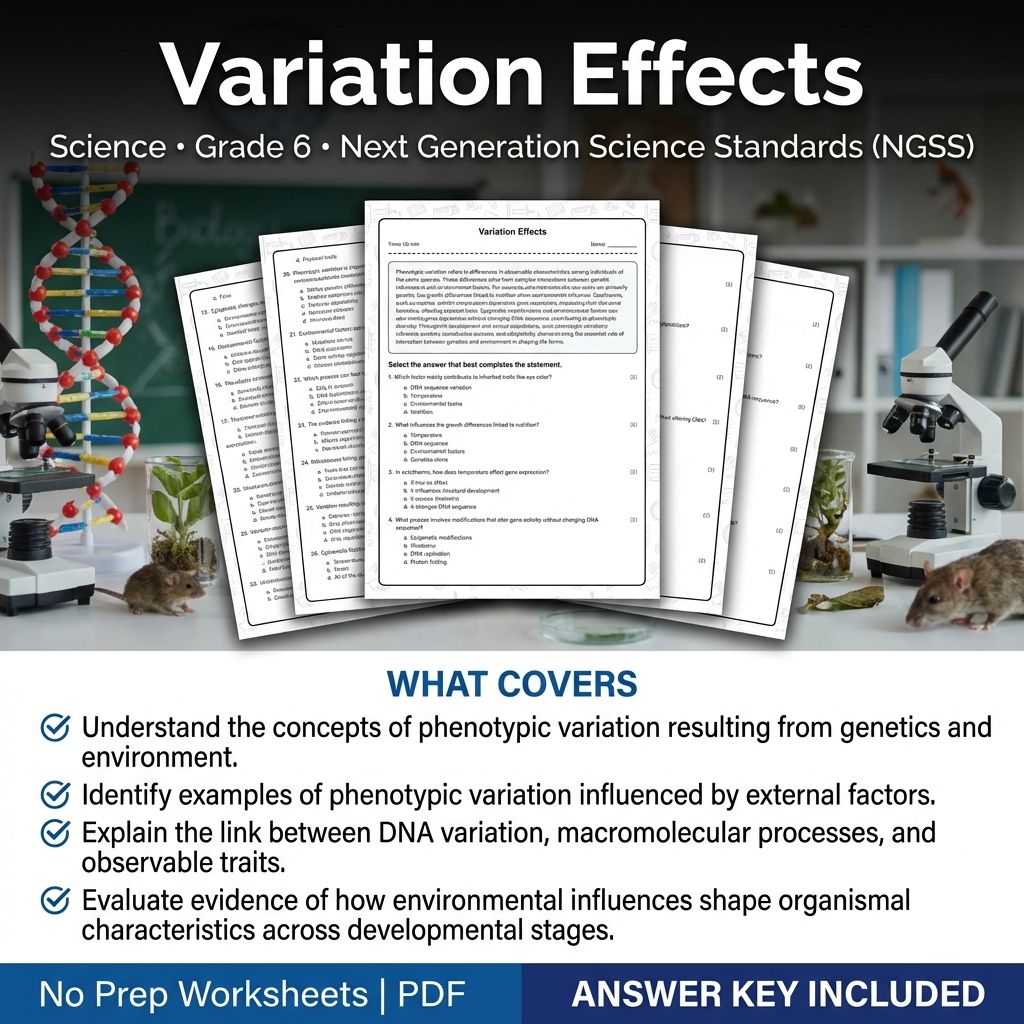
6th Grade Science | Variation Effects Worksheet + Answer Key (Printable PDF)
 Created byCoral Reef Learning
Learning Objectives
- Understand the concepts of phenotypic variation resulting from genetics and environment.
- Identify examples of phenotypic variation influenced by external factors.
- Explain the link between DNA variation, macromolecular processes, and observable traits.
Instant download
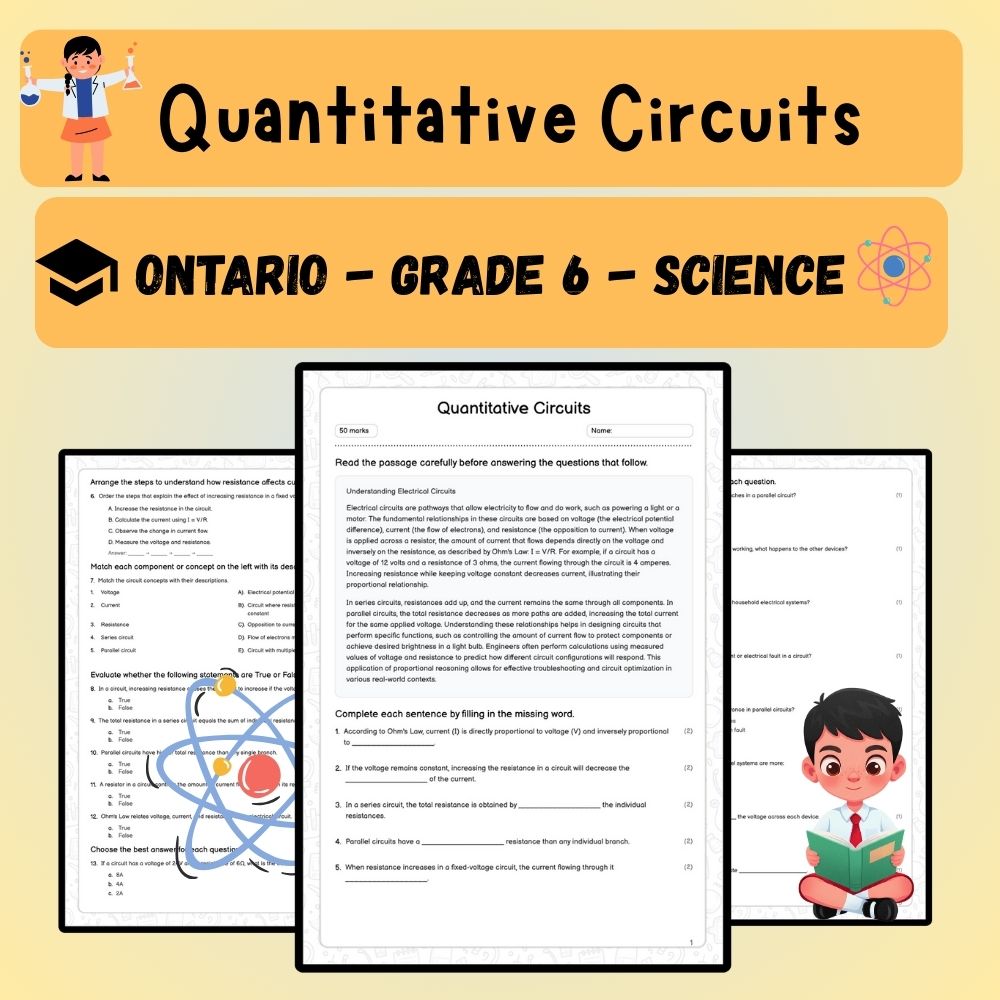
6th Grade Science – Quantitative Circuits Worksheet (PDF )
 Created byPrism Point Learning
Learning Objectives
- Understand the relationship between voltage, current, and resistance in electrical circuits.
- Apply proportional reasoning to calculate circuit parameters and predict responses.
- Analyze how changing resistance affects current flow in a circuit with a fixed voltage.
Also included in: Grade 6 Science Unit – Circuits & Electricity Worksheet Bundle
Instant download
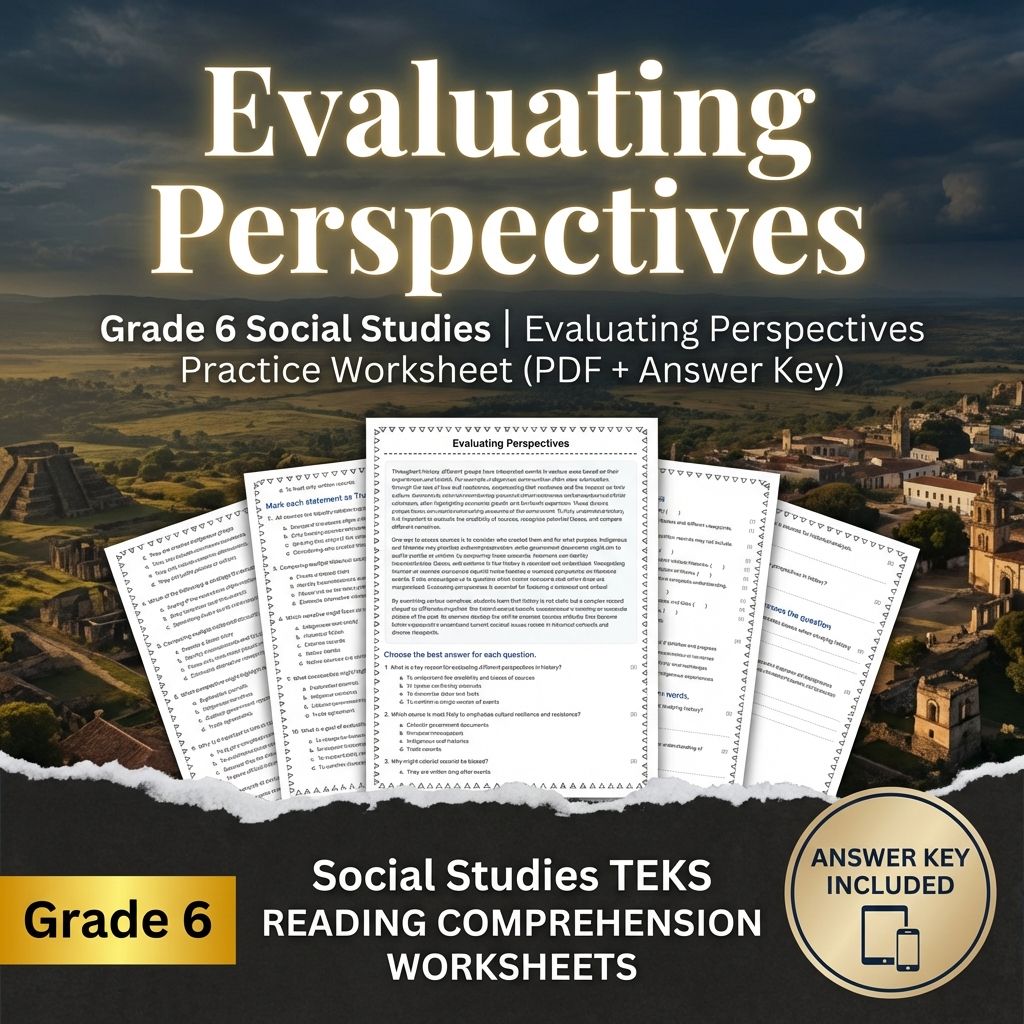
Grade 6 Social Studies | Evaluating Perspectives Practice (PDF + Answer Key)
JCreated byJ.S SheetsLearning Objectives
- Understand how different groups interpret historical evidence through their experiences and beliefs.
- Learn to assess the credibility of sources by identifying biases and viewpoints.
- Compare accounts from diverse sources such as indigenous narratives and colonial records.
Also included in: Grade 6 Social Studies Unit Bundle | Source Analysis, Mapping & Evaluation +1 more
Instant download
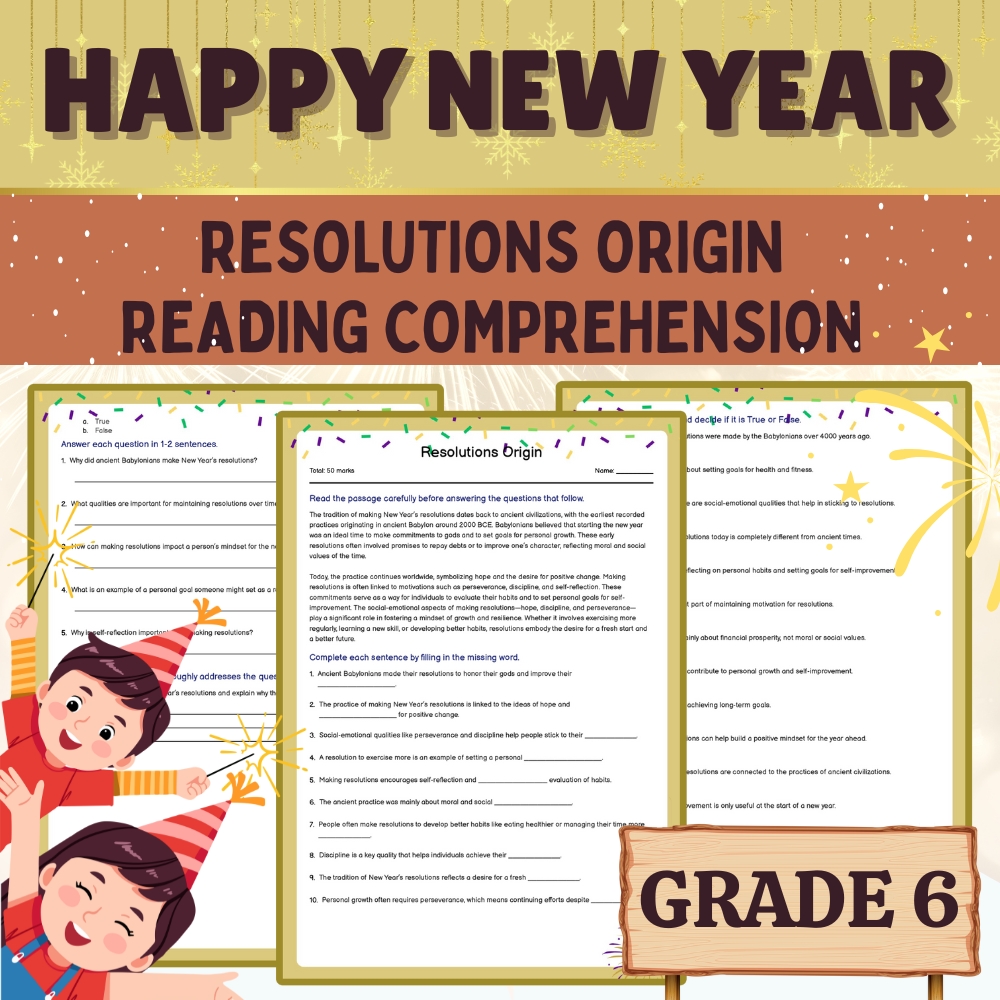
Grade 6 Seasonal | Origins of Resolutions Worksheet
Learning Objectives
- Understand the historical roots of New Year's resolutions, tracing back to ancient Babylonian practices.
- Identify vocabulary related to habits, self-improvement, and social-emotional concepts such as perseverance and discipline.
- Reflect on personal goals and the importance of hope and positive change for individual growth.
Instant download
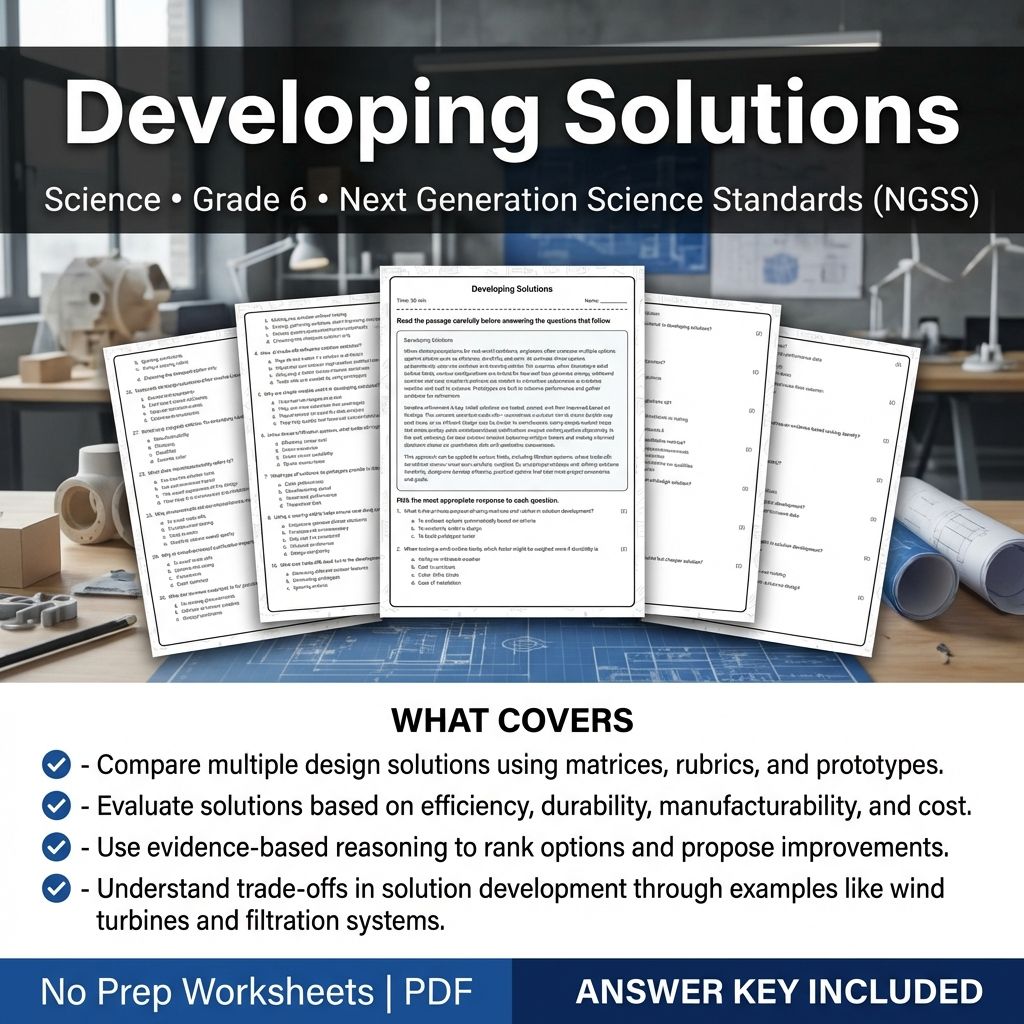
6th Grade Science Developing Solutions Worksheet & Answer Key (Printable PDF)
Created byCoral Reef LearningLearning Objectives
- Compare multiple design solutions using matrices, rubrics, and prototypes.
- Evaluate solutions based on efficiency, durability, manufacturability, and cost.
- Use evidence-based reasoning to rank options and propose improvements.
Instant download
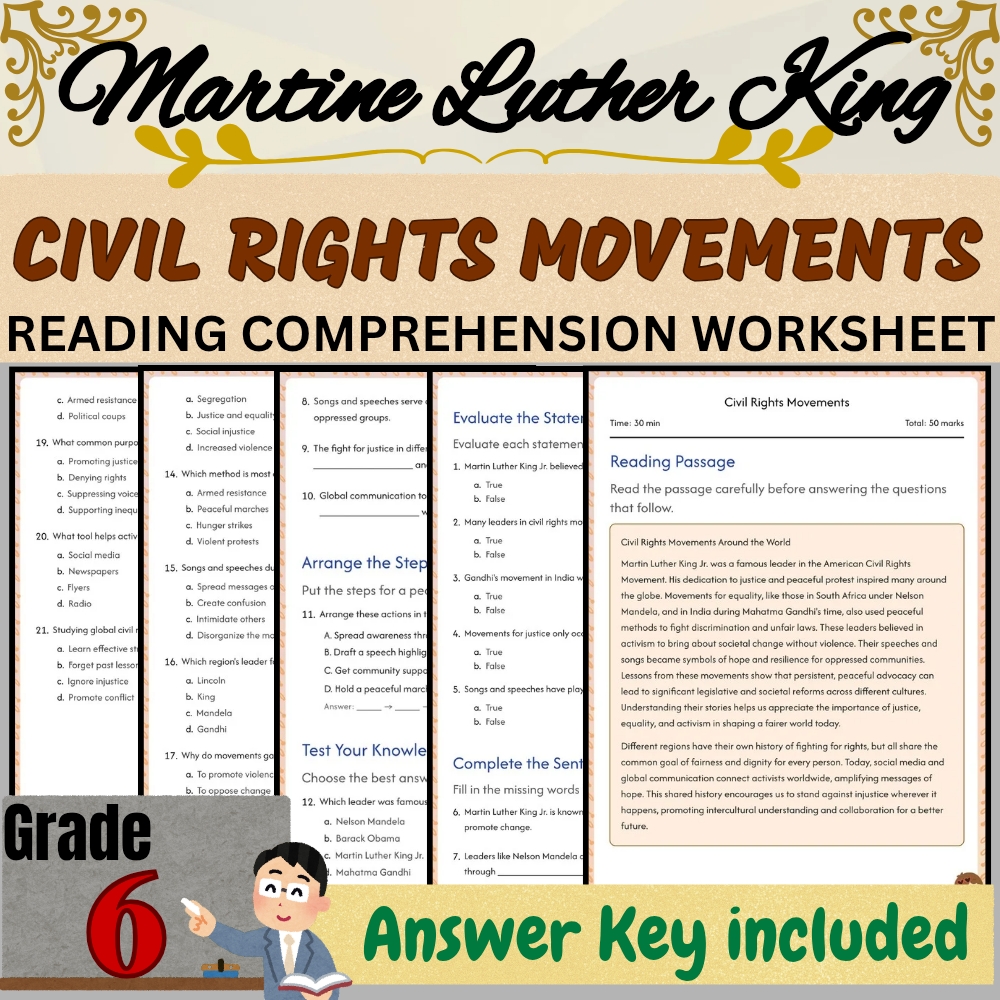
Grade 6 | Civil Rights Movements Worksheet for Mastery | PDF + Answer Key
 Created byShaNova Worksheets
Learning Objectives
- Understand the significance of Martin Luther King Jr. in the Civil Rights Movement.
- Compare civil rights movements across different eras and regions.
- Analyze primary sources, speeches, and songs to learn about social justice advocacy.
Instant download
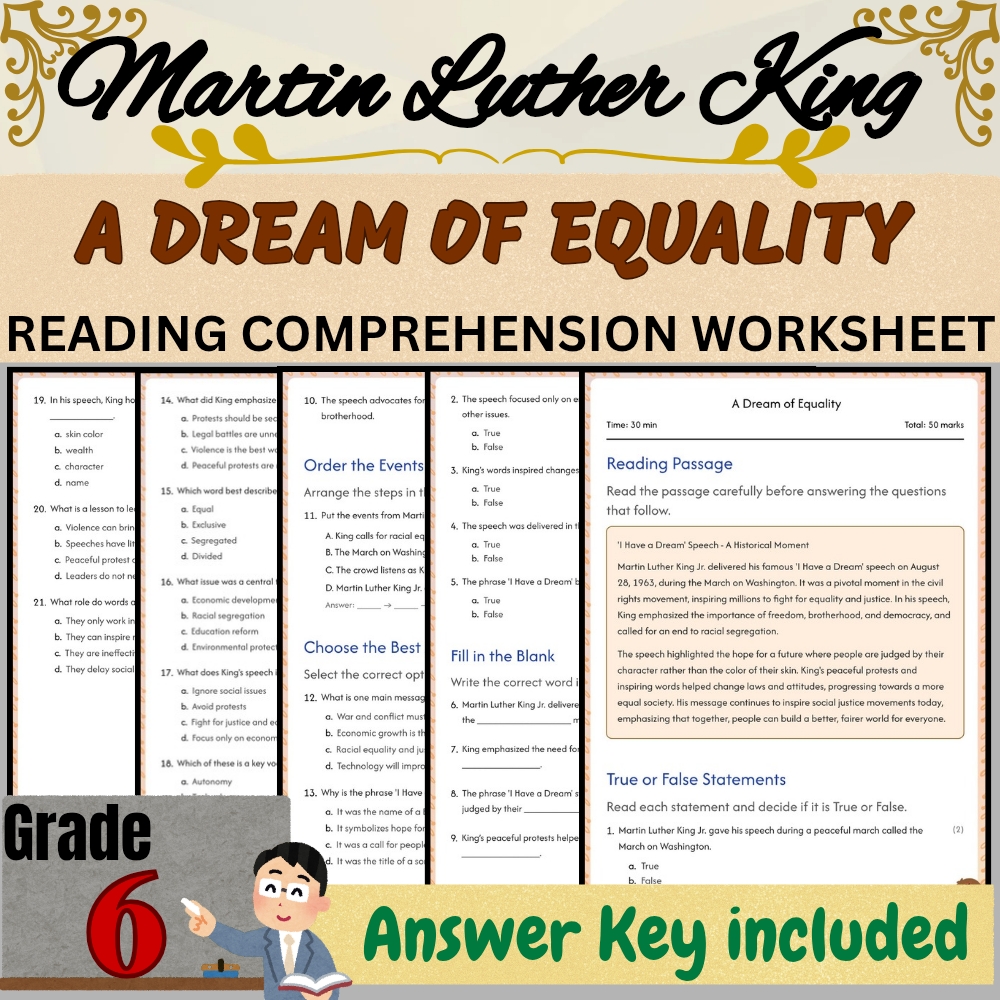
Grade 6 | Martin Luther King 'I Have a Dream' Worksheet PDF + Answer Key
Created byShaNova WorksheetsLearning Objectives
- Understand the importance of equality and justice highlighted in Martin Luther King Jr.'s speech.
- Identify key vocabulary words such as 'civil rights,' 'freedom,' and 'democracy.'
- Analyze the themes and historical context of the 'I Have a Dream' speech.
Instant download
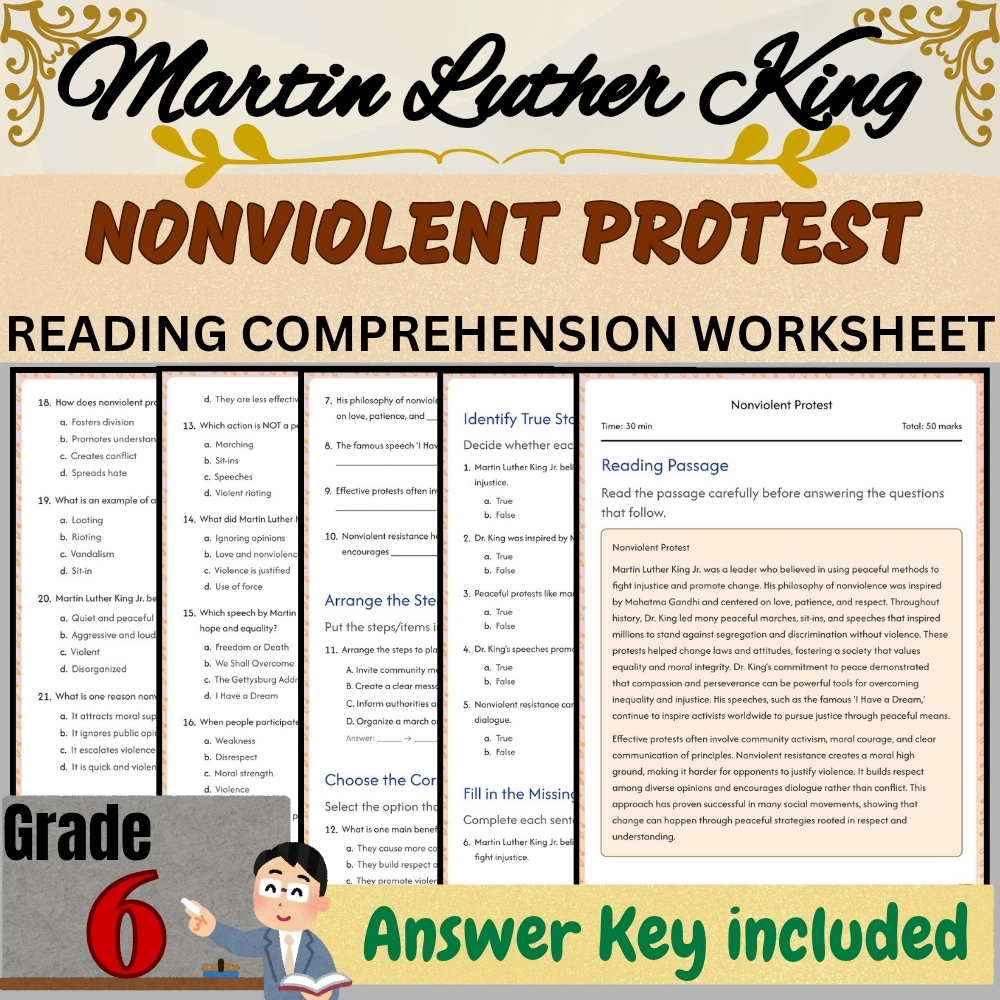
Grade 6 Seasonal | Nonviolent Protest Worksheet for Mastery | PDF + Answer Key
Created byShaNova WorksheetsLearning Objectives
- Understand the principles of nonviolent resistance championed by Martin Luther King Jr.
- Recognize historical examples of peaceful protests led by Martin Luther King Jr.
- Analyze how nonviolent strategies can inspire social change and promote moral integrity.
Instant download
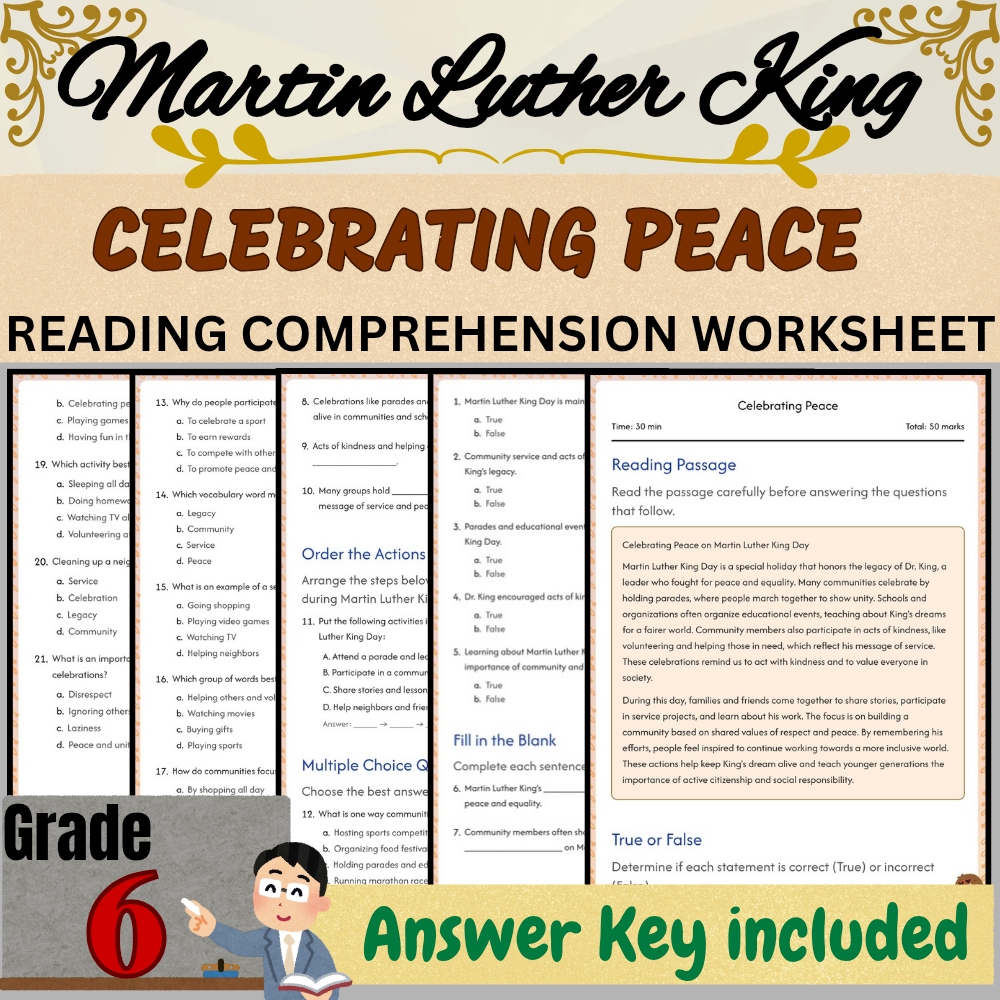
Grade 6 | Celebrating Peace Worksheet for Martin Luther King | PDF + Answer Key
Created byShaNova WorksheetsLearning Objectives
- Learn how communities observe Martin Luther King Day through celebrations and acts of kindness.
- Understand the importance of community service and shared values in honoring Martin Luther King's legacy.
- Identify vocabulary words: community, legacy, and service, within context.
Instant download
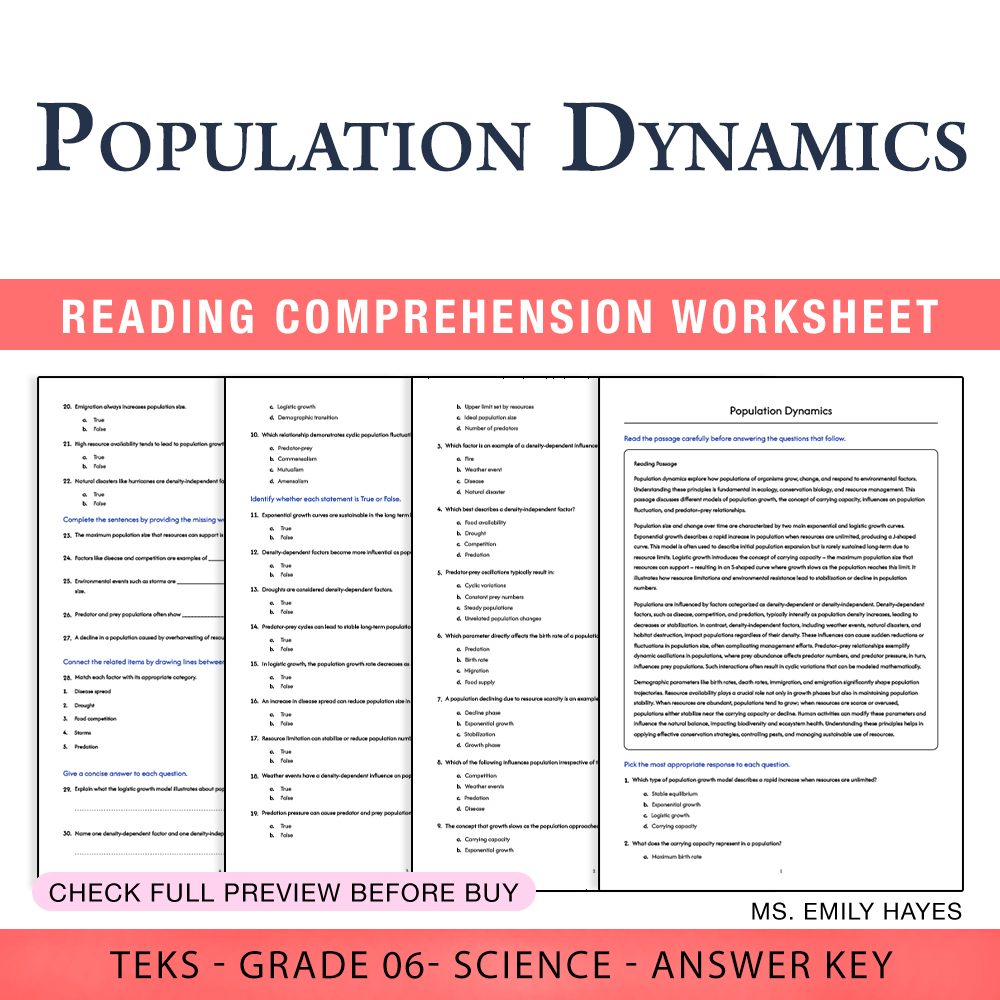
6th Grade Science | Population Dynamics Worksheet (PDF+ Answer Key)
 Created byCopper Leaf Classroom
Learning Objectives
- Explain the principles of population size and growth curves, including exponential and logistic models.
- Define carrying capacity and identify factors influencing population change.
- Distinguish between density-dependent and density-independent influences on populations.
Instant download
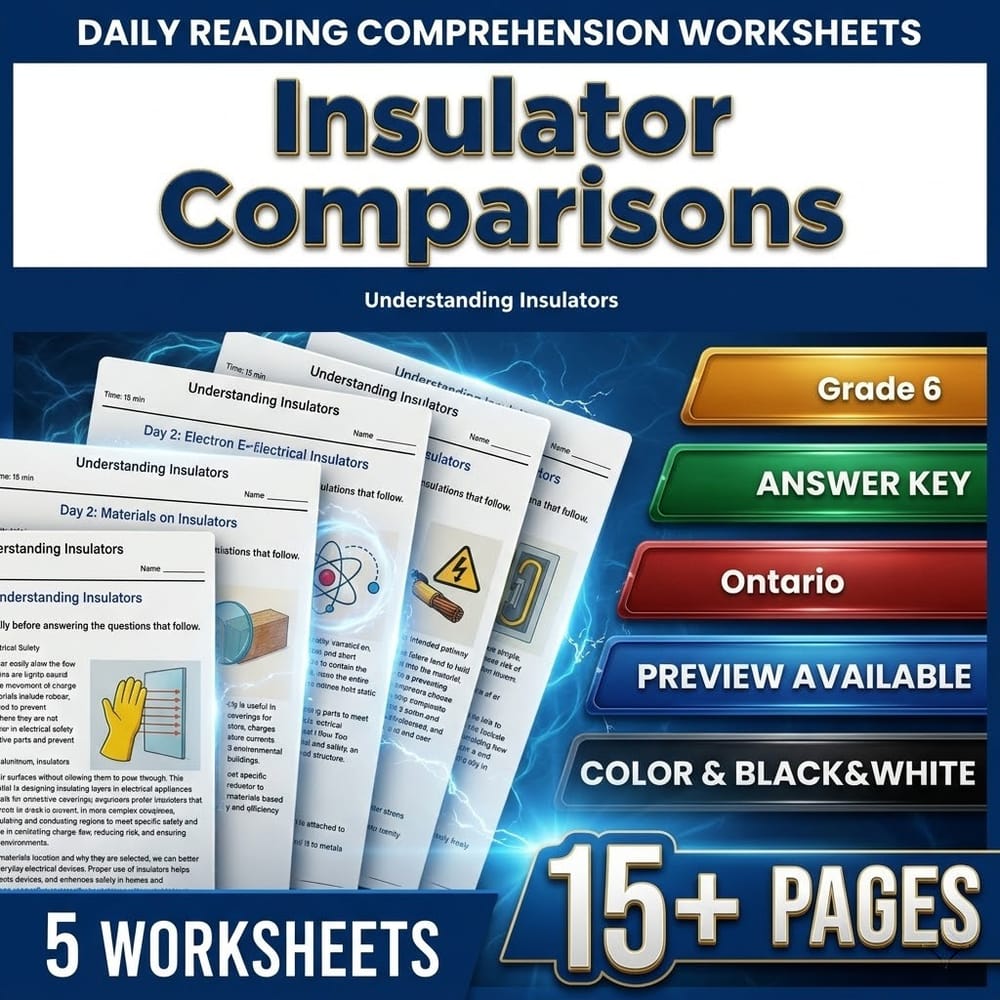
Grade 6 Science – Insulators & Conductors | Daily Reading Worksheet
 Created byQuiet Forest Education
Learning Objectives
- Explain what insulators are and how their electron binding prevents charge flow.
- Identify common insulating materials such as rubber, glass, and dry wood.
- Describe how insulators prevent electrical charges from flowing and support safety.
Also included in: Electricity Grade 6 Science Daily Reading Worksheets Bundle | Ontario +1 more
Instant download
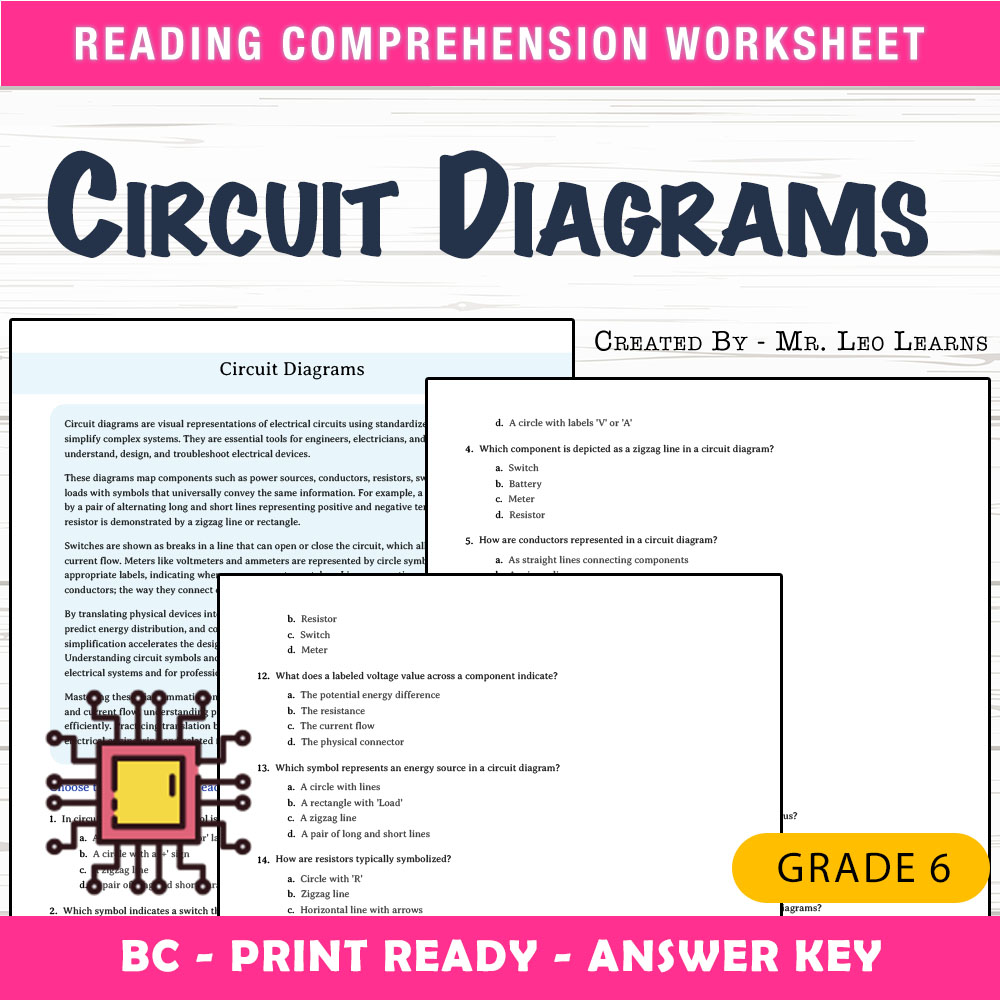
Grade 6 Science — Worksheet MCQ Paper for Mastering Circuit Diagrams
Created byThe Resource HubLearning Objectives
- Understand the standard symbols used in circuit diagrams for sources, conductors, and loads.
- Identify and interpret circuit components such as batteries, resistors, switches, and meters.
- Learn how to represent energy flow and potential differences in circuit diagrams.
Also included in: Grade 6 Science Energy, Waves & Circuits UNIT Bundle | BC Standards +1 more
Instant download
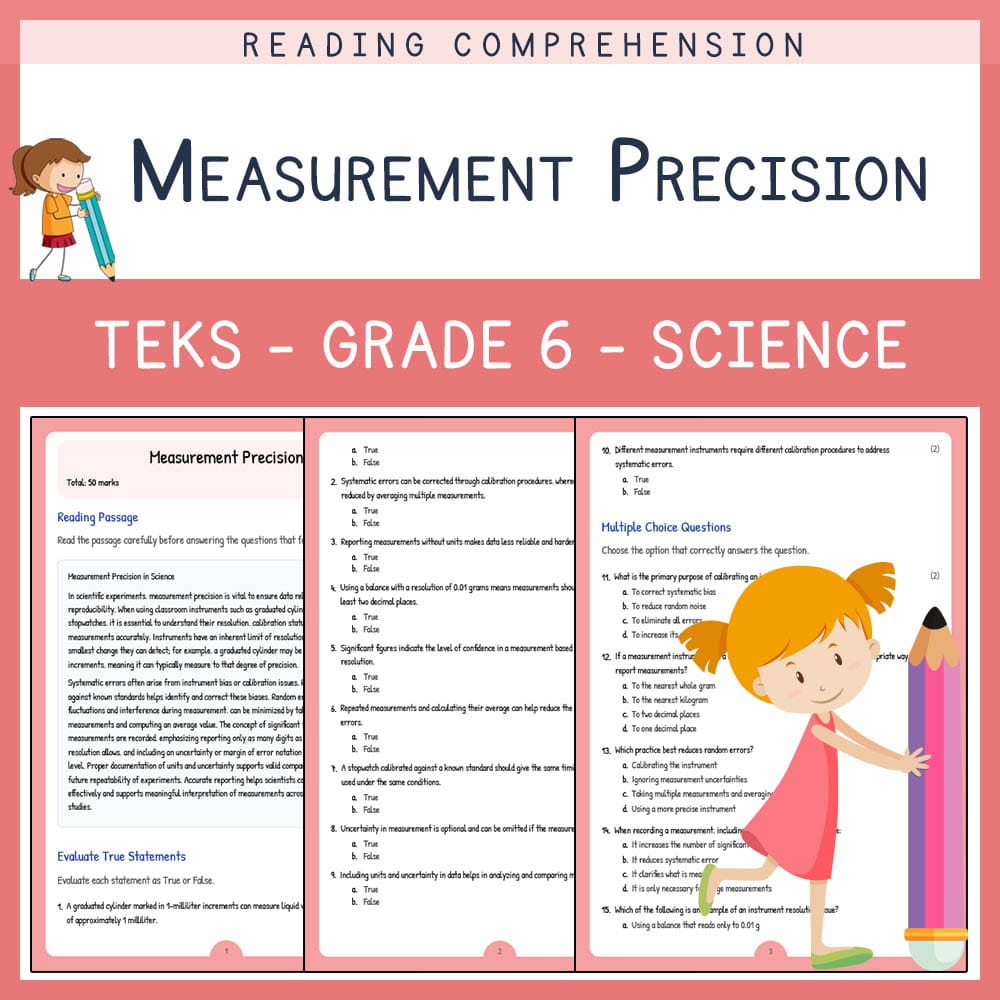
Grade 6 Science | Measurement Precision Worksheet | TEKS Alligned
 Created byLumora Learning
Learning Objectives
- Understand the conventions for reporting measured data with appropriate units and significant figures.
- Identify sources of random and systematic errors in measurement.
- Apply calibration procedures to instruments to minimize bias.
Instant download

Grade 6 Holiday Art Worksheet | January Standard | Worksheet Elena
Created byLumora LearningLearning Objectives
- Explain how art can communicate emotions during holidays and other special events.
- Describe how different cultures use visual arts, music, dance, and storytelling to build connection.
- Use evidence from an artwork or description to support an interpretation and show empathy.
Instant download

Grade 6 Science – Human Influences Worksheet (TEKS) | Practice Set (PDF)
 Created byEvergreen Desk Education
Learning Objectives
- Explain how habitat fragmentation, pollution, land-use change, nonnative species, and resource extraction can affect community composition and population viability.
- Describe how human impacts can reduce genetic diversity and change species distribution and ecological balance.
- Evaluate mitigation strategies such as conservation and restoration for supporting long-term persistence of native communities.
Instant download
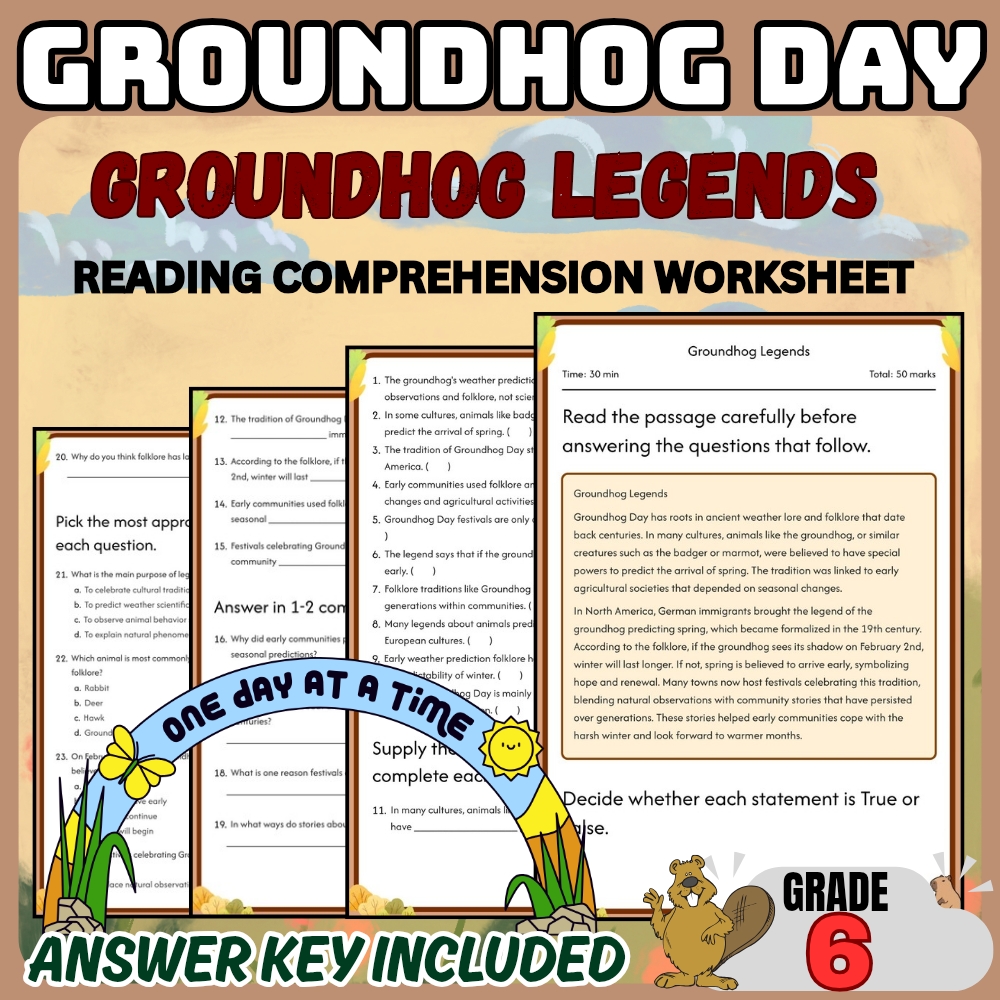
Grade 6 | Groundhog Day for Mastering Legends and Traditions | PDF + Answer Key
Created byShaNova WorksheetsLearning Objectives
- Understand the origins and cultural significance of Groundhog Day and related folklore.
- Identify different legends and traditions from various cultures celebrating the end of winter.
- Analyze how community stories and natural observations contribute to cultural identity.
Instant download
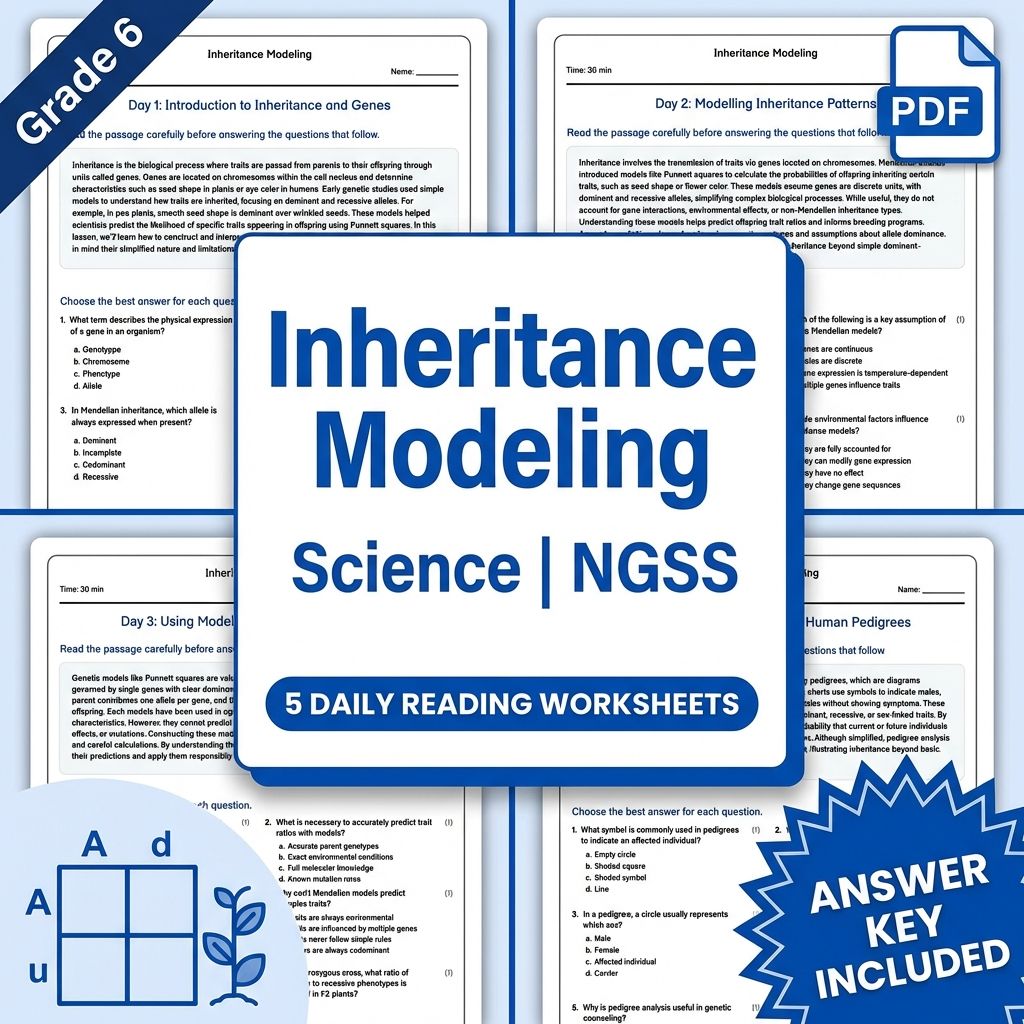
6th Grade Science | Inheritance Modeling Worksheet (PDF+ Answer Key)
Created byCopper Leaf ClassroomLearning Objectives
- Understand the basic concept of inheritance and genes as units of trait transmission
- Learn how Mendelian crosses model dominant and recessive inheritance patterns
- Interpret Punnett squares to predict the ratios of traits in offspring
Instant download

Grade 6 Science – Atoms & Particles Reading Worksheet | California Standards
 Created byBright Mind Resources
Learning Objectives
- Understand that matter is made up of tiny particles called atoms.
- Recognize that atoms are the basic units of elements.
- Learn how different substances have distinct combinations of atoms.
Also included in: Grade 6 Matter Science Daily Reading Worksheets Lesson Bundle | CA Standards +1 more
Instant download
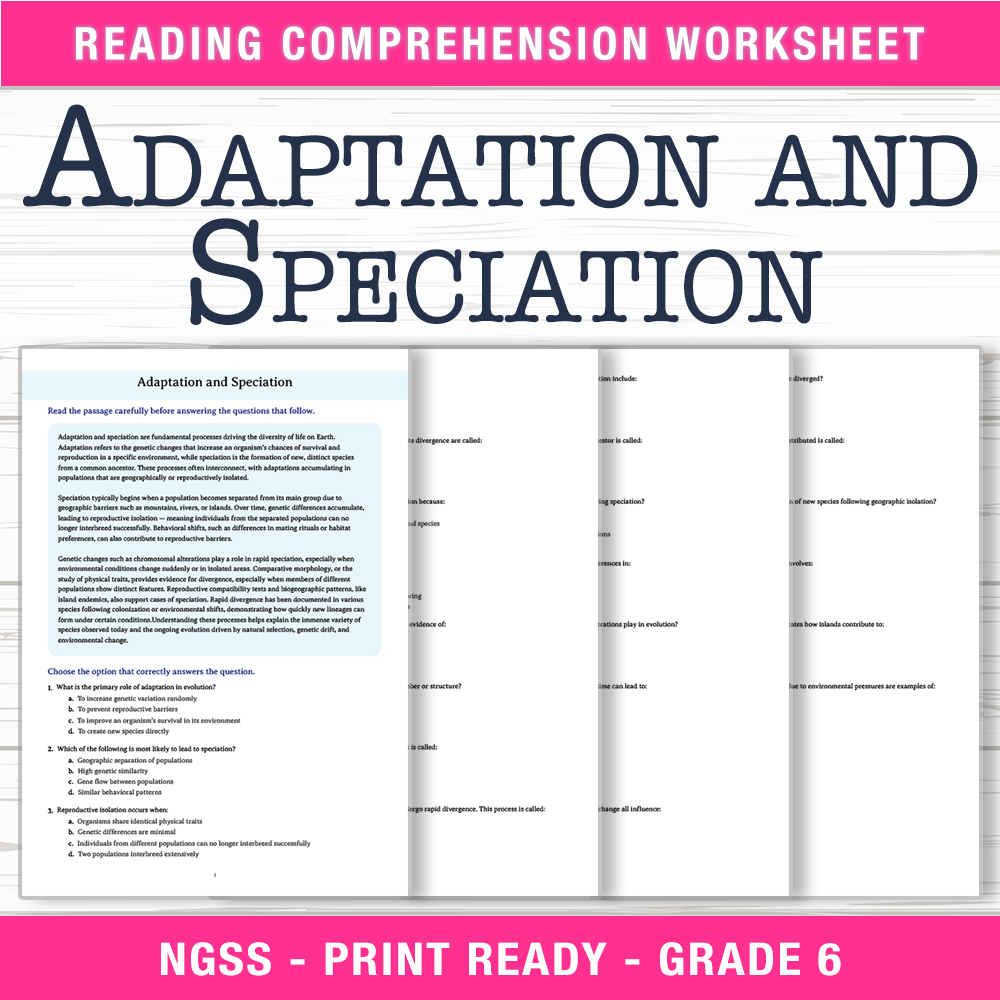
6th Grade Science – Adaptation and Speciation Worksheet (PDF + ANSWER KEY)
 Created byRiverstone Classroom
Learning Objectives
- Describe how populations diverge into distinct lineages through heritable differences and reproductive isolation.
- Identify the environmental, behavioral, and genetic factors that contribute to speciation.
- Analyze evidence such as morphological differences, reproductive compatibility, and biogeographic patterns to understand speciation events.
Instant download
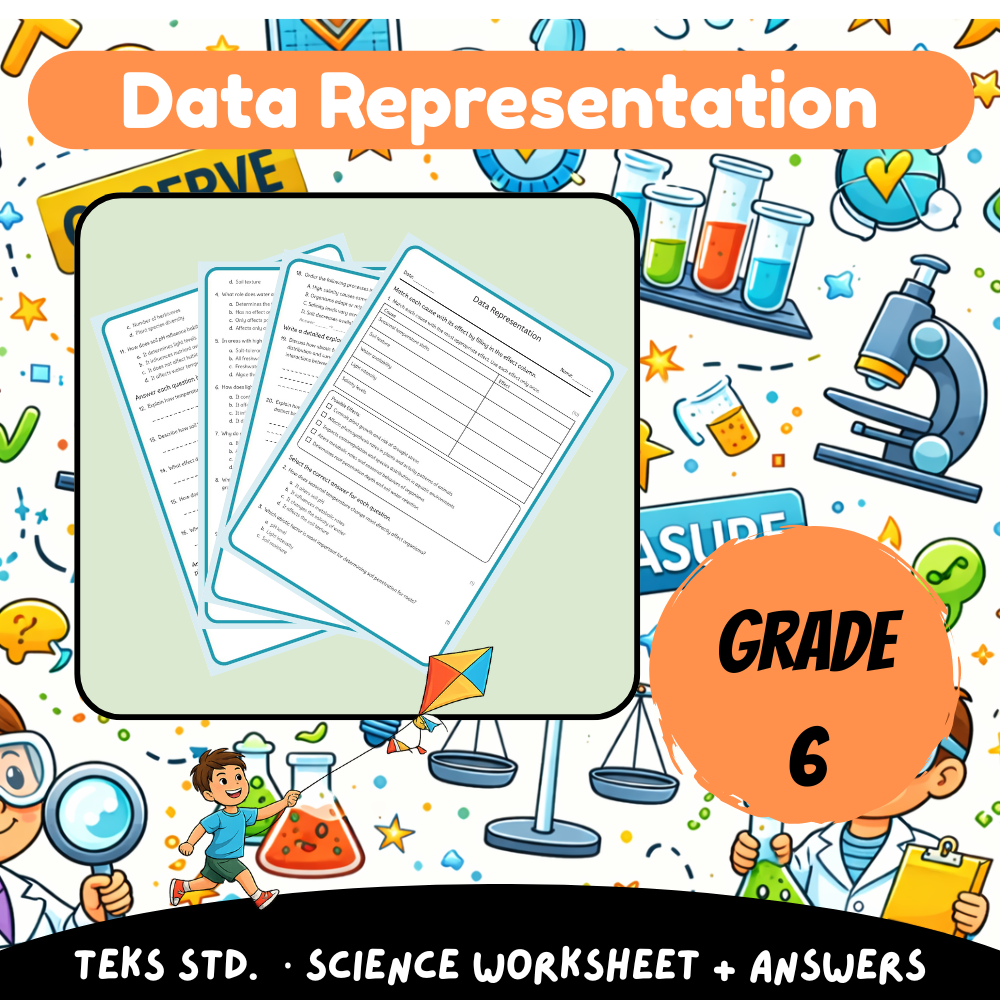
6th Grade Science | Data Representation Worksheet (PDF) – TEKS Standards
Created byBright Mind ResourcesLearning Objectives
- Understand different methods of data organization such as tables, line graphs, bar graphs, and scatter plots
- Learn proper axis labeling, scale selection, and interpretation of graphs
- Apply data representation techniques to real-world examples like mass change over time and distance over time
Instant download

Grade 6 Forces Basics Daily Reading Worksheet | TEKS Science Activity
 Created byBRIGHT PATH RESOURCES
Learning Objectives
- Identify forces as contact or noncontact
- Sort examples of forces using key definitions
- Explain how forces can change motion in everyday situations
Also included in: Energy, Matter & Change Grade 6 Science Lesson Bundle | TEKS Daily Reading +1 more
Instant download

Musculoskeletal System Review Worksheets Grade 6 Science | Test Prep
Created byPrism Point LearningLearning Objectives
- Identify the major parts of the musculoskeletal system (bones, joints, and muscles) and describe what each does.
- Explain how muscles, joints, and bones work together to produce movement and provide protection.
- Describe how the nervous system and circulation support coordinated movement and sustained activity.
Also included in: Multicellular Systems & Functions Lesson Bundle | Grade 6 Science | BC +1 more
Instant download
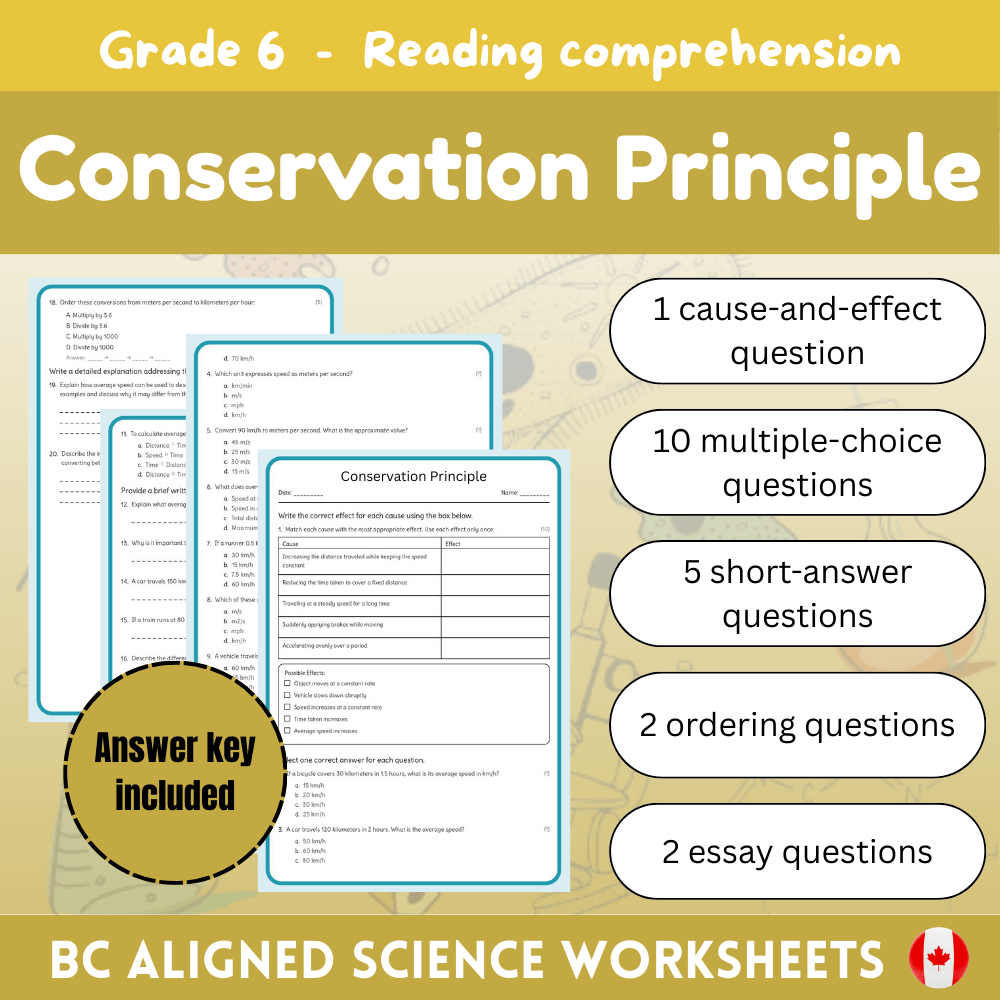
Grade 6 Science | Conservation Principle Worksheet (Answer Key) – BC Standards
Created byBright Mind ResourcesLearning Objectives
- Understand the concept of energy conservation within closed systems.
- Identify different forms of energy and how they transform or transfer during physical processes.
- Apply the conservation principle to evaluate system behavior and efficiency in various contexts.
Instant download

Comparing Data Sets for Patterns Worksheet | Grade 6 Computer Science
Created byBright Mind ResourcesLearning Objectives
- Define and use the vocabulary compare, data set, relationship, and difference when discussing data.
- Identify similarities and differences between two or more data sets using greater, less, equal, and changing values.
- Describe how a relationship can be shown by how values change across data sets.
Instant download
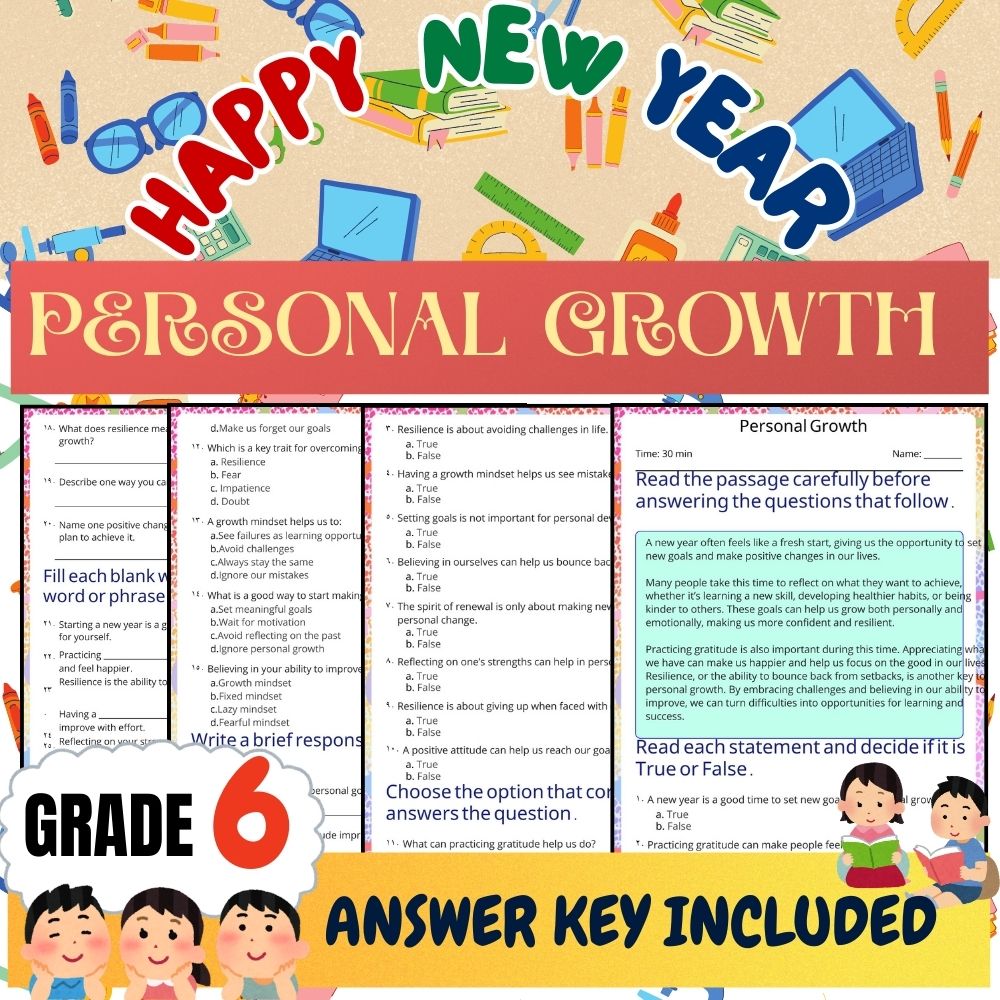
Grade 6 Seasonal Personal Growth Worksheet for New Year | PDF + Answer Key
Created byShaNova WorksheetsLearning Objectives
- Reflect on personal goals and aspirations for the new year.
- Practice gratitude and recognize positive aspects of life.
- Understand the importance of resilience and growth mindset.
Instant download
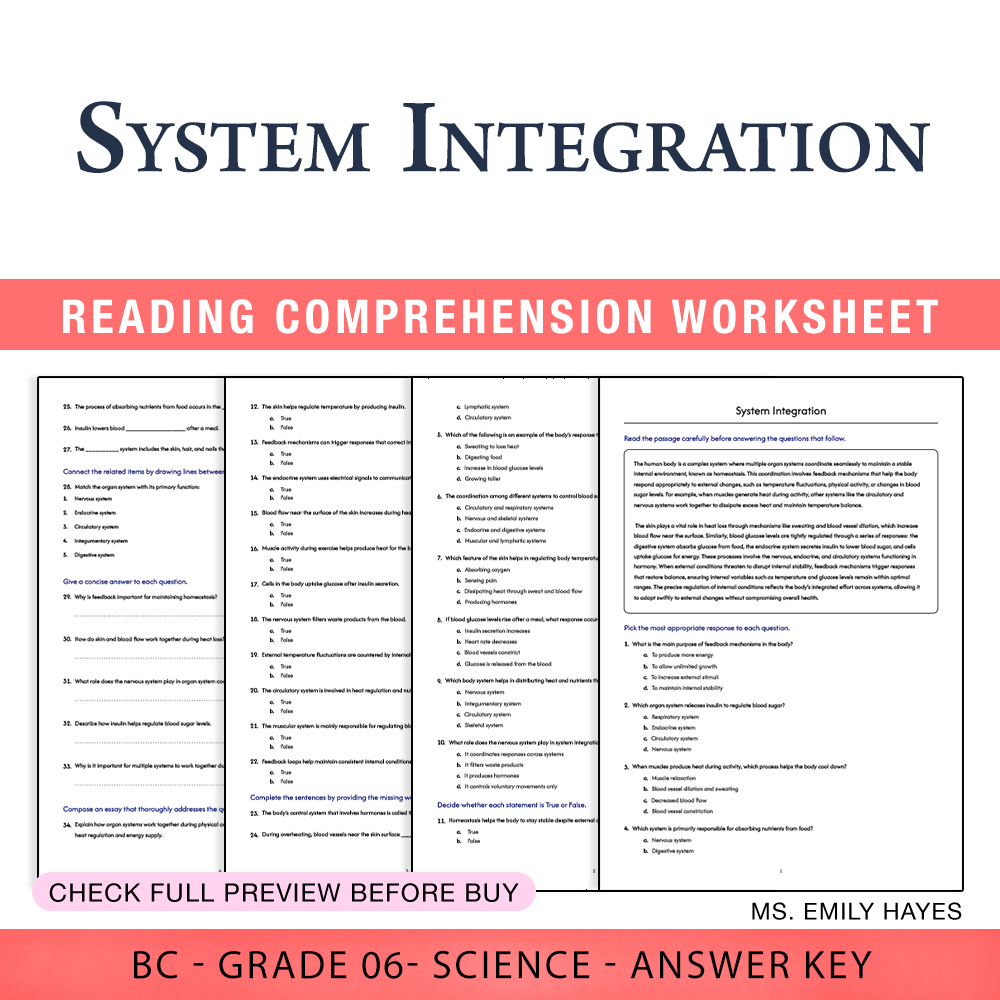
6th Grade Science | System Integration Worksheet (PDF+ Answer Key)
Created byCopper Leaf ClassroomLearning Objectives
- Describe how different organ systems work together to maintain homeostasis.
- Explain feedback mechanisms involved in regulating internal body conditions.
- Identify examples of system coordination in the human body.
Also included in: Grade 6 Science BC | Human Body Systems & Adaptations (PDF+ Answer Keys) +1 more
Instant download
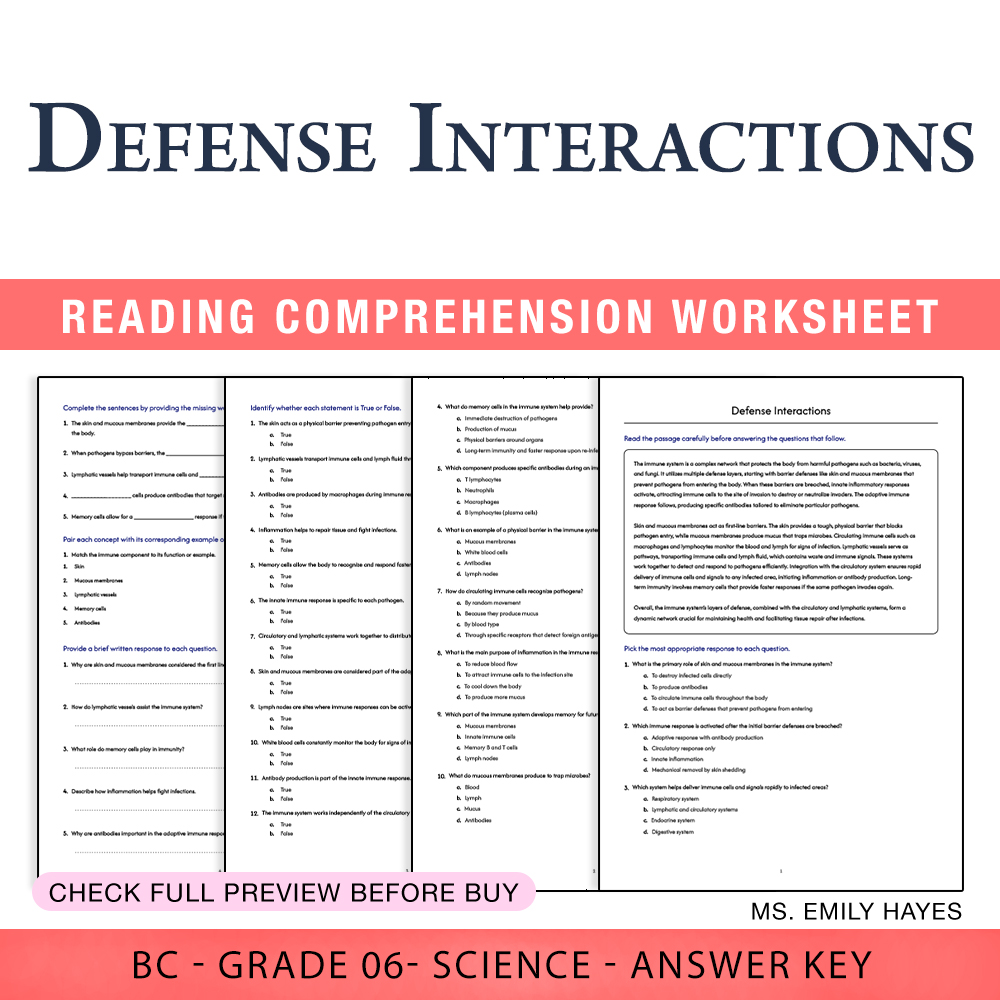
Grade 6 Science | Defense Interactions Worksheet (PDF+ Answer Key)
Created byCopper Leaf ClassroomLearning Objectives
- Explain how the immune system defends organisms through barrier defenses, innate inflammation, and adaptive responses.
- Identify the roles of skin, mucous membranes, circulating immune cells, and lymphatic vessels in immune defense.
- Describe how immune activity interacts with circulatory and lymphatic systems to maintain health and memory.
Also included in: Grade 6 Science BC | Human Body Systems & Adaptations (PDF+ Answer Keys) +1 more
Instant download
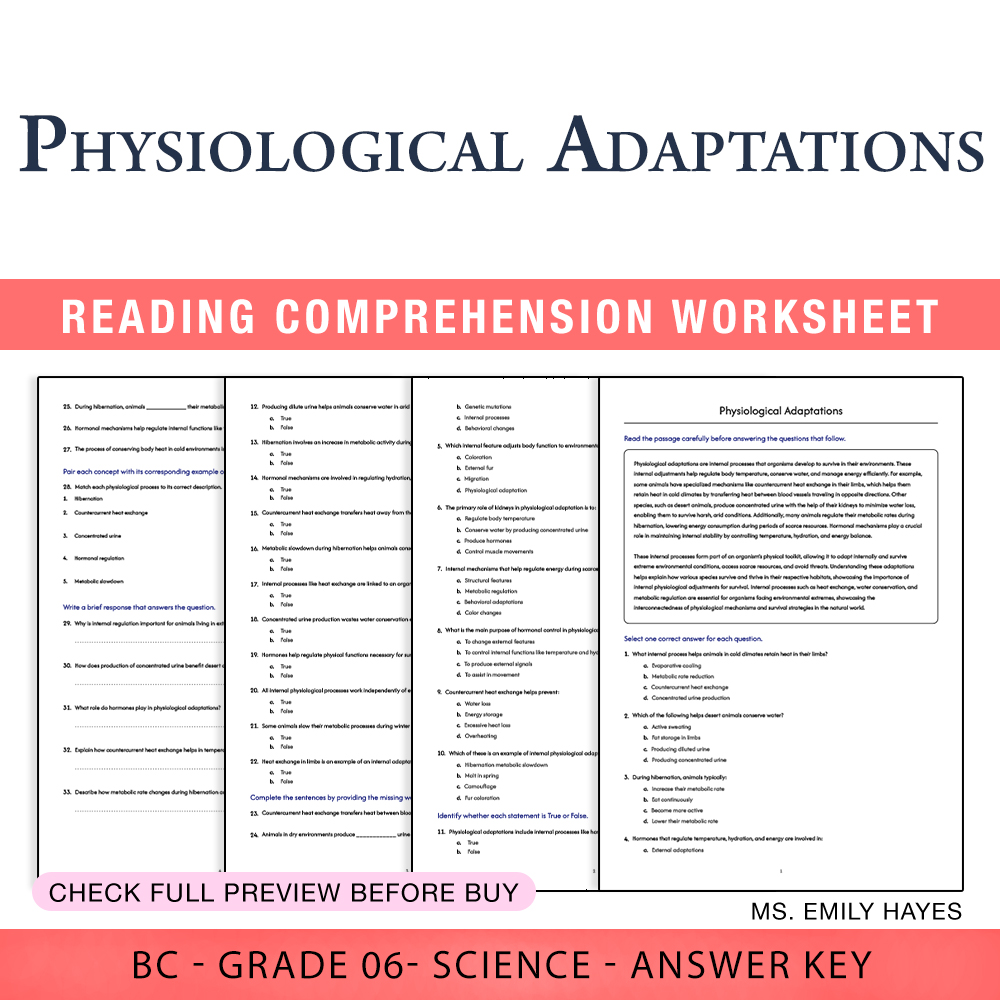
6th Grade Science | Physiological Adaptations Worksheet (PDF+ Answer Key)
Created byCopper Leaf ClassroomLearning Objectives
- Explain the concept of physiological adaptations and their importance for survival.
- Identify different internal processes that help organisms survive environmental challenges.
- Describe specific physiological mechanisms such as heat exchange, water conservation, and metabolic regulation.
Also included in: Grade 6 Science BC | Human Body Systems & Adaptations (PDF+ Answer Keys) +1 more
Instant download
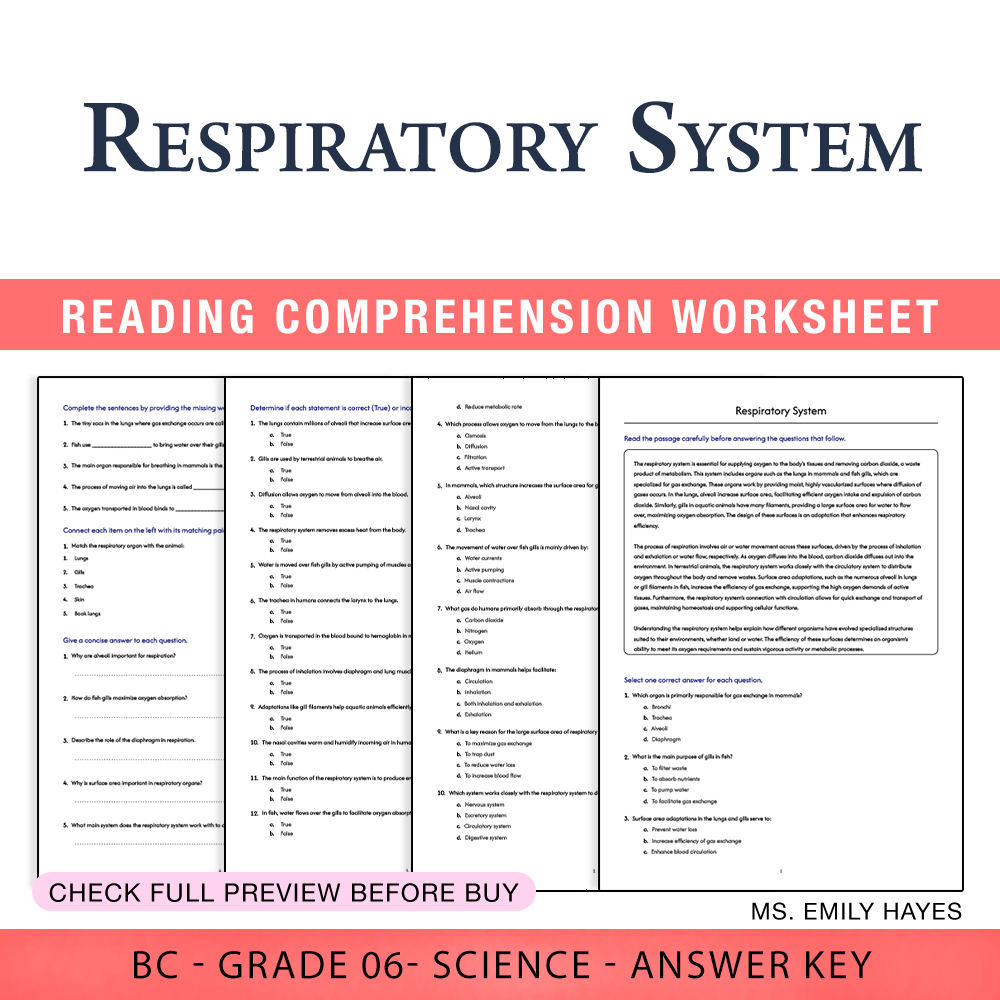
6th Grade Science | Respiratory System Worksheet (PDF+ Answer Key)
Created byCopper Leaf ClassroomLearning Objectives
- Describe the structure and function of the respiratory system.
- Explain how gas exchange occurs in the lungs and gills.
- Identify adaptations that increase respiratory surface area.
Also included in: Grade 6 Science BC | Human Body Systems & Adaptations (PDF+ Answer Keys) +1 more
Instant download
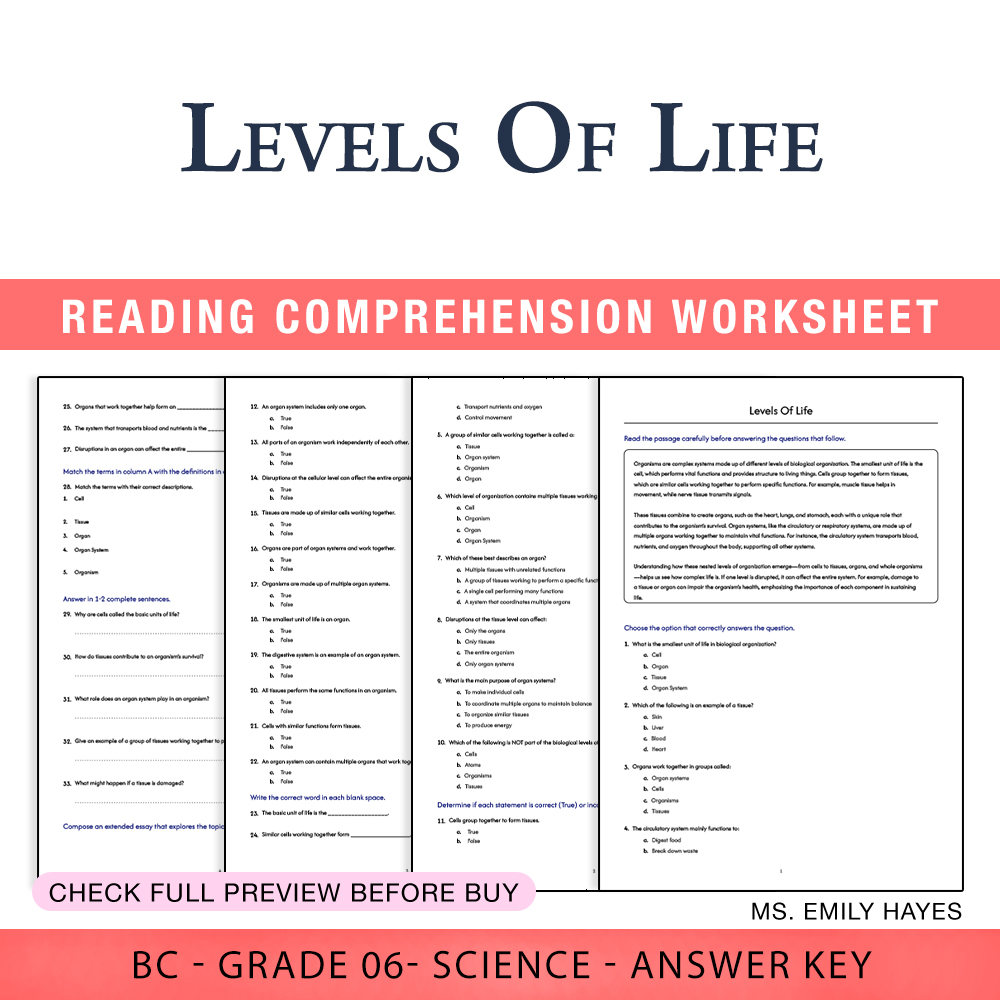
6th Grade Science | Levels Of Life Worksheet (PDF+ Answer Key)
Created byCopper Leaf ClassroomLearning Objectives
- Understand the hierarchical organization of biological levels from cells to organisms
- Describe how cells form tissues, tissues form organs, and organs work together in organ systems
- Recognize the importance of organization in maintaining life processes
Also included in: Grade 6 Science BC | Human Body Systems & Adaptations (PDF+ Answer Keys) +1 more
Instant download
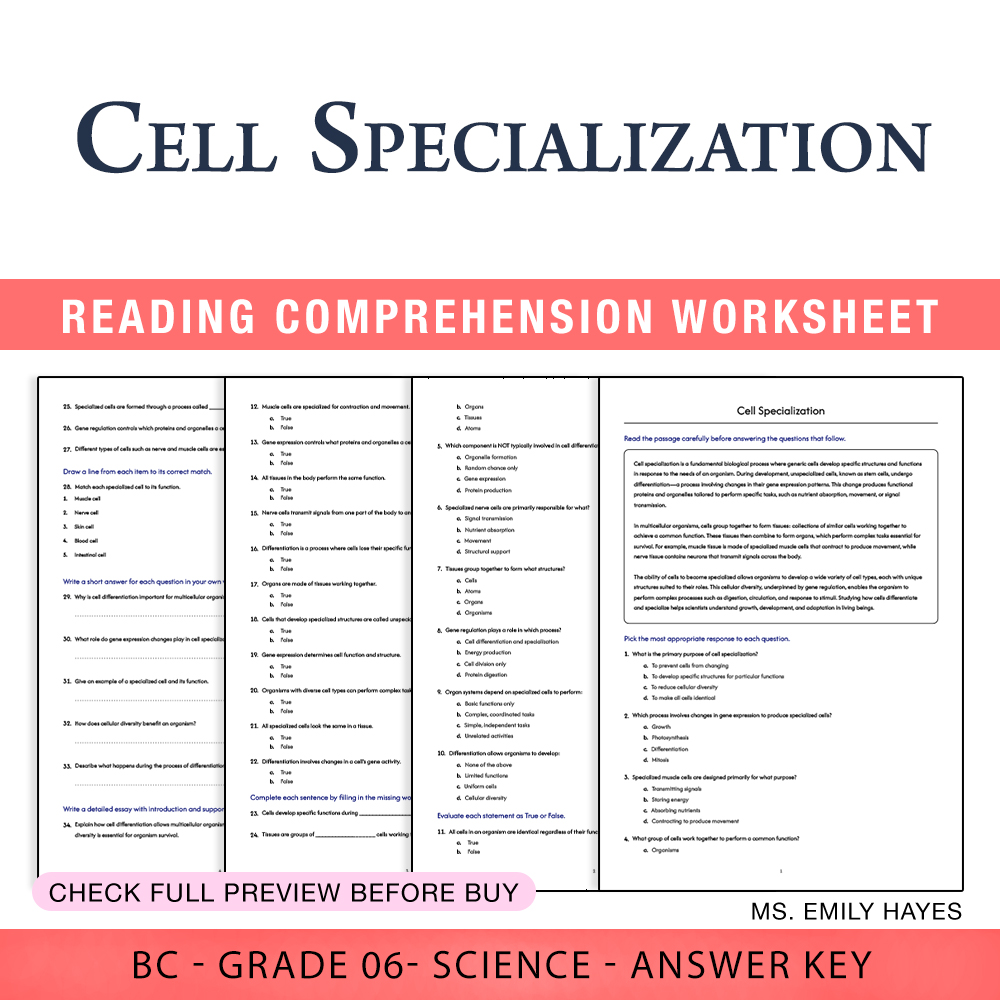
6th Grade Science | Cell Specialization Worksheet (PDF+ Answer Key)
Created byCopper Leaf ClassroomLearning Objectives
- Understand the concept of cell specialization and how cells develop specific structures for particular functions.
- Identify different types of specialized cells and their roles within tissues and organs.
- Describe the process of differentiation and how gene expression leads to functional cellular differences.
Also included in: Grade 6 Science BC | Human Body Systems & Adaptations (PDF+ Answer Keys) +1 more
Instant download
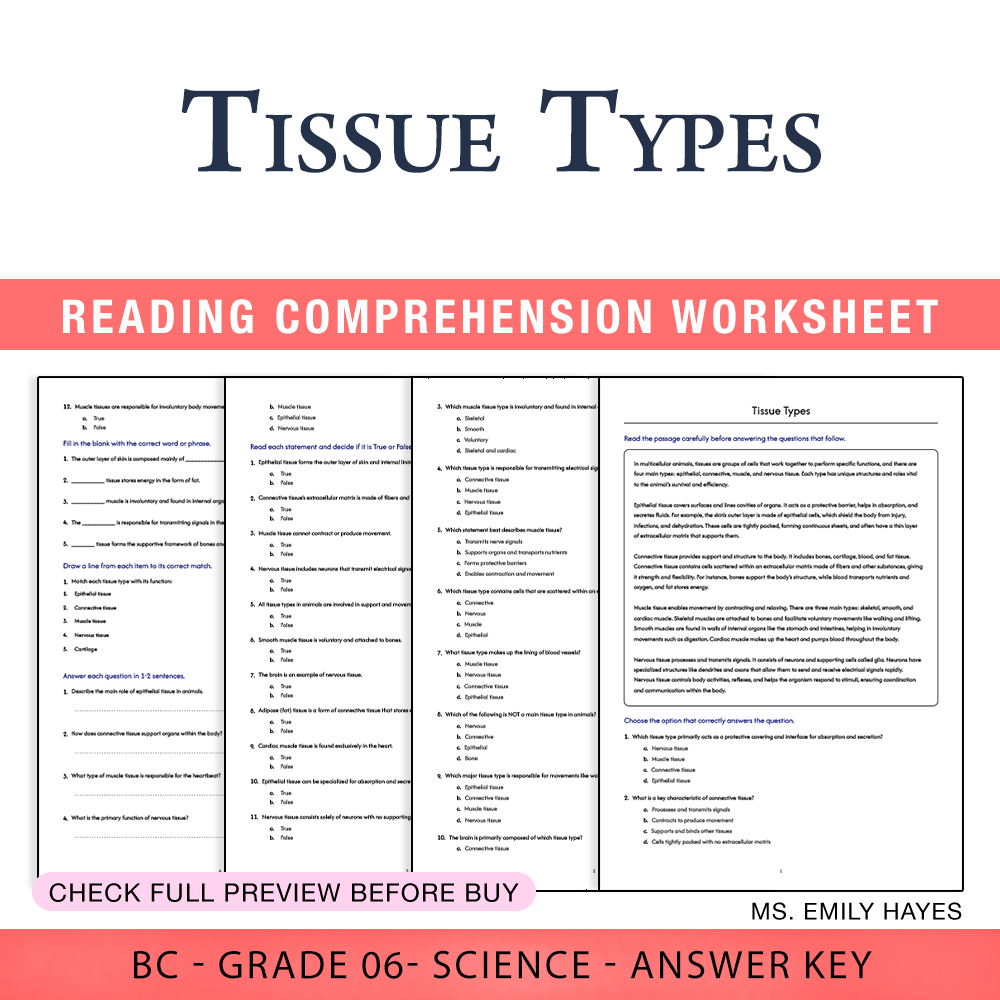
6th Grade Science | Tissue Types Worksheet (PDF+ Answer Key)
Created byCopper Leaf ClassroomLearning Objectives
- Identify and describe the four main tissue types in multicellular animals.
- Explain the functions of epithelial, connective, muscle, and nervous tissues.
- Recognize characteristic structures and extracellular components of each tissue type.
Also included in: Grade 6 Science BC | Human Body Systems & Adaptations (PDF+ Answer Keys) +1 more
Instant download
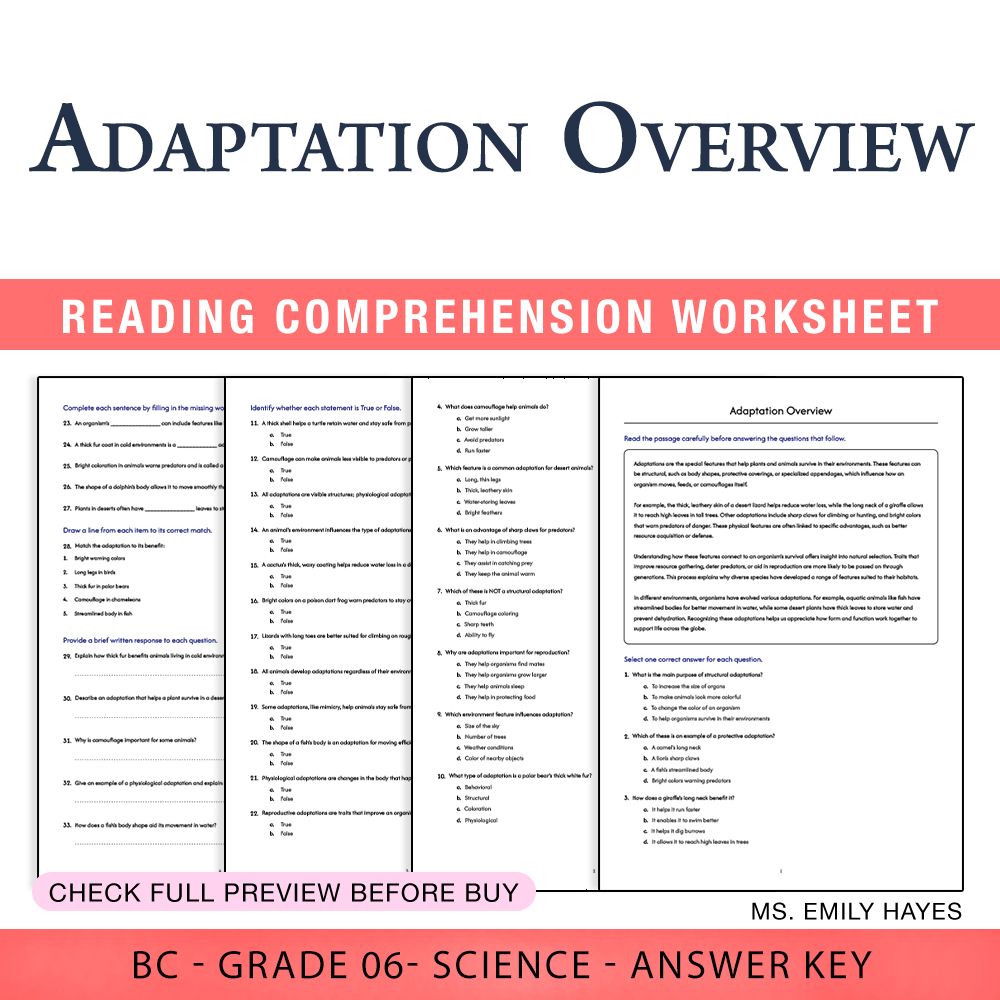
6th Grade Science | Adaptation Overview Worksheet (PDF+ Answer Key)
Created byCopper Leaf ClassroomLearning Objectives
- Identify different types of structural adaptations and understand their functions.
- Explain how adaptations help organisms survive and thrive in their environments.
- Describe relationships between specific features and their advantages for species.
Also included in: Grade 6 Science BC | Human Body Systems & Adaptations (PDF+ Answer Keys) +1 more
Instant download
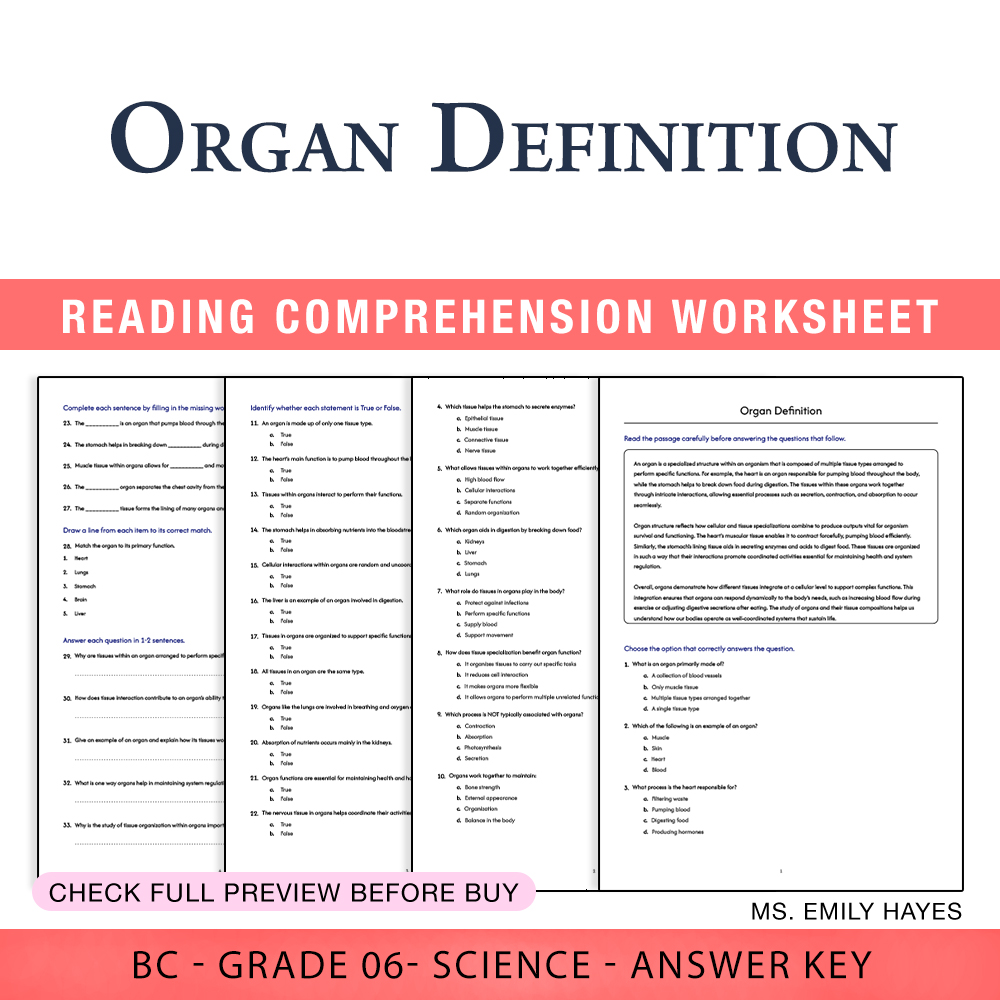
6th Grade Science | Organ Definition Worksheet (PDF + Answer Key)
Created byCopper Leaf ClassroomLearning Objectives
- Understand the structure and function of organs within the human body.
- Identify different tissues that compose organs and their roles.
- Explain how tissues work together in organs to perform specific functions.
Also included in: Grade 6 Science BC | Human Body Systems & Adaptations (PDF+ Answer Keys) +1 more
Instant download
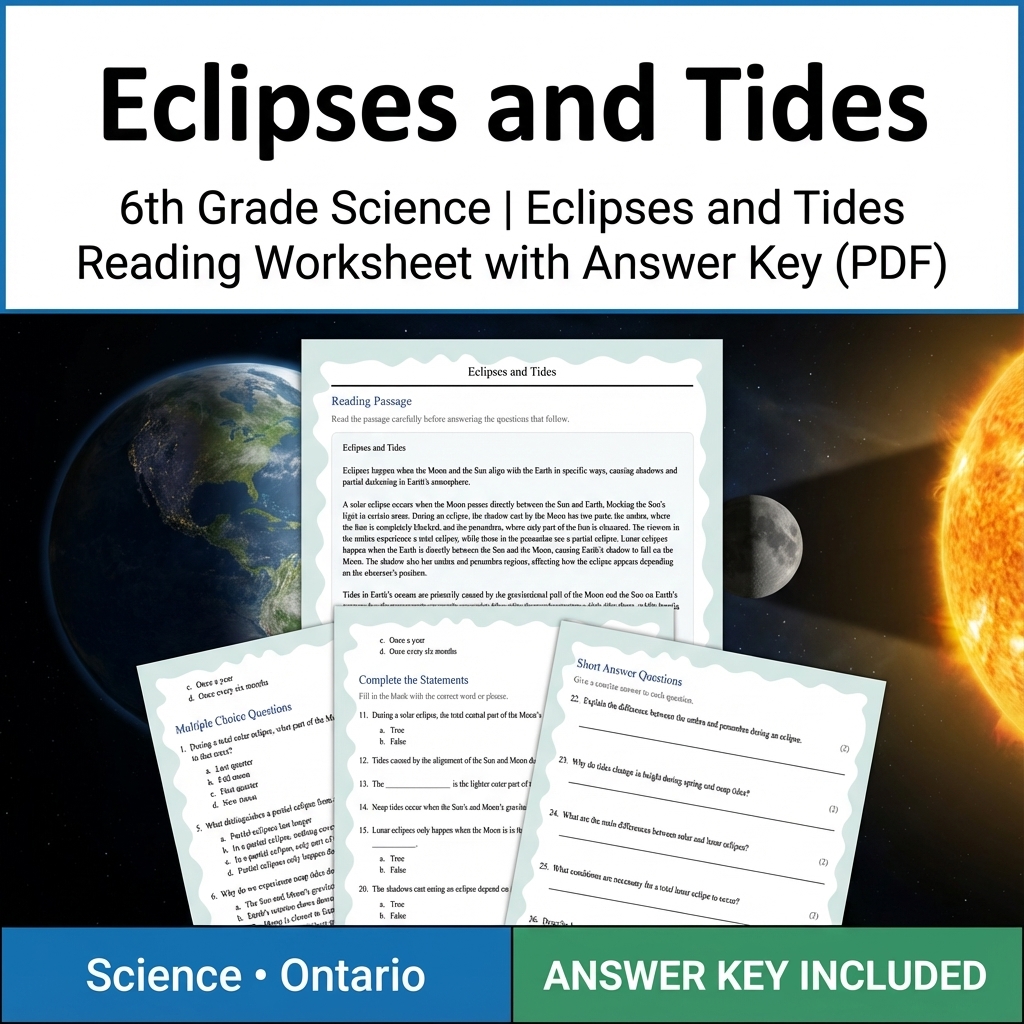
6th Grade Science | Eclipses and Tides Reading Worksheet with Answer Key (PDF)
JCreated byJ.S SheetsLearning Objectives
- Explain the geometric alignment causes of solar and lunar eclipses, including the concepts of umbra and penumbra.
- Describe the gravitational forces between the Earth, Moon, and Sun that produce ocean tides, including spring and neap tides.
Also included in: Grade 6 Science Unit | Solar System, Satellites & Celestial Mechanics Worksheet +1 more
Instant download
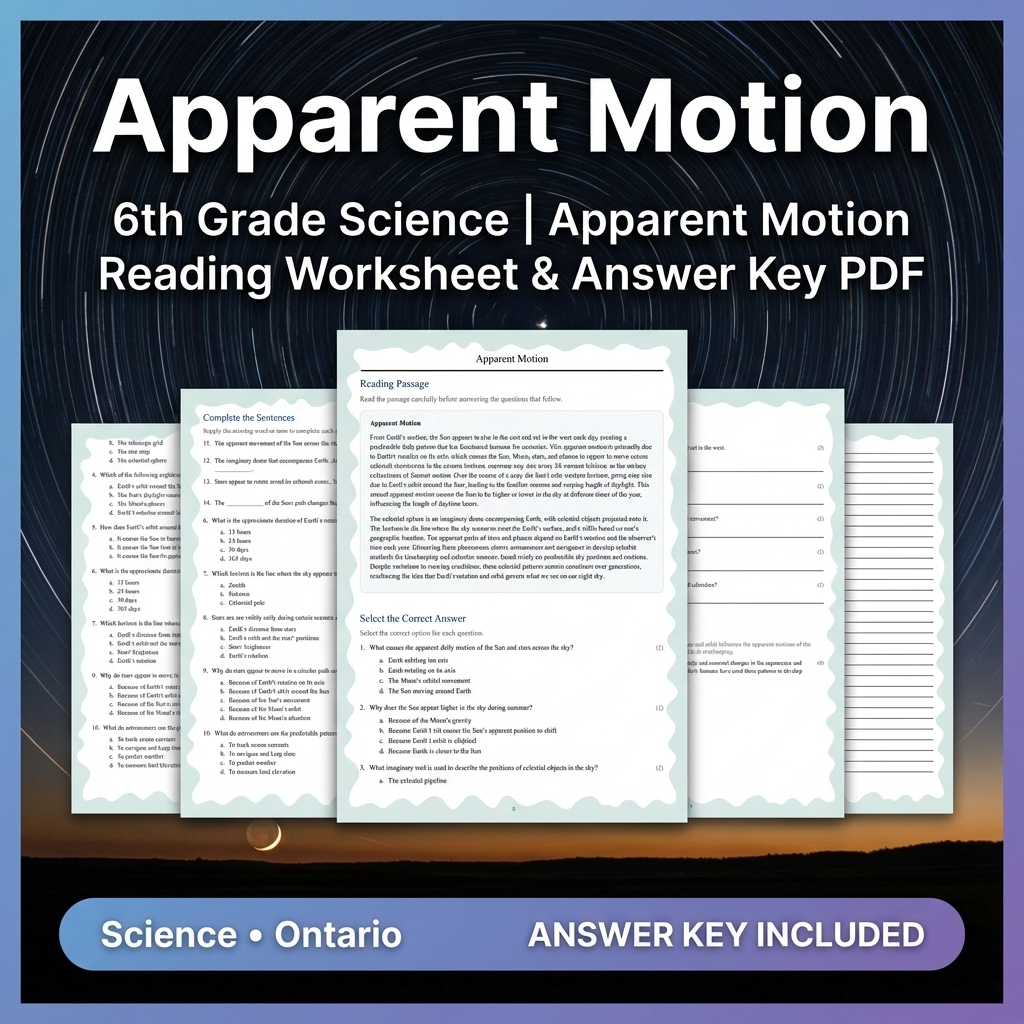
6th Grade Science | Apparent Motion Reading Worksheet & Answer Key PDF
JCreated byJ.S SheetsLearning Objectives
- Understand the daily and annual apparent movements of the Sun, Moon, and stars as seen from Earth.
- Explain how Earth's rotation and orbit influence the apparent positions of celestial objects in the sky.
- Describe concepts such as diurnal rising and setting, celestial sphere, and horizon as they relate to sky observations.
Also included in: Grade 6 Science Unit | Solar System, Satellites & Celestial Mechanics Worksheet +1 more
Instant download
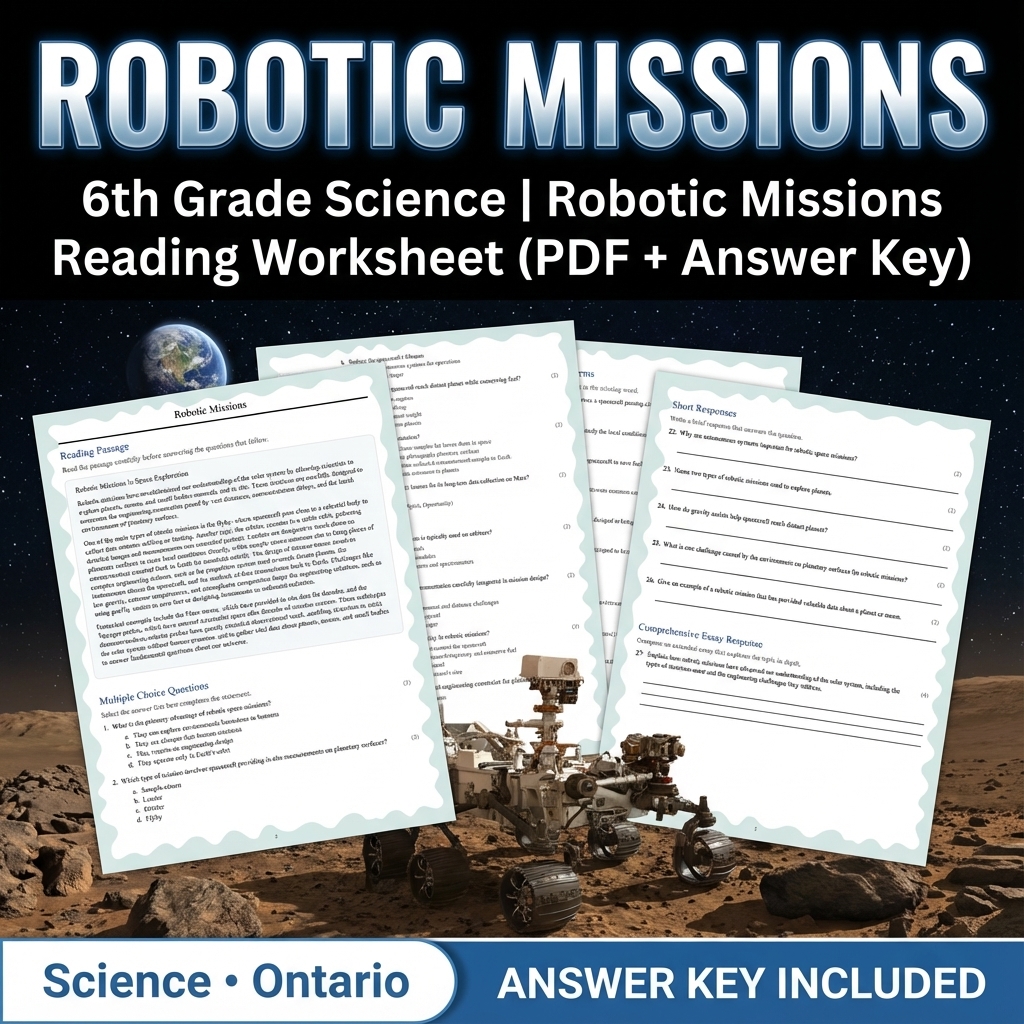
6th Grade Science | Robotic Missions Reading Worksheet (PDF + Answer Key)
JCreated byJ.S SheetsLearning Objectives
- Understand different types of robotic space missions such as flyby, orbiter, lander, and sample-return.
- Explain engineering constraints involved in planetary exploration, including communication delays and environmental conditions.
- Describe how mission design addresses propulsion, instrumentation, and data transmission challenges.
Also included in: Grade 6 Science Unit | Solar System, Satellites & Celestial Mechanics Worksheet +1 more
Instant download
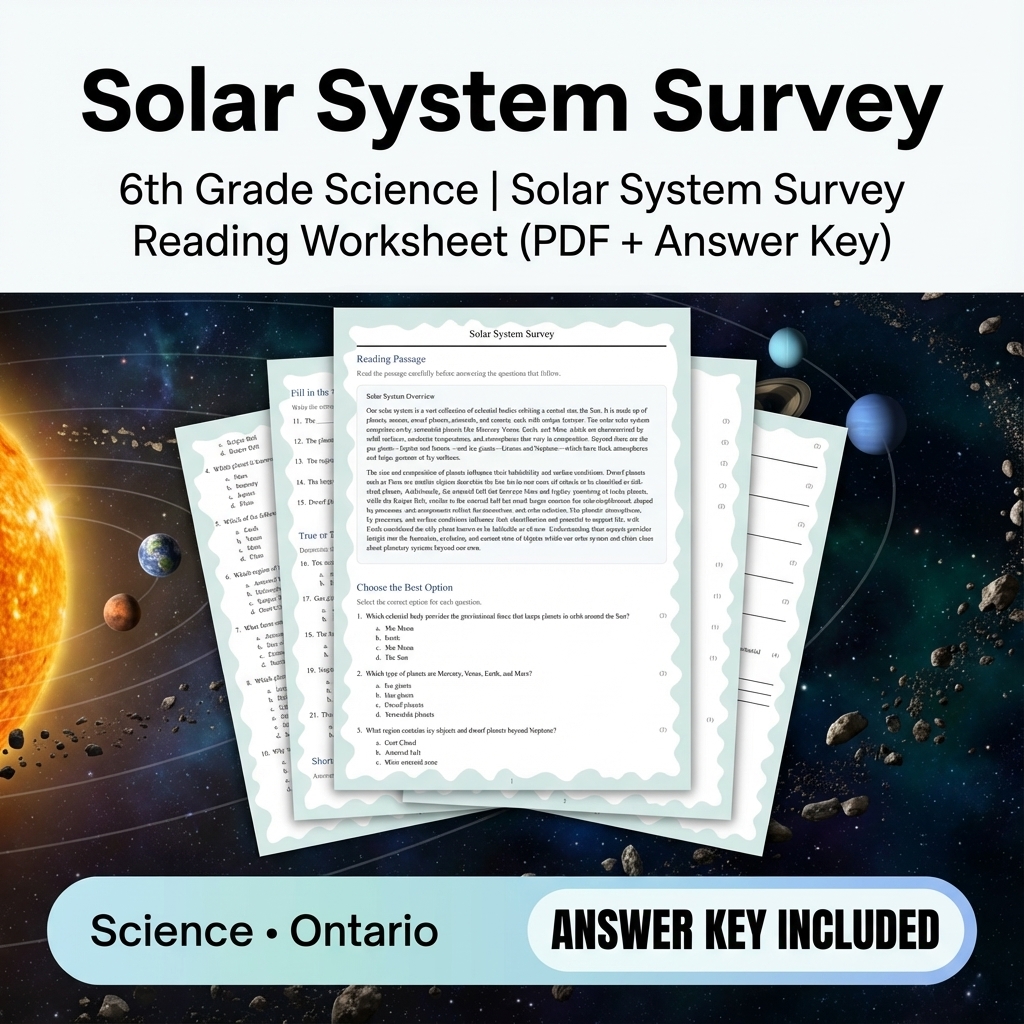
6th Grade Science | Solar System Survey Reading Worksheet (PDF + Answer Key)
JCreated byJ.S SheetsLearning Objectives
- Understand the major components and types of planets in the solar system.
- Differentiate between terrestrial and gas giant planets based on their characteristics.
- Recognize the features of dwarf planets, asteroids, Kuiper Belt objects, and planetary atmospheres.
Also included in: Grade 6 Science Unit | Solar System, Satellites & Celestial Mechanics Worksheet +1 more
Instant download
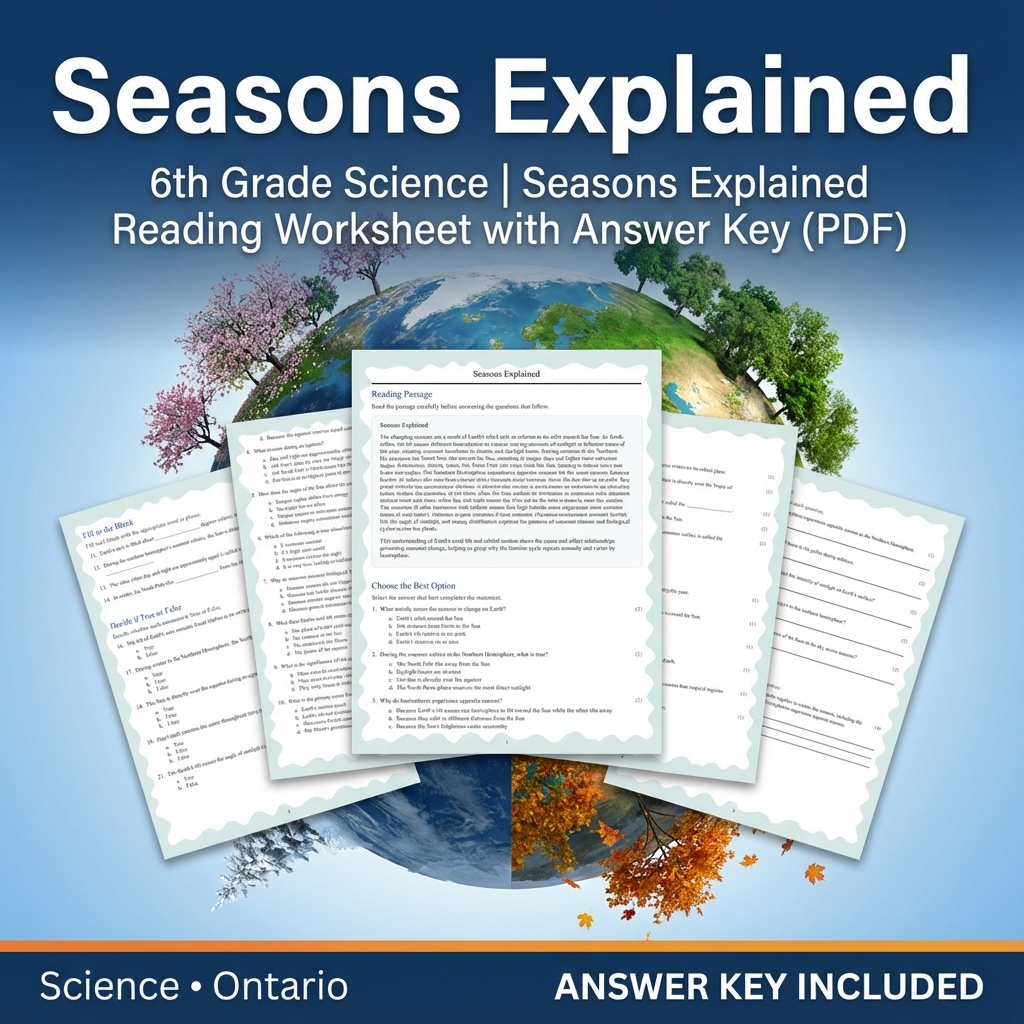
6th Grade Science | Seasons Explained Reading Worksheet with Answer Key (PDF)
JCreated byJ.S SheetsLearning Objectives
- Understand how Earth's axial tilt and orbital motion cause seasonal changes.
- Explain why hemispheres experience opposite seasons.
- Describe how the angle of sunlight affects day length and solar energy distribution.
Also included in: Grade 6 Science Unit | Solar System, Satellites & Celestial Mechanics Worksheet +1 more
Instant download
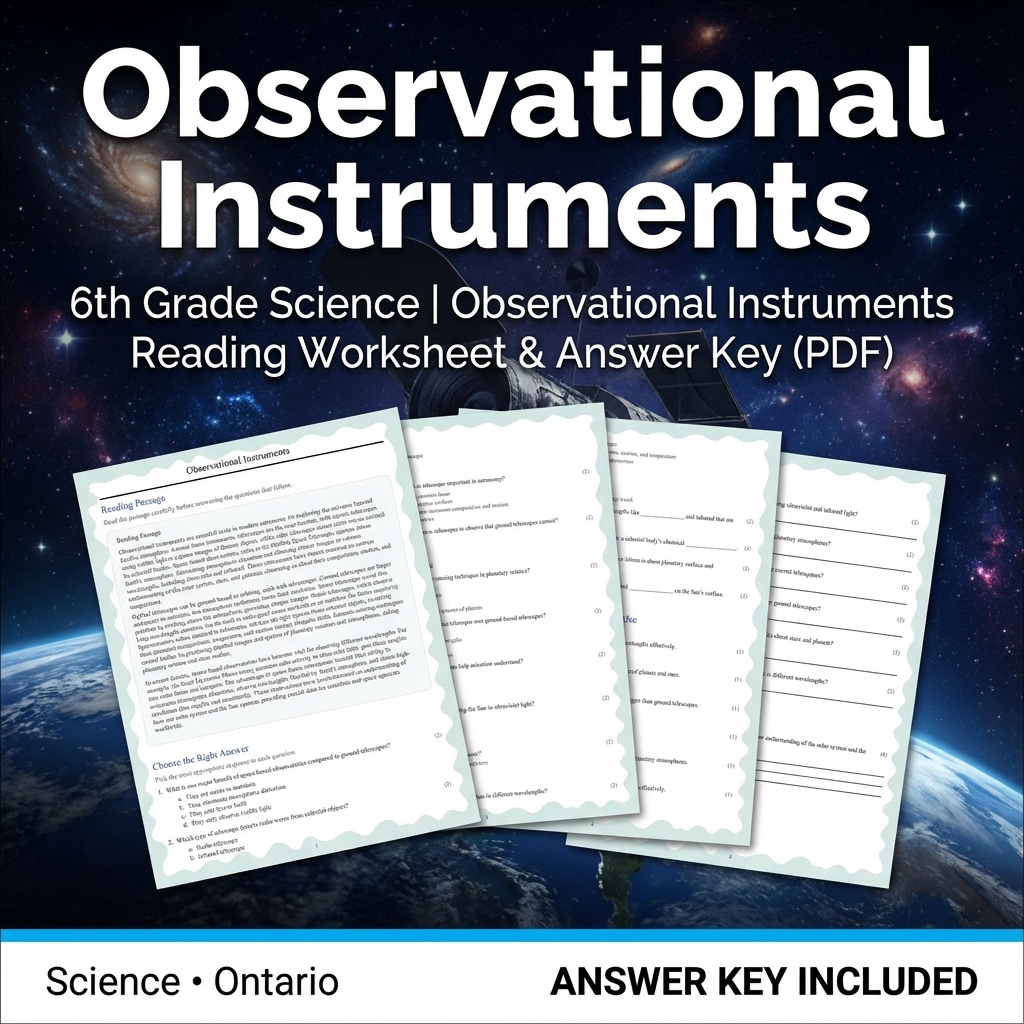
6th Grade Science | Observational Instruments Reading Worksheet & Answer Key
JCreated byJ.S SheetsLearning Objectives
- Understand the major types of observational instruments used in astronomy
- Identify the advantages of space-based instruments over ground-based telescopes
- Explain how different wavelengths help scientists study planetary surfaces, atmospheres, and the Sun
Also included in: Grade 6 Science Unit | Solar System, Satellites & Celestial Mechanics Worksheet +1 more
Instant download
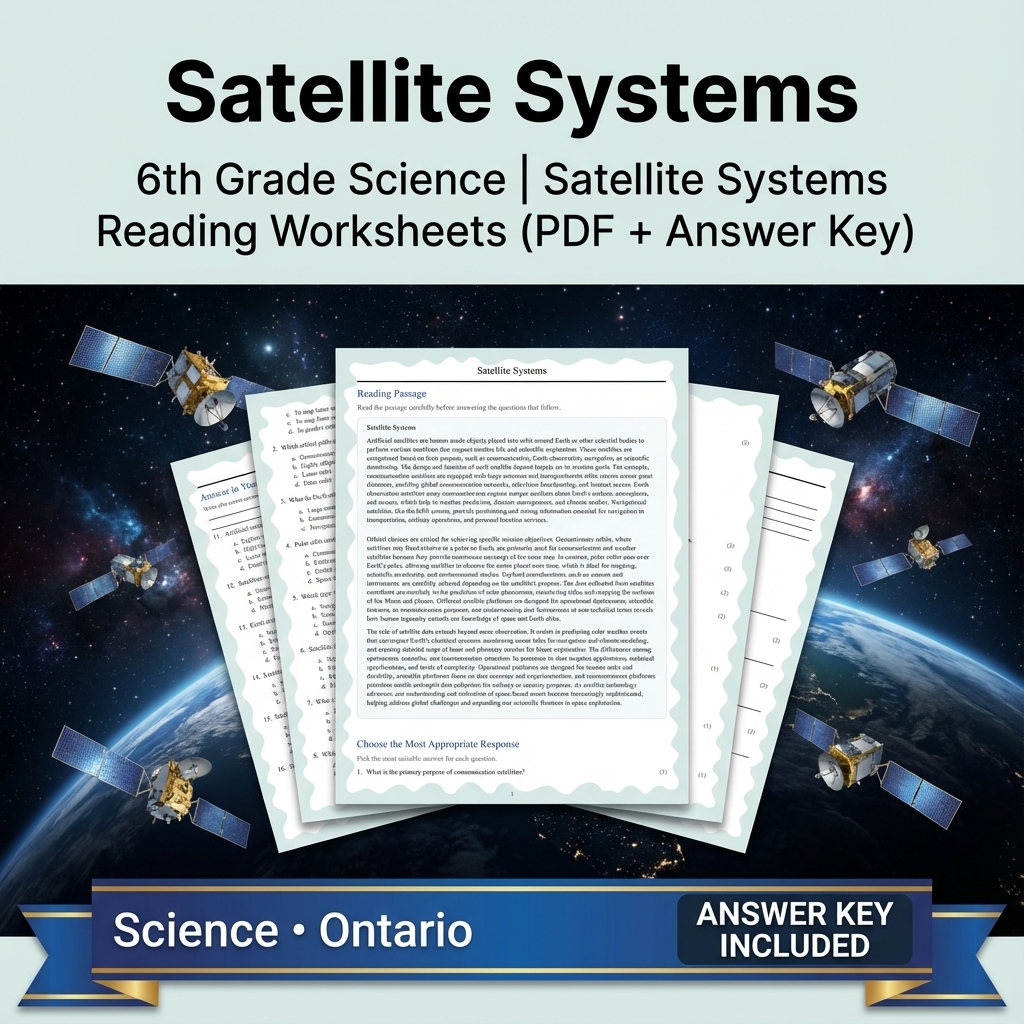
6th Grade Science | Satellite Systems Reading Worksheets (PDF + Answer Key)
JCreated byJ.S SheetsLearning Objectives
- Understand the functions and categories of artificial satellites.
- Identify different orbital choices and their purposes.
- Explain how satellite data contribute to Earth observation and space science.
Also included in: Grade 6 Science Unit | Solar System, Satellites & Celestial Mechanics Worksheet +1 more
Instant download
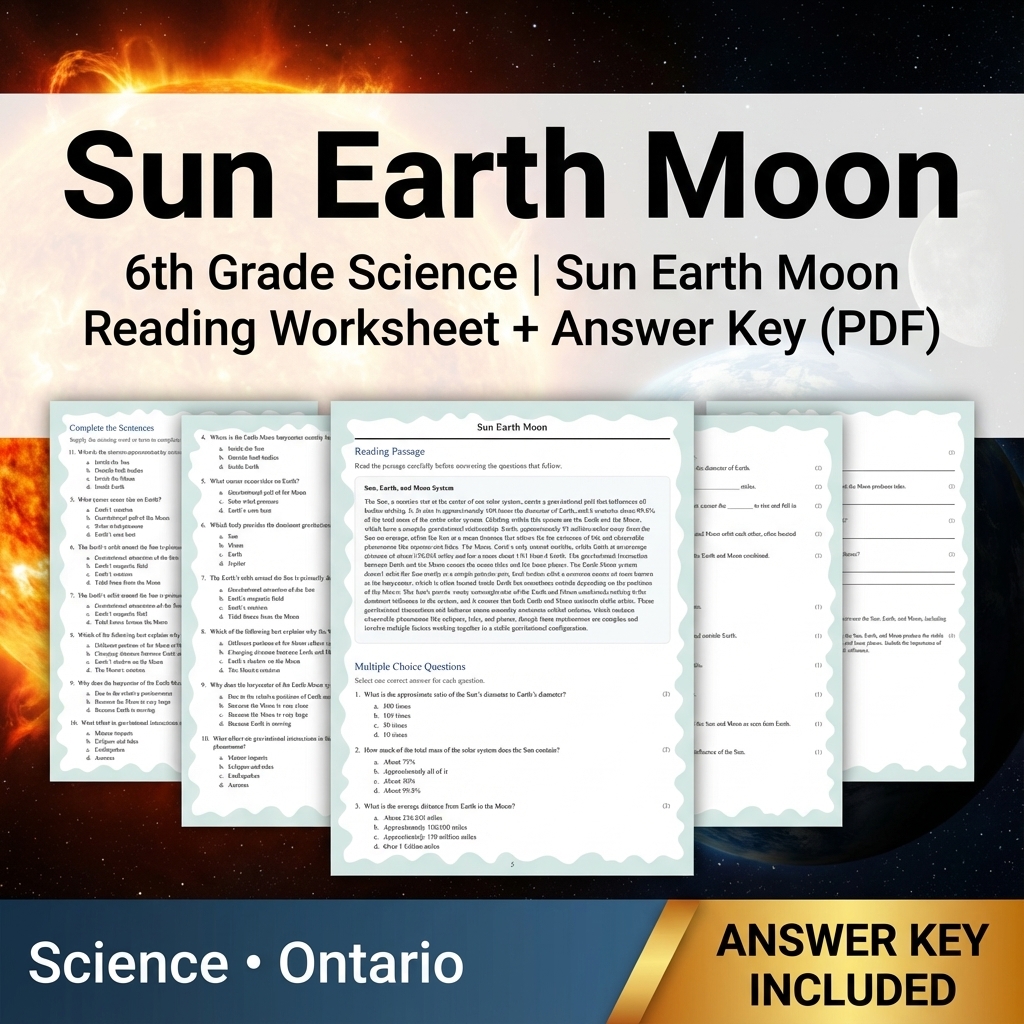
6th Grade Science | Sun Earth Moon Reading Worksheet + Answer Key (PDF)
JCreated byJ.S SheetsLearning Objectives
- Understand the relative sizes, masses, and distances among the Sun, Earth, and Moon.
- Explain the gravitational interactions that influence the orbital relationships of the Sun, Earth, and Moon.
- Describe the Earth's barycenter and the role of the Sun as the dominant gravitational influence in the system.
Also included in: Grade 6 Science Unit | Solar System, Satellites & Celestial Mechanics Worksheet +1 more
Instant download
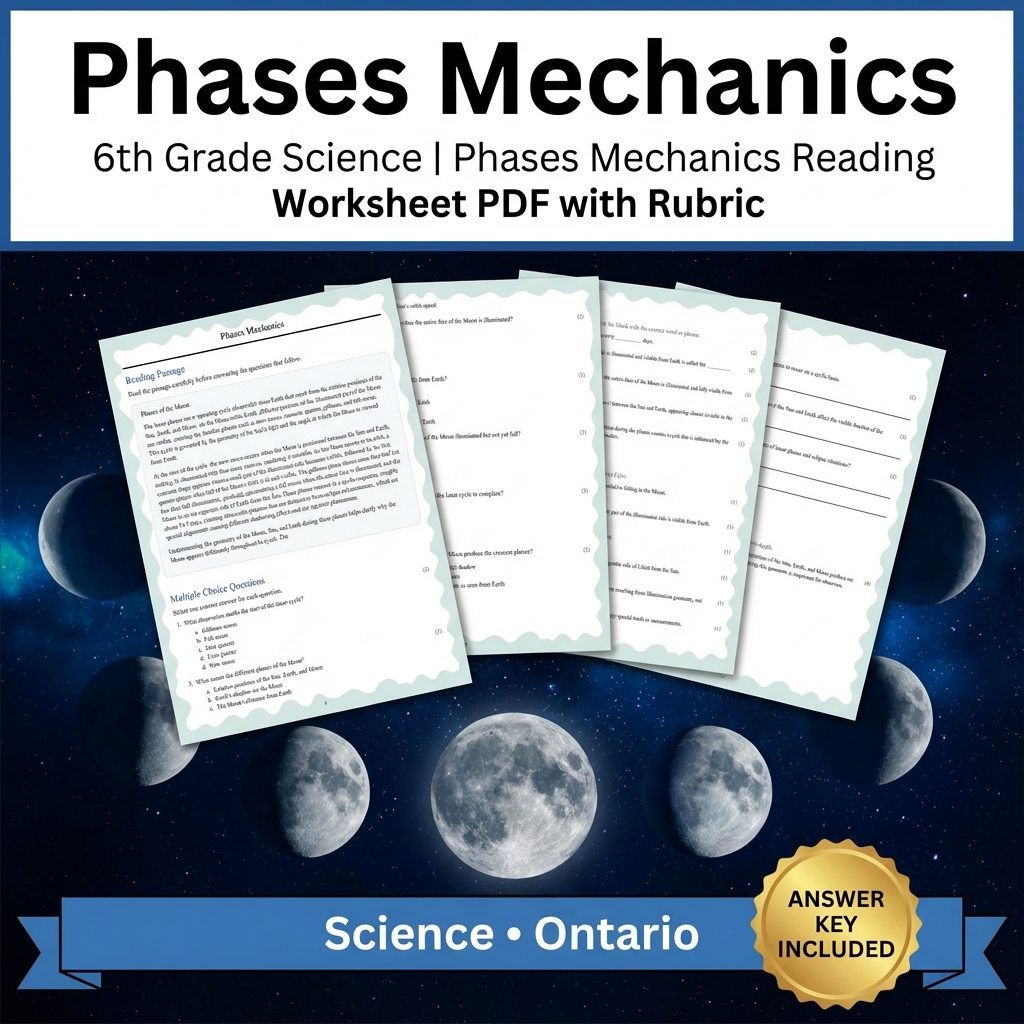
6th Grade Science | Phases Mechanics Reading Worksheet PDF with Rubric
JCreated byJ.S SheetsLearning Objectives
- Explain the sequence and geometry of lunar phases based on the relative positions of the Sun, Earth, and Moon.
- Describe the different visible fractions of the Moon during its phases and the illumination geometry responsible for these changes.
- Distinguish between phase appearance and eclipse conditions as observed from Earth.
Also included in: Grade 6 Science Unit | Solar System, Satellites & Celestial Mechanics Worksheet +1 more
Instant download

Energy Flow Worksheet | NGSS Grade 6 Science Practice for Mastery
JCreated byJ.S SheetsLearning Objectives
- Describe the components and structure of food webs, including producers, consumers, and decomposers.
- Explain how energy diminishes across trophic levels and the concept of energy pyramids.
- Understand the roles of photosynthesis and cellular respiration in energy transfer.
Also included in: Grade 6 Ecosystem Interactions Science Lesson Bundle Worksheet Set – NGSS +1 more
Instant download
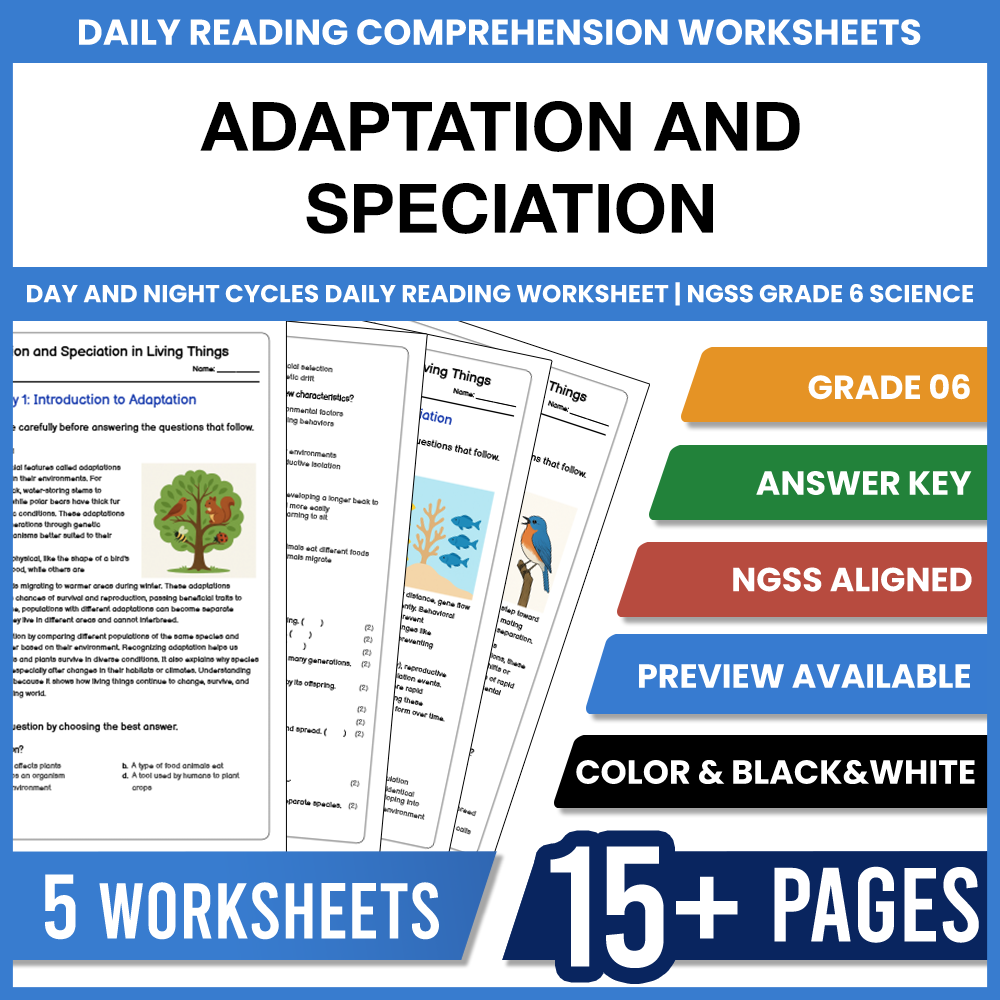
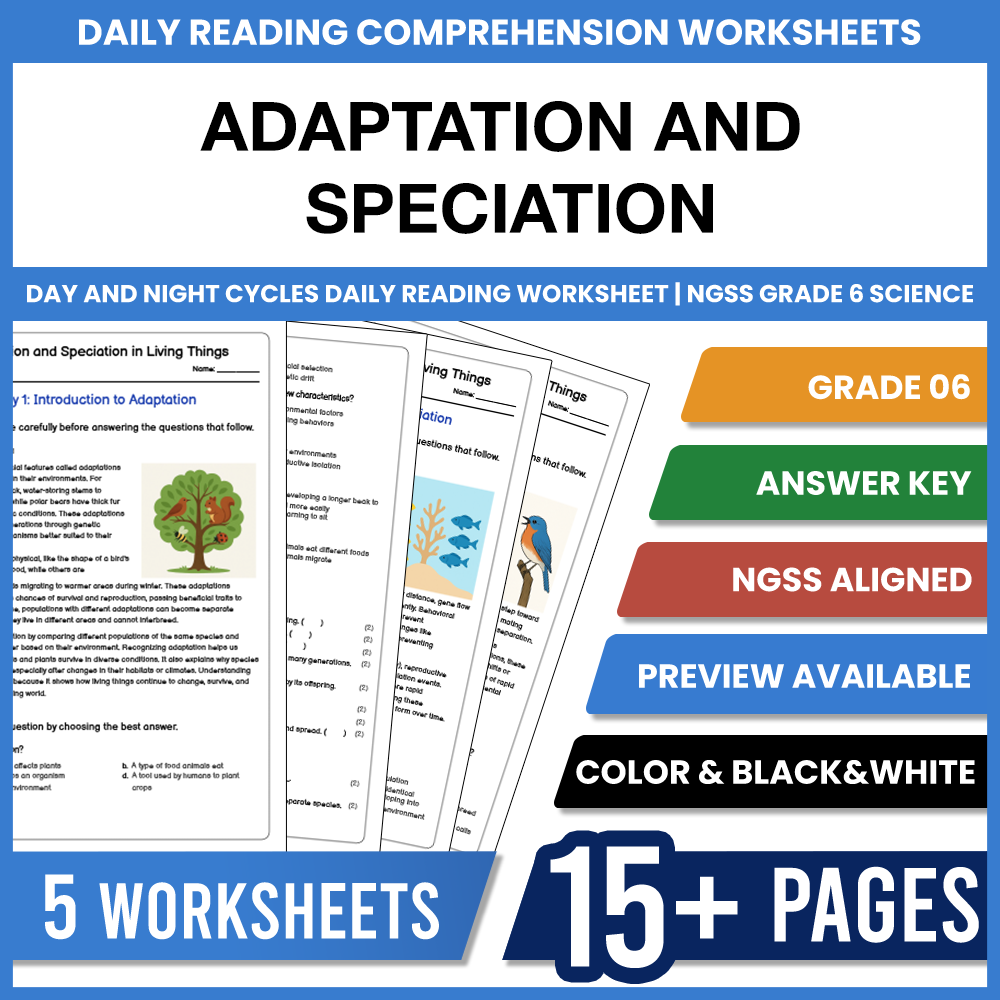
Grade 6 Science – Adaptation & Speciation | Daily Reading Worksheet
 Created byElena Brooks
Learning Objectives
- Understand the concepts of adaptation and speciation
- Identify examples of adaptation in animals and plants
- Learn how populations diverge into new species
Also included in: Grade 6 Science Biological Evolution Worksheet Bundle | NGSS Standards +1 more
Instant download
Grade 6 Science – Fossil Patterns & Uncovering the Past | Daily Reading
Created byElena BrooksLearning Objectives
- Understand how fossils form and what they reveal about ancient life.
- Identify patterns of origin, diversification, and extinction in the fossil record.
- Analyze stratigraphic sequences and morphological transitions in fossils.
Also included in: Grade 6 Science Biological Evolution Worksheet Bundle | NGSS Standards +1 more
Instant download
Browse more categories
About Grade 6 Worksheets
Browse 8,578 printable Grade 6 worksheets across math, ELA, science, and social studies — each a ready-to-print PDF with optional answer keys.
MyTeachingSheets worksheets are made by real teacher-authors and checked before they go live. Download any as a print-ready PDF for lessons, homework, or independent practice — most include answer keys, and previews are always free.