
Grade 6 Worksheets
8,578 grade resources
Grade 6 Science – Model to Explain Change | Daily Reading Worksheet
 Created byBright Mind Resources
Learning Objectives
- Understand the particle model and how it explains physical changes.
- Identify the differences between physical and chemical changes using particle models.
- Recognize examples of physical changes in everyday life.
Also included in: Grade 6 Matter Science Daily Reading Worksheets Lesson Bundle | CA Standards +1 more
Instant download
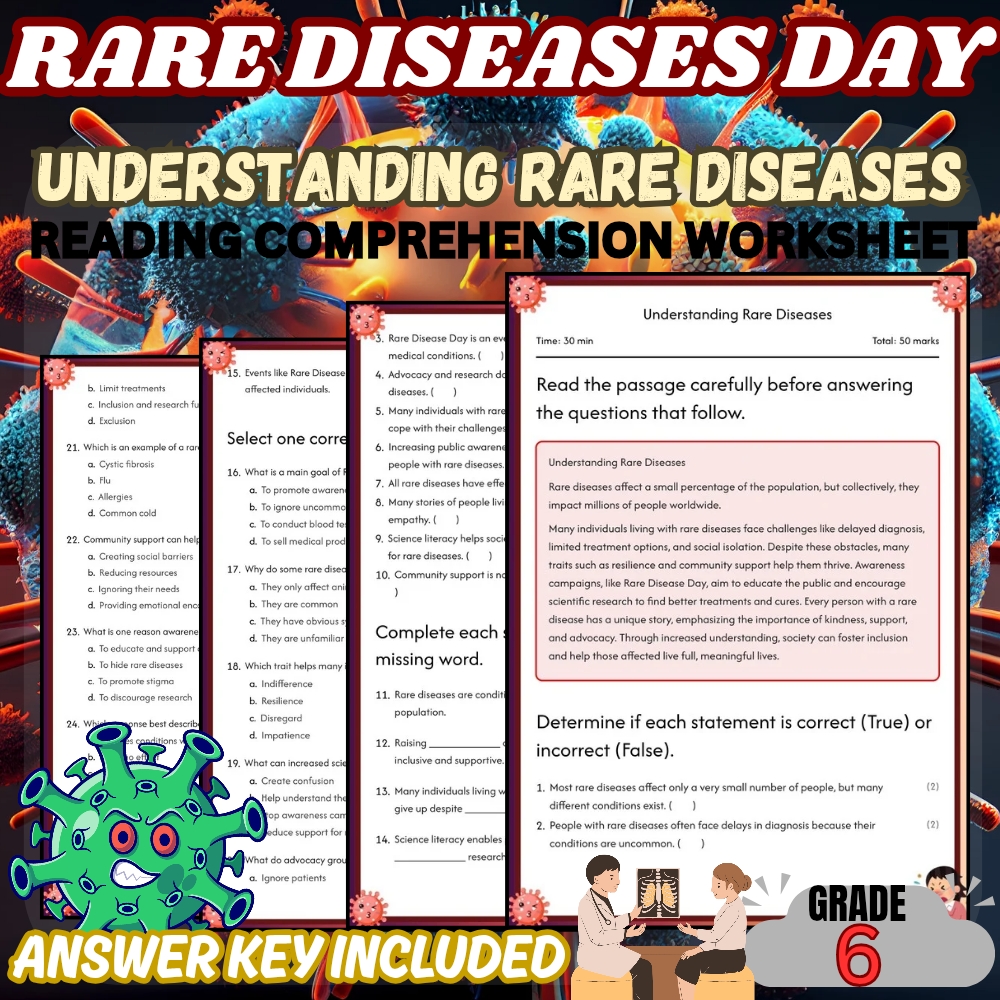
Grade 6 Rare disease day for Understanding Rare Diseases | PDF + Answer Key
 Created byShaNova Worksheets
Learning Objectives
- Introduce students to the concept of rare diseases and their impact on individuals and communities.
- Develop awareness of health-related vocabulary associated with medical conditions.
- Encourage empathy and understanding of the challenges faced by people living with rare diseases.
Instant download
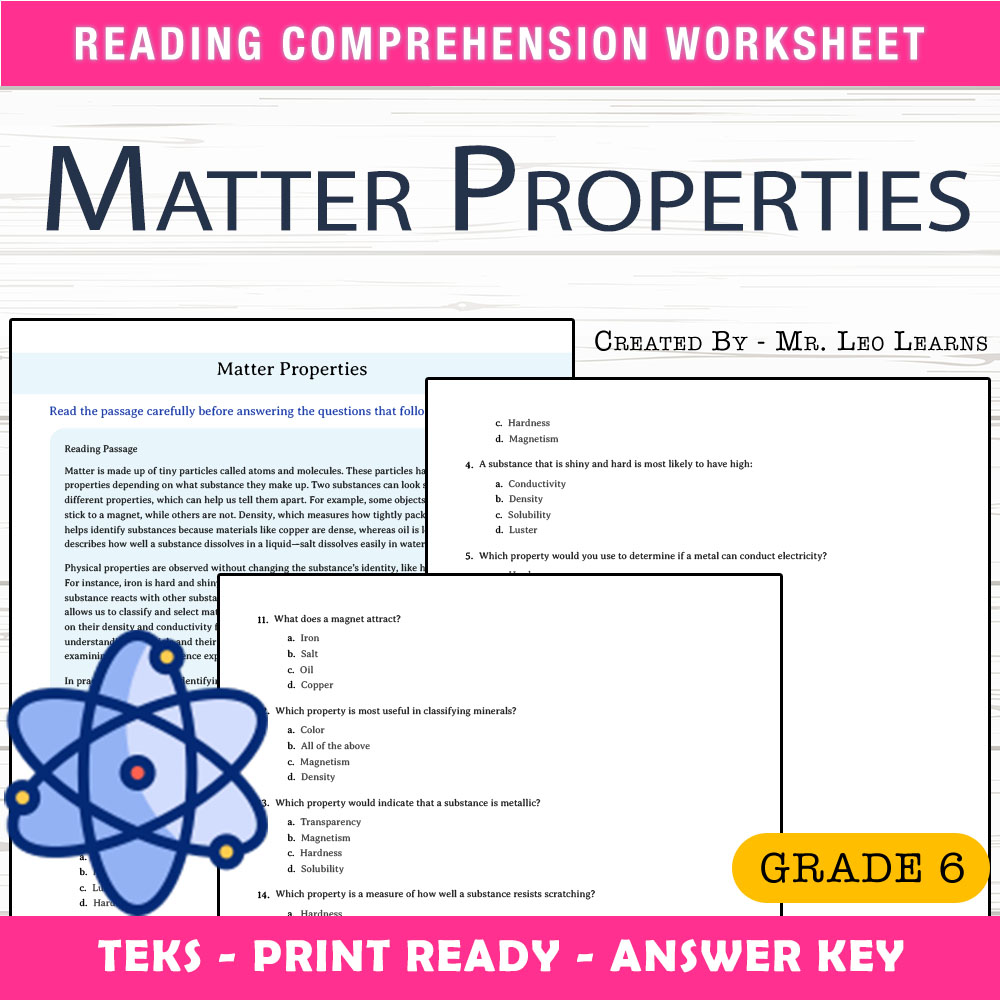
Grade 6 Science – Matter Properties Worksheet for Mastery
 Created byThe Resource Hub
Learning Objectives
- Understand the physical and chemical properties used to identify substances.
- Describe and compare properties such as density, solubility, magnetism, and conductivity.
- Relate observed properties to real-world examples like iron, salt, oil, and copper.
Also included in: Grade 6 Science Unit Bundle | States, Matter, Forces & Energy Mastery
Instant download
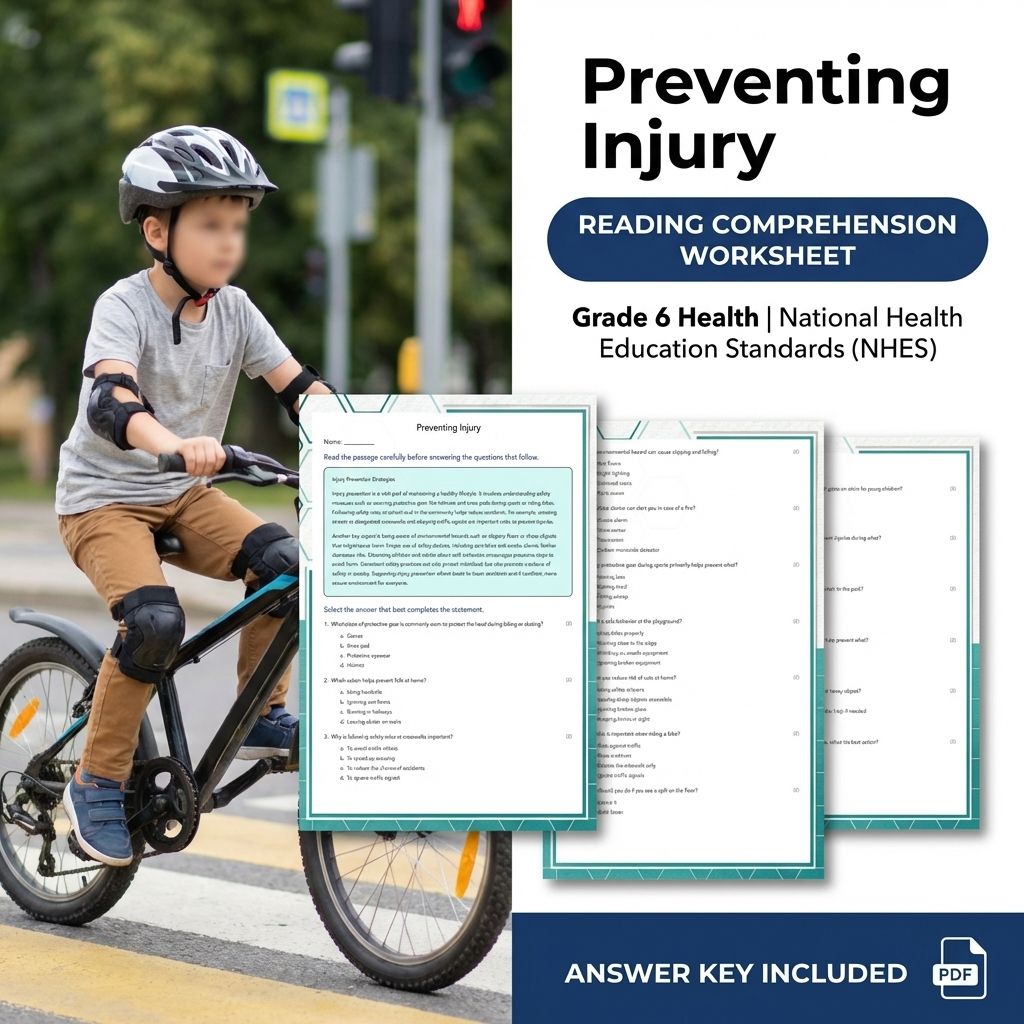
6th Grade Health | Preventing Injury Worksheet (PDF & Answer Key)
 Created bySkylark Worksheets
Learning Objectives
- Understand safety measures to prevent injuries in everyday life.
- Identify safe behaviors at home, school, and in the community.
- Learn the importance of protective gear and following safety rules.
Also included in: Grade 6 Health Unit | Disease Prevention & Safety Practices Worksheet Pack +1 more
Instant download
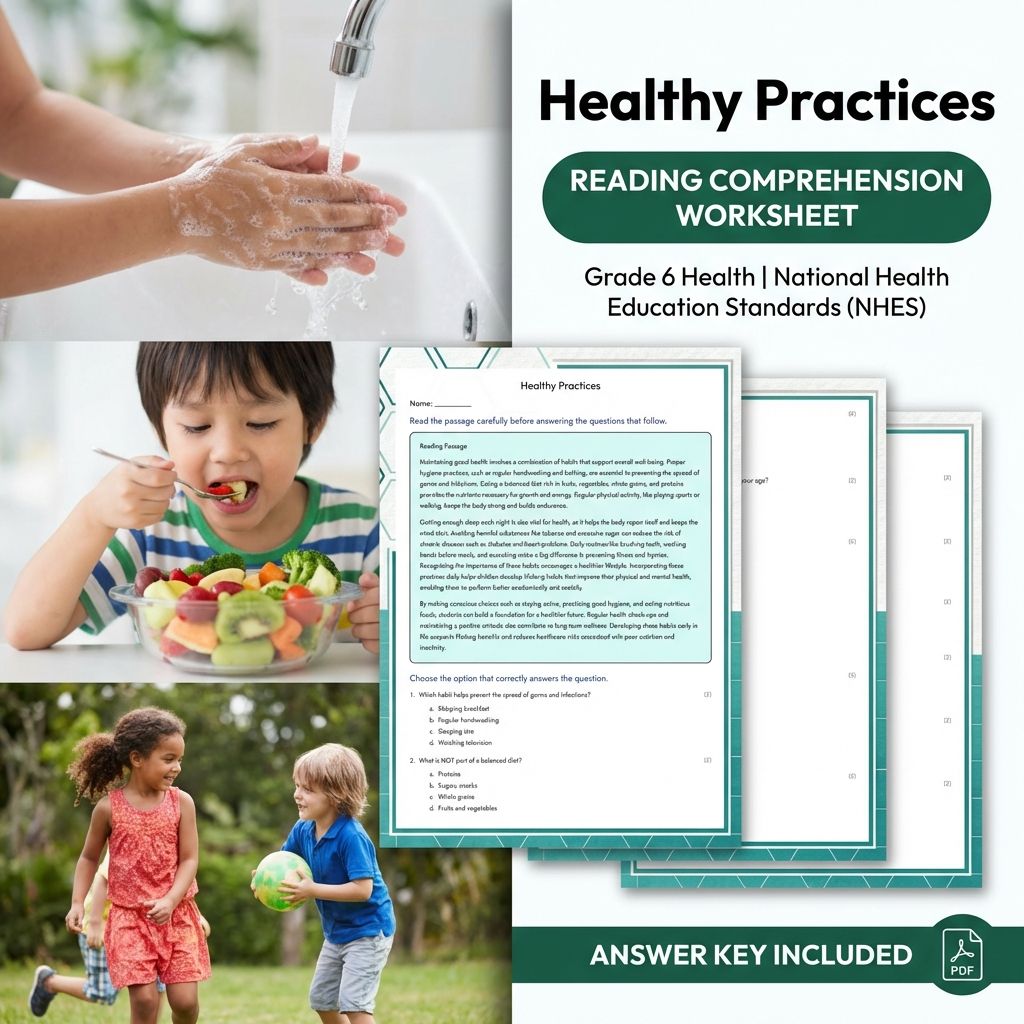
6th Grade Health | Healthy Practices Worksheet (Answer Key) for Student Success
Created bySkylark WorksheetsLearning Objectives
- Understand key habits for maintaining good health, such as hygiene, nutrition, and exercise.
- Identify daily routines that promote long-term well-being and prevent illness.
- Recognize the importance of proper sleep, handwashing, and healthy eating habits.
Also included in: Grade 6 Health Unit | Disease Prevention & Safety Practices Worksheet Pack +1 more
Instant download
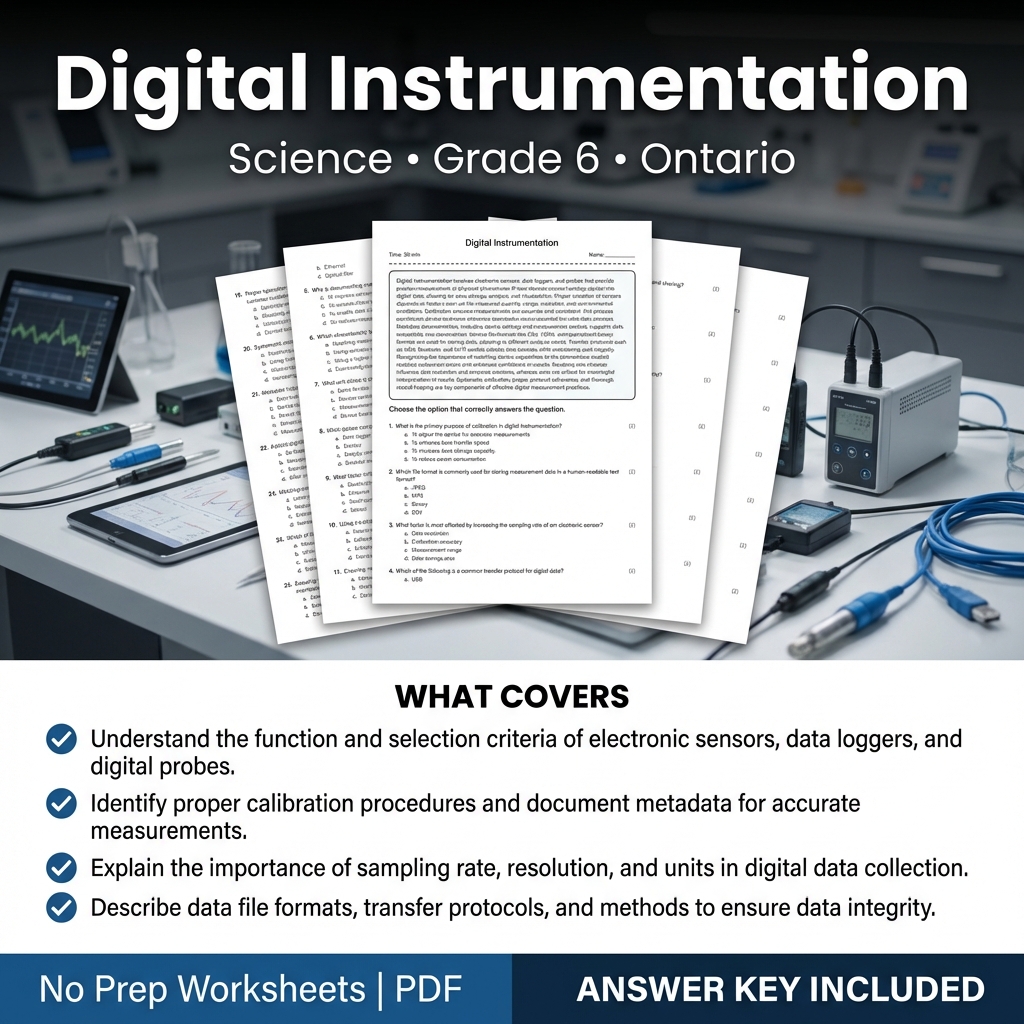
Grade 6 Science Worksheet on Digital Instrumentation – Standard Ontario
 Created byCoral Reef Learning
Learning Objectives
- Understand the function and selection criteria of electronic sensors, data loggers, and digital probes.
- Identify proper calibration procedures and document metadata for accurate measurements.
- Explain the importance of sampling rate, resolution, and units in digital data collection.
Instant download
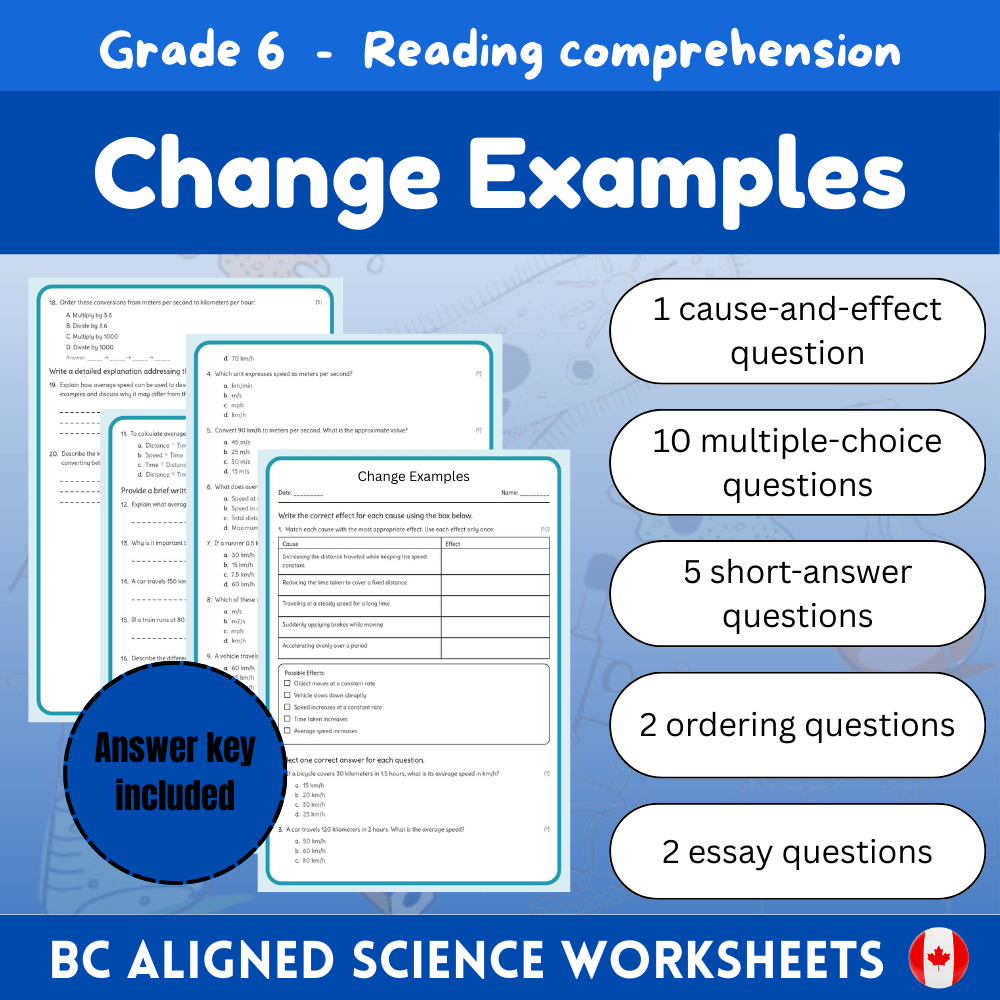
6th Grade Science | Change Examples Worksheet– Physical & Chemical Changes (PDF)
Created byBright Mind ResourcesLearning Objectives
- Understand the difference between physical and chemical changes.
- Identify examples of physical and chemical changes.
- Describe properties of substances that indicate a chemical change.
Instant download

Grade 6 Science | Organ Systems Overview Worksheet | BC Aligned
 Created byLumora Learning
Learning Objectives
- Identify the major organ systems in the human body and their principal functions.
- Describe how different organ systems interact to maintain homeostasis.
- Explain the processes carried out by various organ systems, such as digestion, transport, and defense.
Instant download

Grade 6 Science | Exploring Science Careers - Daily Reading Comprehension
Created byCoral Reef LearningLearning Objectives
- Understand the role of a biomedical technician
- Identify tasks involved in scientific data collection
- Recognize skills needed for science-related careers
Instant download
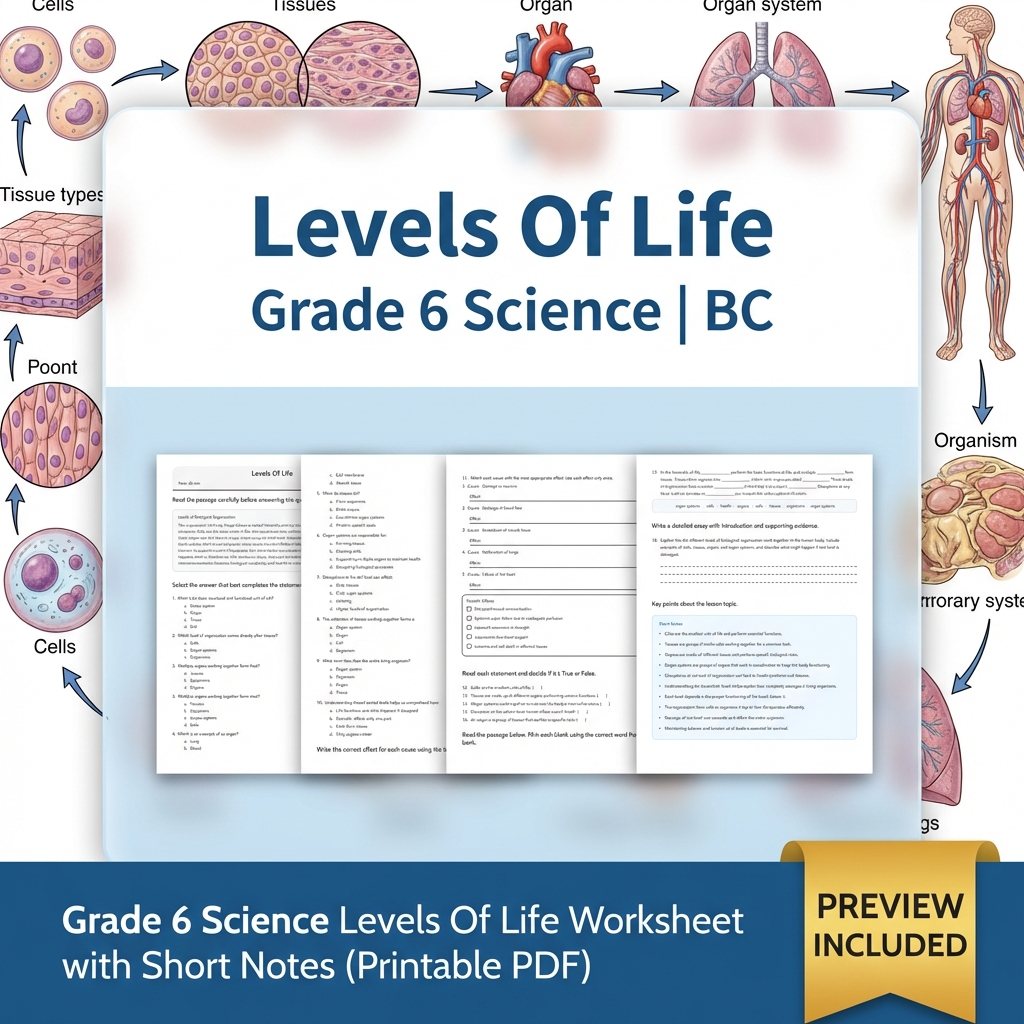
Grade 6 Science Levels Of Life Worksheet with Short Notes (Printable PDF)
 Created byMeadowlark Worksheets
Learning Objectives
- Understand the hierarchical levels of biological organization from cells to organisms.
- Recognize how tissues, organs, and organ systems work together to maintain life.
- Explain how disruptions at one level can affect higher levels of organization.
Also included in: Grade 6 Science | Multicellular Systems & Functions Unit Worksheet Bundle +1 more
Instant download
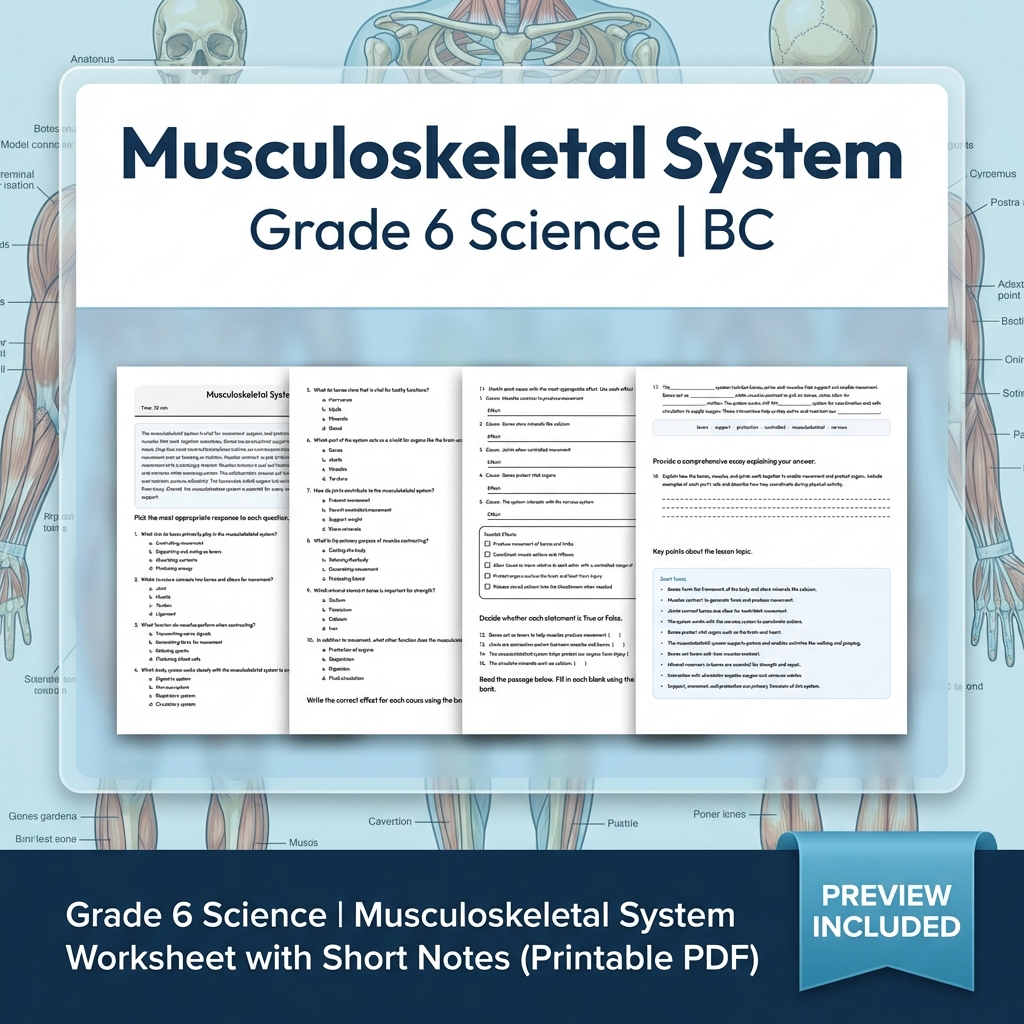
Grade 6 Science | Musculoskeletal System Worksheet with Short Notes (PDF)
Created byMeadowlark WorksheetsLearning Objectives
- Understand the components and functions of the musculoskeletal system.
- Identify how bones, muscles, and joints work together to support movement.
- Explain the interaction between the musculoskeletal system and other body systems.
Also included in: Grade 6 Science | Multicellular Systems & Functions Unit Worksheet Bundle +1 more
Instant download
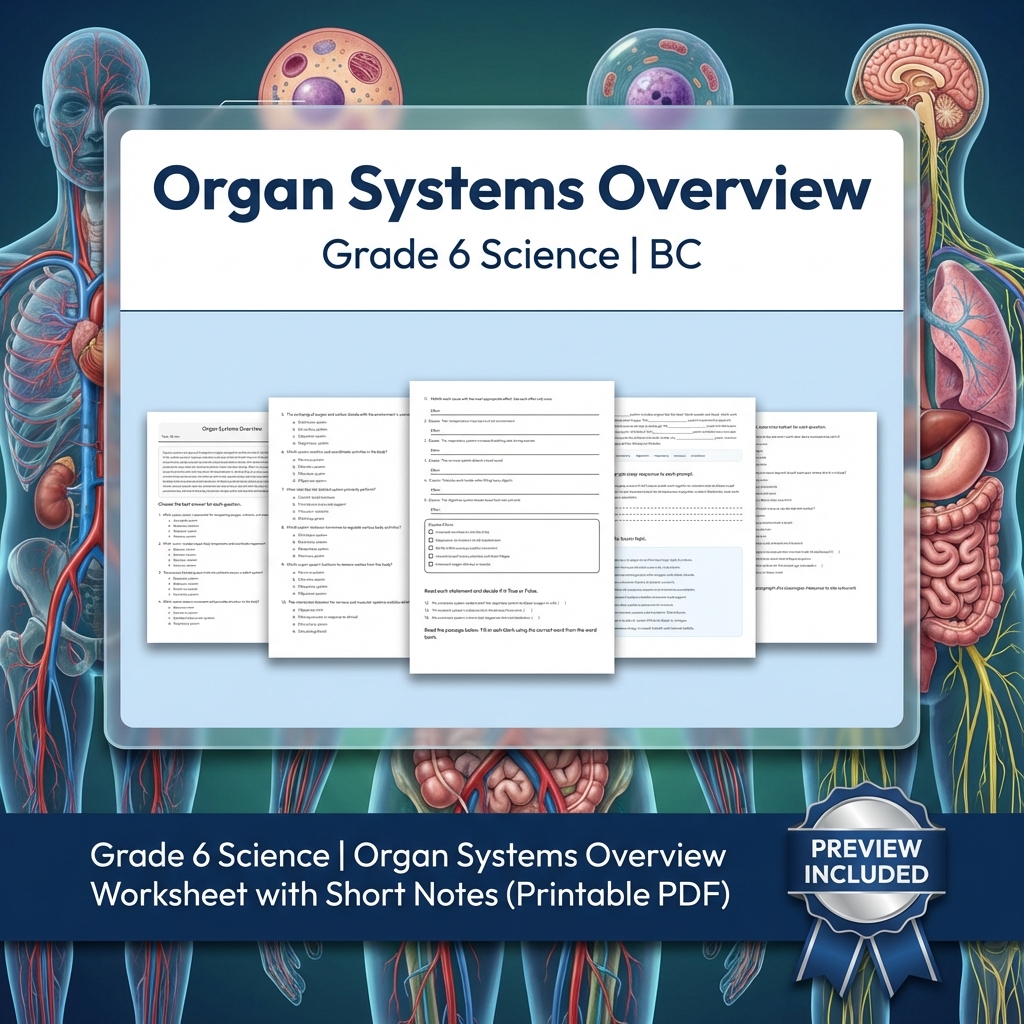
Grade 6 Science | Organ Systems Overview Worksheet with Short Notes (PDF)
Created byMeadowlark WorksheetsLearning Objectives
- Identify major organ systems and their principal functions.
- Describe how different organ systems interact to maintain internal balance.
- Explain the importance of system coordination for sustaining life.
Also included in: Grade 6 Science | Multicellular Systems & Functions Unit Worksheet Bundle +1 more
Instant download
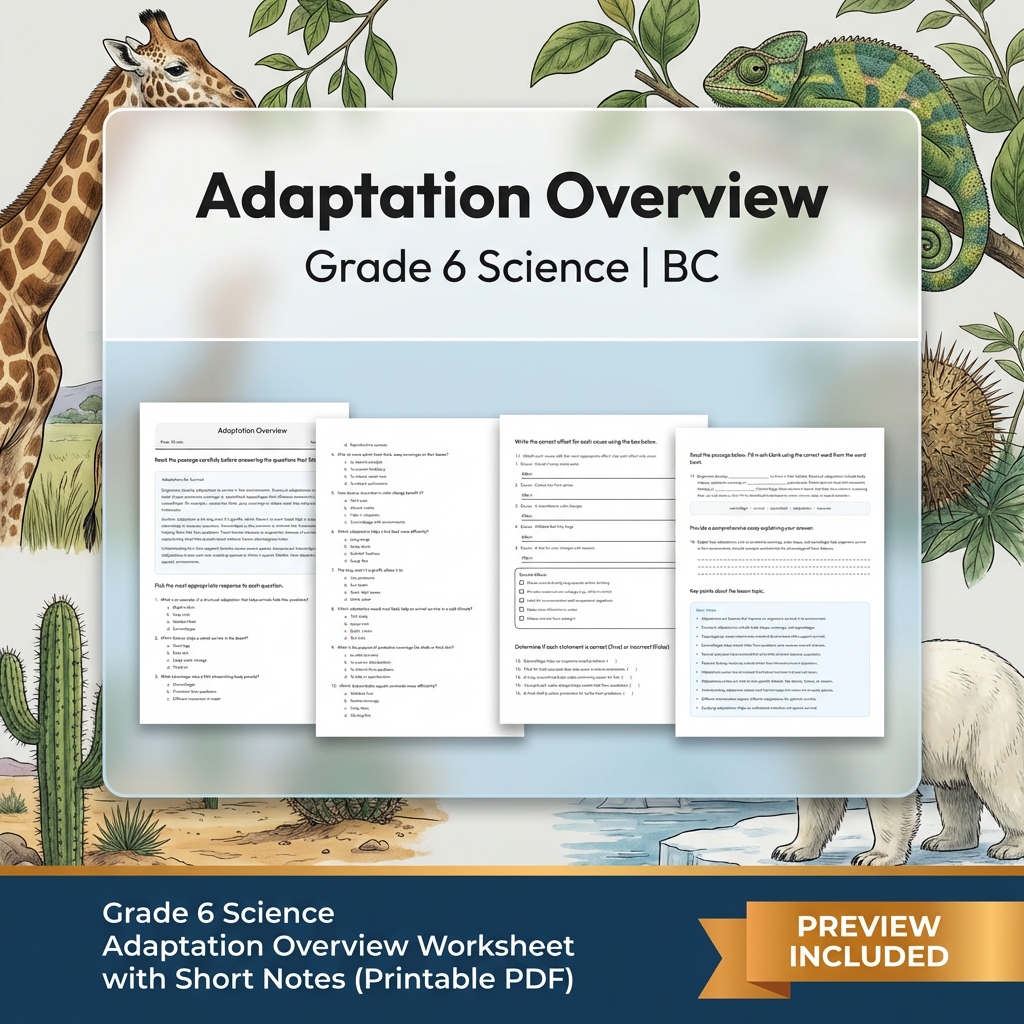
Grade 6 Science Adaptation Overview Worksheet with Short Notes (Printable PDF)
Created byMeadowlark WorksheetsLearning Objectives
- Understand the concept of structural and physiological adaptations in organisms.
- Link specific features to advantages in survival and resource acquisition.
- Explain how adaptations support survival in diverse habitats.
Also included in: Grade 6 Science | Multicellular Systems & Functions Unit Worksheet Bundle +1 more
Instant download
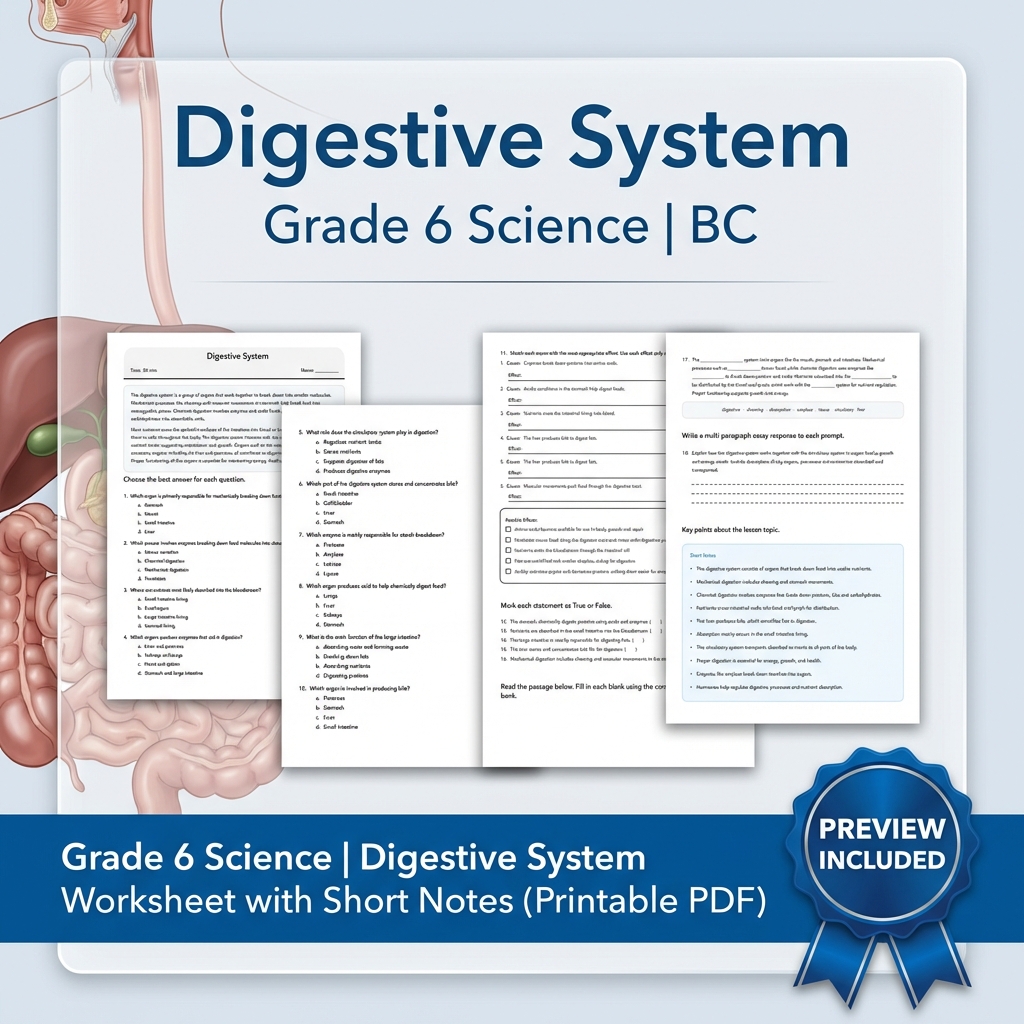
Grade 6 Science | Digestive System Worksheet with Short Notes (Printable PDF)
Created byMeadowlark WorksheetsLearning Objectives
- Understand the organs and processes involved in digestion.
- Identify how enzymes and acids chemically break down food.
- Explain how nutrients are absorbed into the blood and lymph.
Also included in: Grade 6 Science | Multicellular Systems & Functions Unit Worksheet Bundle +1 more
Instant download
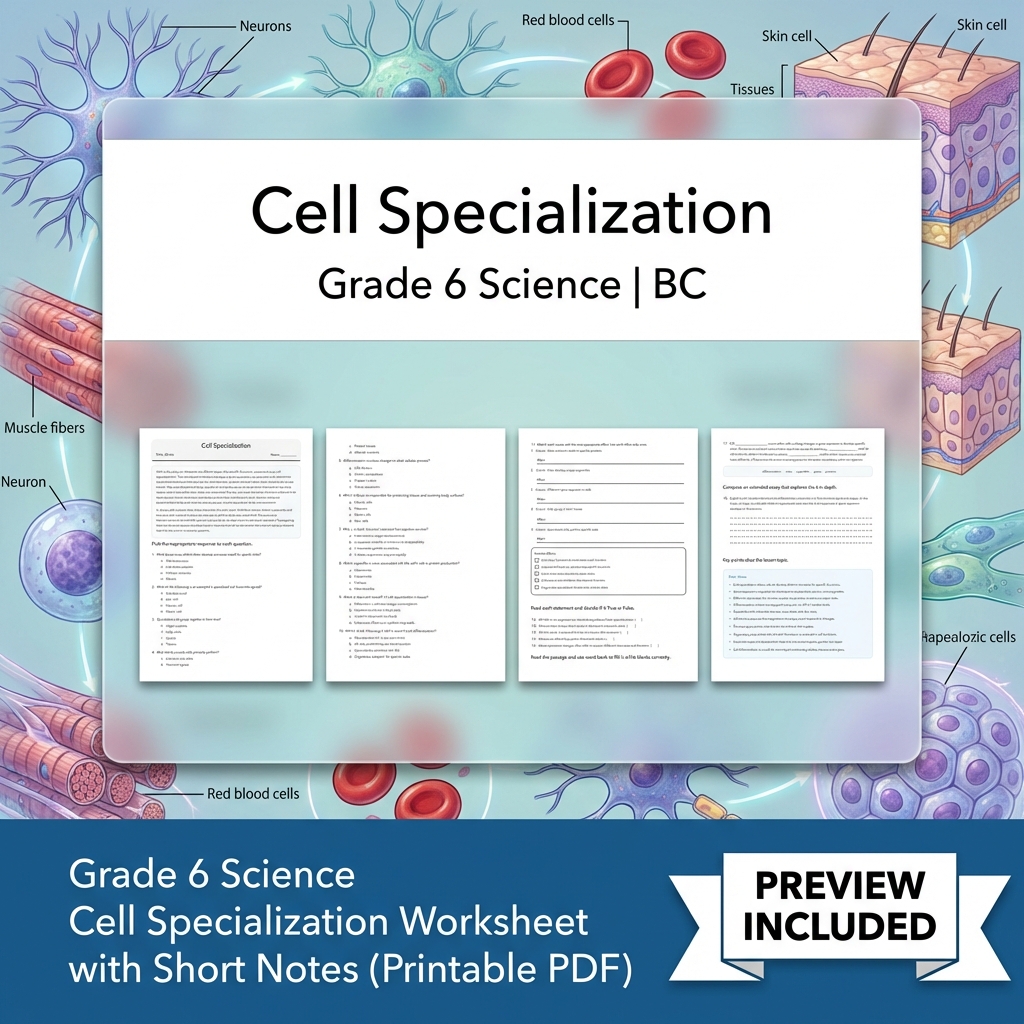
Grade 6 Science Cell Specialization Worksheet with Short Notes (Printable PDF)
Created byMeadowlark WorksheetsLearning Objectives
- Understand the concept of cell specialization and its role in the body.
- Identify different types of specialized cells and their functions.
- Explain how differentiation leads to different cell roles in tissues and organs.
Also included in: Grade 6 Science | Multicellular Systems & Functions Unit Worksheet Bundle +1 more
Instant download
Grade 6 Science | Organ Definition Worksheet with Short Notes (Printable PDF)
Created byMeadowlark WorksheetsLearning Objectives
- Define what an organ is and explain its role in the human body.
- Identify different tissues that make up organs and their functions.
- Describe how tissue interactions within organs enable vital processes.
Also included in: Grade 6 Science | Multicellular Systems & Functions Unit Worksheet Bundle +1 more
Instant download
Grade 6 Science | Adaptation Tradeoffs Worksheet with Short Notes (PDF)
Created byMeadowlark WorksheetsLearning Objectives
- Understand the concept of adaptation trade-offs in organisms.
- Identify examples of trade-offs between survival advantages and costs.
- Analyze how environmental pressures influence trait combinations in species.
Also included in: Grade 6 Science | Multicellular Systems & Functions Unit Worksheet Bundle +1 more
Instant download
Grade 6 Science | Nervous System Worksheet with Short Notes (Printable PDF)
Created byMeadowlark WorksheetsLearning Objectives
- Understand how neurons transmit signals in the nervous system.
- Identify the main parts and functions of the nervous system.
- Explain how the nervous system coordinates responses and works with the endocrine system.
Also included in: Grade 6 Science | Multicellular Systems & Functions Unit Worksheet Bundle +1 more
Instant download
Grade 6 Science | Physiological Adaptations Worksheet with Short Notes ( PDF)
Created byMeadowlark WorksheetsLearning Objectives
- Understand internal physiological processes that help organisms survive in different environments.
- Identify examples of physiological adaptations like heat exchange, urine concentration, and metabolic regulation.
- Explain how hormones and internal mechanisms contribute to survival under environmental stresses.
Also included in: Grade 6 Science | Multicellular Systems & Functions Unit Worksheet Bundle +1 more
Instant download
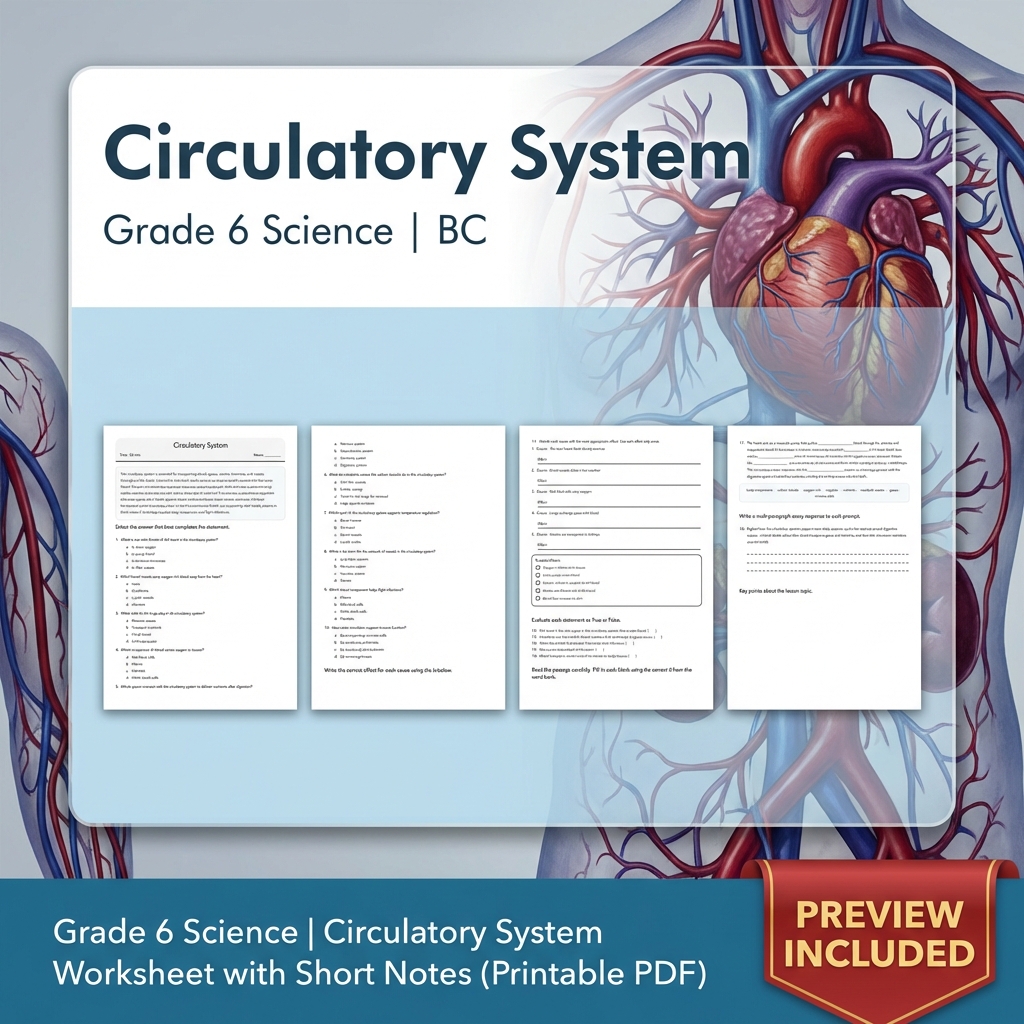
Grade 6 Science | Circulatory System Worksheet with Short Notes (Printable PDF)
Created byMeadowlark WorksheetsLearning Objectives
- Understand the main components and functions of the circulatory system.
- Identify how blood transports gases, nutrients, hormones, and wastes.
- Explain how the heart pumps blood to maintain circulation.
Also included in: Grade 6 Science | Multicellular Systems & Functions Unit Worksheet Bundle +1 more
Instant download
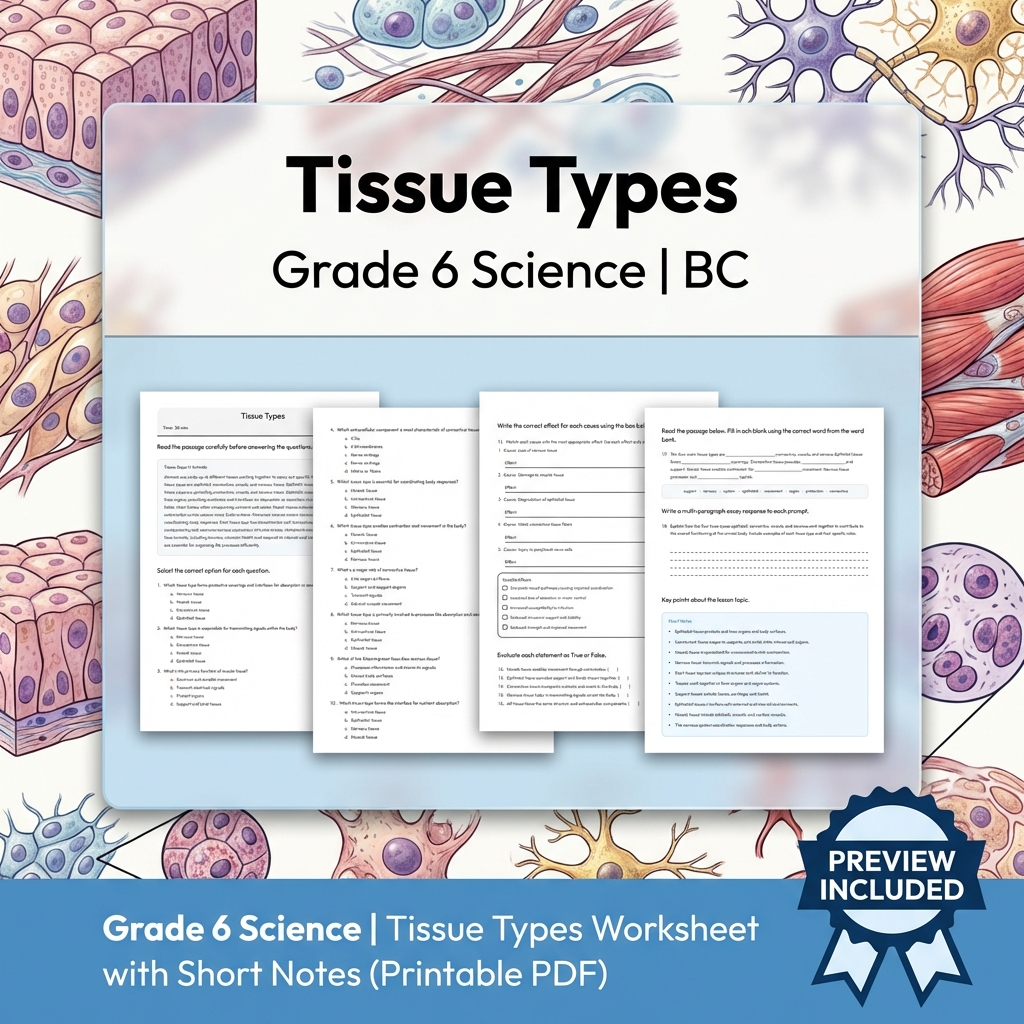
Grade 6 Science | Tissue Types Worksheet with Short Notes (Printable PDF)
Created byMeadowlark WorksheetsLearning Objectives
- Identify and describe the four main tissue types in animals.
- Understand the functions and structural features of epithelial, connective, muscle, and nervous tissues.
- Explain how tissue types contribute to organ functions and overall animal health.
Also included in: Grade 6 Science | Multicellular Systems & Functions Unit Worksheet Bundle +1 more
Instant download
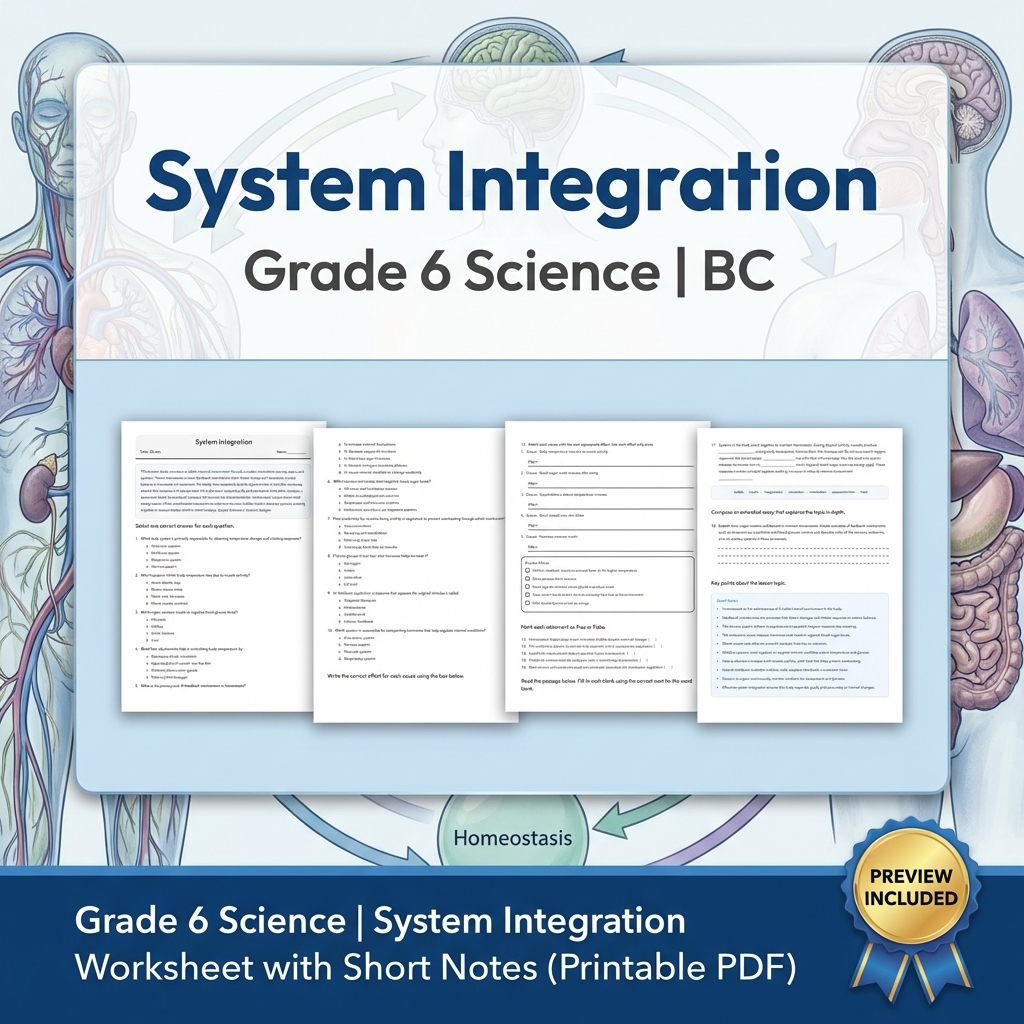
Grade 6 Science | System Integration Worksheet with Short Notes (Printable PDF)
Created byMeadowlark WorksheetsLearning Objectives
- Understand how different organ systems collaborate to maintain homeostasis.
- Identify feedback mechanisms involved in regulating internal body variables.
- Describe examples of system responses including heat regulation and blood glucose control.
Also included in: Grade 6 Science | Multicellular Systems & Functions Unit Worksheet Bundle +1 more
Instant download

6th Grade Health | Understanding Advocacy Worksheet (Answer Key Included)
Created bySkylark WorksheetsLearning Objectives
- Define health advocacy and its importance in community health.
- Identify key strategies used in health advocacy efforts.
- Recognize the role of individuals and groups in influencing health policy decisions.
Also included in: Grade 6 Health Unit | Advocacy & Communication Worksheets (Answer Key Included) +1 more
Instant download

Physical Benefits Worksheet | Ontario Grade 6 Health Assessment
Created bySkylark WorksheetsLearning Objectives
- Identify the physical health benefits of regular activity.
- Understand how movement improves cardiovascular health, muscle strength, and flexibility.
- Recognize the mental health advantages of consistent physical activity.
Also included in: Grade 6 Health Lesson Bundle | Ontario Standards and Worksheets
Instant download

Grade 6 Science | Chemical Evidence Assessment | California Standards
Created byLumora LearningLearning Objectives
- Identify observable indicators that suggest a new substance formed during a chemical reaction
- Explain how chemical evidence connects to changes in composition at the particle level
- Differentiate chemical changes from physical changes using evidence such as gas, precipitate, color, temperature, and persistence
Instant download
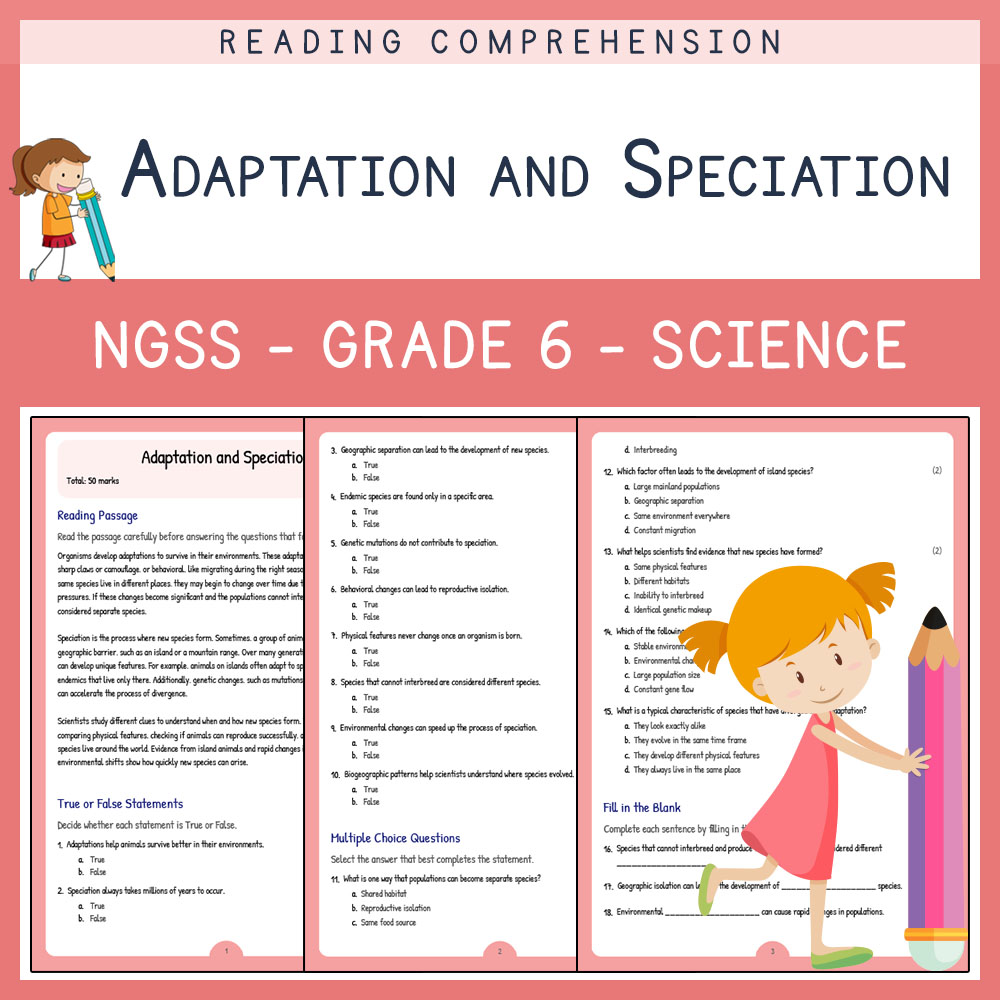
Grade 6 Science | Adaptation & Speciation Worksheet (PDF) | NGSS Aligned
Created byLumora LearningLearning Objectives
- Understand how populations diverge into distinct lineages through adaptation and speciation.
- Identify the role of geographic, behavioral, and genetic factors in species divergence.
- Recognize evidence of speciation such as island endemics and rapid divergence.
Instant download
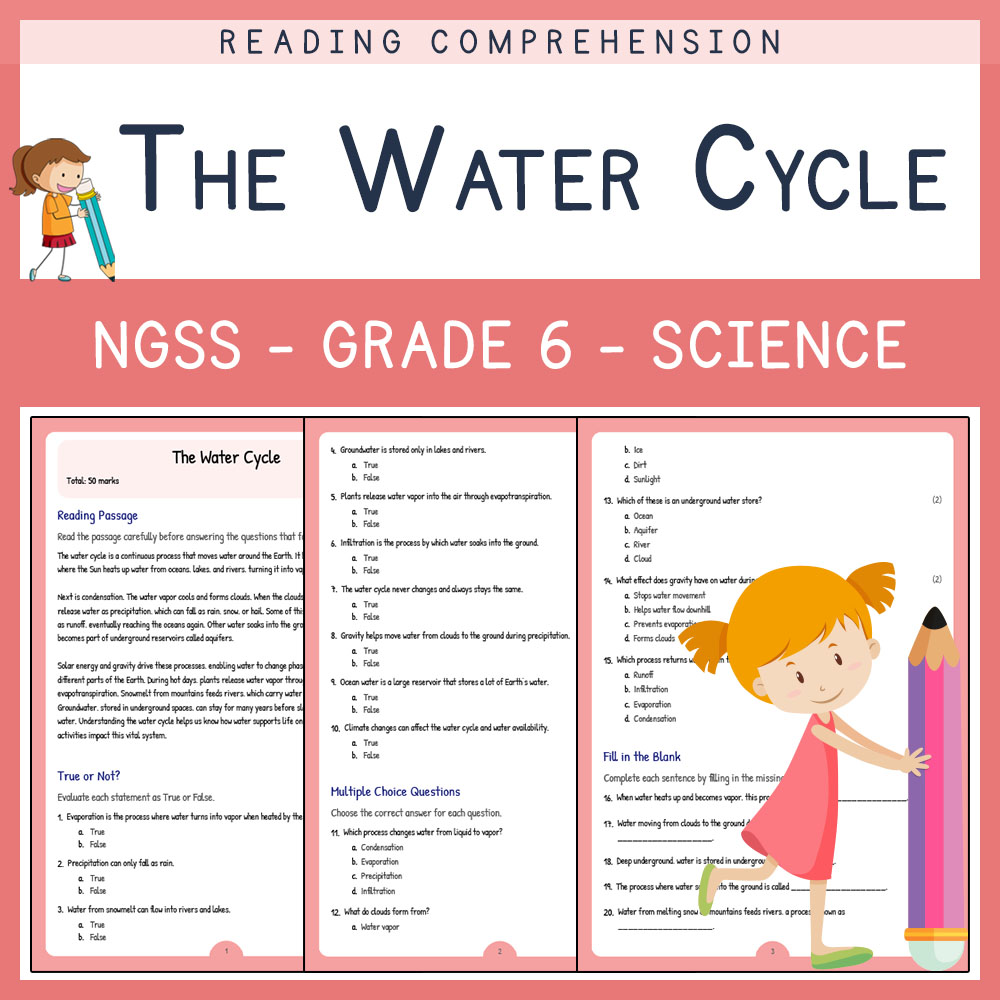
Grade 6 Science | The Water Cycle Worksheets (PDF) | NGSS Aligned
Created byLumora LearningLearning Objectives
- Understand the stages of the water cycle: evaporation, condensation, precipitation, runoff, infiltration, and groundwater storage.
- Identify how solar energy and gravity drive the water cycle processes.
- Recognize the importance of reservoirs like oceans, ice, and groundwater in storing water.
Instant download
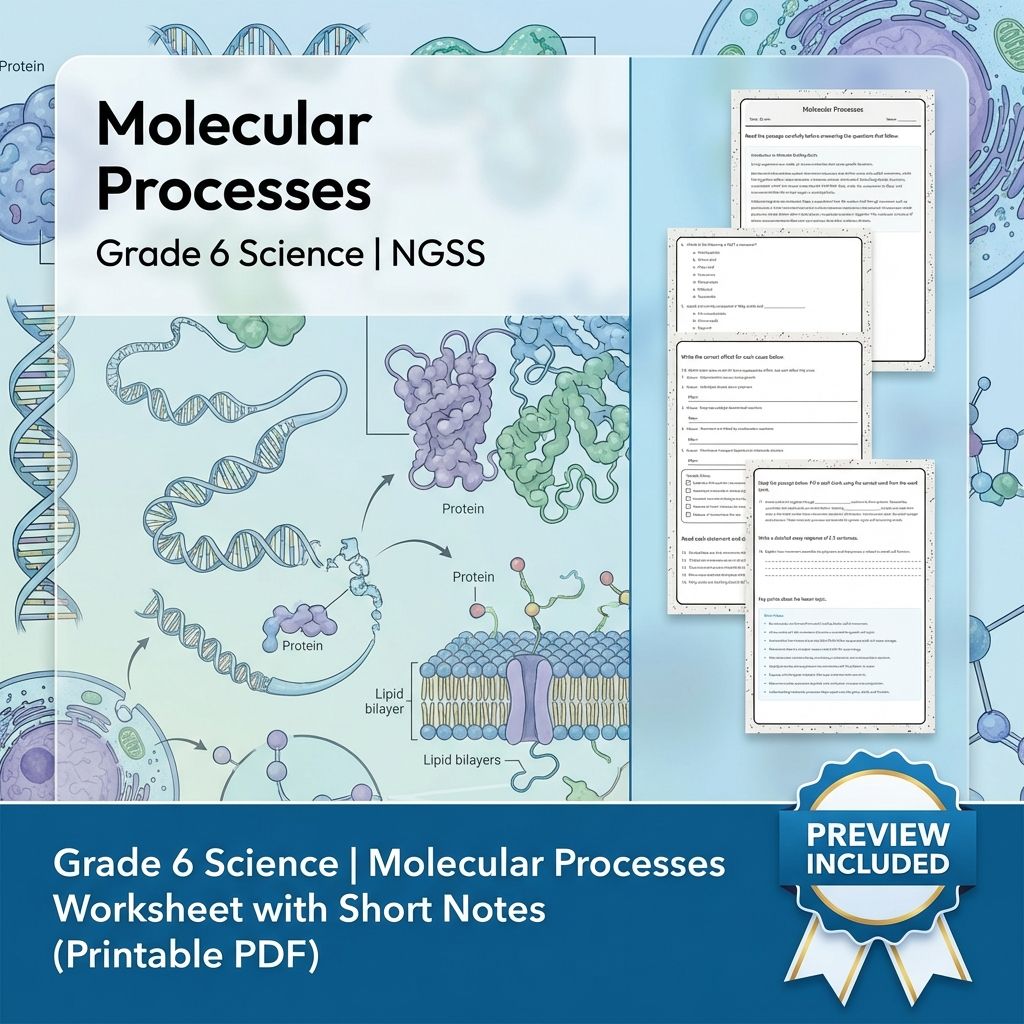
Grade 6 Science | Molecular Processes Worksheet with Short Notes (Printable PDF)
Created byMeadowlark WorksheetsLearning Objectives
- Identify and describe the basic building blocks of biomolecules, including amino acids, nucleotides, fatty acids, and monosaccharides.
- Explain how monomers form polymers through condensation reactions and how polymers break down by hydrolysis.
- Relate molecular structures of macromolecules to their functions, such as enzyme activity, membrane transport, and growth.
Also included in: Grade 6 Science NGSS From Molecules to Organisms: Structures & Processes +1 more
Instant download

Grade 6 Holiday | Epilepsy awareness for Mastering Empathy | PDF + Answer Key
Created byShaNova WorksheetsLearning Objectives
- Understand the importance of empathy and support for individuals with epilepsy.
- Recognize real-life examples of kindness and inclusiveness in communities.
- Analyze how compassionate attitudes foster confidence and belonging.
Instant download
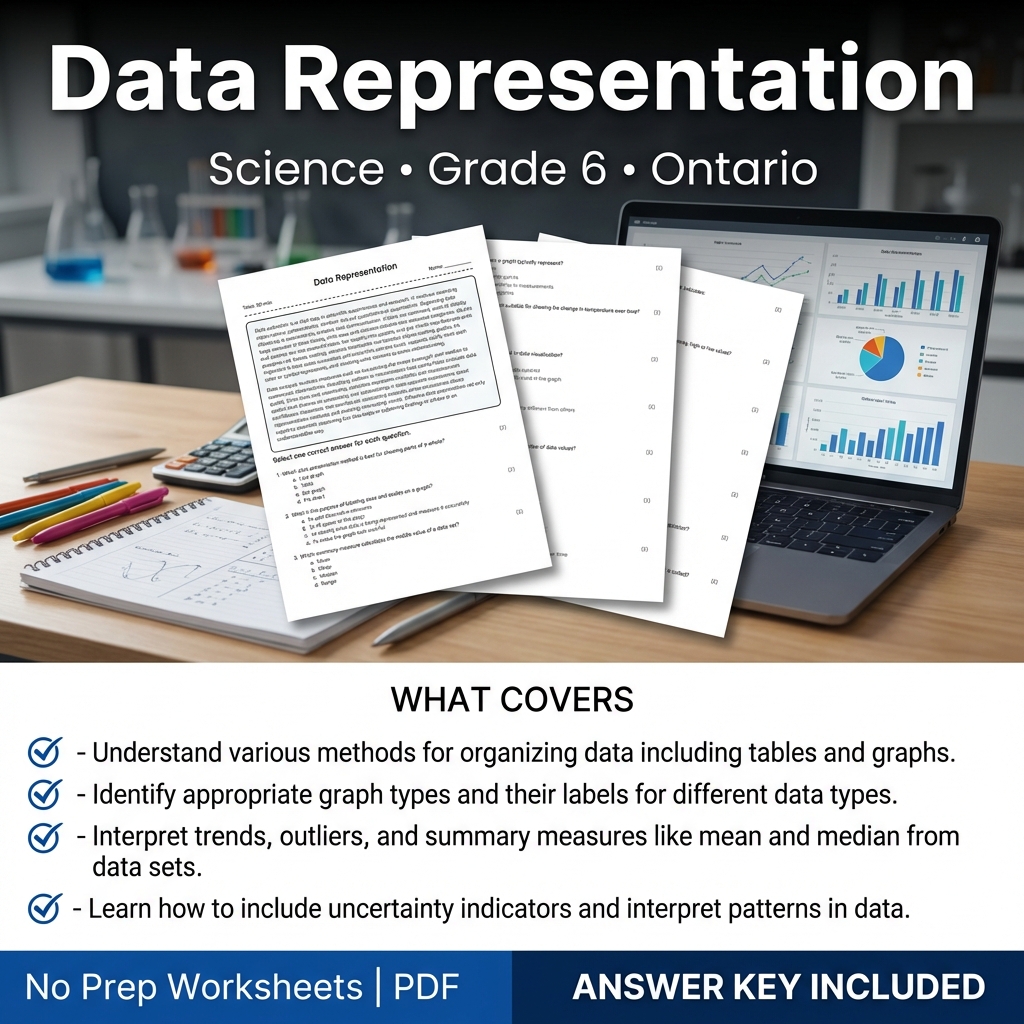
Grade 6 Science Worksheet Data Representation | Ontario Standards Practice
Created byCoral Reef LearningLearning Objectives
- Understand various methods for organizing data including tables and graphs.
- Identify appropriate graph types and their labels for different data types.
- Interpret trends, outliers, and summary measures like mean and median from data sets.
Instant download
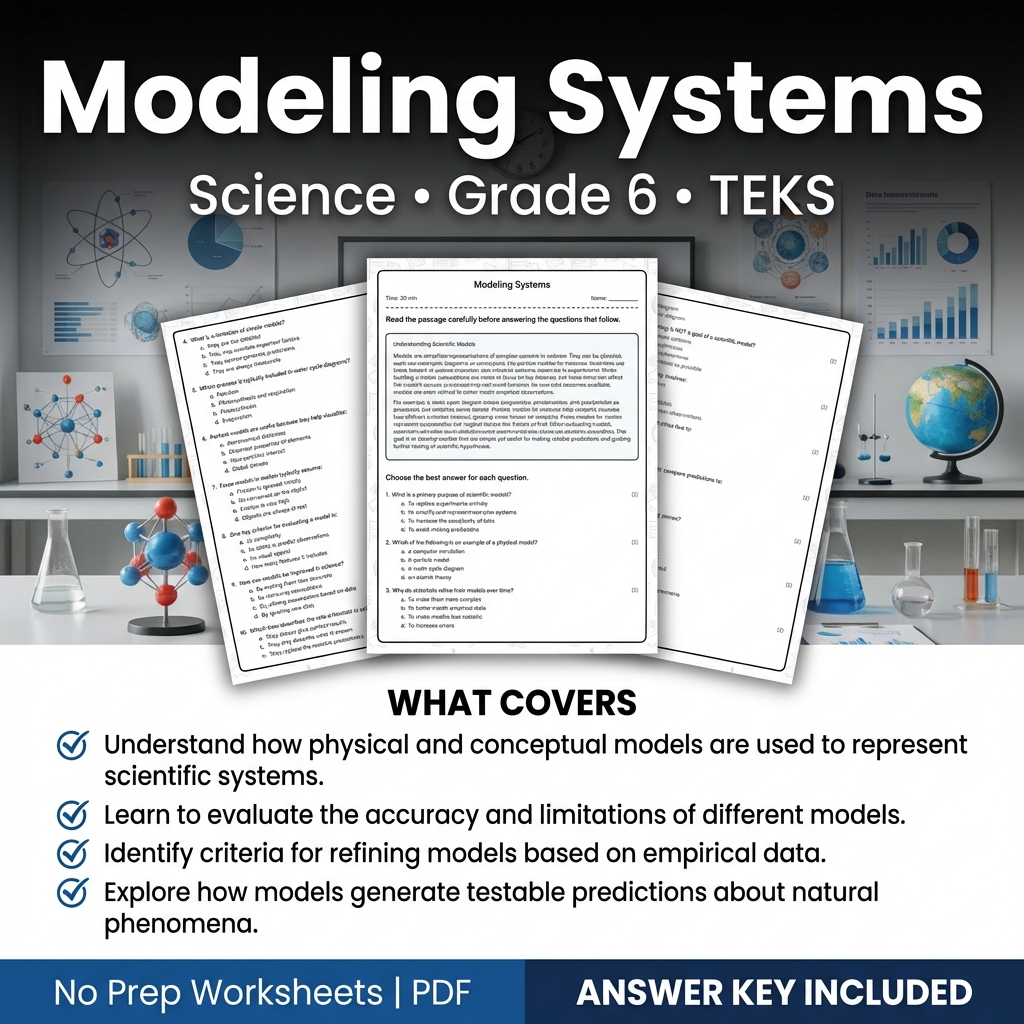
Modeling Systems Grade 6 Science Worksheet | TEKS Practice & Assessment
Created byCoral Reef LearningLearning Objectives
- Understand how physical and conceptual models are used to represent scientific systems.
- Learn to evaluate the accuracy and limitations of different models.
- Identify criteria for refining models based on empirical data.
Instant download
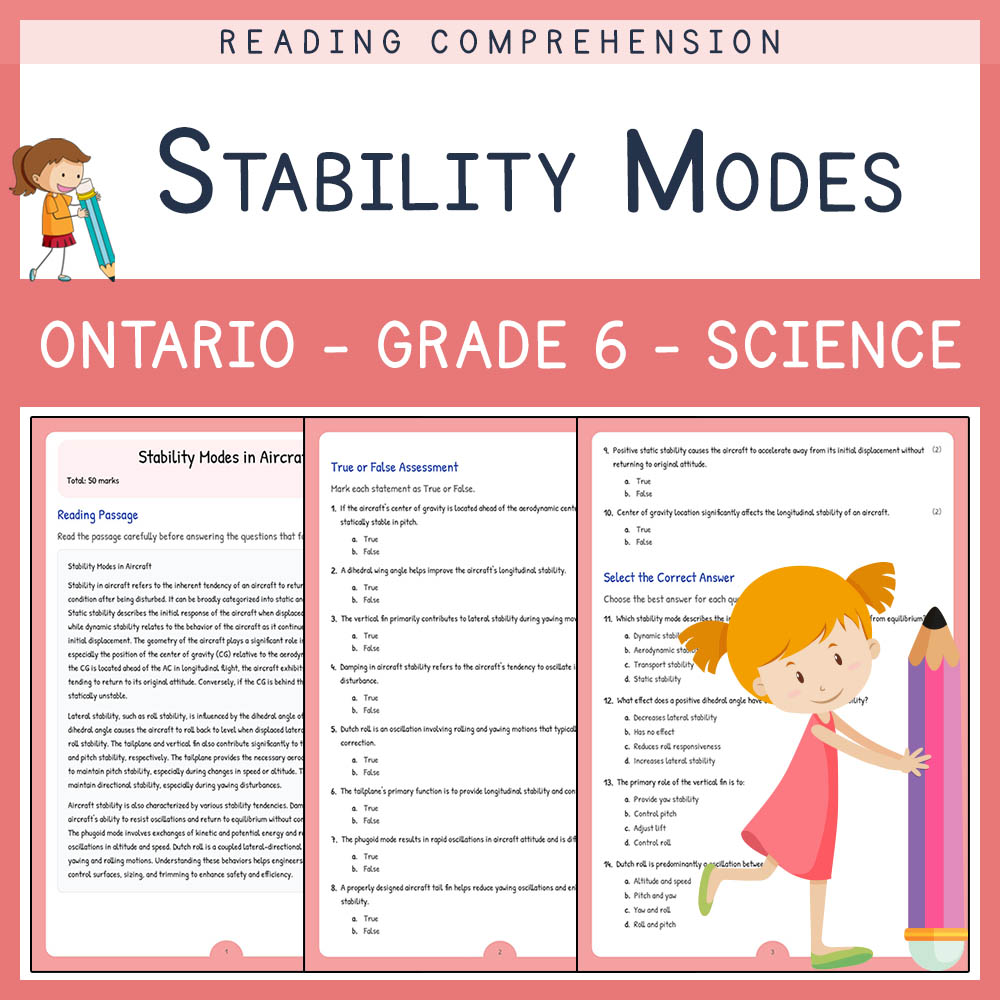
Grade 6 Science | Aircraft Stability Modes Worksheet & Answer Key (PDF)
Created byLumora LearningLearning Objectives
- Define the different types of stability in aircraft and explain how aircraft geometry influences stability.
- Analyze the effects of center of gravity position and dihedral angle on aircraft stability.
- Describe the roles of fins and tailplanes in contributing to directional and pitch stability.
Also included in: Grade 6 Science | Flight Custom Bundle | Ontario Standards
Instant download
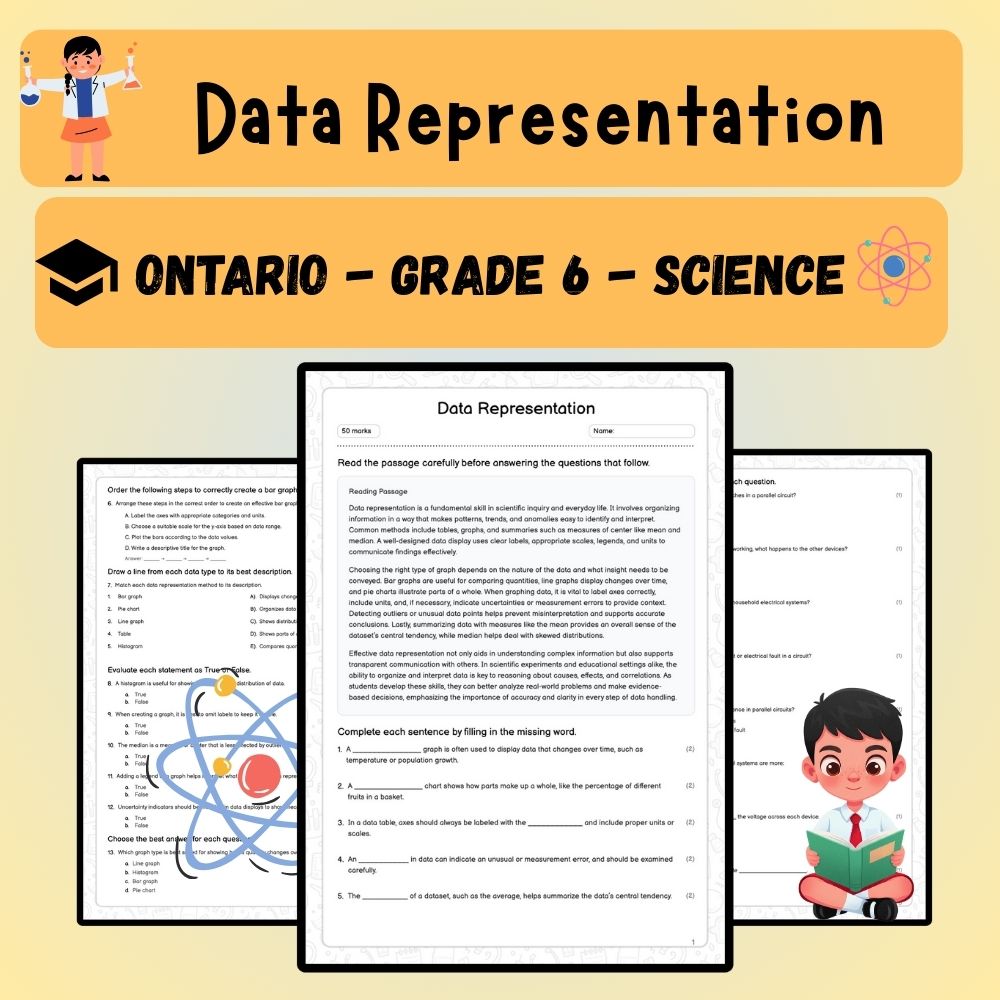
Grade 6 Science – Data Representation Worksheet (PDF) – Ontario Standards
 Created byPrism Point Learning
Learning Objectives
- Understand the importance of clear data organization and representation.
- Identify suitable graph types and labeling techniques for data display.
- Interpret trends, outliers, and summary measures in datasets.
Also included in: Grade 6 Science Unit | Inquiry, Modeling & Data Skills Worksheet Bundle
Instant download

Grade 6 Science Worksheet | Understanding Airfoil Shapes (PDF)
 Created byEvergreen Desk Education
Learning Objectives
- Explain how camber, thickness, chord length, and leading-edge curvature affect pressure distribution and lift.
- Compare simplified Bernoulli ideas with Newtonian ideas for lift in a clear, grade-appropriate way.
- Describe how angle of attack and critical angles relate to lift and stall.
Also included in: Grade 6 Flight & Aerodynamics Science Lesson Bundle Worksheets (Ontario) +1 more
Instant download

Grade 6 Science – Drag Components Worksheet (Ontario Standards PDF)
Created byEvergreen Desk EducationLearning Objectives
- Categorize aerodynamic drag into parasitic drag and induced drag
- Explain how form drag, skin-friction drag, and interference drag contribute to parasitic drag
- Describe why induced drag is tied to lift production and wing span
Also included in: Grade 6 Flight & Aerodynamics Science Lesson Bundle Worksheets (Ontario) +1 more
Instant download
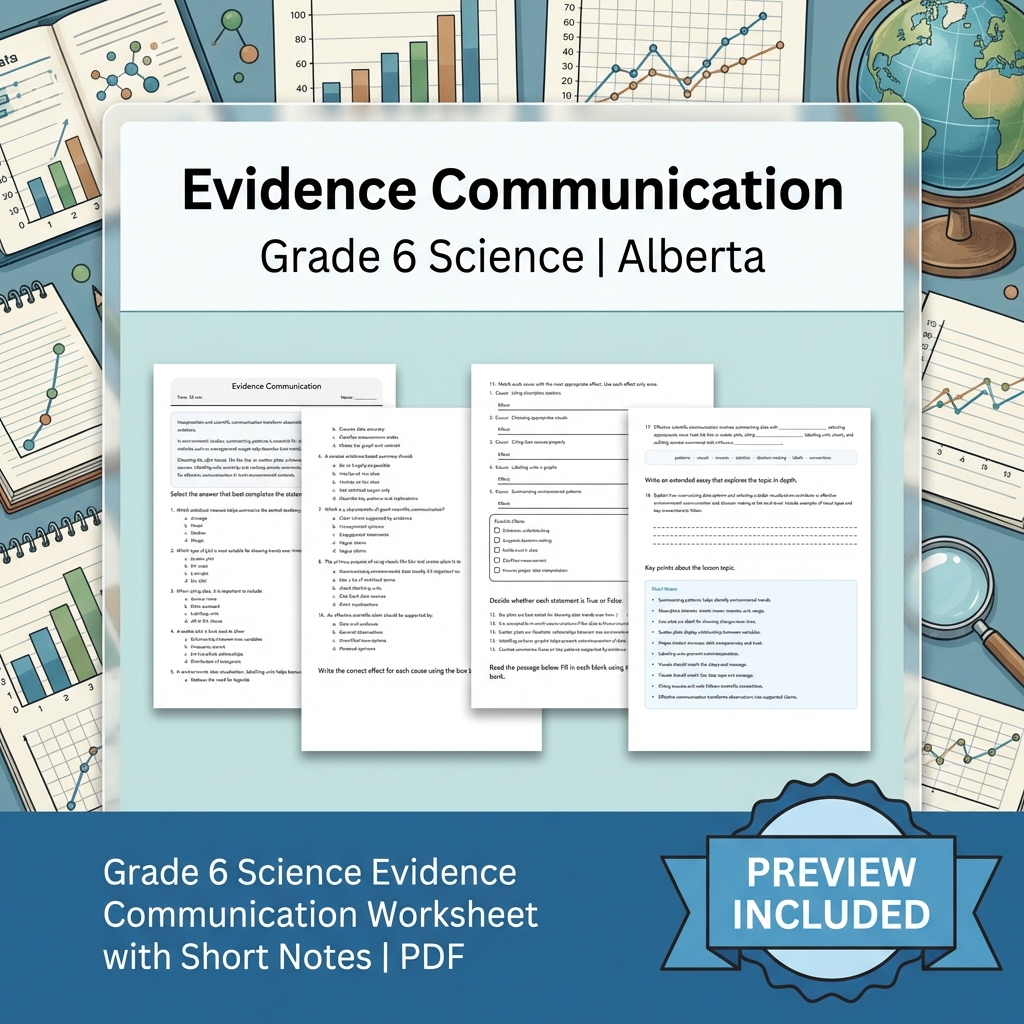
Grade 6 Science Evidence Communication Worksheet with Short Notes | PDF
Created byMeadowlark WorksheetsLearning Objectives
- Understand methods for summarizing patterns using descriptive statistics.
- Learn how to select appropriate visual representations like bar, line, and scatter plots.
- Recognize conventions for citing data sources and labelling units.
Also included in: Grade 6 Science | Evidence & Investigation Unit Worksheet Bundle +1 more
Instant download
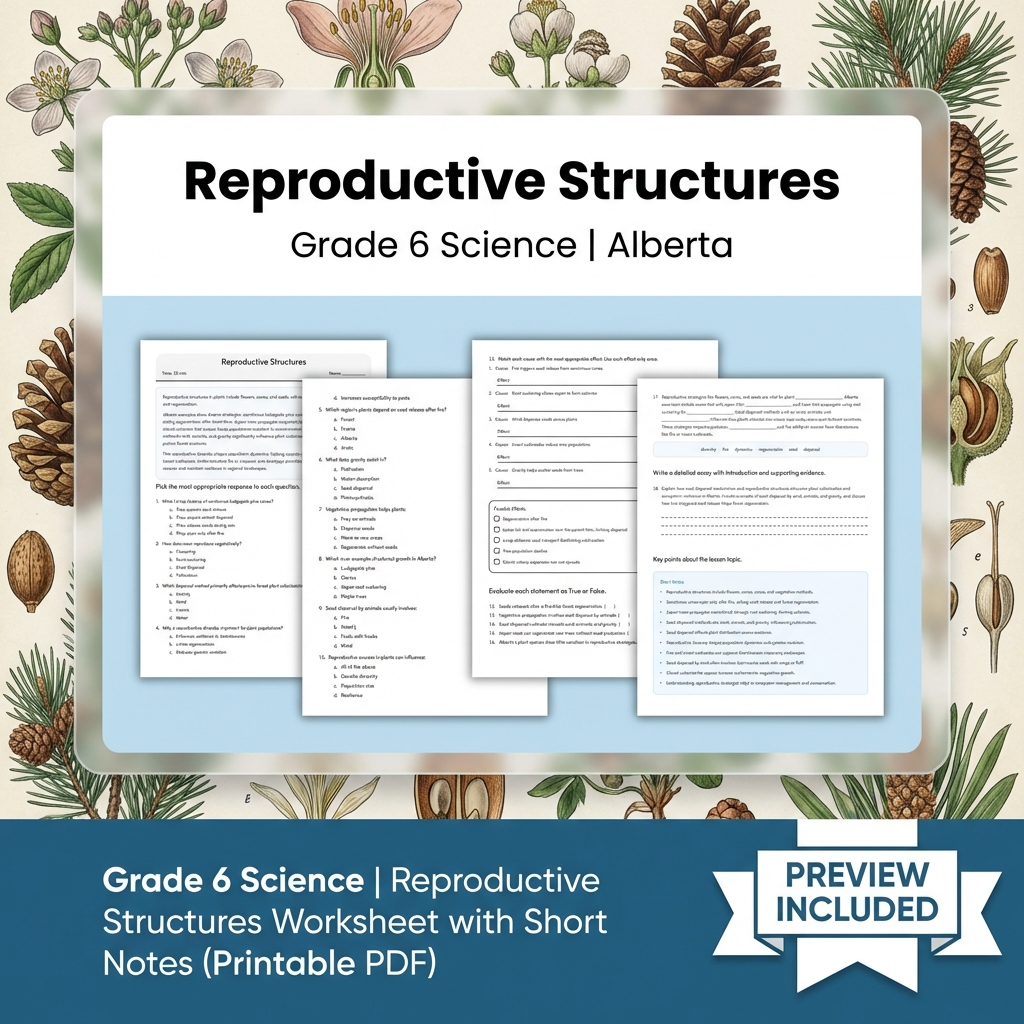
Grade 6 Science | Reproductive Structures Worksheet with Short Notes (PDF)
Created byMeadowlark WorksheetsLearning Objectives
- Identify key reproductive structures like flowers, cones, and seeds.
- Understand how seed dispersal mechanisms affect plant distribution.
- Explore regeneration strategies such as vegetative propagation.
Also included in: Grade 6 Science | Trees and Forests Unit Worksheet Bundle – Alberta Curriculum +1 more
Instant download
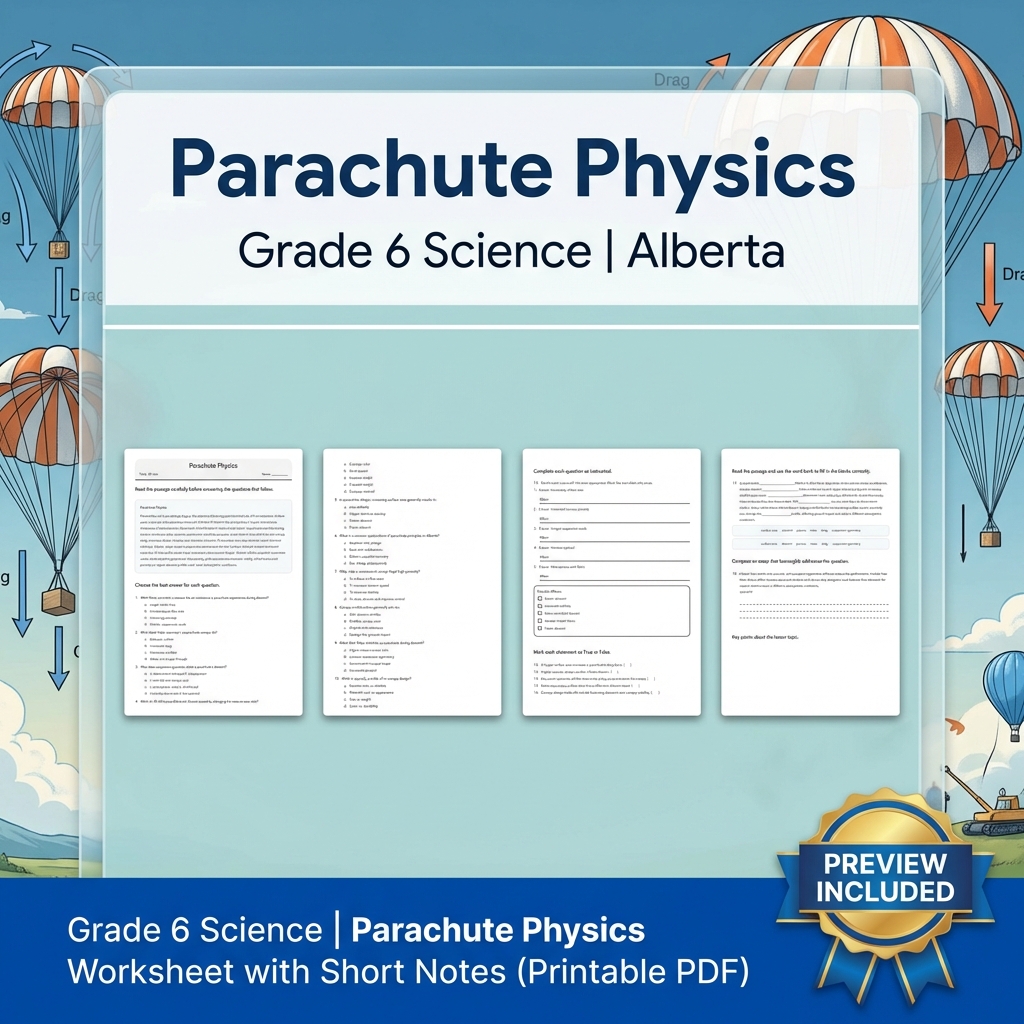
Grade 6 Science | Parachute Physics Worksheet with Short Notes (Printable PDF)
Created byMeadowlark WorksheetsLearning Objectives
- Explain how surface area, porosity, and suspension geometry affect parachute drag.
- Describe the concept of terminal velocity and how mass-to-area ratio influences descent speed.
- Analyze how canopy design trade-offs impact stability and descent in different atmospheric conditions.
Also included in: Grade 6 Science – Air and Aerodynamics UNIT Bundle | Alberta Curriculum Resources +1 more
Instant download
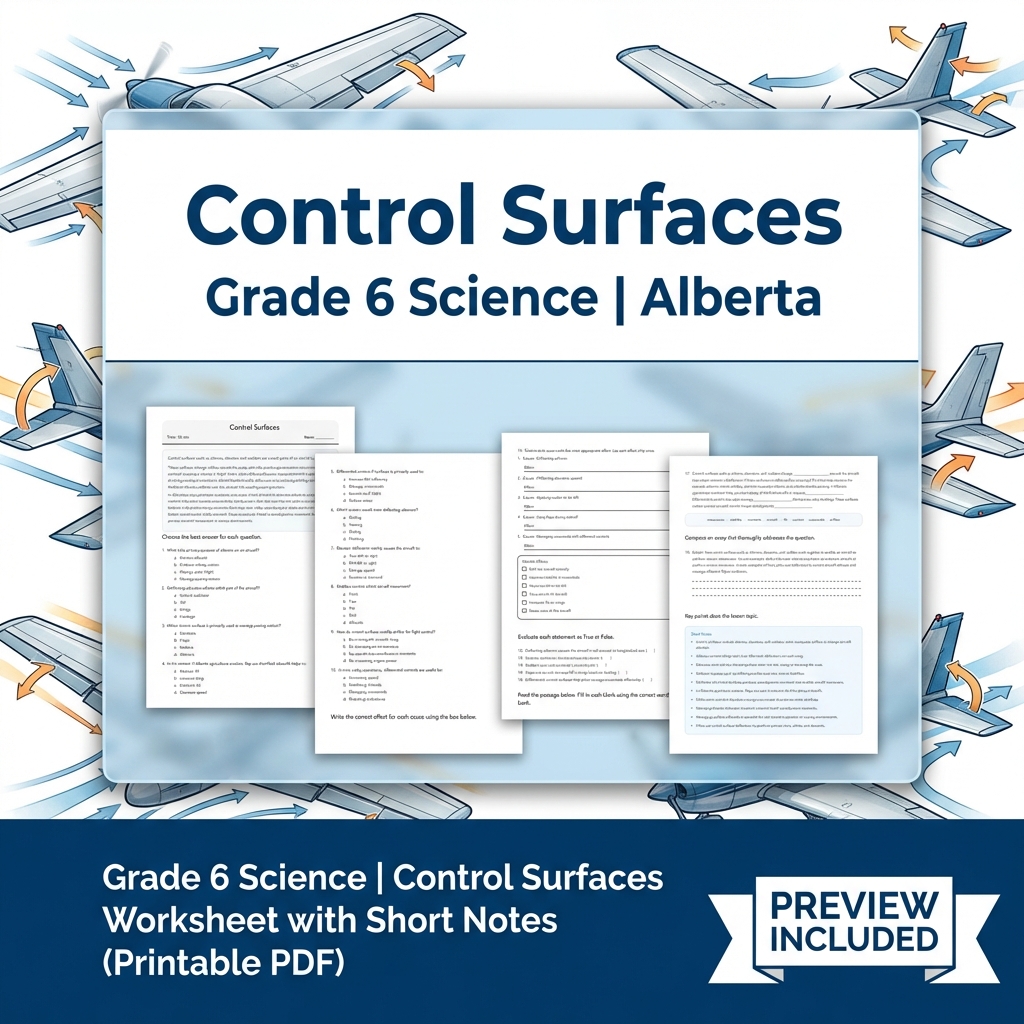
Grade 6 Science | Control Surfaces Worksheet with Short Notes (Printable PDF)
Created byMeadowlark WorksheetsLearning Objectives
- Define different control surfaces such as ailerons, elevators, and rudders.
- Explain how deflection of control surfaces modifies airflow to produce aircraft attitude changes.
- Describe the aerodynamic moments generated by control surface deflections.
Also included in: Grade 6 Science – Air and Aerodynamics UNIT Bundle | Alberta Curriculum Resources +1 more
Instant download
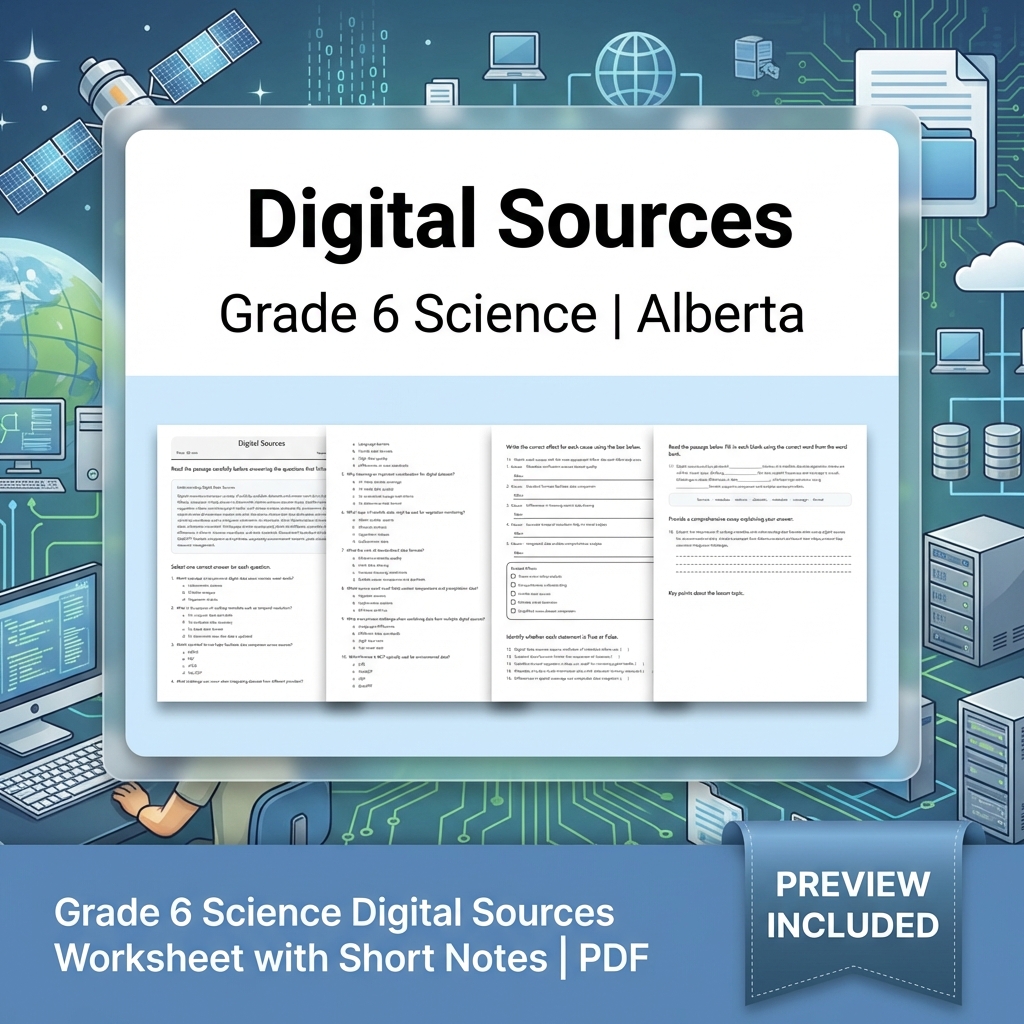
Grade 6 Science Digital Sources Worksheet with Short Notes | PDF
Created byMeadowlark WorksheetsLearning Objectives
- Understand various types of digital sources related to environmental data.
- Learn how to verify metadata, resolution, and coverage of digital datasets.
- Recognize challenges in integrating data from multiple sources.
Also included in: Grade 6 Science | Evidence & Investigation Unit Worksheet Bundle +1 more
Instant download

Grade 6 Science | Species Classification Worksheet with Short Notes (PDF)
Created byMeadowlark WorksheetsLearning Objectives
- Understand the main groups of organisms in species classification, including producers, consumers, and decomposers.
- Identify examples of native and invasive species within local ecosystems.
- Describe how functional classification helps predict energy flow and ecosystem dynamics.
Also included in: Grade 6 Science | Trees and Forests Unit Worksheet Bundle – Alberta Curriculum +1 more
Instant download
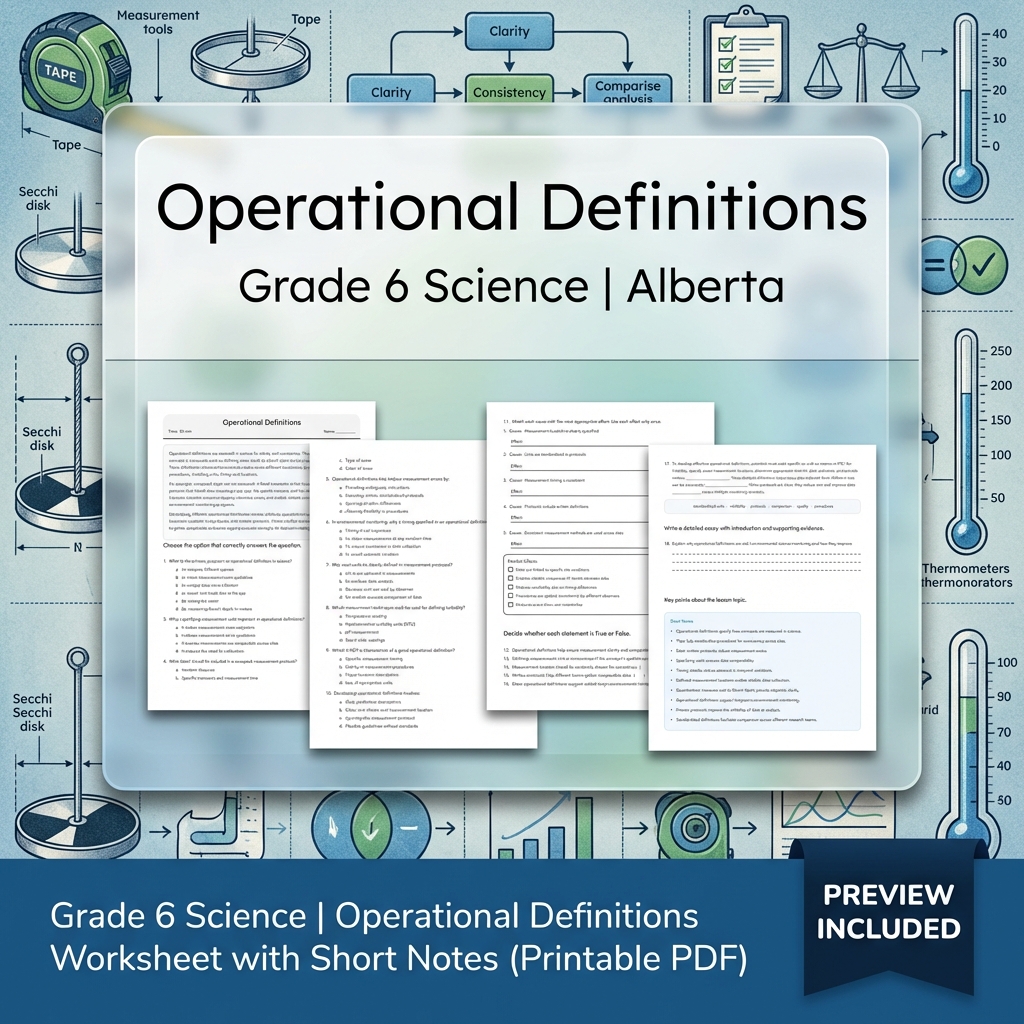
Grade 6 Science | Operational Definitions Worksheet with Short Notes (PDF)
Created byMeadowlark WorksheetsLearning Objectives
- Understand the purpose and importance of operational definitions in scientific measurement.
- Learn how to convert qualitative observations into quantitative data.
- Identify methods for specifying measurement protocols, units, and locations.
Also included in: Grade 6 Science | Evidence & Investigation Unit Worksheet Bundle +1 more
Instant download
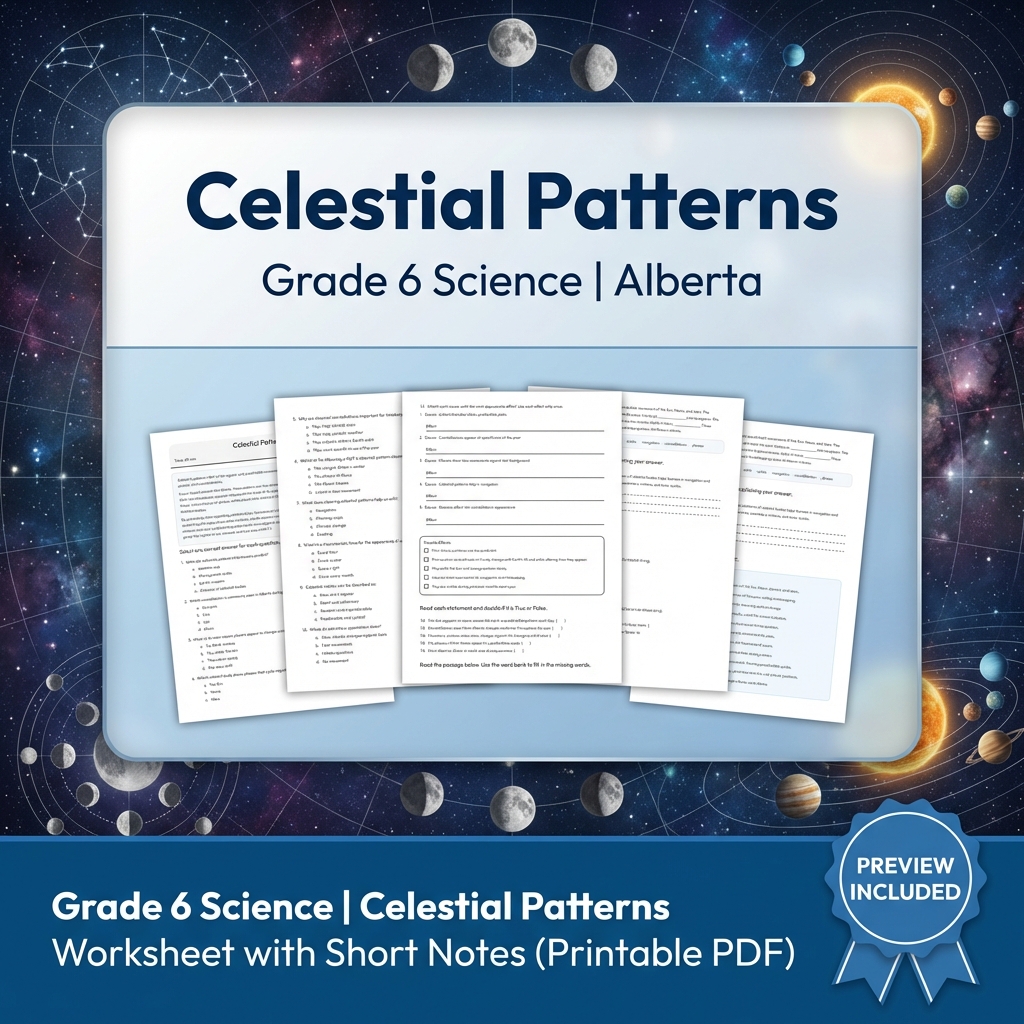
Grade 6 Science | Celestial Patterns Worksheet with Short Notes (Printable PDF)
Created byMeadowlark WorksheetsLearning Objectives
- Describe the predictable paths of the Sun, Moon, and planets as seen from a fixed location.
- Explain the significance of seasonal constellations and planetary apparitions in timekeeping and navigation.
- Identify common celestial patterns and their characteristic times.
Also included in: Grade 6 Science Sky Science Unit Bundle | Alberta Curriculum Worksheets +1 more
Instant download

Grade 6 Science | Lunar Motion Worksheet with Short Notes (Printable PDF)
Created byMeadowlark WorksheetsLearning Objectives
- Understand the orbital pattern of the Moon around Earth.
- Describe how lunar phases change over time.
- Explain the relationship between the Sun, Earth, and Moon during different lunar phases.
Also included in: Grade 6 Science Sky Science Unit Bundle | Alberta Curriculum Worksheets +1 more
Instant download

Grade 6 Science | Graph Selection Worksheet with Short Notes (Printable PDF)
Created byMeadowlark WorksheetsLearning Objectives
- Understand which type of graph is appropriate for different data types.
- Identify how to label axes and choose scales to accurately represent data.
- Learn when to use line graphs, bar charts, and scatter plots with Alberta examples.
Also included in: Grade 6 Science | Evidence & Investigation Unit Worksheet Bundle +1 more
Instant download

Grade 6 Science | Wing Shapes Worksheet with Short Notes (Printable PDF)
Created byMeadowlark WorksheetsLearning Objectives
- Understand how wing shape influences lift, stall behavior, and maneuverability.
- Identify features such as camber, aspect ratio, and taper that affect wing performance.
- Compare high-aspect-ratio glider wings with low-aspect, robust agricultural wings.
Also included in: Grade 6 Science – Air and Aerodynamics UNIT Bundle | Alberta Curriculum Resources +1 more
Instant download

Grade 6 Science Measurement Tools Worksheet with Short Notes PDF
Created byMeadowlark WorksheetsLearning Objectives
- Understand the various instruments used in data collection, such as thermometers and pH probes.
- Learn how calibration of measurement tools ensures accurate data recording.
- Identify best practices for consistent observation and measurement in scientific experiments.
Also included in: Grade 6 Science | Evidence & Investigation Unit Worksheet Bundle +1 more
Instant download
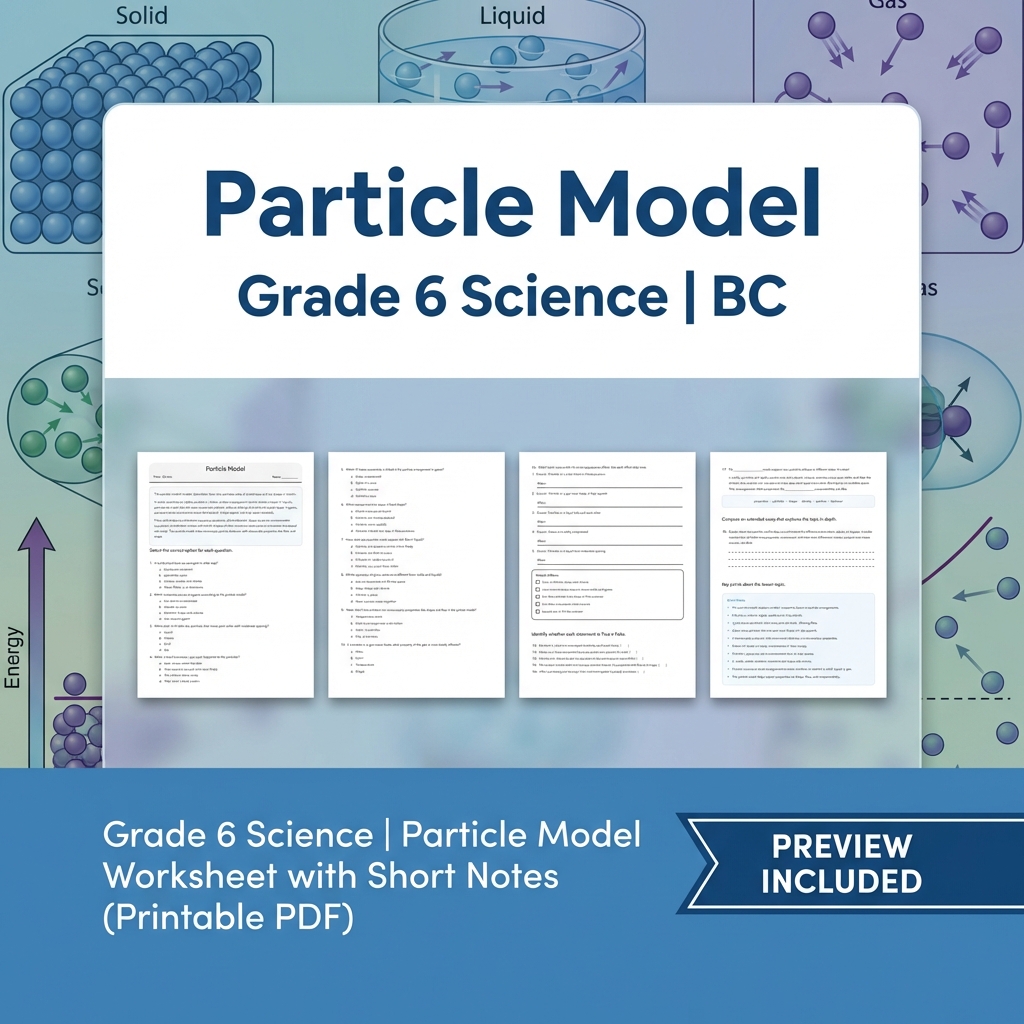
Grade 6 Science | Particle Model Worksheet with Short Notes (Printable PDF)
Created byMeadowlark WorksheetsLearning Objectives
- Understand the basic idea of the particle model and how it explains states of matter.
- Identify differences in particle arrangements in solids, liquids, and gases.
- Describe how microscopic particle behaviour relates to macroscopic properties like shape, volume, and flow.
Also included in: Grade 6 Science | Matter, Properties & Change UNIT Worksheet Bundle +1 more
Instant download
Browse more categories
About Grade 6 Worksheets
Browse 8,578 printable Grade 6 worksheets across math, ELA, science, and social studies — each a ready-to-print PDF with optional answer keys.
MyTeachingSheets worksheets are made by real teacher-authors and checked before they go live. Download any as a print-ready PDF for lessons, homework, or independent practice — most include answer keys, and previews are always free.