
Grade 6 Science Worksheets
5,969 worksheets
Natural Resources Worksheets: Sustainability & Distribution Grade 6
 Created byPrism Point Learning
Learning Objectives
- Identify renewable and nonrenewable natural resources
- Explain why natural resources are distributed unevenly across regions
- Describe environmental effects of natural resource extraction
Instant download
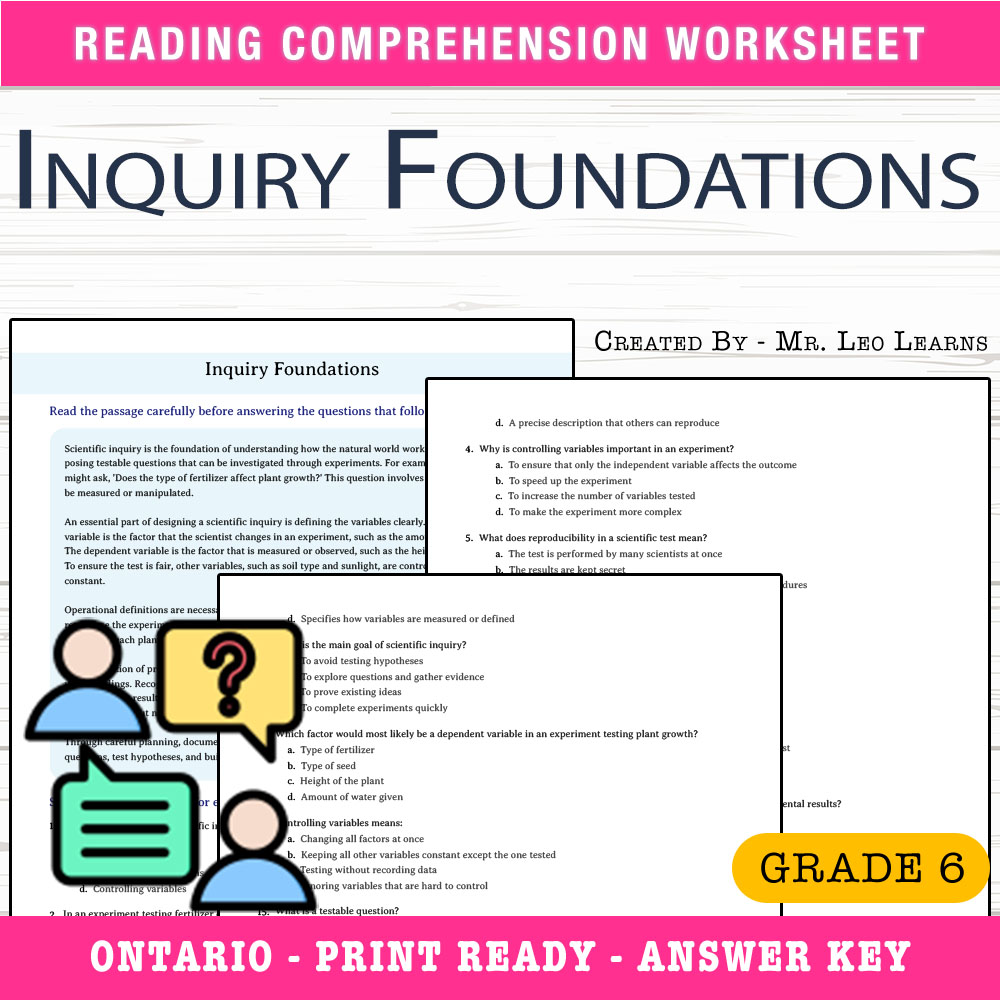
Grade 6 Science – Inquiry Foundations Worksheet for Mastery
 Created byThe Resource Hub
Learning Objectives
- Understand the importance of operational definitions in scientific inquiry.
- Distinguish between independent and dependent variables in experiments.
- Learn to design fair tests by controlling variables.
Also included in: Grade 6 Science Unit | Scientific Skills & Responsible Practice Worksheet Bundle +1 more
Instant download
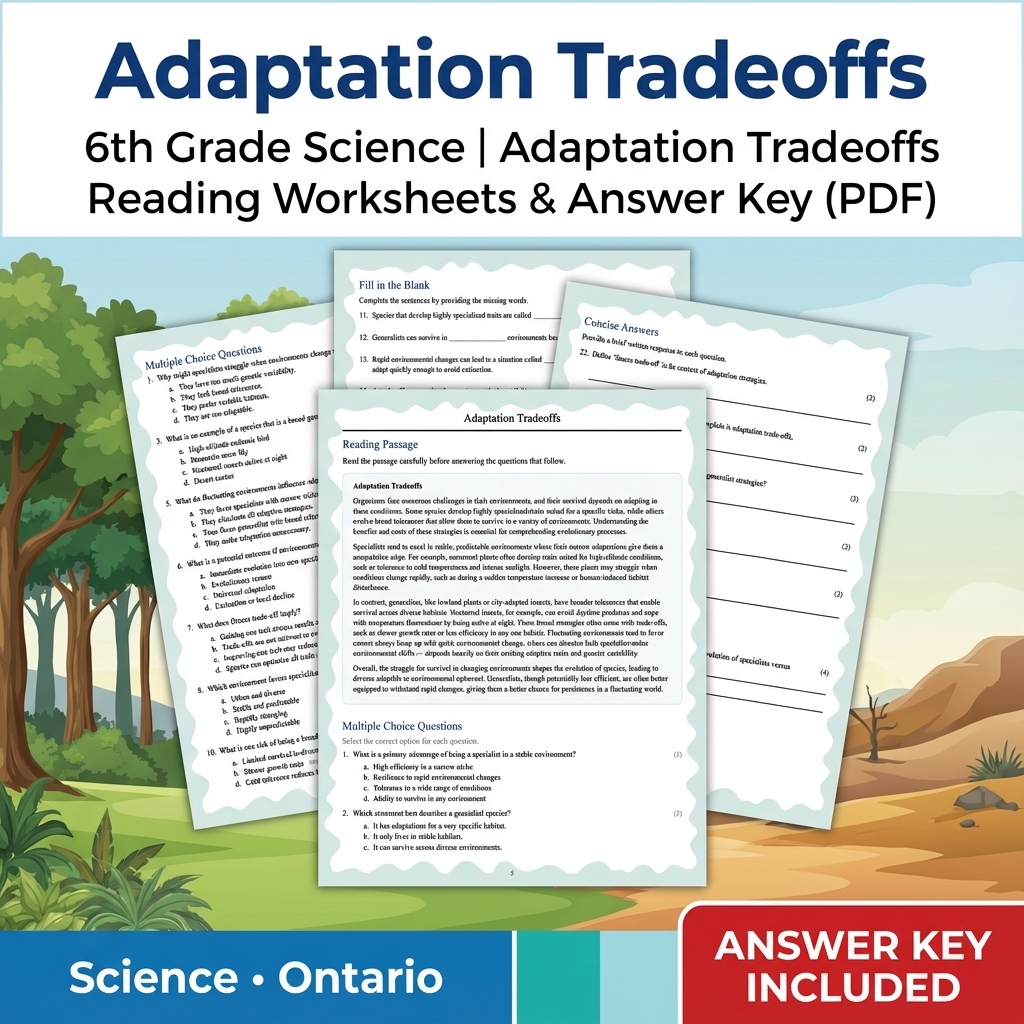
6th Grade Science | Adaptation Tradeoffs Reading Worksheets & Answer Key (PDF)
JCreated byJ.S SheetsLearning Objectives
- Understand the concept of fitness trade-offs in adaptation strategies.
- Distinguish between specialist and generalist adaptations in various environments.
- Analyze benefits and costs associated with narrow niche specialization versus broad tolerance.
Also included in: Grade 6 Science Unit Bundle – Ecosystems, Biodiversity & Environmental Impact +1 more
Instant download
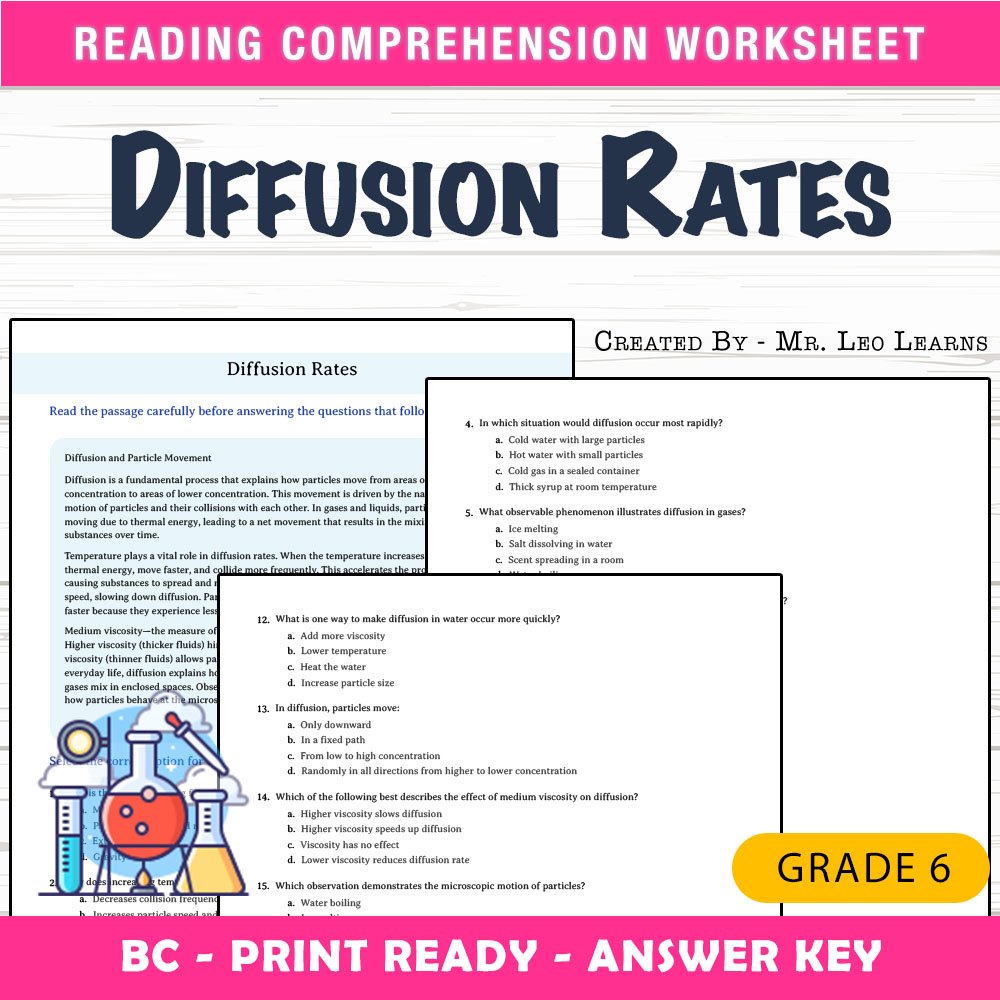
Grade 6 Science — Diffusion Rates Worksheet MCQ Paper for Mastery
Created byThe Resource HubLearning Objectives
- Understand how particles move and diffuse from high to low concentration areas.
- Explain how temperature affects the rate of diffusion in gases and liquids.
- Identify factors such as particle size and medium viscosity that influence diffusion.
Also included in: Grade 6 Science | Matter, Properties & Change Worksheet Bundle (BC Framework) +1 more
Instant download
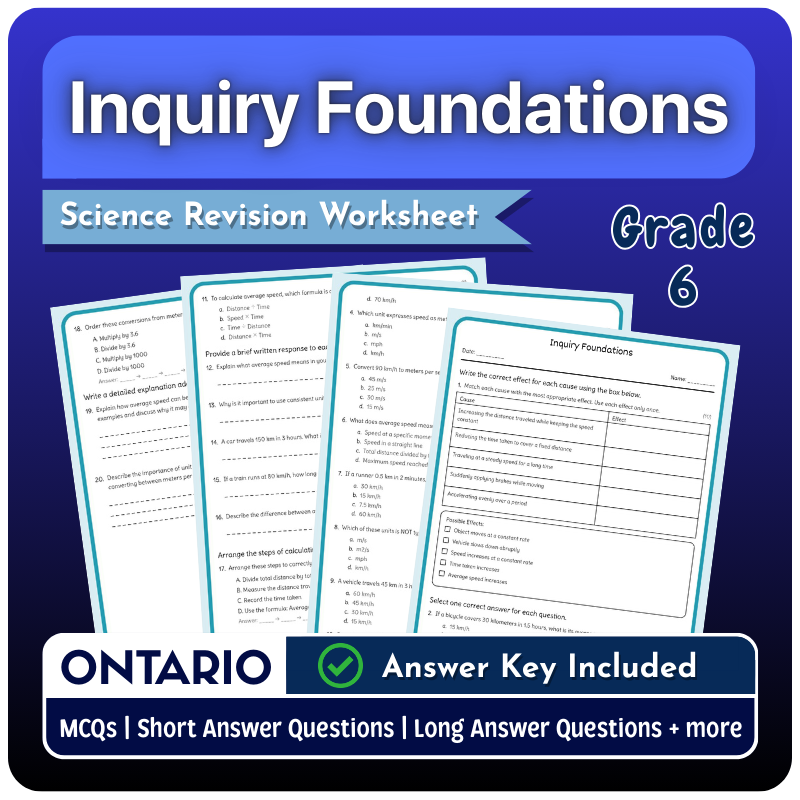
Grade 6 Science | Inquiry Foundations Worksheet (Ontario) PDF
 Created byBright Mind Resources
Learning Objectives
- Understand operational definitions and the role of variables in scientific inquiry.
- Distinguish between independent and dependent variables in experiments.
- Develop testable questions and establish fair comparisons in scientific investigations.
Instant download
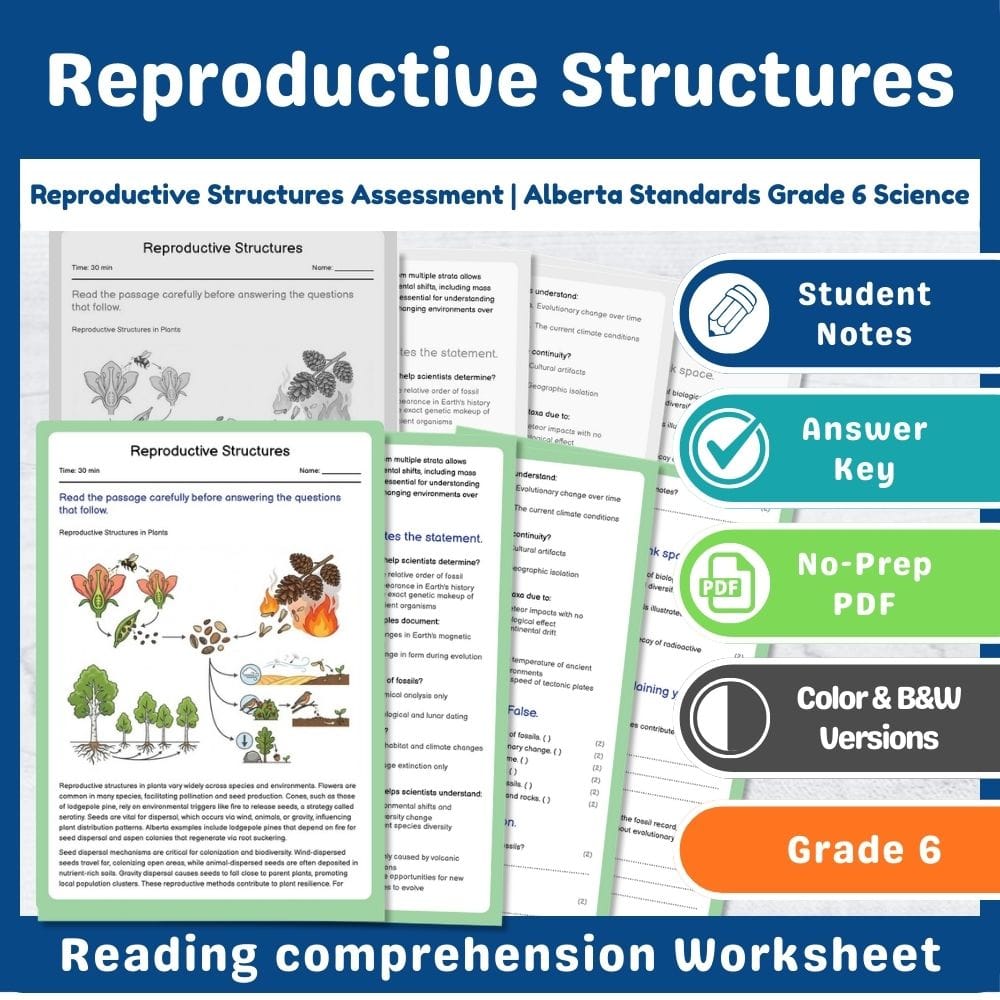
Reproductive Structures Assessment | Alberta Standards Grade 6 Science
Created byPrism Point LearningLearning Objectives
- Understand the role of flowers, cones, and seeds in plant reproduction.
- Identify different seed dispersal mechanisms and their effects on plant colonization.
- Explain how reproductive diversity contributes to population resilience and genetic variation.
Also included in: Lesson Grade 6 Science Mini Bundle Trees and Forests Alberta Standards
Instant download
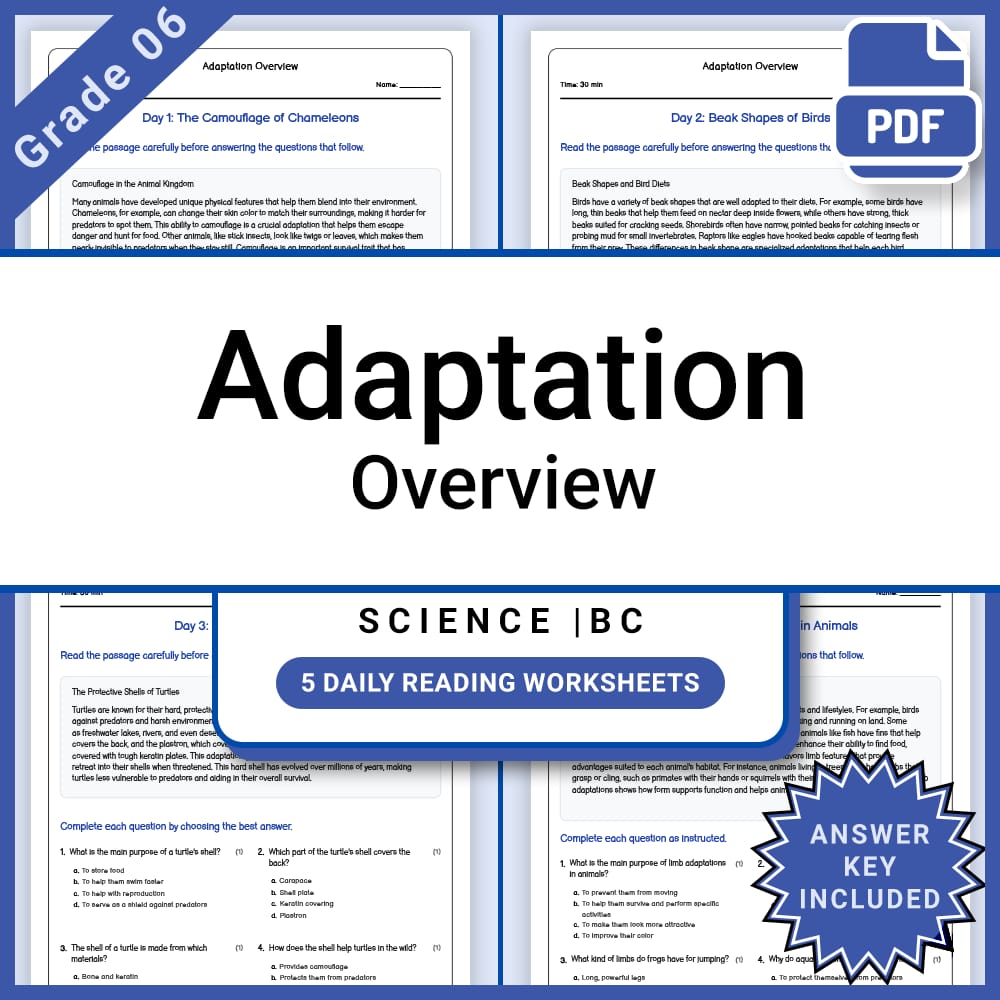
Grade 6 Science – Adaptation Overview Daily Reading Worksheet with Answer Key
JCreated byJ.S SheetsLearning Objectives
- Understand what structural adaptations are and how they help animals survive.
- Identify examples of camouflage and other physical features that animals use for protection.
- Explain the benefits of different adaptations in various environments.
Also included in: Grade 6 Science Lesson Group | Body Systems and Adaptations Bundle +1 more
Instant download
6th Grade Science | Ethical Dimensions in Science Worksheet (PDF) – TEKS Standards
Created byBright Mind ResourcesLearning Objectives
- Understand key ethical principles such as beneficence, risk minimization, and informed consent in scientific contexts.
- Analyze scenarios involving data privacy, environmental stewardship, and biotechnology through ethical criteria.
- Evaluate the societal impacts of scientific decisions and technological applications.
Instant download

Grade 6 Science Worksheet on Tools Safety | Alberta Standards
 Created byCoral Reef Learning
Learning Objectives
- Understand proper handling and storage of measurement tools in fieldwork.
- Identify safe practices for using instruments near wetlands and river sites.
- Learn calibration, cleaning, and battery management protocols for measurement devices.
Instant download
Grade 6 Science | Adaptation and Speciation Worksheet (Printable PDF + Answer Key)
Learning Objectives
- Understand the concepts of adaptation and how species evolve over time.
- Identify different types of adaptations in animals and plants.
- Explain the process of speciation and factors that lead to new species formation.
Also included in: Grade 6 Science | Biological Evolution: Unity and Diversity Unit Bundle (NGSS-aligned Worksheets) +1 more
Instant download

Space Tools Worksheet Pack | Grade 6 Science Activities
Created byPrism Point LearningLearning Objectives
- Explain how space tools (telescopes, probes, and Earth-observing satellites) help scientists study planets and Earth systems.
- Interpret what spectral imaging, remote sensing, and resolution limits mean for data quality and conclusions.
- Use satellite and probe examples to describe how measurements support mapping landforms, atmospheric composition, and ocean-surface phenomena.
Also included in: Grade 6 Earth and Space Science Lesson Bundle TEKS (8 worksheets) +1 more
Instant download
Grade 6 Science | Particle Models Worksheet + Answer Key (NGSS Aligned PDF)
Created byBright Mind ResourcesLearning Objectives
- Describe matter as made up of particles too small to see.
- Explain particle motion, collisions, and spacing in different states of matter.
- Relate temperature and thermal energy to particle movement and pressure in gases.
Also included in: Grade 6 Science Unit Bundle | Chemical Reactions & Atomic Structure - NGSS +2 more
Instant download
6th Grade Science | Natural Hazards Worksheet + Answer Key – NGSS Aligned (PDF)
Created byBright Mind ResourcesLearning Objectives
- Analyze the origins and patterns of natural hazards such as earthquakes, volcanic eruptions, hurricanes, and floods.
- Understand the effects of tectonic, atmospheric, and hydrologic processes on hazard occurrence.
- Evaluate cause-effect relationships using data and hazard zone maps.
Also included in: Grade 6 Science Unit | Natural Hazards & Human Impacts Worksheet Pack (NGSS) +2 more
Instant download
6th Grade Science | Gravity and Friction Worksheet + Answer Key (NGSS)
Created byBright Mind ResourcesLearning Objectives
- Understand how gravitational force depends on mass and distance.
- Differentiate between contact forces like friction and action-at-a-distance forces like gravity.
- Explain examples of gravitational interactions in the solar system and everyday life.
Also included in: Grade 6 Science Unit Bundle – Forces, Motion & Magnetism Worksheets (NGSS) +2 more
Instant download
Grade 6 Science | Variation Factors Worksheet (Answer Key) aligned with NGSS
Created byBright Mind ResourcesLearning Objectives
- Understand how genetic factors contribute to observable variation among individuals.
- Explain how environmental factors influence phenotypic traits.
- Recognize models of allele combinations and mutation impacts on traits.
Also included in: Grade 6 Science Unit Bundle | Variation & Inheritance Worksheets (NGSS Aligned) +2 more
Instant download
Grade 6 Science | Chemical Reactions Worksheet (NGSS Aligned & Answer Key)
Created byBright Mind ResourcesLearning Objectives
- Identify criteria that indicate a chemical reaction has occurred using qualitative data.
- Analyze quantitative data such as mass and temperature changes to determine if new substances are formed.
- Interpret indicators like color change, gas evolution, precipitate formation, and temperature change in chemical reactions.
Also included in: Grade 6 Science Unit Bundle | Chemical Reactions & Atomic Structure - NGSS +2 more
Instant download
Grade 6 Science | Energy Pathways Worksheet (Answer Key) – NGSS Standards
Created byBright Mind ResourcesLearning Objectives
- Describe how energy is transferred through biological processes like photosynthesis and respiration.
- Identify reactants and products involved in energy transformations within chloroplasts and mitochondria.
- Explain how light energy is converted into chemical bonds in plants.
Also included in: Grade 6 Science UNIT Bundle | Cell Functions, Energy & Systems NGSS Worksheets +2 more
Instant download
Grade 6 Science Resource Distribution Worksheet – NGSS Standards (Download PDF)
Created byBright Mind ResourcesLearning Objectives
- Understand how geological processes influence the distribution of mineral, energy, and groundwater resources.
- Identify spatial patterns in resource deposits and aquifers.
- Evaluate the trade-offs involved in resource extraction and long-term availability.
Also included in: Grade 6 Science Unit | Natural Hazards & Human Impacts Worksheet Pack (NGSS) +2 more
Instant download
Grade 6 Science | Cell Evidence NGSS Worksheet (Workbook + Answer Key)
Created byBright Mind ResourcesLearning Objectives
- Identify characteristics that define cells as the basic unit of life.
- Compare observations of single-celled and multicellular organisms using microscopy and preserved specimens.
- Assess relationships among cells, tissues, organs, and whole organisms based on empirical features.
Also included in: Grade 6 Science UNIT Bundle | Cell Functions, Energy & Systems NGSS Worksheets +2 more
Instant download
6th Grade Science – Signal Integration Worksheet (NGSS Aligned + Answer Key)
Created byBright Mind ResourcesLearning Objectives
- Explain how cells communicate through chemical and electrical signals in signaling pathways.
- Differentiate between rapid nervous impulses and longer-term endocrine effects.
- Describe the processes of neurotransmission, receptor-mediated gene expression, and hormonal feedback.
Also included in: Grade 6 Science UNIT Bundle | Cell Functions, Energy & Systems NGSS Worksheets +2 more
Instant download
Grade 6 Science | Species Interactions Worksheet (NGSS Aligned, PDF)
Created byBright Mind ResourcesLearning Objectives
- Construct explanations predicting patterns of species interactions across ecosystems.
- Identify mutualism, competition, predation, and parasitism as recurring interaction types.
- Compare interaction outcomes in forest, grassland, and freshwater environments.
Also included in: Grade 6 Science Unit Bundle | Ecosystems & Biodiversity NGSS Worksheets (PDF) +2 more
Instant download
Grade 6 Science | Electric and Magnetic Interactions Worksheet – NGSS Standards
Created byBright Mind ResourcesLearning Objectives
- Describe how electric and magnetic forces depend on source strength and distance.
- Identify examples of electrostatic and magnetic forces in real-world situations.
- Explain inverse and direct relationships in electromagnetic interactions using qualitative representations.
Also included in: Grade 6 Science Unit Bundle – Forces, Motion & Magnetism Worksheets (NGSS) +2 more
Instant download
6th Grade Science | Forces and Motion Worksheet (Answer Key) – NGSS Standard
Created byBright Mind ResourcesLearning Objectives
- Understand how net force affects the motion of objects.
- Describe the relationship between mass, force, and acceleration.
Also included in: Grade 6 Science Unit Bundle – Forces, Motion & Magnetism Worksheets (NGSS) +2 more
Instant download

6th Grade Science | Developing Solutions Worksheet (NGSS Aligned PDF) | Science
Created byBright Mind ResourcesLearning Objectives
- Compare multiple design solutions using criteria and constraints.
- Evaluate solutions with quantitative and qualitative metrics.
- Use evidence and models to justify rankings of options.
Also included in: Grade 6 Science | Designing and Solving Problems Unit Bundle (NGSS Aligned) +2 more
Instant download
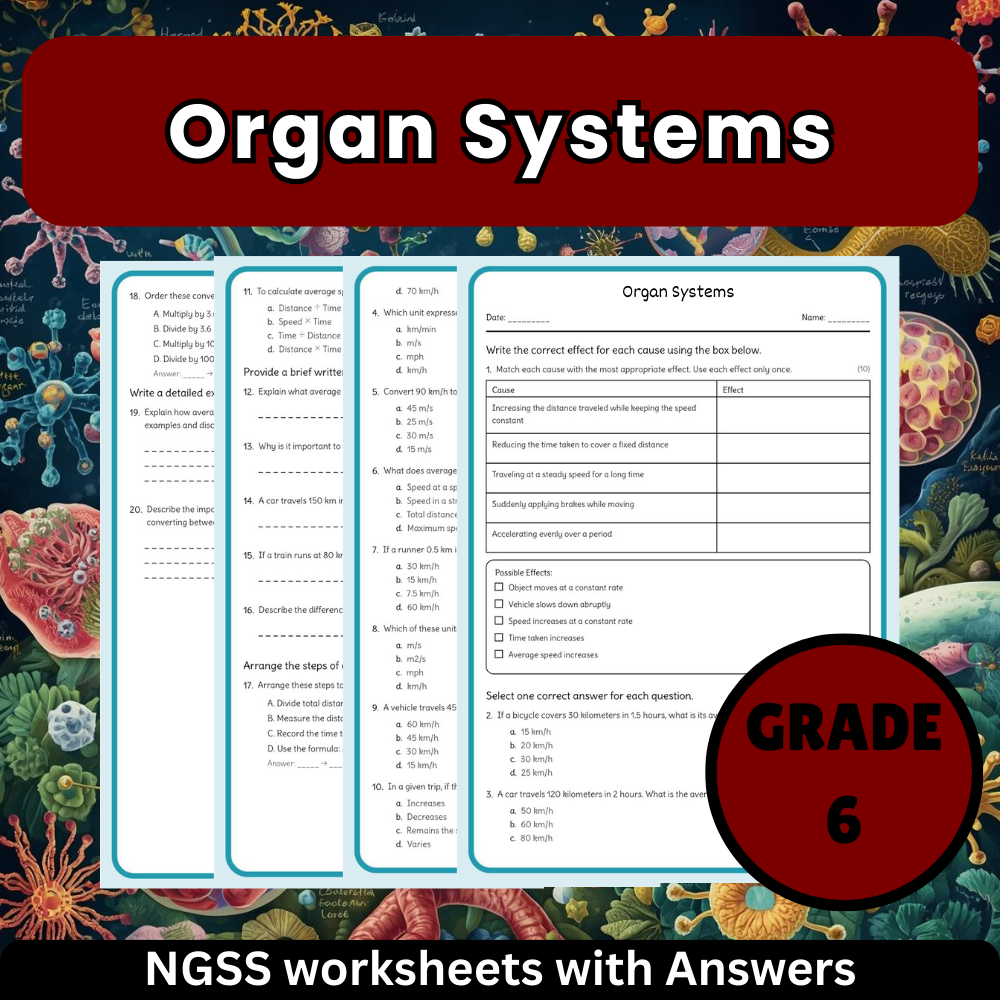
6th Grade Science | Organ Systems Worksheet + Answer Key – NGSS Aligned
Created byBright Mind ResourcesLearning Objectives
- Identify the main organs involved in the circulatory, respiratory, digestive, and nervous systems.
- Explain how organs within each system work together to perform bodily functions.
- Describe how different organ systems interact and depend on each other for overall health.
Also included in: Grade 6 Science UNIT Bundle | Cell Functions, Energy & Systems NGSS Worksheets +2 more
Instant download

Elements, Atoms and Molecules Worksheets | Grade 6 Physical Science
LCreated byLearnora ResourcesLearning Objectives
- Define matter, elements, and atoms using accurate scientific vocabulary
- Identify examples that are elements or not elements
- Explain how atoms can join to form molecules
Instant download

Filtration Method Assessment | General Standards Grade 6 Science
Created byPrism Point LearningLearning Objectives
- Understand the process of filtration and how it separates components in a mixture.
- Identify the properties of particles that allow them to be retained or pass through a filter.
- Describe observable evidence indicating successful filtration, such as sediment and clarity.
Also included in: Grade 6 Physical Science Science Lesson Bundle: General Framework
Instant download
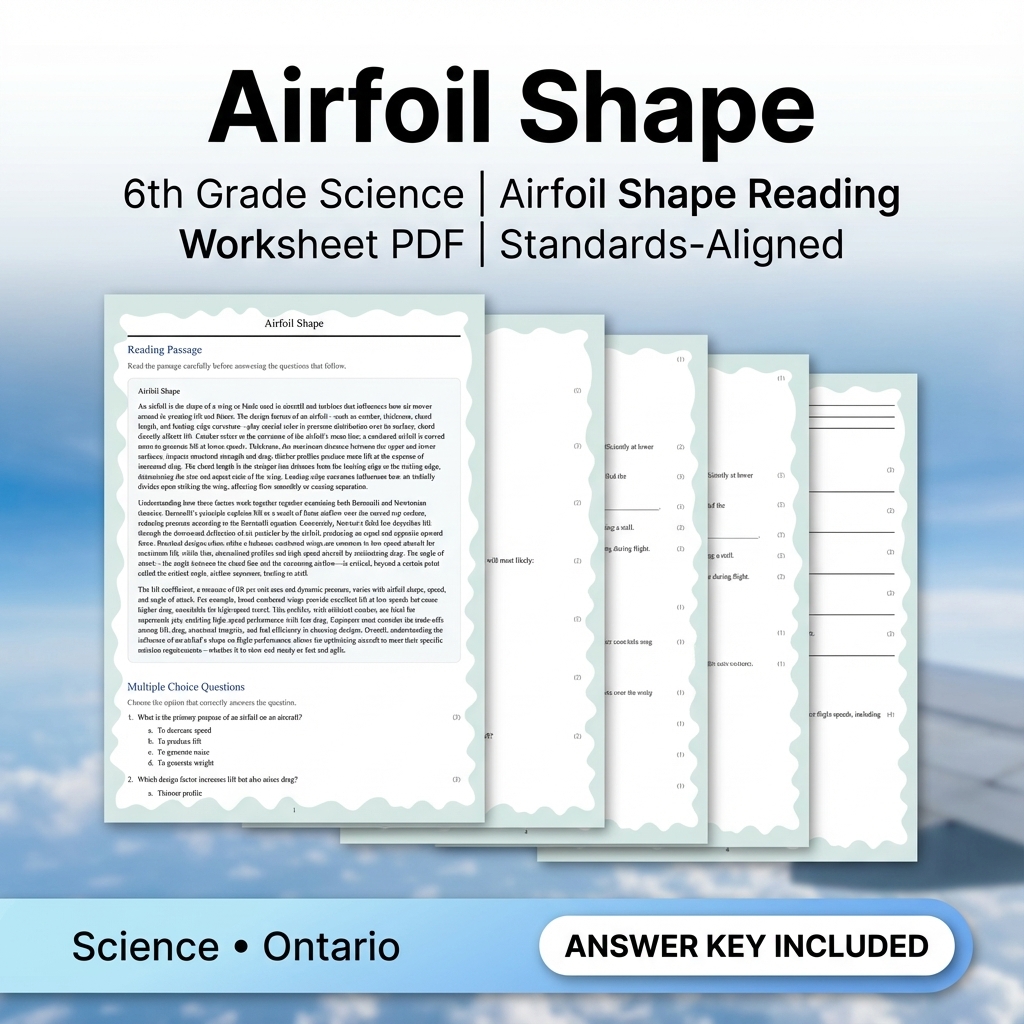
6th Grade Science | Airfoil Shape Reading Worksheet PDF | Standards-Aligned
JCreated byJ.S SheetsLearning Objectives
- Understand how camber, thickness, chord length, and leading-edge curvature influence pressure distribution and lift.
- Compare Bernoulli and Newtonian explanations for lift generation.
- Analyze how angle of attack and airfoil geometry affect lift at different speeds.
Also included in: Grade 6 Science | Aerodynamics & Flight Unit Worksheet Pack (PDF + Answer Keys) +1 more
Instant download
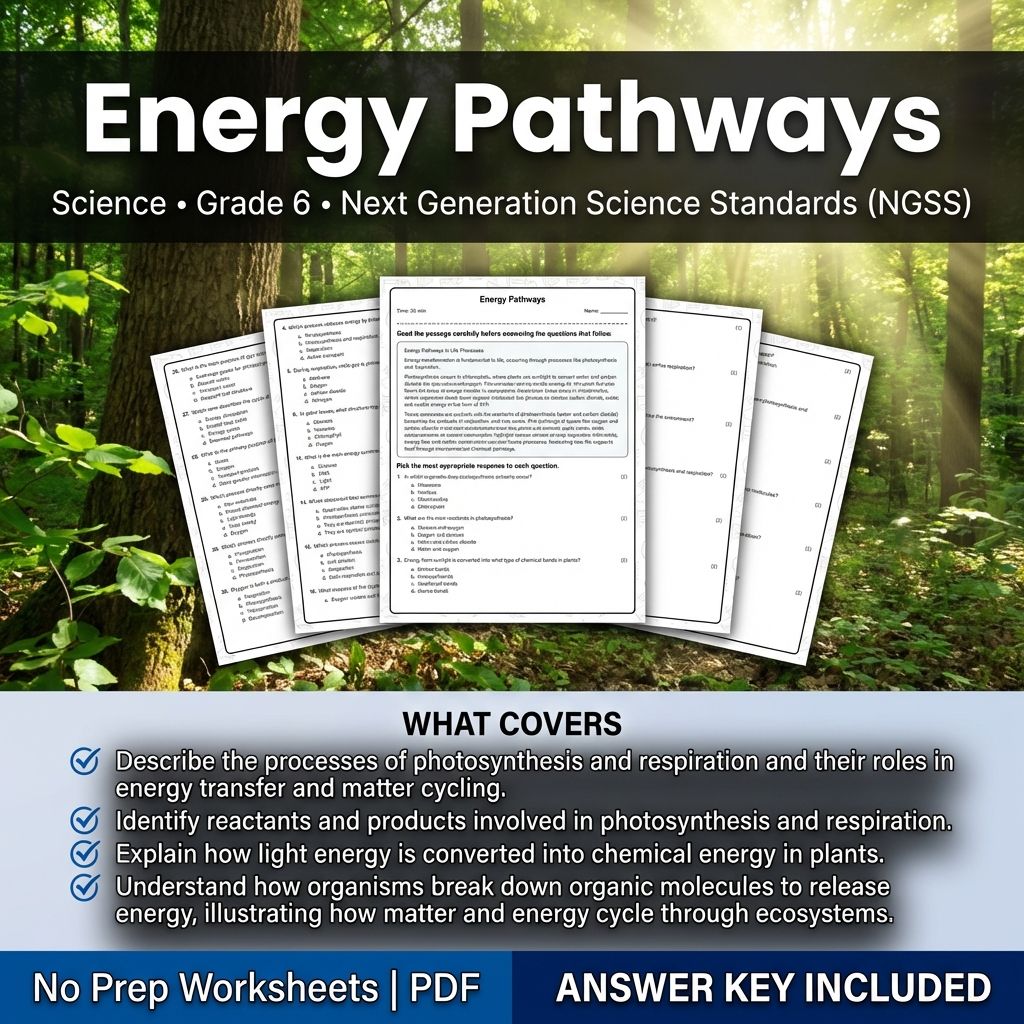
Grade 6 Science | Energy Pathways Worksheet & Answer Key (Printable PDF)
Created byCoral Reef LearningLearning Objectives
- Describe the processes of photosynthesis and respiration and their roles in energy transfer and matter cycling.
- Identify reactants and products involved in photosynthesis and respiration.
- Explain how light energy is converted into chemical energy in plants.
Instant download
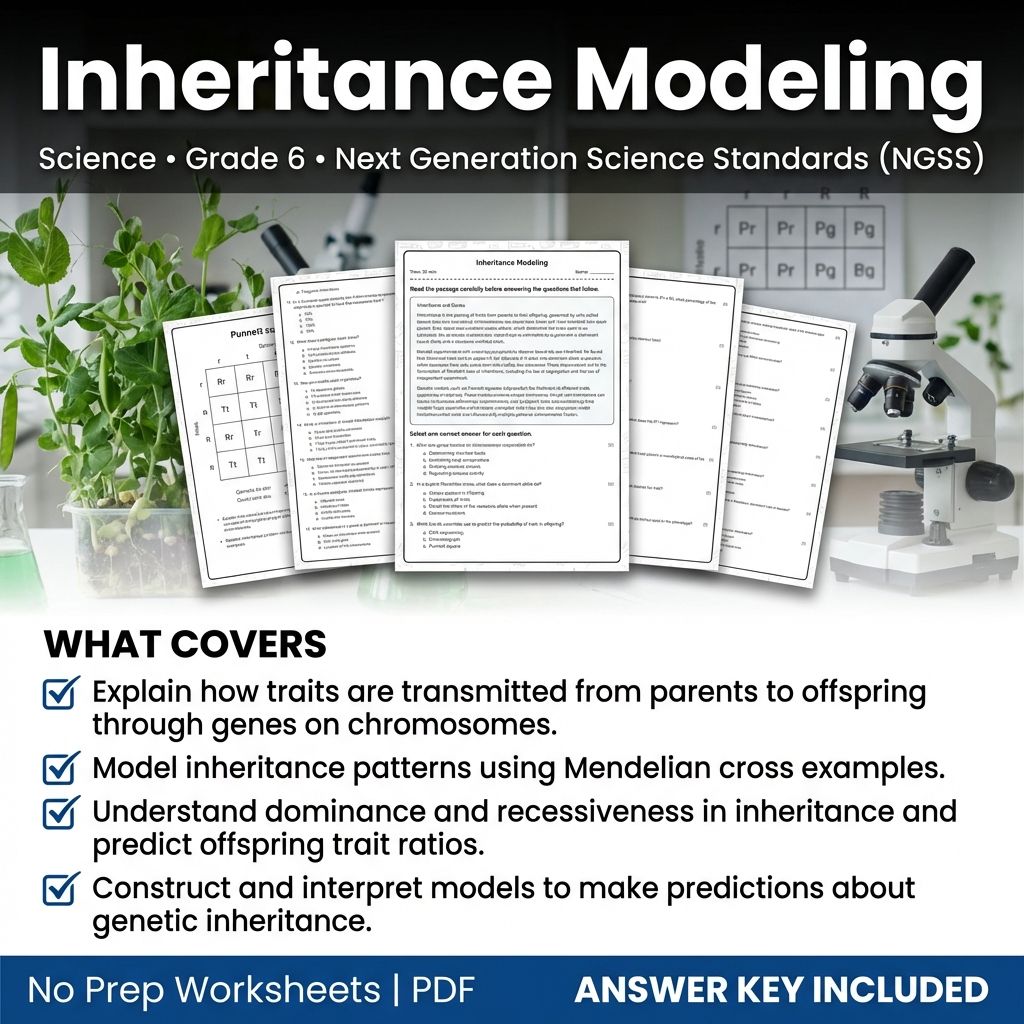
Grade 6 Science | Inheritance Modeling Worksheet & Answer Key (Printable PDF)
Created byCoral Reef LearningLearning Objectives
- Explain how traits are transmitted from parents to offspring through genes on chromosomes.
- Model inheritance patterns using Mendelian cross examples.
- Understand dominance and recessiveness in inheritance and predict offspring trait ratios.
Instant download

Grade 6 Science | Change Examples in Science - Reading Comprehension Practice
Created byCoral Reef LearningLearning Objectives
- Identify physical changes in everyday life
- Distinguish between physical and chemical changes
- Recognize examples of physical changes
Instant download
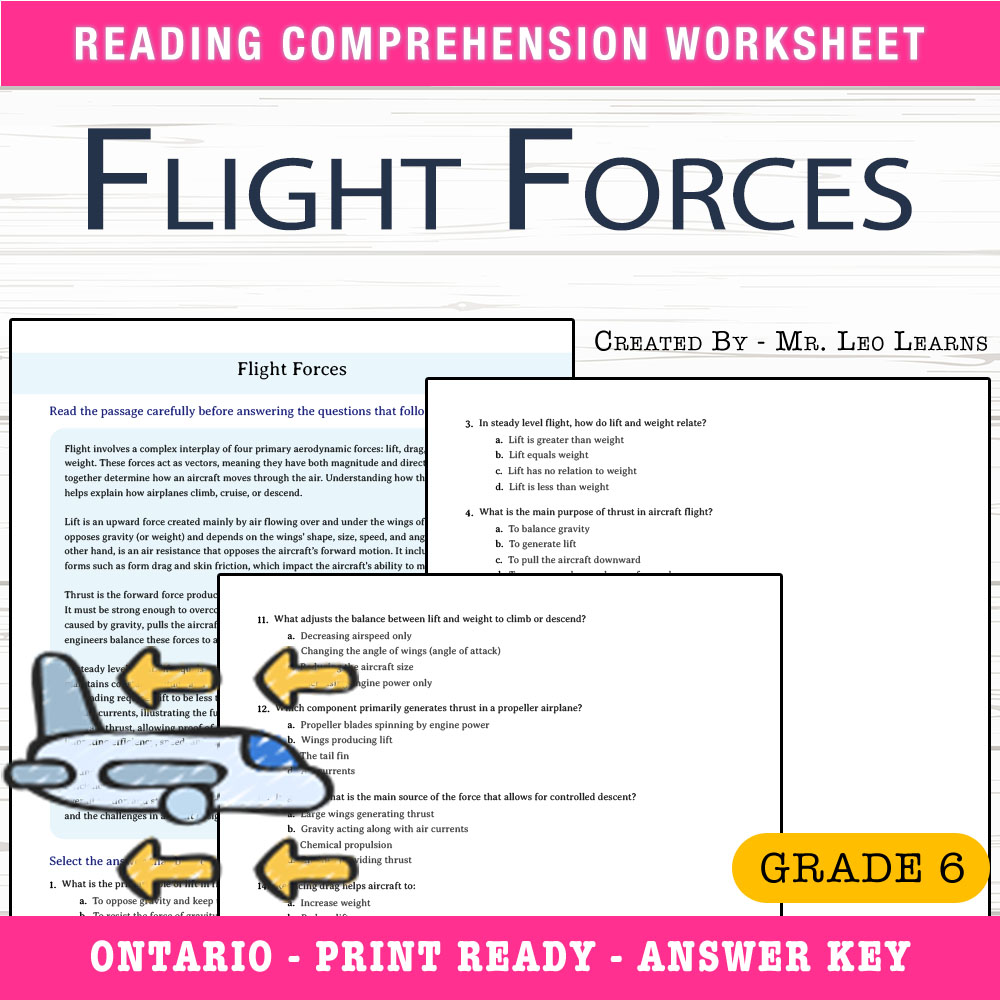
Grade 6 Science — Flight Forces Worksheet for Mastery
Created byThe Resource HubLearning Objectives
- Explain the four main aerodynamic forces: lift, drag, thrust, and weight.
- Describe how vectors of forces interact to influence airplane motion such as climbing, cruising, and descending.
- Understand how force magnitudes and directions control flight behaviors like steady level flight, climbing, and gliding.
Also included in: Grade 6 Science | Aerodynamics & Engineering Unit Workbook (Worksheet Pack) +1 more
Instant download
Grade 6 Science – Fossil Patterns & Uncovering the Past | Daily Reading
 Created byElena Brooks
Learning Objectives
- Understand how fossils form and what they reveal about ancient life.
- Identify patterns of origin, diversification, and extinction in the fossil record.
- Analyze stratigraphic sequences and morphological transitions in fossils.
Also included in: Grade 6 Science Biological Evolution Worksheet Bundle | NGSS Standards +1 more
Instant download
Grade 6 Science – Adaptation & Speciation | Daily Reading Worksheet
Created byElena BrooksLearning Objectives
- Understand the concepts of adaptation and speciation
- Identify examples of adaptation in animals and plants
- Learn how populations diverge into new species
Also included in: Grade 6 Science Biological Evolution Worksheet Bundle | NGSS Standards +1 more
Instant download
Grade 6 Science – Population Dynamics & Change | Daily Reading Worksheet
Created byElena BrooksLearning Objectives
- Understand the concept of population change over time
- Identify different types of population change such as growth, decline, and stabilization
- Interpret simple graphs and charts related to population data
Also included in: Grade 6 Science Biological Evolution Worksheet Bundle | NGSS Standards +1 more
Instant download
Grade 6 Science – Natural Selection & Evolution | Daily Reading Worksheet
Created byElena BrooksLearning Objectives
- Understand the concept of natural selection and how traits are favored based on environmental pressures.
- Identify examples of natural selection in real-world scenarios.
- Describe how certain traits increase survival and reproduction chances in various environments.
Also included in: Grade 6 Science Biological Evolution Worksheet Bundle | NGSS Standards +1 more
Instant download
Grade 6 Science – Tree Evidence & Evolution | Daily Reading Worksheet
Created byElena BrooksLearning Objectives
- Understand what homologous structures are and how they indicate evolutionary relationships.
- Identify homologous structures in different species based on anatomical features.
- Analyze the significance of molecular traits such as conserved DNA sequences in evolution.
Also included in: Grade 6 Science Biological Evolution Worksheet Bundle | NGSS Standards +1 more
Instant download

Grade 6 Science – Biodiversity Patterns in Ecosystems | Daily Reading Worksheet
Created byElena BrooksLearning Objectives
- Understand the concept of biodiversity and how it varies across different ecosystems.
- Identify factors that influence species richness and distribution.
- Analyze data displays related to biodiversity and interpret ecological patterns.
Also included in: Grade 6 Science Biological Evolution Worksheet Bundle | NGSS Standards +1 more
Instant download
Grade 6 Science – Design Refinement in Aerodynamics Daily Worksheet + Answer Key
JCreated byJ.S SheetsLearning Objectives
- Understand how shape adjustments affect flight performance
- Identify criteria for evaluating modifications to aircraft or gliders
- Learn about the trade-offs between speed, stability, and payload
Also included in: Grade 6 Science Lesson Bundle: Flight, Weather, and Aerodynamics +1 more
Instant download
6th Grade Science | Chemical Indicators Worksheet + Answer Key (PDF)
Created byBright Mind ResourcesLearning Objectives
- Identify observable signs indicating a chemical reaction has taken place.
- Distinguish between physical and chemical changes using various indicators.
- Understand the importance of multiple observations to confirm a chemical change.
Instant download
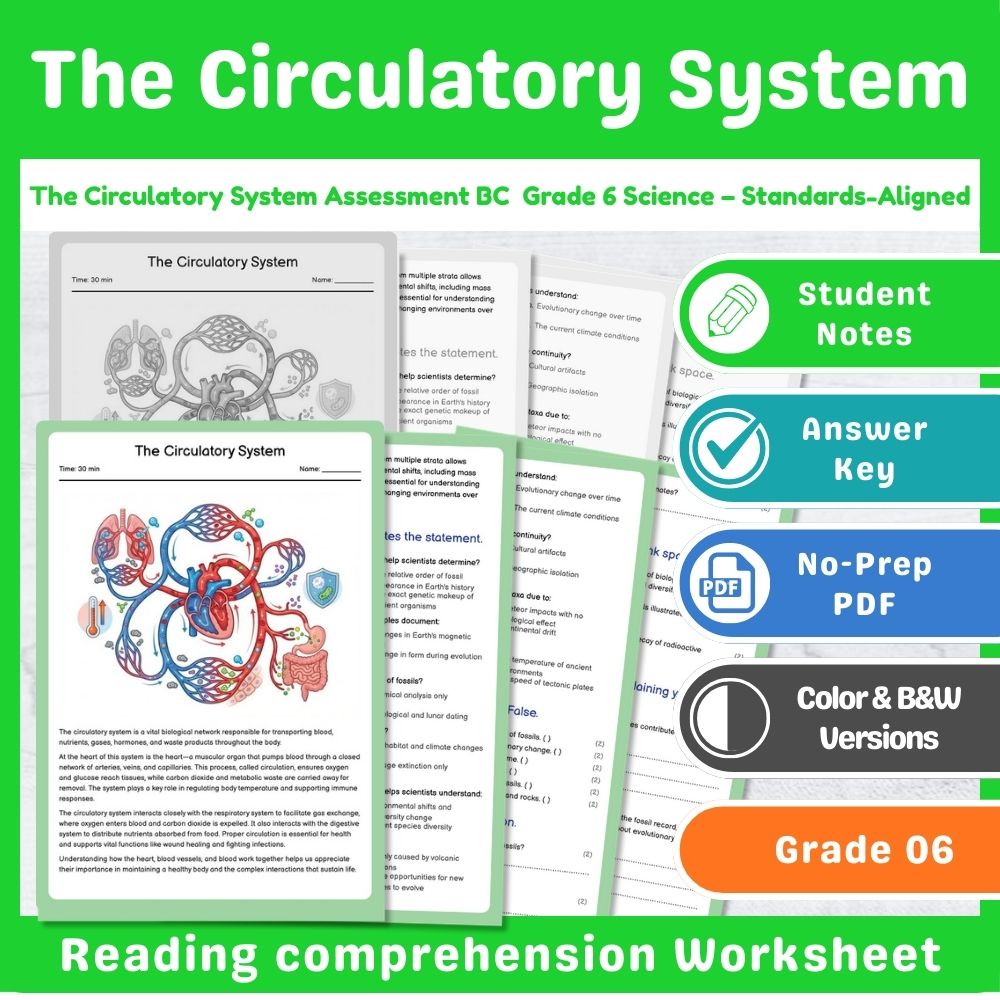
The Circulatory System Assessment Grade 6 Science – Standards-Aligned
Created byPrism Point LearningLearning Objectives
- Understand the components and functions of the circulatory system.
- Identify how blood, heart, and vessels work together to support body functions.
- Describe the interaction between the circulatory, respiratory, and digestive systems.
Instant download

Grade 6 TEKS Conservation Concepts Daily Science Reading Worksheet
 Created byBRIGHT PATH RESOURCES
Learning Objectives
- Identify the main idea of a conservation of mass passage
- Use evidence from measurements to support a conservation conclusion
- Distinguish between closed systems and open systems in terms of mass change
Also included in: Energy, Matter & Change Grade 6 Science Lesson Bundle | TEKS Daily Reading +1 more
Instant download

6th Grade Science | Variables Control Worksheet (PDF) TEKS Alignment
 Created byEvergreen Desk Education
Learning Objectives
- Identify independent, dependent, and controlled variables in a controlled experiment
- Use operational definitions to clearly explain how variables are measured or changed
- Recognize and reduce confounding variables by controlling conditions, using replication, and randomization
Instant download

Musculoskeletal System Worksheet for Grade 6 Science
JCreated byJ.S SheetsLearning Objectives
- Identify the main components of the musculoskeletal system and their functions.
- Explain how bones, muscles, and joints work together to enable movement and support.
- Describe how the musculoskeletal system interacts with other body systems like the nervous and circulatory systems.
Instant download

Grade 6 Science | Defense Interactions - Reading Comprehension Practice
Created byCoral Reef LearningLearning Objectives
- Understand the body's barrier defenses like skin and mucous membranes.
- Identify how the immune system detects and responds to pathogens.
- Learn the role of circulating immune cells and lymphatic vessels.
Instant download
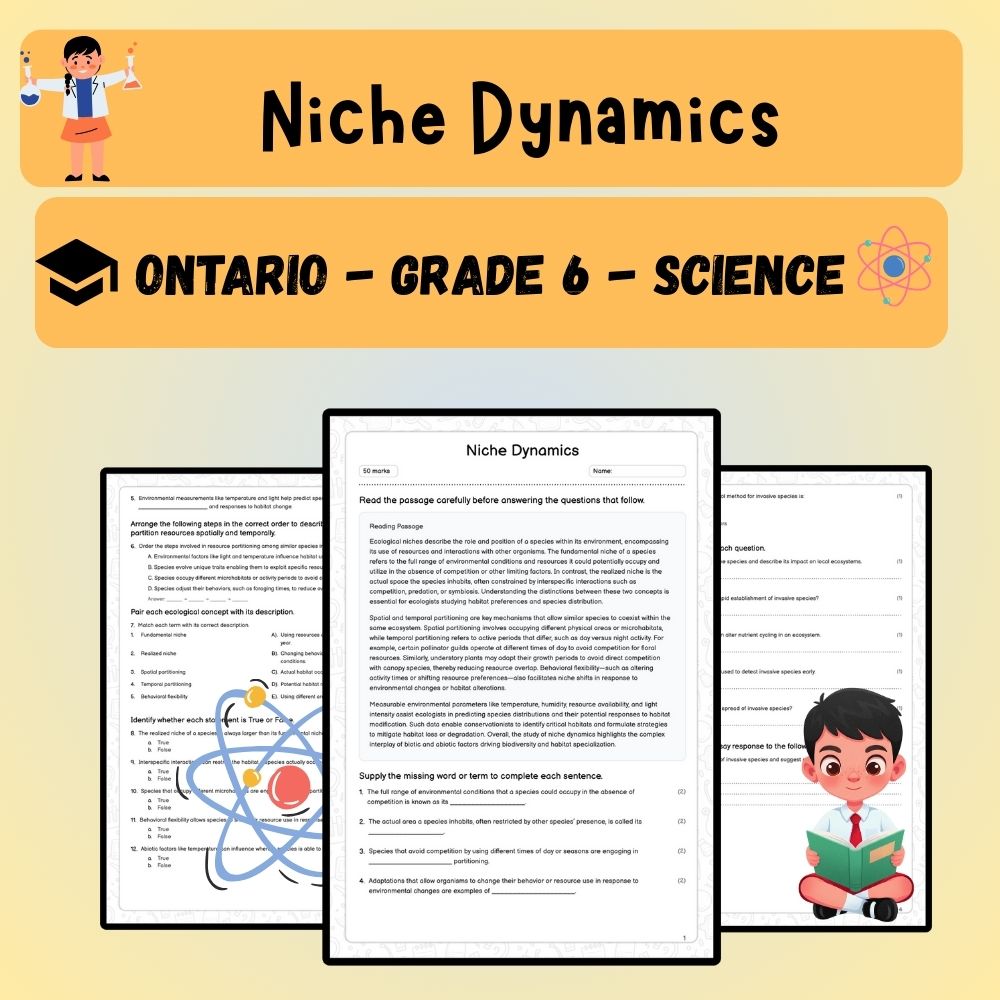
6th Grade Science | Understanding Ecological Niches Worksheet (PDF + Answer Key)
Created byPrism Point LearningLearning Objectives
- Explain the concept of ecological niches and differentiate between fundamental and realized niches.
- Analyze how abiotic factors and interspecific interactions influence resource use and habitat occupation.
- Identify examples of temporal and spatial niche partitioning among species.
Also included in: Grade 6 Science Unit Bundle – Ecology, Classification & Environment
Instant download
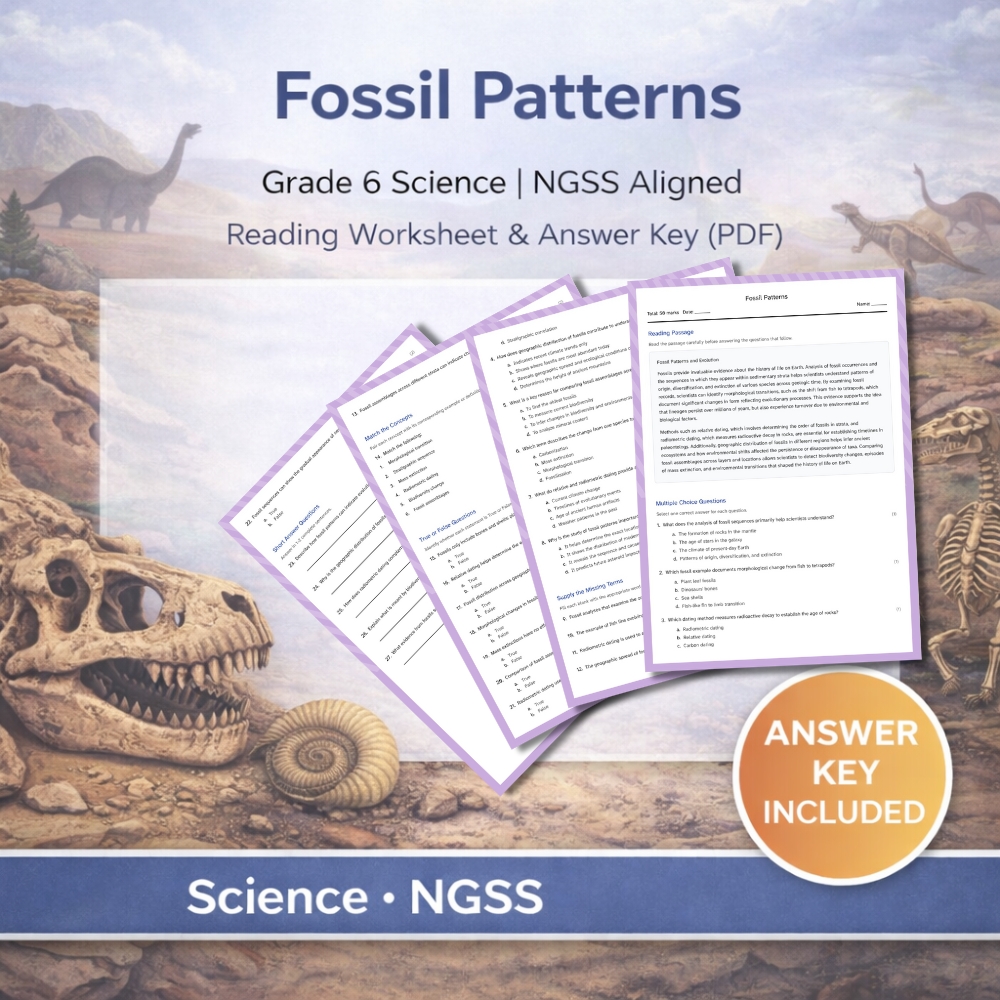
6th Grade Science | Fossil Patterns (Worksheet & Answer Key) NGSS Standards
 Created byCedar Grove Learning
Learning Objectives
- Describe how fossil occurrences and stratigraphic sequences reveal patterns of biological change over geologic time.
- Identify morphological transitions in fossils, such as fish-to-tetrapod evolution, as evidence of change in form.
- Explain how methods like relative dating and geographic distribution support understanding of lineage continuity and extinction.
Also included in: Grade 6 Science | Ecosystems, Evolution & Biodiversity | NGSS Worksheet Bundle +1 more
Instant download
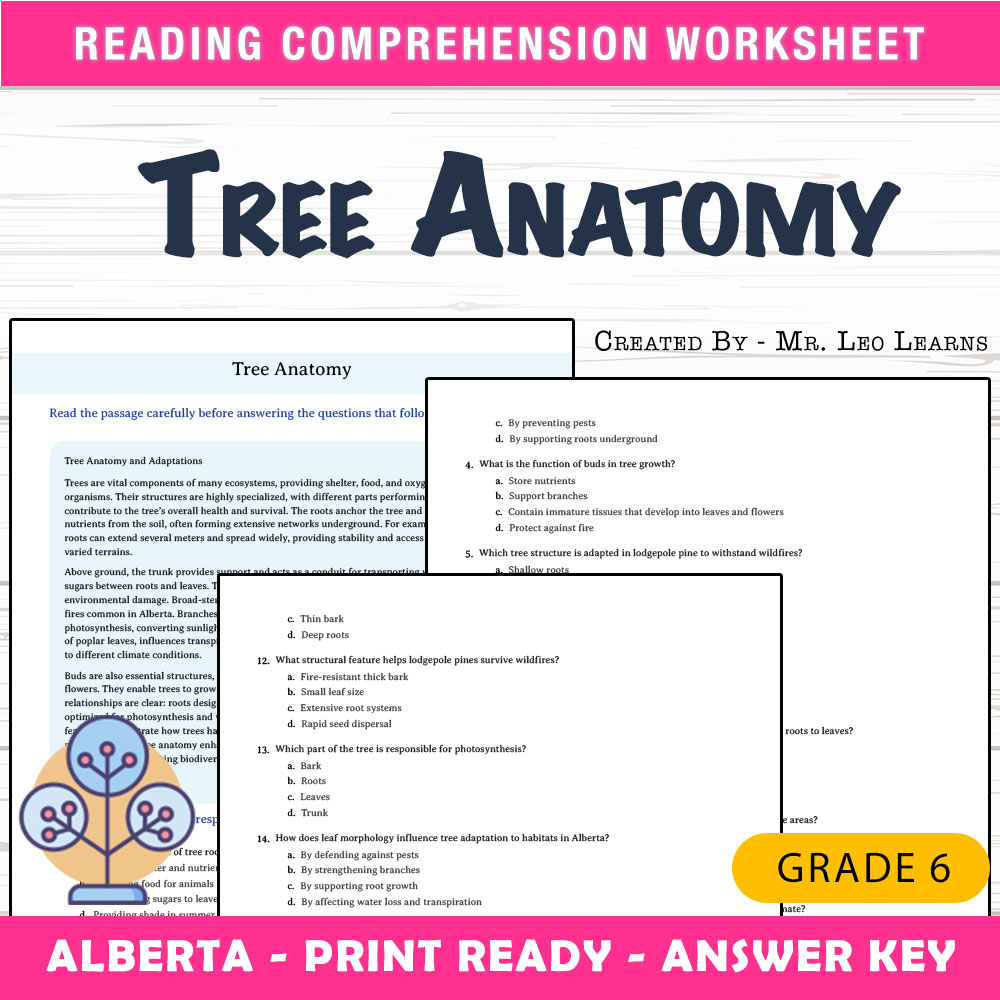
Grade 6 Science — Tree Anatomy Worksheet MCQ Paper for Mastery
Created byThe Resource HubLearning Objectives
- Identify main structures of trees such as roots, trunk, branches, leaves, buds, and bark.
- Explain the functions of different tree structures in support, transport, storage, and protection.
- Understand how structural variations in trees adapt to different habitats in Alberta.
Also included in: Grade 6 Science | Trees and Forests Unit Bundle for Alberta (Worksheet Pack) +1 more
Instant download
About Grade 6 Science Worksheets
Explore Grade 6 Science worksheets for classwork, homework, or review. Our 5,969 printables download instantly as PDFs.
MyTeachingSheets worksheets are made by real teacher-authors and checked before they go live. Download any as a print-ready PDF for lessons, homework, or independent practice — most include answer keys, and previews are always free.