
Grade 6 Science Worksheets
5,969 worksheets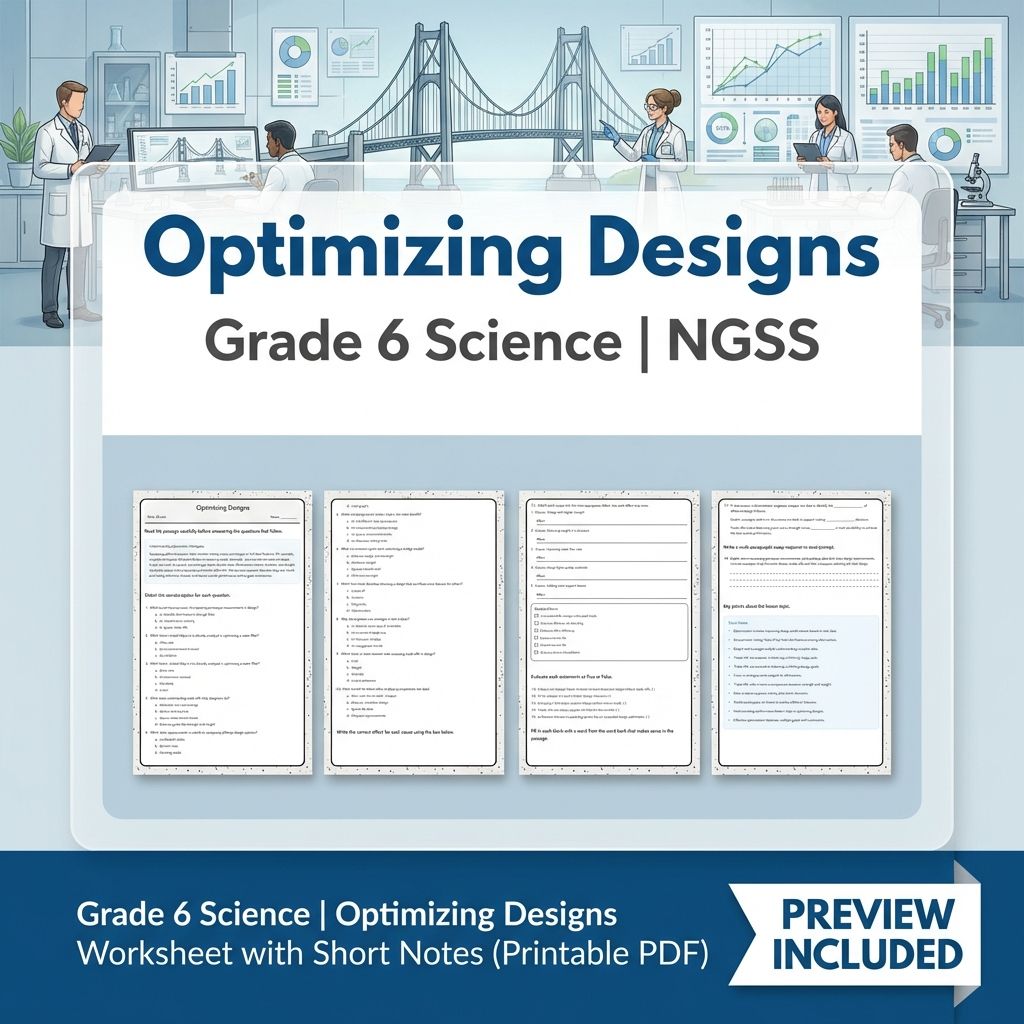
Grade 6 Science | Optimizing Designs Worksheet with Short Notes (Printable PDF)
 Created byMeadowlark Worksheets
Learning Objectives
- Analyze data from comparative tests to identify performance characteristics and trade-offs.
- Use graphs, averages, and error discussions to support design choices.
- Understand how to balance competing goals like strength versus weight or cost versus durability.
Also included in: Grade 6 Science NGSS Engineering Design | STEM Worksheets & Activities Bundle +1 more
Instant download
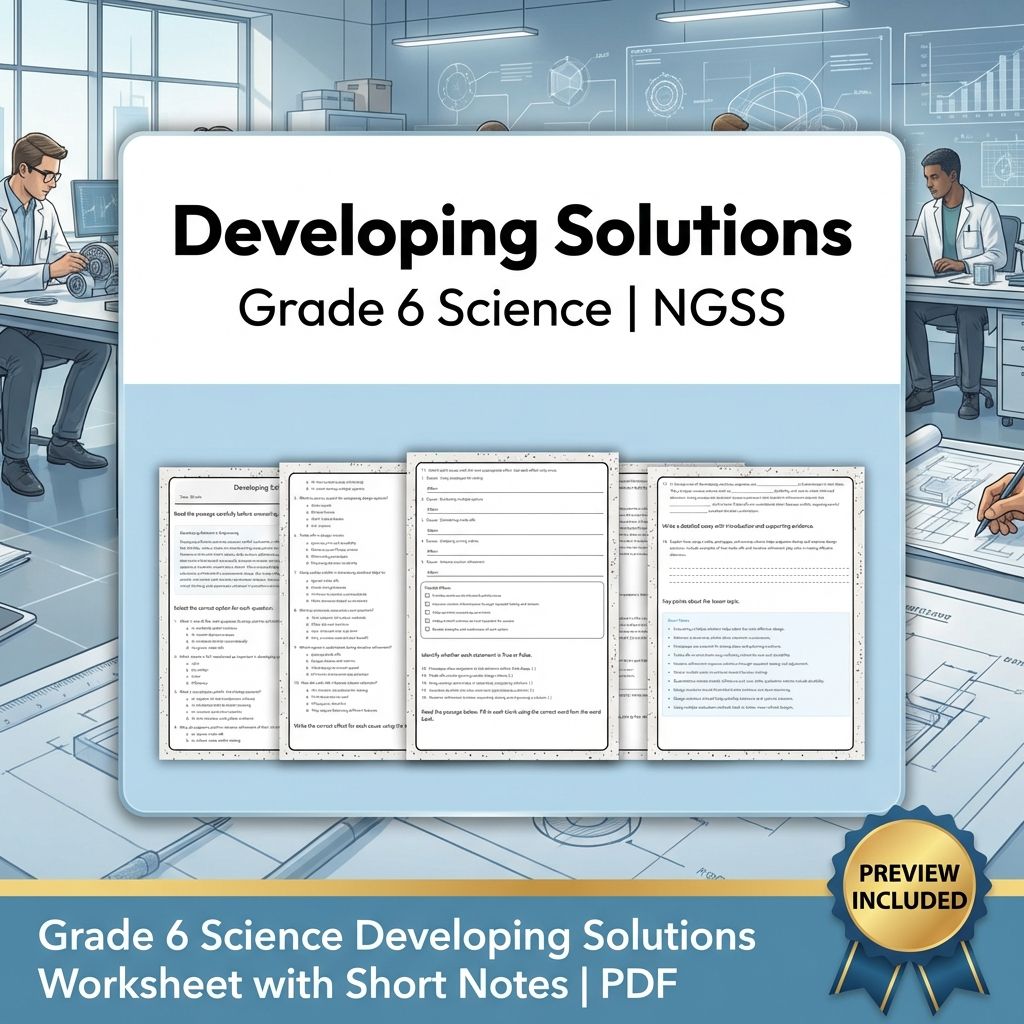
Grade 6 Science Developing Solutions Worksheet with Short Notes PDF
Created byMeadowlark WorksheetsLearning Objectives
- Compare multiple design solutions using matrices, scoring rubrics, and prototypes.
- Analyze quantitative and qualitative metrics such as efficiency, durability, manufacturability, and cost.
- Use models and evidence-based justification to rank options and improve solutions.
Also included in: Grade 6 Science NGSS Engineering Design | STEM Worksheets & Activities Bundle +1 more
Instant download
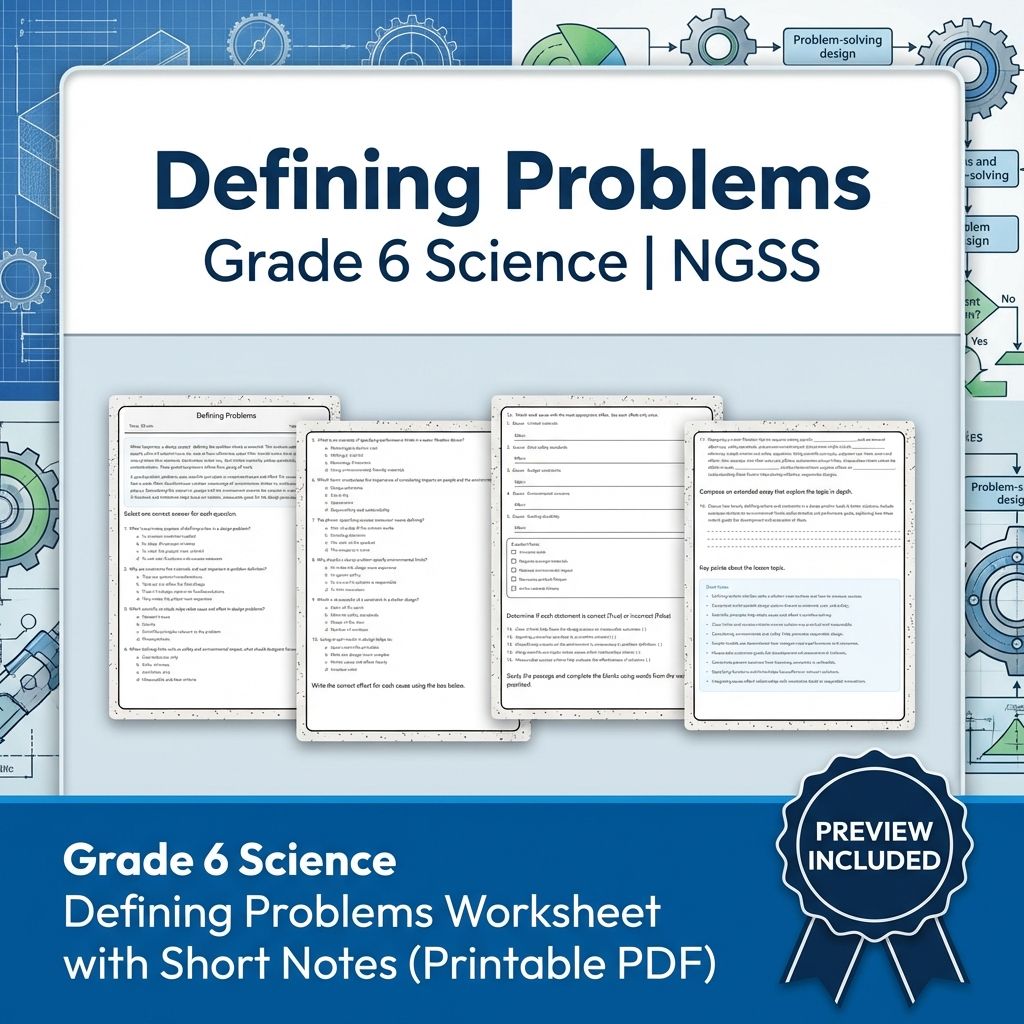
Grade 6 Science Defining Problems Worksheet with Short Notes (Printable PDF)
Created byMeadowlark WorksheetsLearning Objectives
- Understand how to establish criteria and constraints for a design problem.
- Identify ways to specify required functions and success measures.
- Relate cause and effect using scientific principles in problem definition.
Also included in: Grade 6 Science NGSS Engineering Design | STEM Worksheets & Activities Bundle +1 more
Instant download
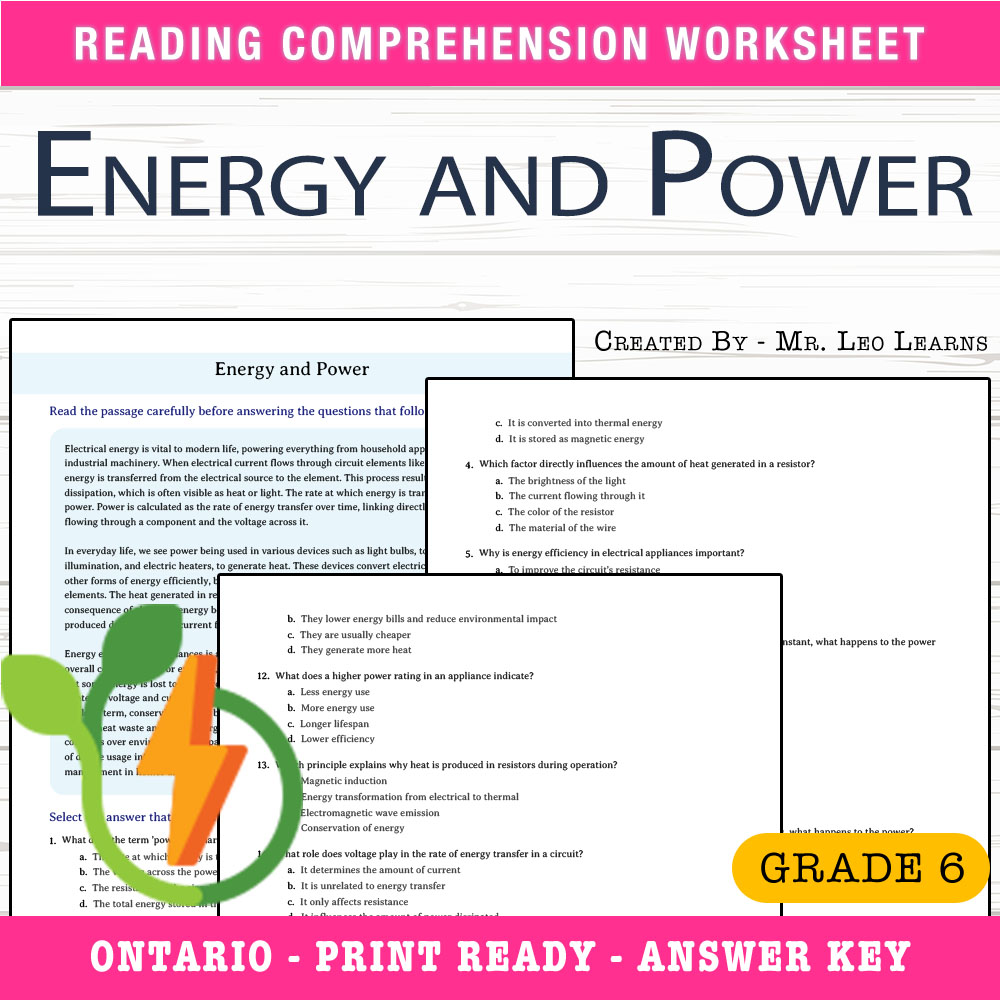
Grade 6 Science — Energy and Power Worksheet for Mastery
 Created byThe Resource Hub
Learning Objectives
- Explain the relationship between electrical energy transfer and power dissipation in circuit elements.
- Define power as the rate of energy transfer and connect it to current and voltage.
- Identify everyday examples of electrical power usage such as lighting and heating.
Also included in: Grade 6 Science Unit Bundle – Circuits, Electricity & Energy Worksheets +1 more
Instant download
Grade 6 Science – Adaptation Tradeoffs Worksheet for Mastery | PDF + Answer Key
Created byThe Resource HubLearning Objectives
- Understand the concept of adaptation trade-offs and how they influence organism strategies.
- Identify examples of specialists and generalists in different environments.
- Analyze how environmental fluctuations affect evolutionary strategies such as niche specialization and broad tolerance.
Also included in: Grade 6 Science Unit Bundle | Ecosystems, Genetic Traits & Environmental Impact +1 more
Instant download

Grade 6 Science – Series Circuit Characteristics Worksheet for Mastery
Created byThe Resource HubLearning Objectives
- Explain the single-path configuration of series circuits and how current remains consistent through all components.
- Describe how voltage divides among series-connected components and relate this to brightness in incandescent bulbs.
- Analyze how adding resistances in series impacts overall circuit resistance and device operation.
Also included in: Grade 6 Science Unit Bundle – Circuits, Electricity & Energy Worksheets +1 more
Instant download

Grade 6 Science — Pollution Effects Worksheet for Mastering Environmental Impact
Created byThe Resource HubLearning Objectives
- Understand the ecological impacts of nutrient loading, chemical contaminants, and bioaccumulation due to pollution.
- Identify measurable indicators such as dissolved oxygen, algal biomass, and contaminant residues in ecosystems.
- Explain how pollution influences species diversity and ecosystem functioning in terrestrial and aquatic environments.
Also included in: Grade 6 Science Unit Bundle | Ecosystems, Genetic Traits & Environmental Impact +1 more
Instant download
Grade 6 Science – Electric Current Worksheet for Mastering Fundamentals
Created byThe Resource HubLearning Objectives
- Explain how electric current is an organized movement of charges through a conductor.
- Differentiate between conventional current direction and electron flow.
- Describe potential difference as the driving force behind current.
Also included in: Grade 6 Science Unit Bundle – Circuits, Electricity & Energy Worksheets +1 more
Instant download

Grade 6 Science — Niche Dynamics Worksheet for Mastery
Created byThe Resource HubLearning Objectives
- Understand the concept of ecological niches and the difference between fundamental and realized niches.
- Identify how abiotic factors and interspecific interactions influence resource use and habitat occupation.
- Analyze examples of niche partitioning among species and the role of behavioral flexibility in adaptation.
Also included in: Grade 6 Science Unit Bundle | Ecosystems, Genetic Traits & Environmental Impact +1 more
Instant download

Grade 6 Science – Combined Circuits Worksheet for Mastery
Created byThe Resource HubLearning Objectives
- Understand the principles of mixed series-parallel electrical networks and how to decompose them into simpler subcircuits.
- Analyze current and voltage distribution in combined circuit configurations and predict the effects of element changes.
- Identify diagnostic signs in combined circuits, such as brightness variations, to determine component status.
Also included in: Grade 6 Science Unit Bundle – Circuits, Electricity & Energy Worksheets +1 more
Instant download
Grade 6 Science – Charge Concepts | Daily Reading Worksheet + Answer Key
JCreated byJ.S SheetsLearning Objectives
- Understand the definition of electric charge
- Differentiate between static and current electricity
- Identify examples of charge phenomena in daily life
Also included in: Grade 6 Science Lesson Group – Circuits and Energy Ontario Framework +1 more
Instant download
Grade 6 Science – Physiological Adaptations Worksheet MCQ Paper
Created byThe Resource HubLearning Objectives
- Understand internal physiological processes that support survival in different environments.
- Identify examples of physiological adaptations such as heat exchange, water conservation, and metabolic regulation.
- Link physiological mechanisms to their roles in helping organisms adapt to environmental extremes.
Also included in: Grade 6 Science Unit | Multicellular Systems & Functions Worksheet Bundle +1 more
Instant download

Grade 6 Graph Selection Worksheet | Alberta Practice PDF
 Created byClear Sky Classroom
Learning Objectives
- Match data types (time trends, categories, relationships) to appropriate graph types
- Select an appropriate scale and axis labels to avoid misleading interpretations
- Use annotations to clarify key features of data in science graphs
Also included in: Grade 6 Scientific Investigation Data Analysis Science Lesson Bundle | Alberta +1 more
Instant download
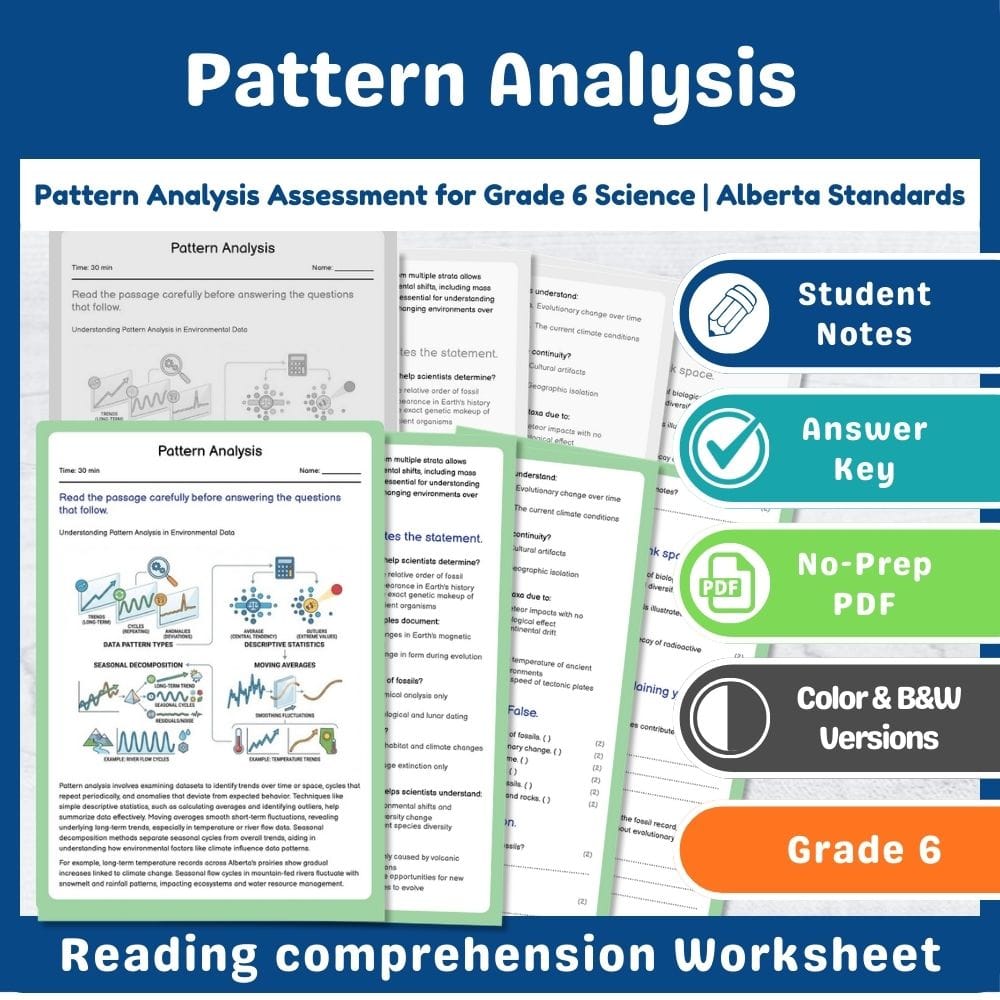
Pattern Analysis Assessment for Grade 6 Science | Alberta Standards
 Created byPrism Point Learning
Learning Objectives
- Understand methods used to detect trends, cycles, and anomalies in datasets.
- Recognize the role of descriptive statistics, moving averages, and seasonal decomposition in pattern analysis.
- Link observed data patterns to environmental drivers through examples such as temperature trends and river flow cycles.
Also included in: Lesson Grade 6 Science Mini Bundle | Evidence and Investigation
Instant download
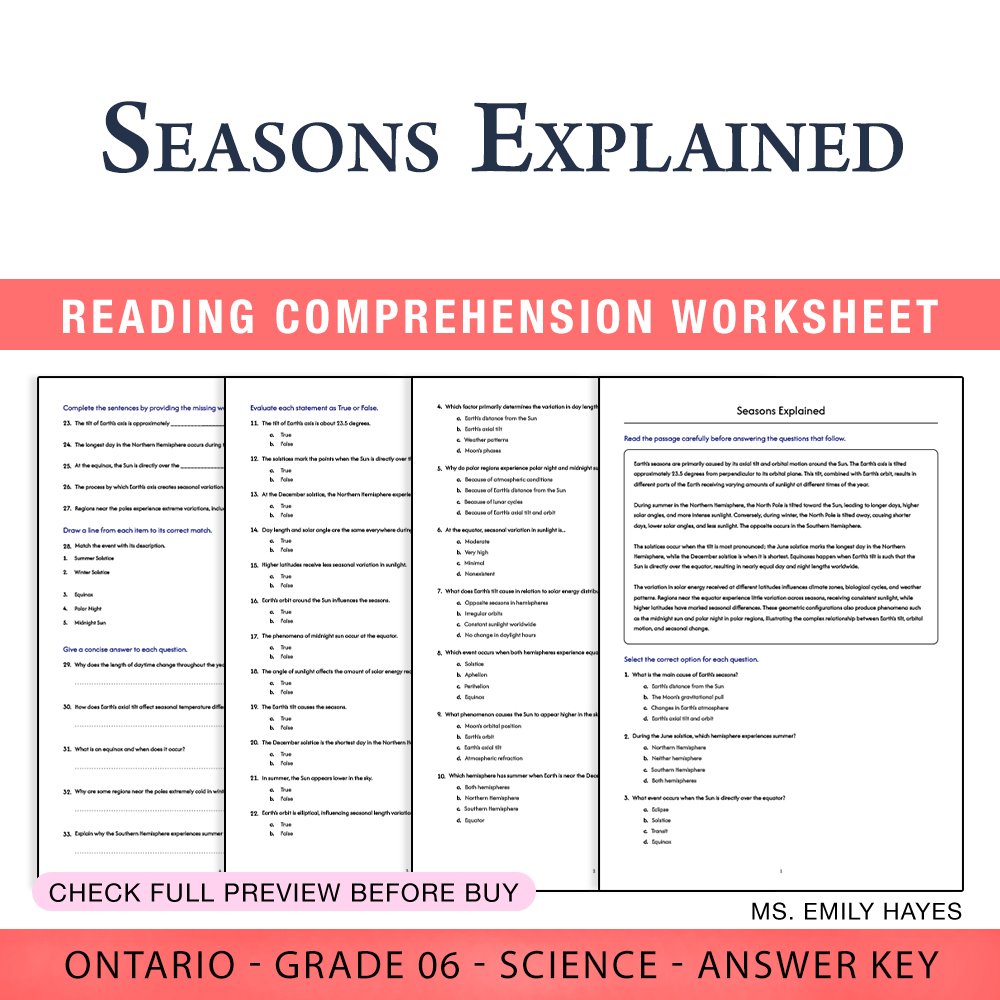
6th Grade Science | Seasons Explained Worksheet (PDF + Answer Key)
 Created byCopper Leaf Classroom
Learning Objectives
- Explain how Earth's axial tilt causes seasonal variation in sunlight and temperature.
- Describe why hemispheres experience opposite seasons due to Earth's orbit and tilt.
- Identify the effects of solstices and equinoxes on daylight duration and solar elevation.
Instant download
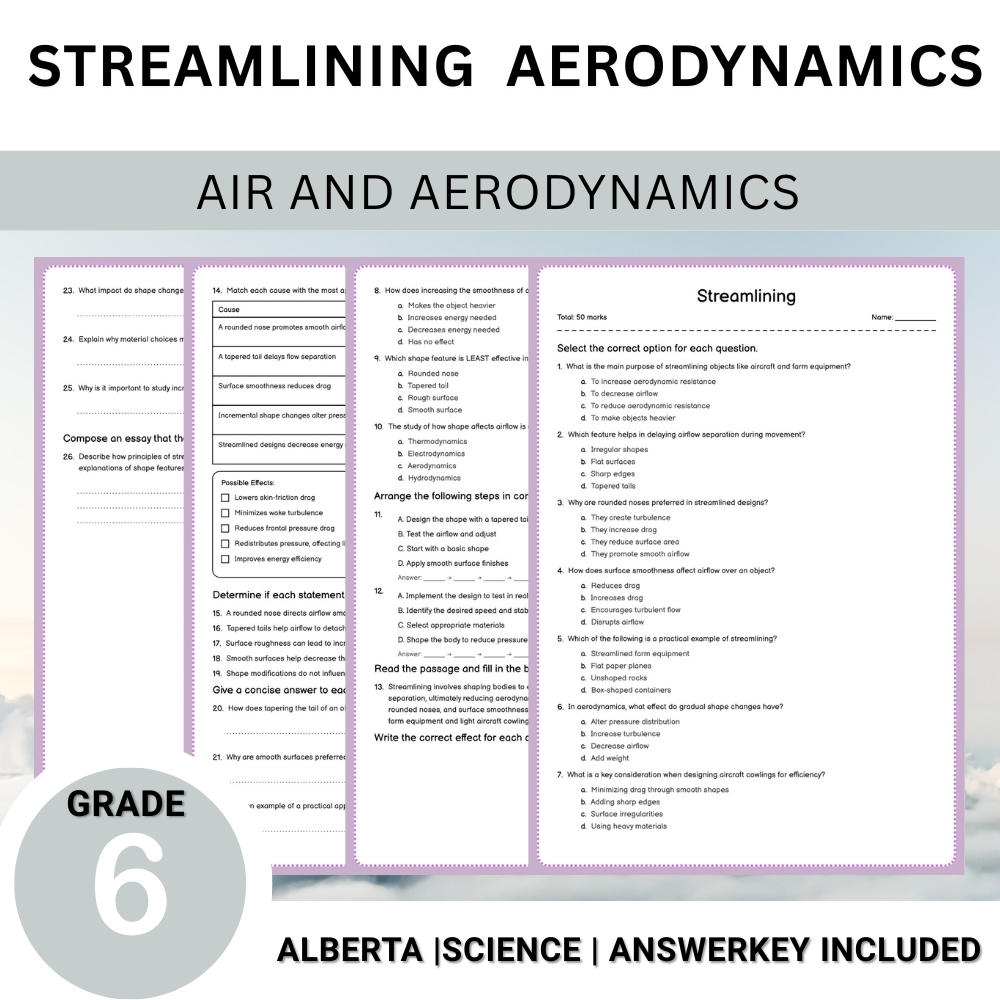
Grade 6 Science | Streamlining Worksheet – Assessment & Student Practice
Learning Objectives
- Understand how shape modifications in objects reduce aerodynamic resistance.
- Identify key principles like tapered tails, rounded noses, and surface smoothness that influence airflow.
- Connect practical examples such as farm equipment and aircraft cowlings to aerodynamic efficiency.
Also included in: Grade 6 Science Unit Bundle | Flight, Air Pressure & Aerodynamics Worksheets +1 more
Instant download
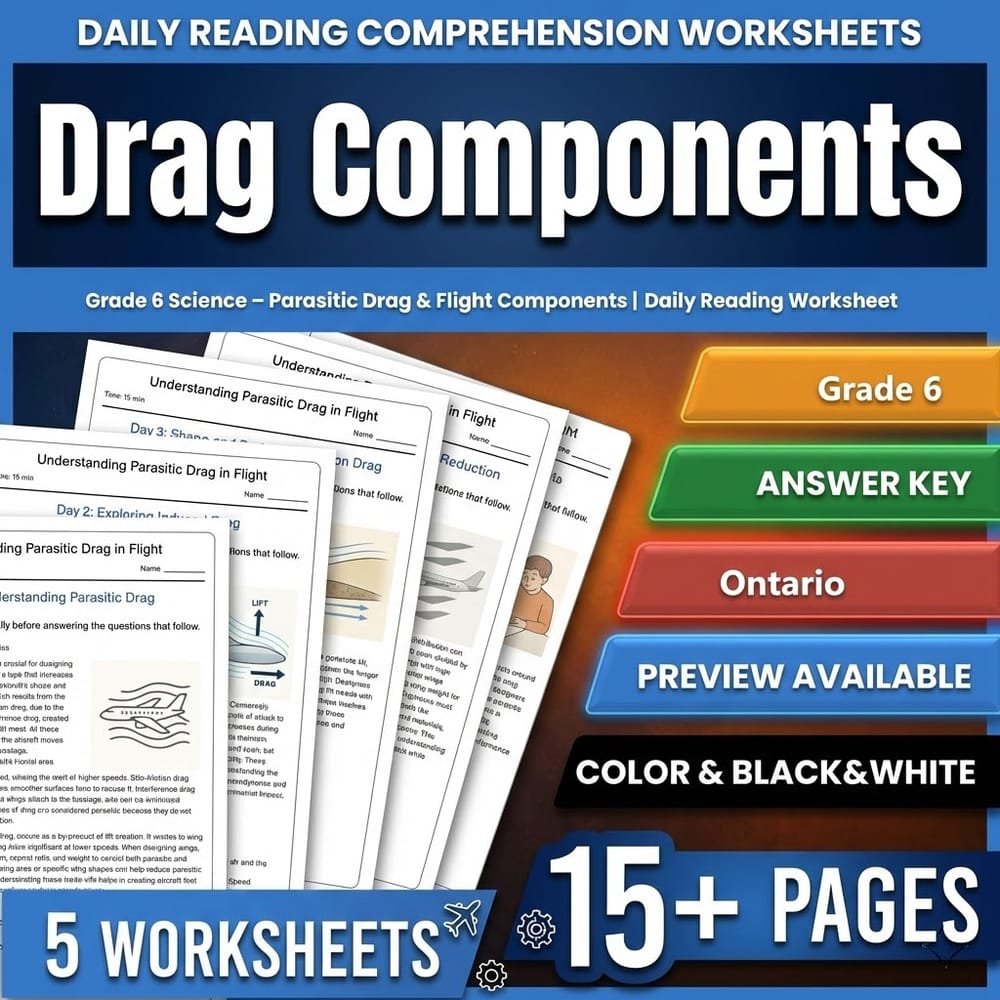
Grade 6 Science – Parasitic Drag & Flight Components | Daily Reading Worksheet
 Created byQuiet Forest Education
Learning Objectives
- Identify the different types of parasitic drag.
- Explain how form, skin-friction, and interference drag contribute to parasitic drag.
- Understand the dependence of parasitic drag on speed and aircraft shape.
Also included in: Flight Science Grade 6 Daily Reading Worksheets Bundle | Ontario +1 more
Instant download
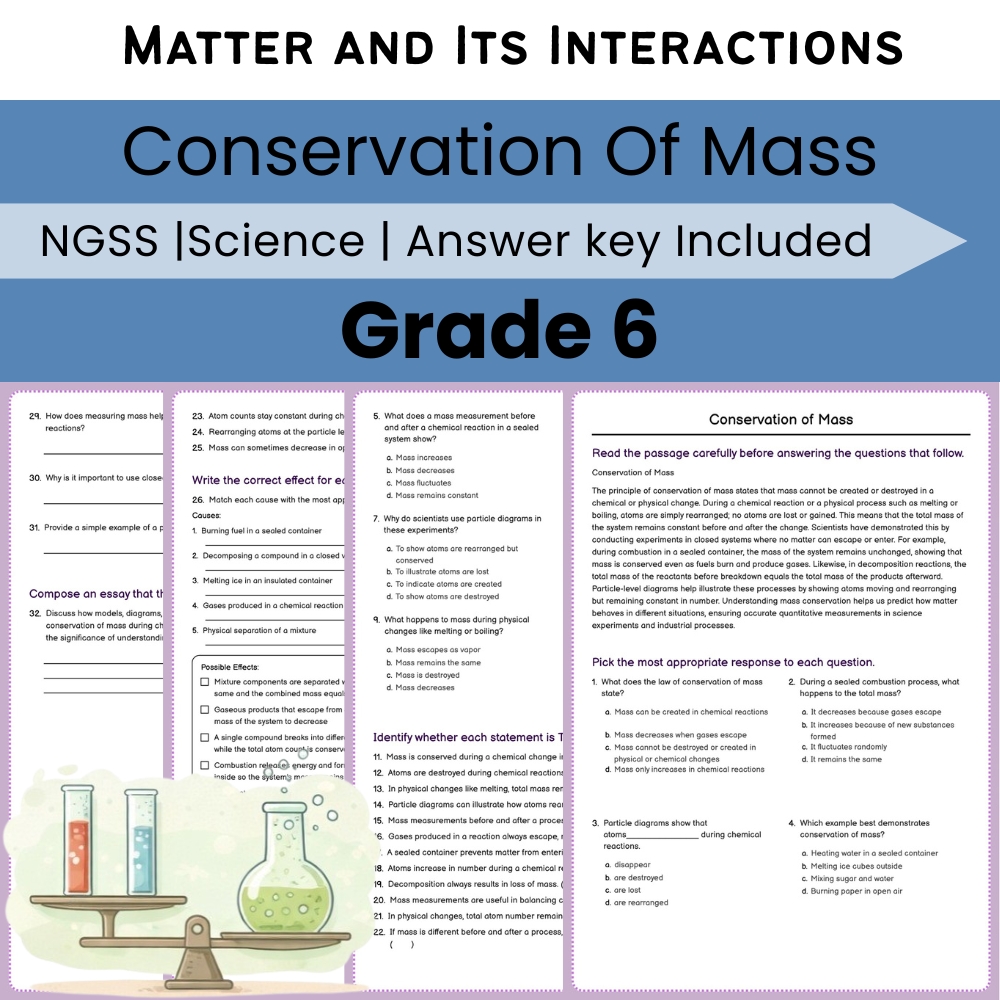
Grade 6 Science | Conservation of Mass Worksheet + Answer Key (Printable PDF)
Learning Objectives
- Understand the principle of conservation of mass in physical and chemical changes.
- Trace atoms and mass during chemical reactions and physical processes.
- Use models and diagrams to demonstrate mass conservation at the particle level.
Also included in: Grade 6 Science | Matter and Its Interactions NGSS Unit Bundle - Assessments & Worksheets +1 more
Instant download
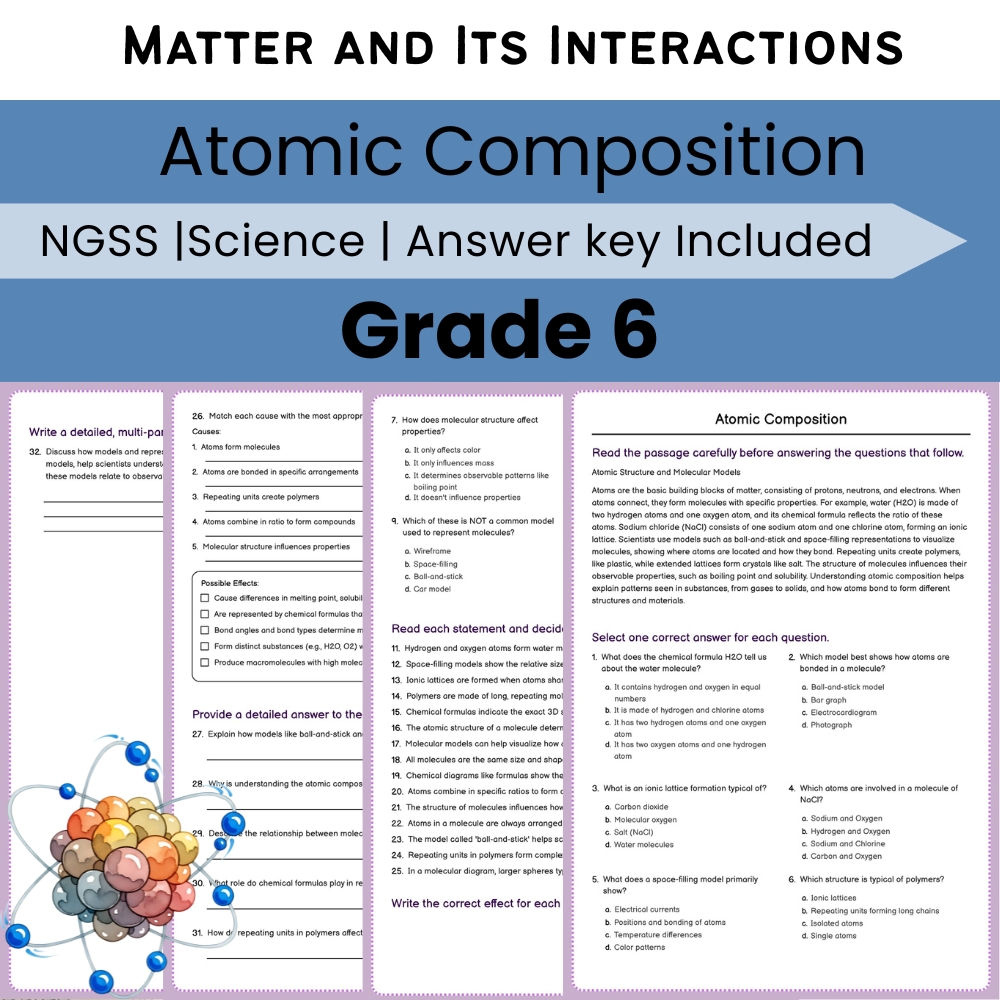
Grade 6 Science | Atomic Composition Worksheet – NGSS Assessment & Student Practice (PDF)
Learning Objectives
- Describe how atoms combine to form simple molecules like H2O and NaCl.
- Use models such as ball-and-stick and space-filling representations to visualize molecules.
- Explain the relationship between molecular structure and observable patterns of matter.
Also included in: Grade 6 Science | Matter and Its Interactions NGSS Unit Bundle - Assessments & Worksheets +1 more
Instant download
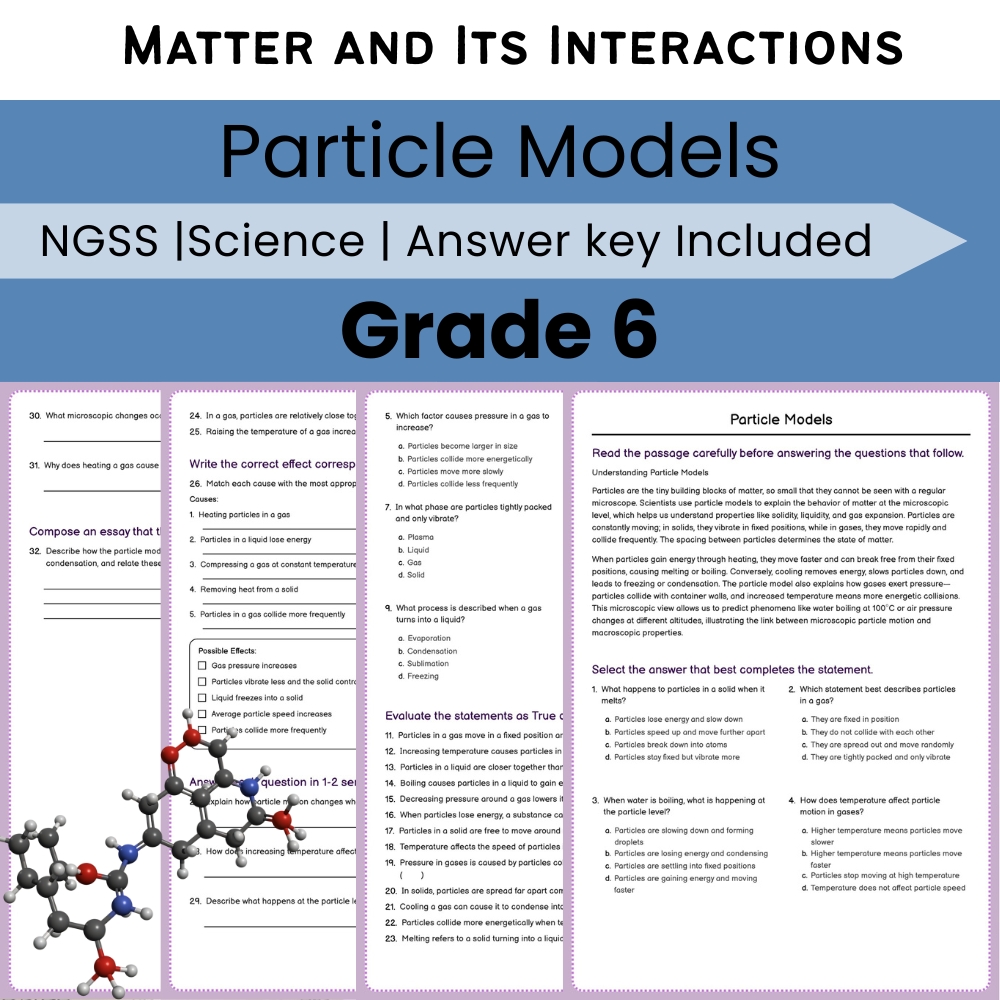
Grade 6 Science | Particle Models Worksheet (Printable PDF & Assessments)
Learning Objectives
- Describe matter as composed of particles too small to see and relate microscopic behavior to macroscopic properties.
- Explain particle motion, collisions, and spacing in different phases of matter.
- Use particle models to understand changes of state such as melting, freezing, boiling, and condensation.
Also included in: Grade 6 Science | Matter and Its Interactions NGSS Unit Bundle - Assessments & Worksheets +1 more
Instant download
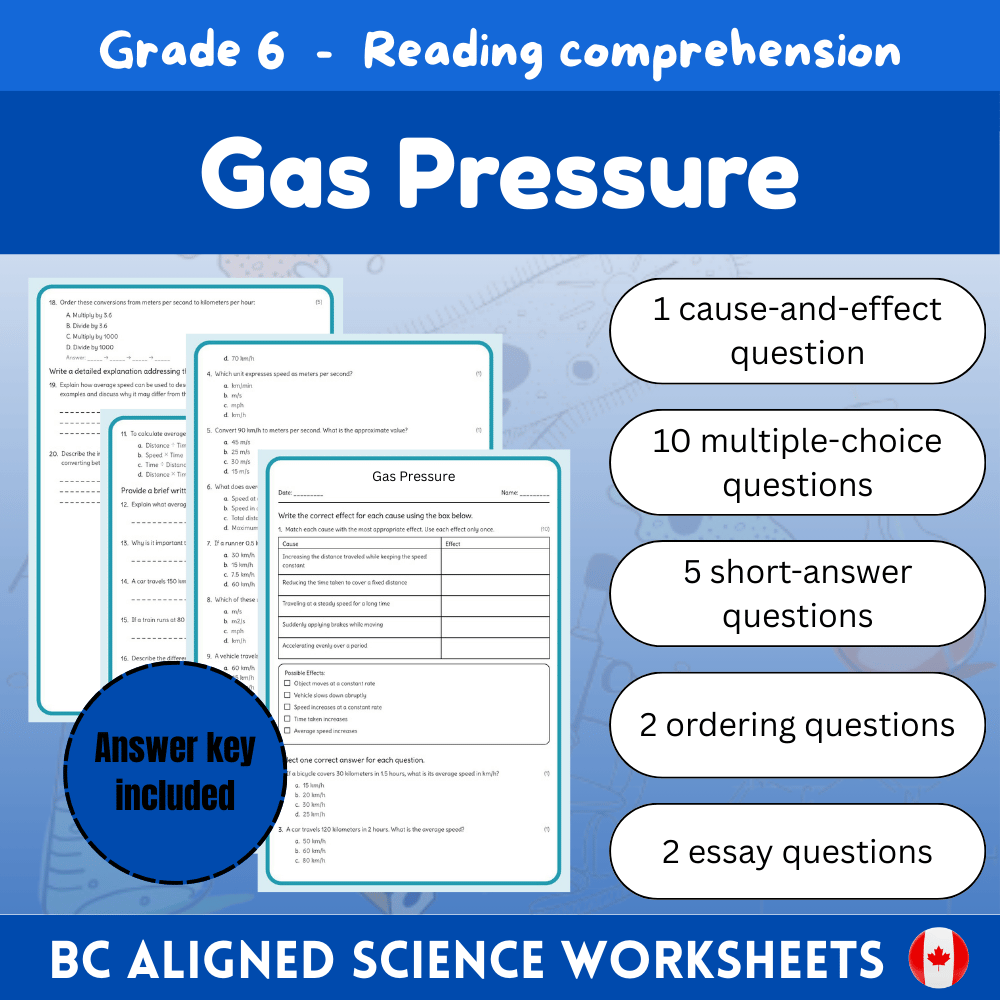
6th Grade Science | Gas Pressure Concepts Worksheet + Answer Key – BC Standards
 Created byBright Mind Resources
Learning Objectives
- Explain how gas pressure results from particle collisions with container walls.
- Describe how changes in temperature and volume affect gas pressure.
- Use the particle model to understand gas behaviours such as compression and expansion.
Instant download
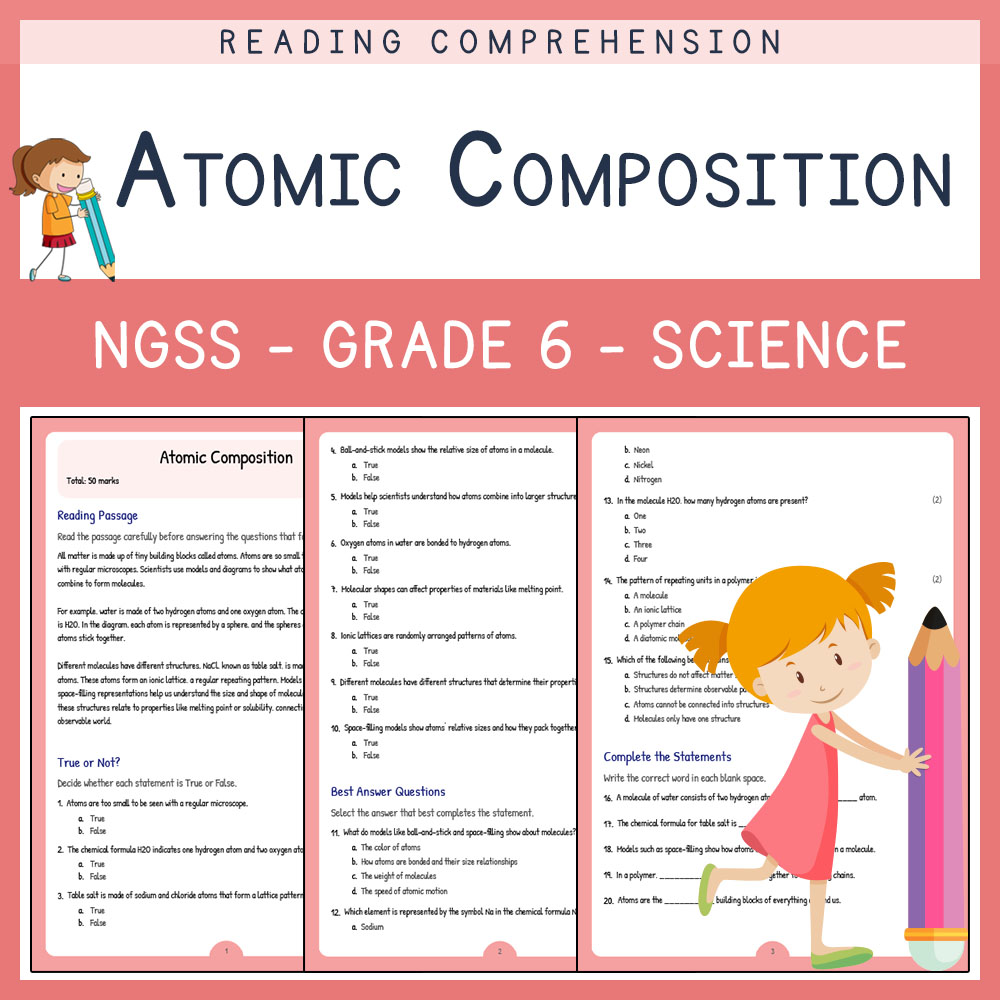
Grade 6 Science | Atomic Composition Worksheet (PDF) | NGSS Aligned
 Created byLumora Learning
Learning Objectives
- Use models and diagrams to describe how atoms form molecules and structures.
- Understand chemical formulas such as H2O and NaCl.
- Identify how atoms combine and how structure relates to observable patterns of matter.
Instant download
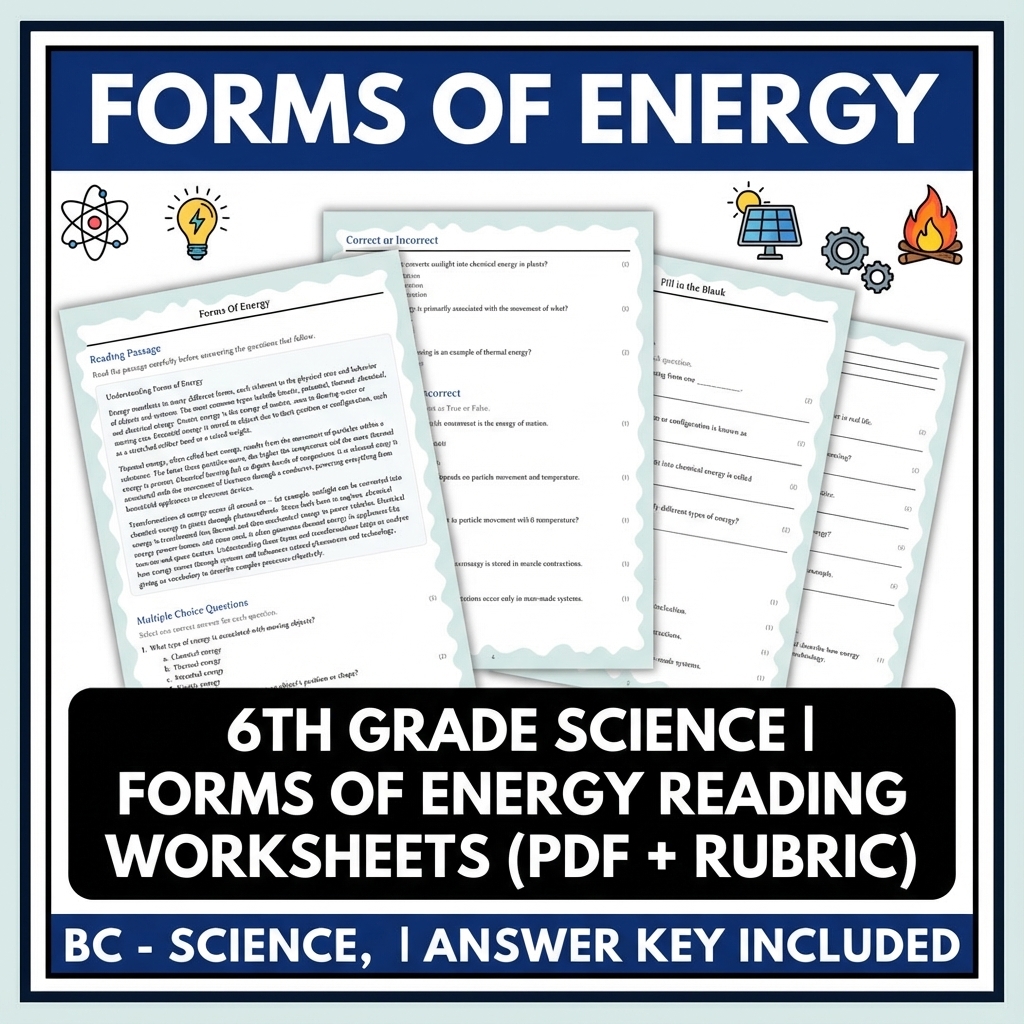
6th Grade Science | Forms of Energy Reading Worksheets (PDF + Rubric)
JCreated byJ.S SheetsLearning Objectives
- Identify different forms of energy such as kinetic, potential, thermal, chemical, and electrical.
- Describe how energy can be stored, transferred, and transformed between different forms.
- Explain examples of energy transformations in natural and engineered systems.
Instant download
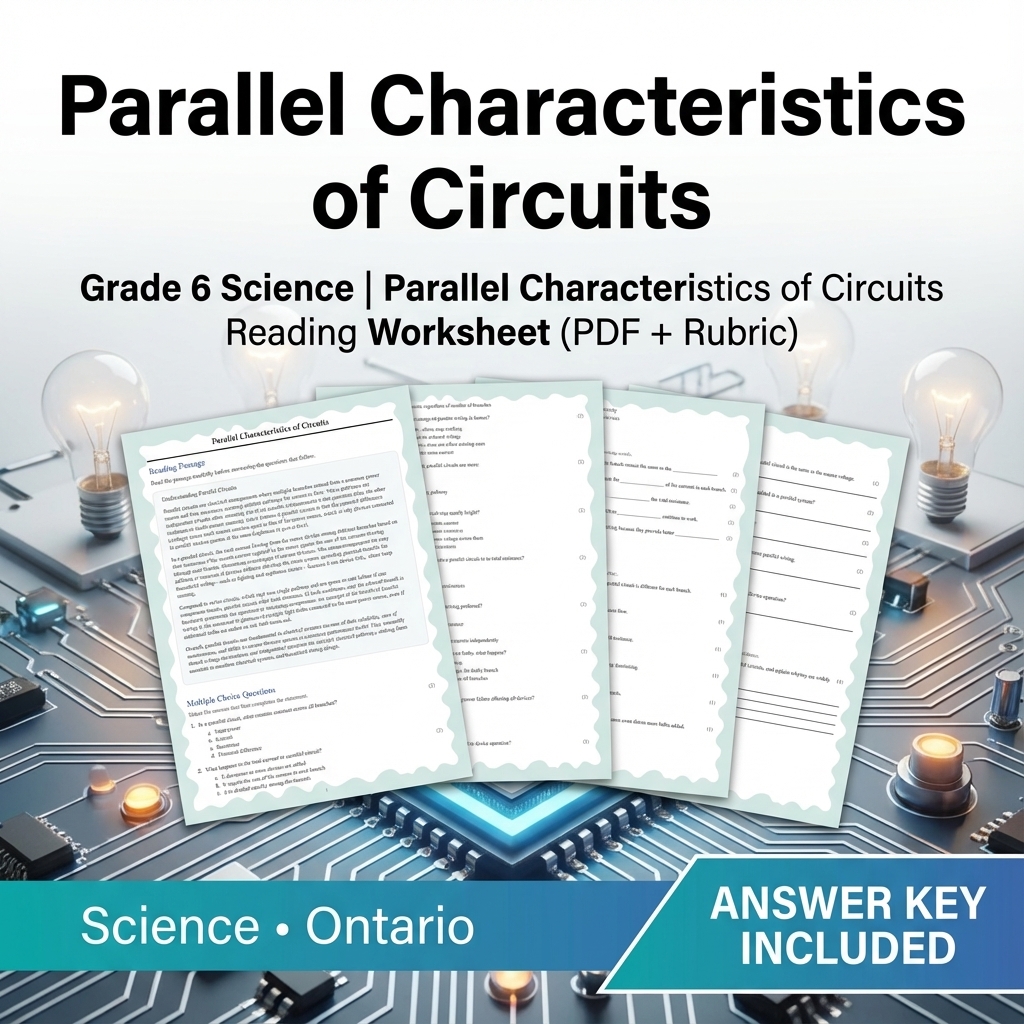
Grade 6 Science | Parallel Characteristics of Circuits Reading (PDF + Rubric)
JCreated byJ.S SheetsLearning Objectives
- Understand the structure and function of parallel circuits.
- Identify the advantages of parallel wiring in household systems.
- Explain how current splits and potential difference remains consistent in parallel branches.
Also included in: Grade 6 Science Circuit & Electricity Unit Bundle – Worksheets & Answer Keys +1 more
Instant download
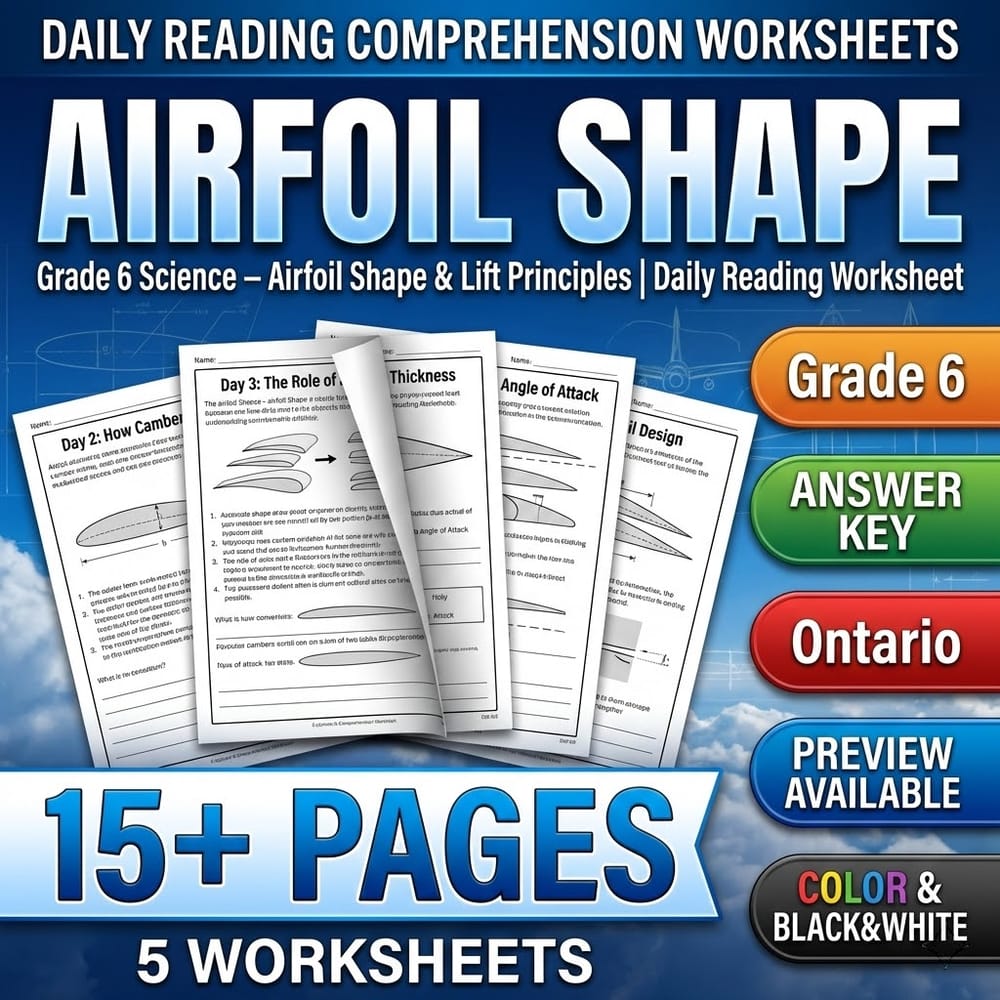
Grade 6 Science – Airfoil Shape & Lift Principles | Daily Reading Worksheet
Created byQuiet Forest EducationLearning Objectives
- Understand the key features of different airfoil profiles
- Describe how camber, thickness, chord length, and leading-edge curvature influence lift
- Compare Bernoulli and Newtonian explanations of lift
Also included in: Flight Science Grade 6 Daily Reading Worksheets Bundle | Ontario +1 more
Instant download
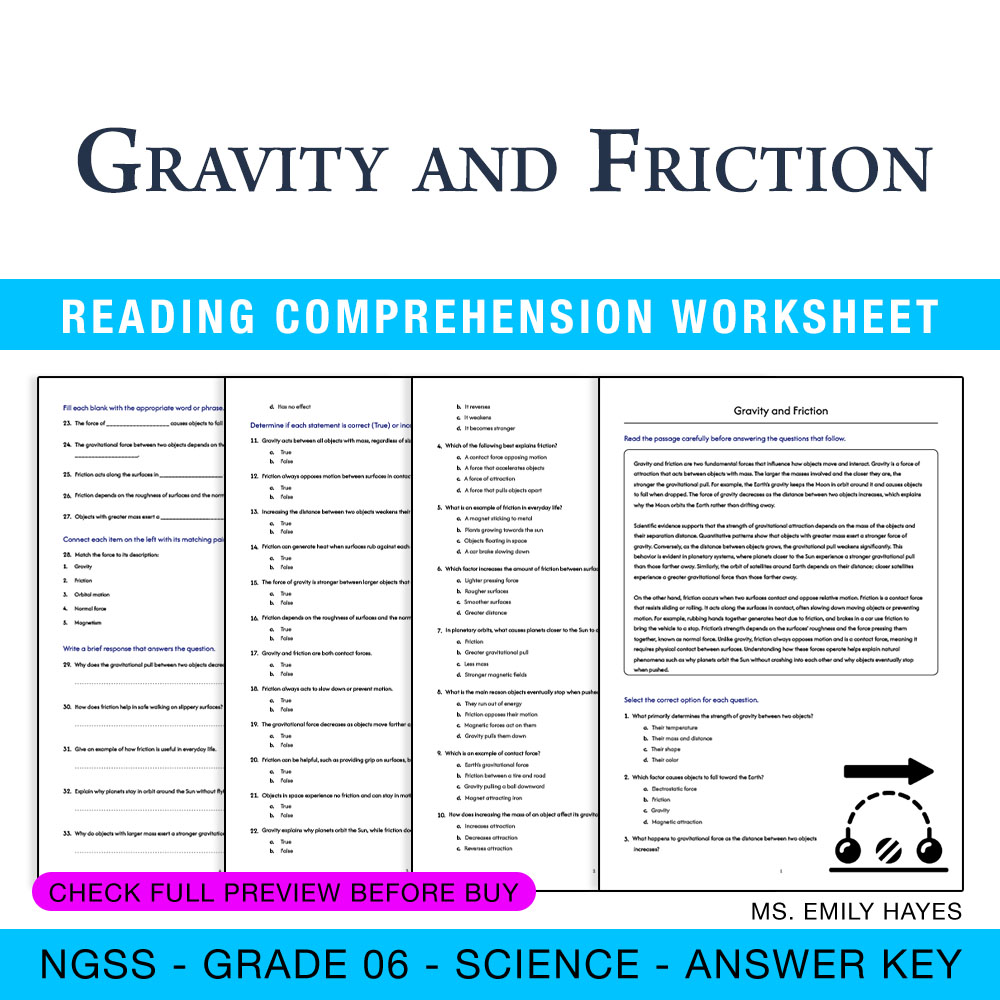
6th Grade Science | Gravity and Friction Worksheet (PDF + Answer Key)
Created byCopper Leaf ClassroomLearning Objectives
- Describe how gravity depends on mass and distance using examples like Earth-Moon system and planetary orbits.
- Explain the concept of friction as a contact force that resists motion along surfaces.
- Differentiate between gravitational forces and contact forces such as friction in how they affect motion and orbiting behavior.
Instant download

Grade 6 Science | Operational Definitions Worksheet (Alberta Standards) (PDF)
 Created byEvergreen Desk Education
Learning Objectives
- Explain what an operational definition is and why it improves clarity and comparability in science.
- Identify the key parts of an operational definition (unit, measurement method, location, and timing).
- Convert qualitative observations into measurable, quantitative descriptions using correct units and protocols.
Instant download
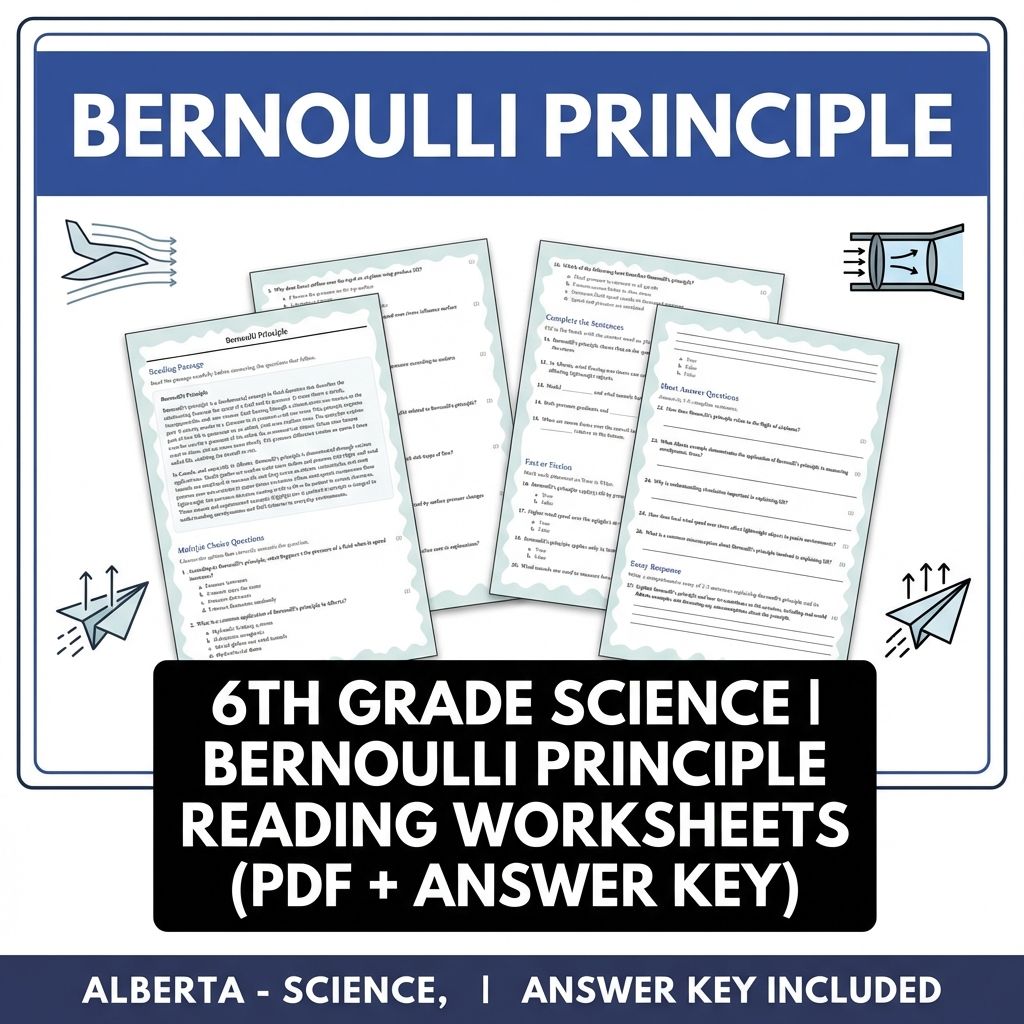
6th Grade Science | Bernoulli Principle Reading Worksheets (PDF + Answer Key)
JCreated byJ.S SheetsLearning Objectives
- Explain the relationship between fluid speed and pressure as described by Bernoulli's principle.
- Describe how pressure differences around airfoils contribute to lift.
- Identify examples of Bernoulli's principle in real-world Alberta settings, such as wind tunnels and model gliders.
Also included in: Grade 6 Science | Flight Physics & Aerodynamics UNIT Pack (Answer Keys Included) +1 more
Instant download

Population Dynamics Worksheet Grade 6 Ontario | Carrying Capacity Science
 Created byTeacher's Corner
Learning Objectives
- Explain how birth and death rates, immigration, and emigration affect population size over time
- Describe the difference between exponential growth and logistic growth using carrying capacity
- Identify limiting factors and predict how density-dependent and density-independent factors change populations
Instant download
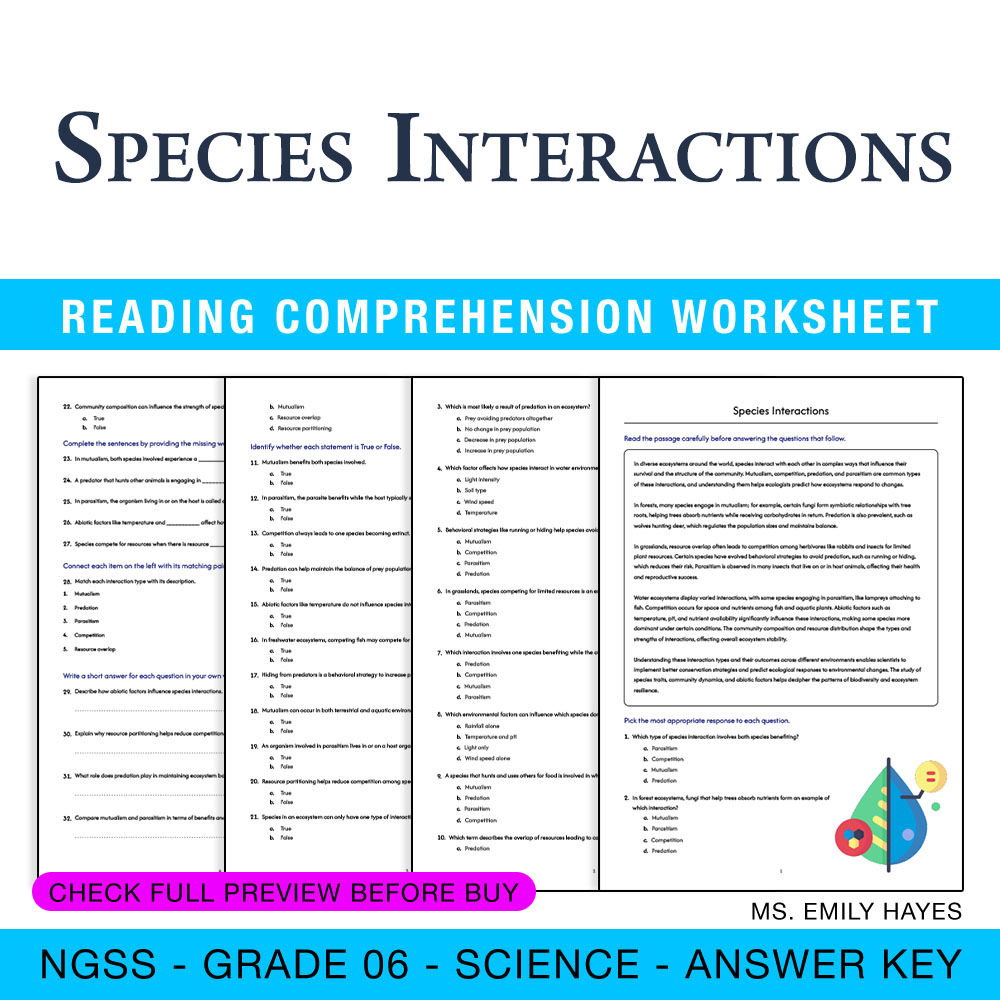
6th Grade Science | Species Interactions Worksheet (PDF +Answer Key)
Created byCopper Leaf ClassroomLearning Objectives
- Construct explanations predicting patterns of species interactions across ecosystems
- Identify key types of species interactions such as mutualism, competition, predation, and parasitism
- Compare interaction outcomes in forest, grassland, and freshwater environments
Instant download
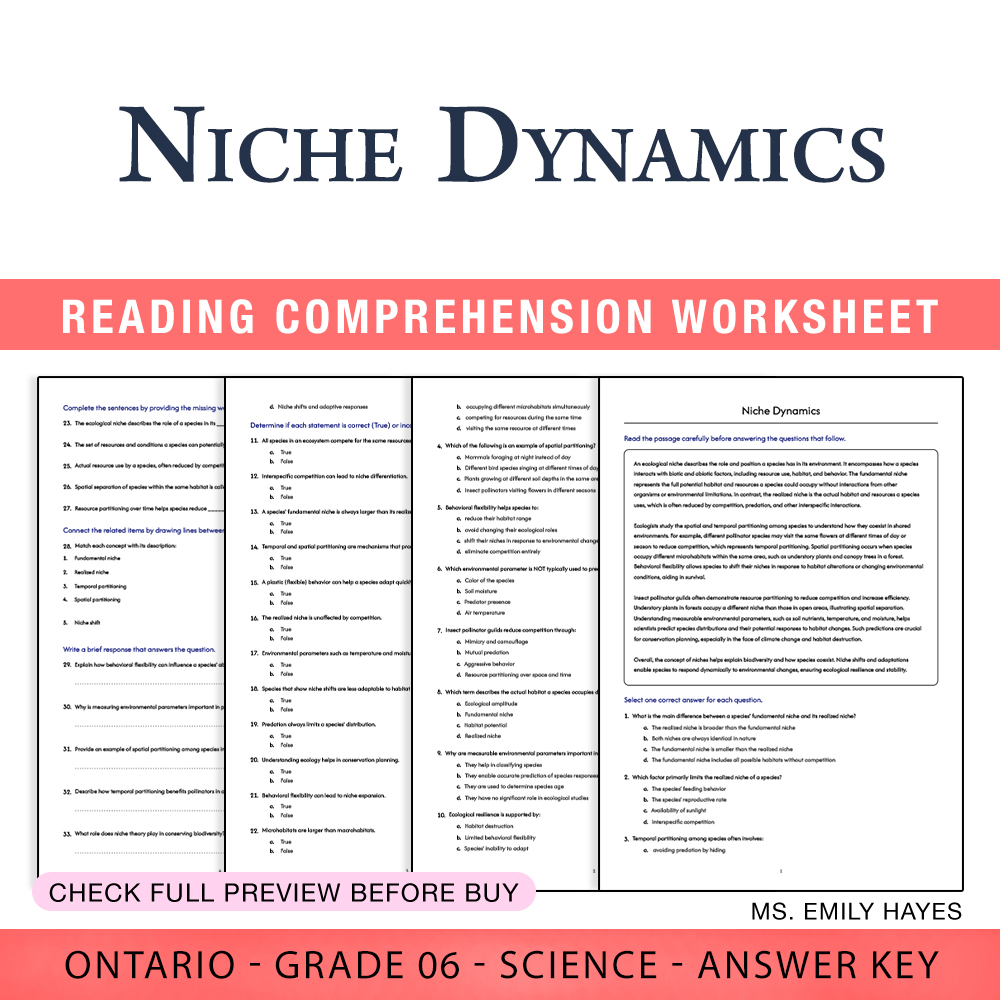
6th Grade Science | Niche Dynamics Worksheet (PDF+ Answer Key)
Created byCopper Leaf ClassroomLearning Objectives
- Understand the differences between fundamental and realized ecological niches.
- Identify how biotic and abiotic factors influence resource use and habitat occupation.
- Analyze examples of ecological partitioning and behavioral flexibility in species.
Instant download

Grade 6 Science | Forces Basics: Contact & Non-Contact Forces - Comprehension
 Created byCoral Reef Learning
Learning Objectives
- Understand what contact forces are, including friction and the normal force.
- Identify examples of contact forces in everyday life.
- Learn the difference between balanced and unbalanced forces.
Instant download

Cell Functions Worksheet | NGSS Grade 6 Life Science Activity
 Created byAmber Owl Education
Learning Objectives
- Explain how major cell organelles contribute to essential cell functions.
- Connect the structure of organelles to their specific roles in the cell.
- Compare plant and animal cell features using organelle function.
Also included in: Cells & Scientific Evidence Lesson Bundle – Grade 6 Science NGSS +1 more
Instant download

Grade 6 Variation Effects Worksheet | NGSS Science Activity & Notes
Created byAmber Owl EducationLearning Objectives
- Explain how genetic differences and environmental influences can produce phenotypic variation within a species.
- Describe how temperature and nutrition can change gene expression or growth during development.
- Connect DNA sequence variation and epigenetic/environmental modifiers to observed differences in structure and function.
Also included in: Cells & Scientific Evidence Lesson Bundle – Grade 6 Science NGSS +1 more
Instant download

Energy Pathways Worksheet | NGSS Grade 6 Science Activity & Notes
Created byAmber Owl EducationLearning Objectives
- Explain how photosynthesis and cellular respiration transform energy in chloroplasts and mitochondria.
- Describe how matter cycles between organisms and the atmosphere through gas exchange and respiration.
- Use the idea of mass conservation to connect reactants and products in energy pathway processes.
Also included in: Cells & Scientific Evidence Lesson Bundle – Grade 6 Science NGSS +1 more
Instant download

Forces Basics Worksheet Grade 6 Science Activities | TEKS-Aligned Practice
Created byPrism Point LearningLearning Objectives
- Distinguish between contact and noncontact forces using everyday examples (gravity, friction, and normal force).
- Explain how balanced vs. unbalanced forces relate to changes in motion (speed and direction).
- Describe the idea of net force qualitatively without formal vector calculations.
Also included in: Grade 6 Matter, Energy, and Change Science Lesson Bundle TEKS Worksheets +1 more
Instant download

Grade 6 Streamlining and Airflow Worksheet | Alberta Science
 Created byBRIGHT PATH RESOURCES
Learning Objectives
- Identify the main idea of a text about streamlining
- Describe how shape changes affect airflow and pressure
- Explain how streamlined designs can reduce resistance and support stability
Also included in: Aerodynamics & Flight Physics Grade 6 Science Worksheets Bundle | Alberta +1 more
Instant download

Species Interactions Across Ecosystems Worksheet | NGSS Grade 6 Science
 Created bySkylark Worksheets
Learning Objectives
- Identify and distinguish mutualism, competition, predation, and parasitism as common species interactions.
- Explain how shared resources and behavioral strategies can change the strength of interactions.
- Use habitat context (forest, grassland, freshwater) and species traits to predict interaction outcomes.
Also included in: Grade 6 Ecosystems Lesson Bundle: NGSS Science Worksheets & Food Webs +1 more
Instant download
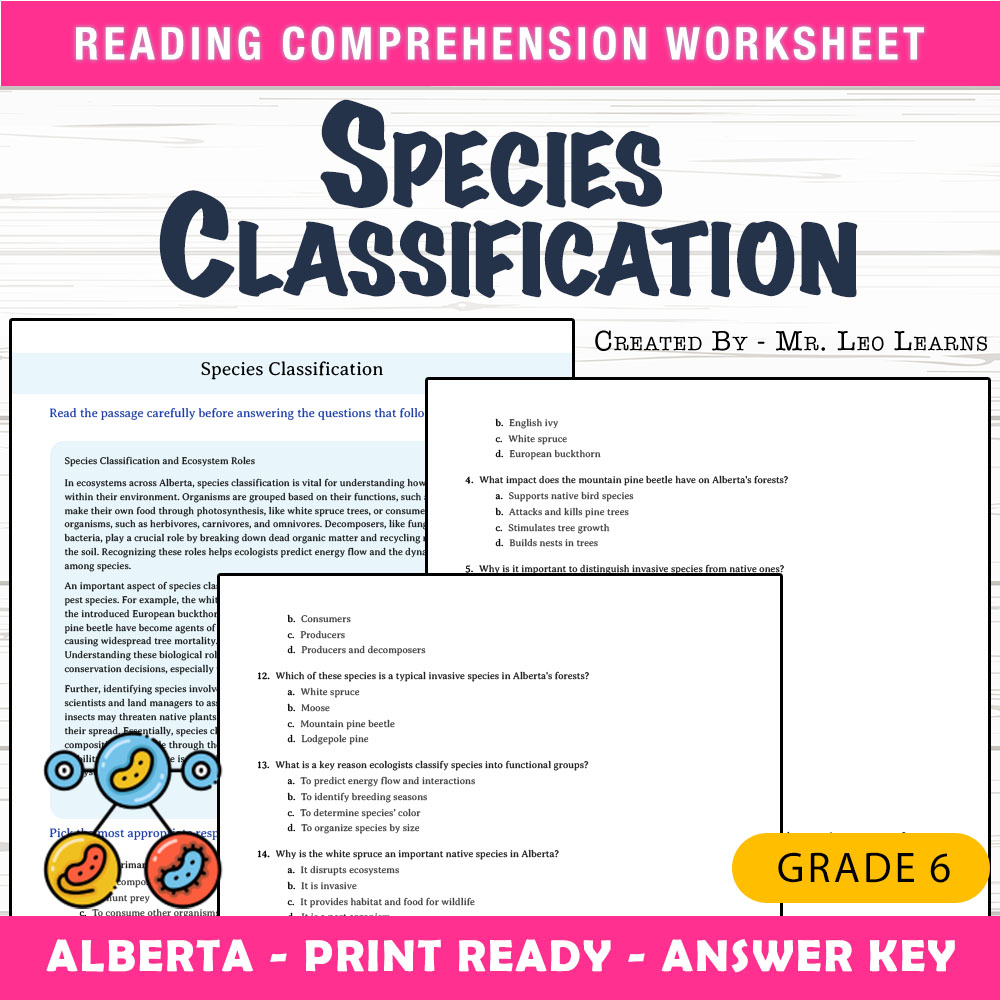
Grade 6 Science — Species Classification Worksheet for Mastery
Created byThe Resource HubLearning Objectives
- Understand the concept of species classification and its importance in ecology.
- Identify functional groups such as producers, consumers, and decomposers.
- Distinguish between native and invasive species, with examples relevant to Alberta.
Also included in: Grade 6 Science | Trees and Forests Unit Bundle for Alberta (Worksheet Pack) +1 more
Instant download
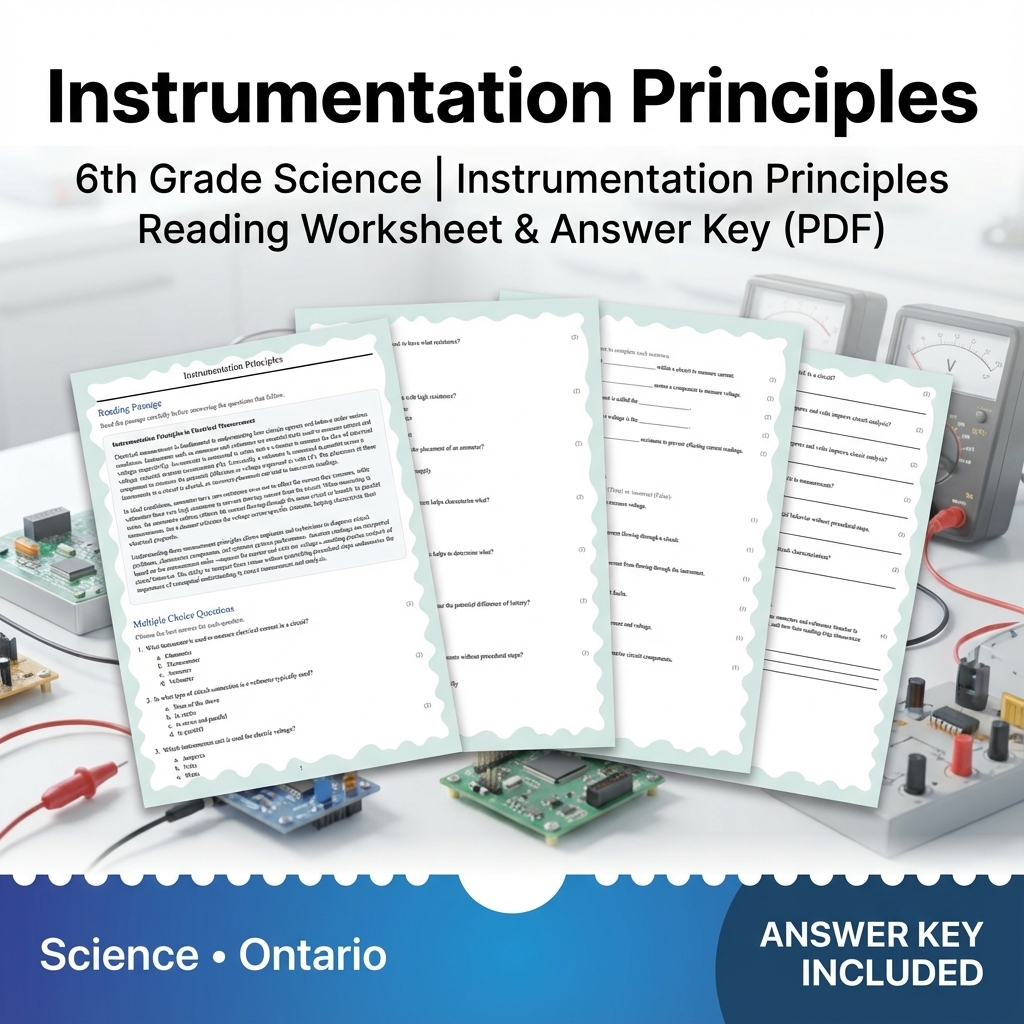
6th Grade Science | Instrumentation Principles Reading Worksheet & Answer Key
JCreated byJ.S SheetsLearning Objectives
- Understand the roles of ammeters and voltmeters in electrical circuits
- Identify measurement units of amperes and volts used in electrical measurements
- Explain the placement of measurement instruments in series and parallel circuits
Also included in: Grade 6 Science Circuit & Electricity Unit Bundle – Worksheets & Answer Keys +1 more
Instant download
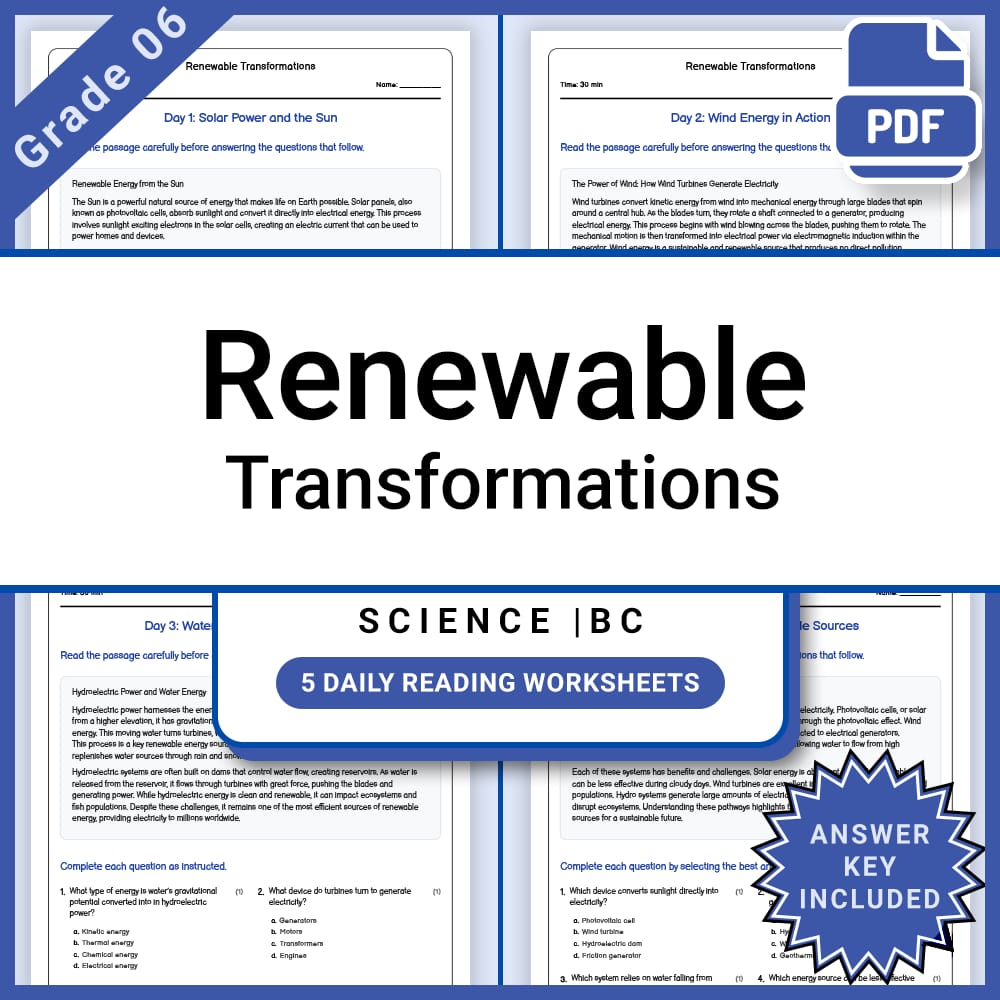
Grade 6 Science – Renewable Transformations Daily Reading Worksheet + Answer Key
JCreated byJ.S SheetsLearning Objectives
- Understand how sunlight is converted into electrical energy.
- Identify different renewable energy sources and their transformation pathways.
- Explain the importance of energy conservation in renewable systems.
Also included in: Grade 6 Science Lesson Group | Waves, Light, Energy, Circuits & Technology +1 more
Instant download

Population Change Worksheet | Standards-Aligned Grade 6 Science Practice
JCreated byJ.S SheetsLearning Objectives
- Understand how birth rates, death rates, and resource availability influence population sizes.
- Interpret data showing fluctuations in population over time.
- Explain how resource abundance or scarcity affects reproduction and mortality.
Also included in: Grade 6 Life Science Science Lesson Bundle – California Standards +1 more
Instant download
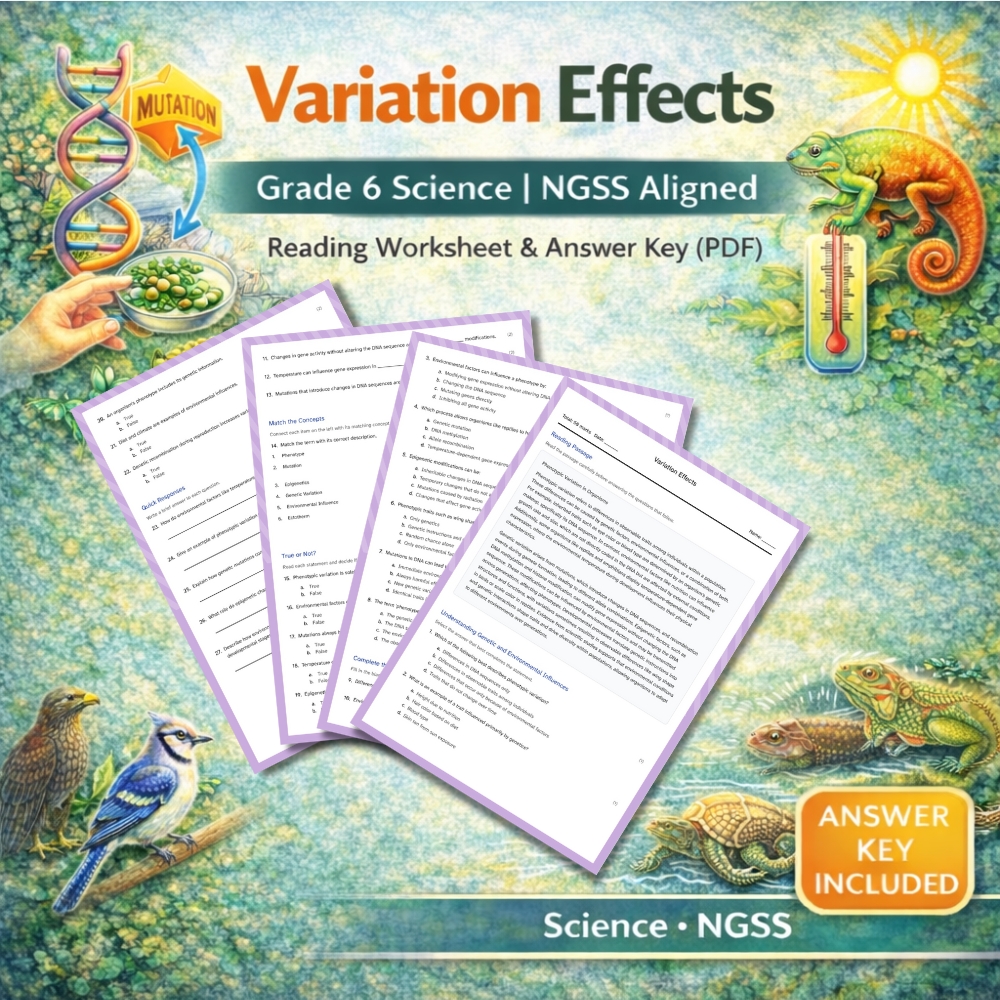
6th Grade Science | Variation Effects | Worksheet & Answer Key – NGSS Standards
 Created byCedar Grove Learning
Learning Objectives
- Understand how genetic and environmental factors influence organism traits.
- Explain the processes linking DNA, gene expression, and phenotypic variation.
- Identify examples of phenotypic variation caused by inherited and environmental factors.
Also included in: Grade 6 Science Worksheet Bundle | Cell Processes & Systems NGSS(PDF+Answer Key) +1 more
Instant download
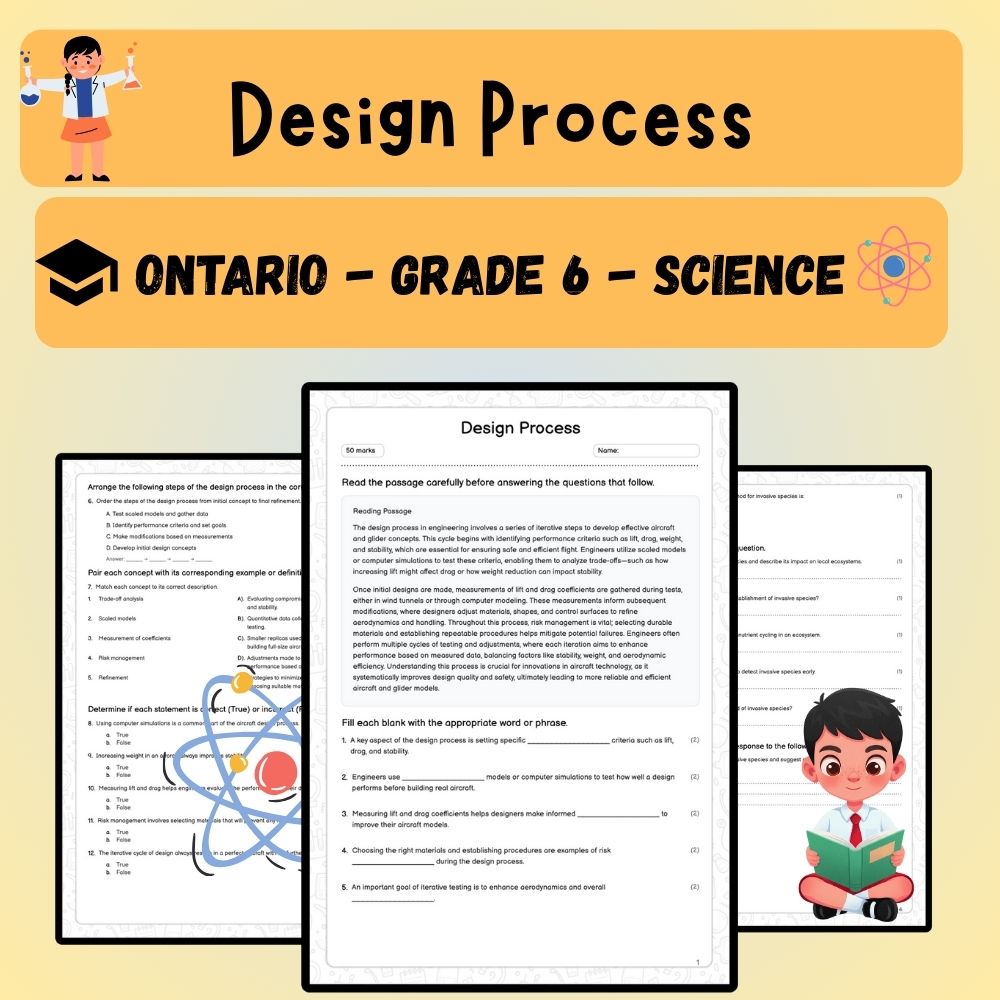
Grade 6 Science | Engineering Design Process Worksheet (PDF )
Created byPrism Point LearningLearning Objectives
- Understand the key stages of the design process in aeronautics.
- Identify criteria and trade-offs involved in aircraft and glider design.
- Apply measurement and refinement techniques to improve aerodynamic performance.
Instant download
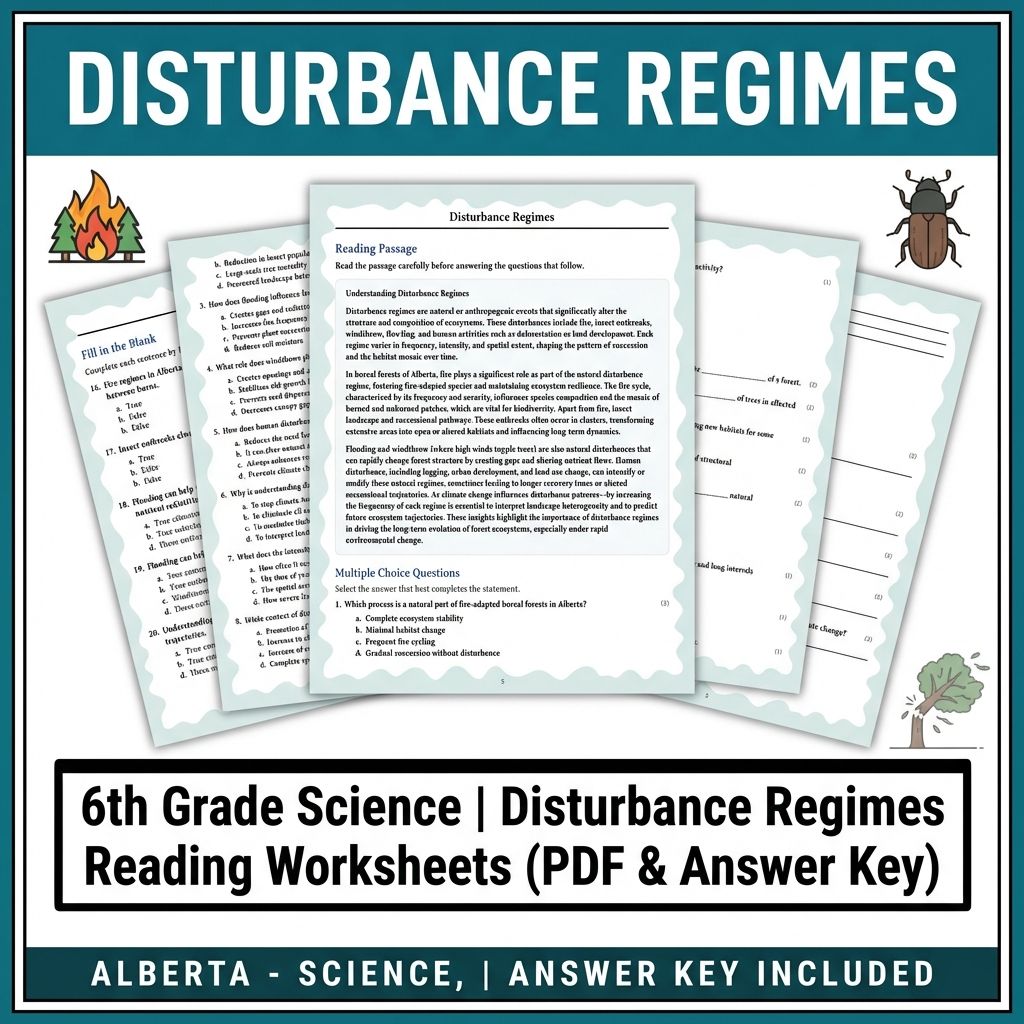
6th Grade Science | Disturbance Regimes Reading Worksheets (PDF & Answer Key)
JCreated byJ.S SheetsLearning Objectives
- Understand the different types of disturbance regimes that shape forest ecosystems.
- Recognize how disturbance characteristics influence landscape patterns and succession.
- Explain the role of fire, insects, wind, flooding, and human activities in ecosystems.
Also included in: Grade 6 Science Unit Bundle | Ecosystems and Biodiversity (Answer Keys Included) +1 more
Instant download
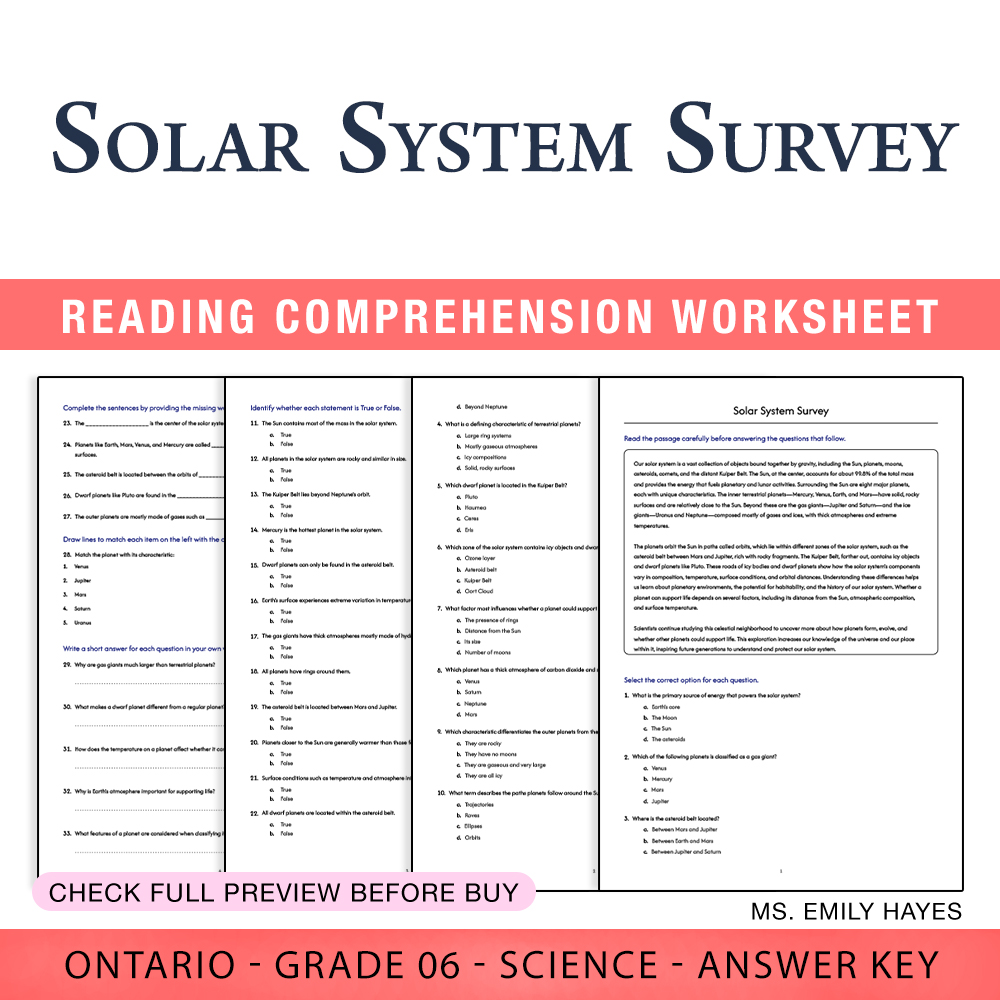
6th Grade Science | Solar System Survey Worksheet (PDF + Answer Key)
Created byCopper Leaf ClassroomLearning Objectives
- Describe the major components of the solar system and their characteristics.
- Differentiate between terrestrial planets and gas giants based on their properties.
- Identify key features of dwarf planets, asteroids, and the Kuiper Belt.
Instant download
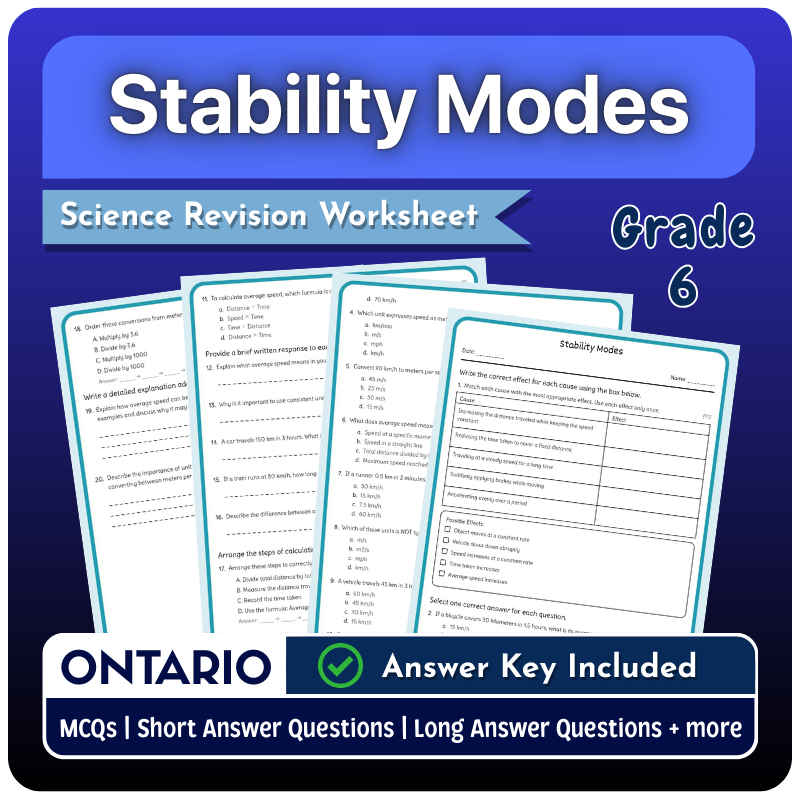
6th Grade Science | Stability Modes Worksheet (Ontario) (PDF)
Created byBright Mind ResourcesLearning Objectives
- Understand the difference between static and dynamic stability in aircraft.
- Explain how airplane geometry impacts longitudinal, lateral, and directional stability.
- Identify how the position of the center of gravity affects aircraft stability.
Instant download

Atmospheric Patterns Worksheet | Grade 6 Science Practice
Created byPrism Point LearningLearning Objectives
- Describe Earth’s atmospheric structure and how pressure differences and air masses influence regional weather.
- Explain how fronts, prevailing winds, and seasonal heating patterns can create observable weather and climate changes.
- Connect heat transfer processes and the greenhouse effect to local climate variability and microclimates.
Also included in: Grade 6 Earth and Space Science Lesson Bundle TEKS (8 worksheets) +1 more
Instant download
About Grade 6 Science Worksheets
Explore Grade 6 Science worksheets for classwork, homework, or review. Our 5,969 printables download instantly as PDFs.
MyTeachingSheets worksheets are made by real teacher-authors and checked before they go live. Download any as a print-ready PDF for lessons, homework, or independent practice — most include answer keys, and previews are always free.