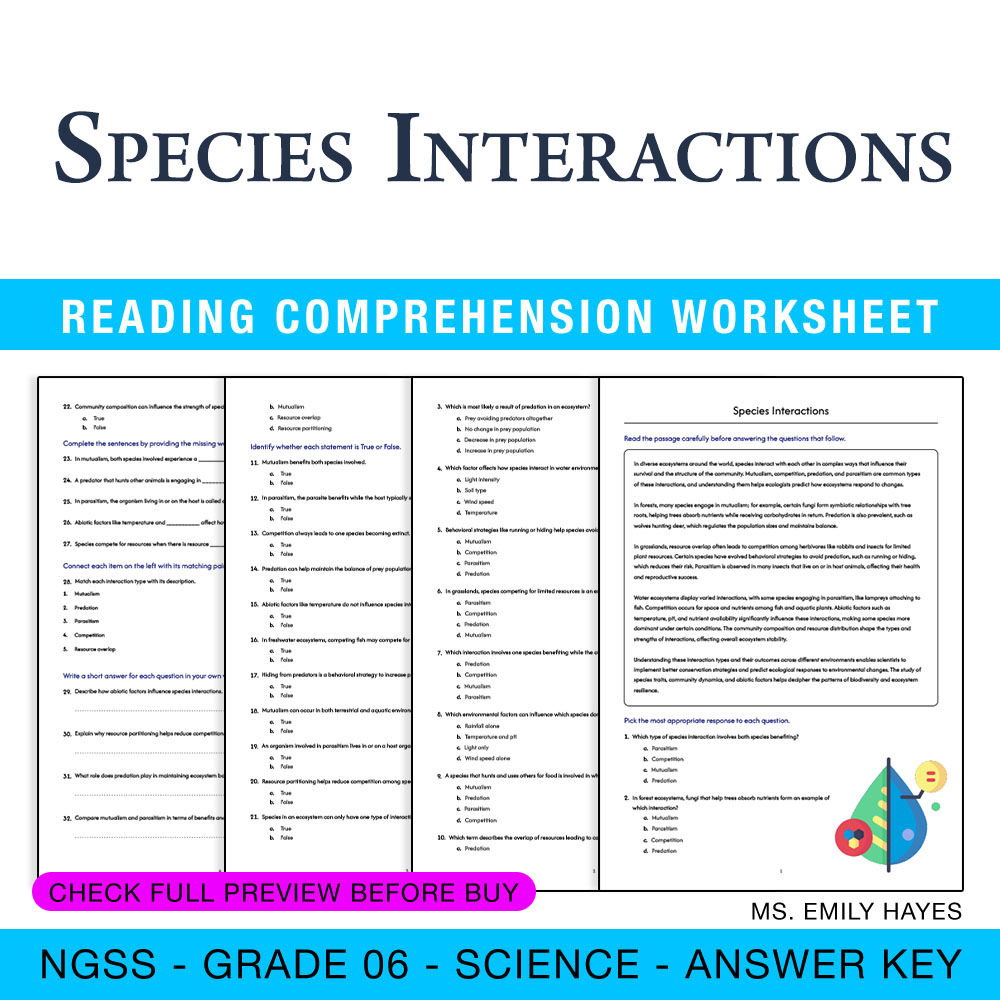
Are you searching for an effective way to help your sixth-grade students master the complex topic of species interactions? This engaging and comprehensive worksheet addresses a common challenge in classroom science instruction: building students' understanding of how different species interact within ecosystems. Designed to enhance critical thinking and deepen comprehension, this print-ready PDF worksheet is perfect for classroom practice, homework assignments, or review sessions. It offers a structured approach to exploring the types of interactions, their ecological significance, and the impacts on biodiversity, helping students develop essential skills in analyzing real-world ecological relationships. With this resource, teachers can save planning time while providing students with meaningful, standards-aligned learning experiences.
Why Teachers Love This ✅ Saves preparation time with a ready-to-use, high-quality PDF worksheet aligned with Next Generation Science Standards (NGSS)
✅ Student-centered activities designed to reinforce understanding of complex concepts like mutualism, parasitism, and competition
✅ Provides a variety of question formats—reading comprehension, multiple choice, true/false, fill-in-the-blank, matching, and short answer—that promote active learning and critical thinking
✅ Durable, print-ready PDF format for immediate classroom use, ideal for in-person instruction and assessment
Why Students Succeed With This ✅ Clear, concise instructions paired with engaging questions that make learning about ecology accessible
✅ Scaffolded activities that gradually build student confidence and mastery of key concepts
✅ Real-world examples and scenarios that connect ecological theories to everyday life
✅ Opportunities for analytical thinking through diverse question types—encouraging deep understanding of how species interact within ecosystems
What You Get Complete, print-ready PDF worksheet pack including:
• A compelling reading passage introducing species interactions, emphasizing ecological importance
• 10 multiple choice questions to assess understanding of key interaction types
• 12 true/false questions to reinforce definitions and concepts
• 5 fill-in-the-blank exercises focusing on specific vocabulary and processes
• 1 matching activity linking interaction types to their descriptions
• 5 short answer questions to develop analytical and explanatory skills
• 2 essay prompts encouraging deeper reflection on ecological relationships and conservation
• A comprehensive answer key with rubric for objective assessment and easy grading
Key Learning Objectives Students will master these core skills:
➡️ Identify and describe different types of species interactions such as mutualism, parasitism, and competition
➡️ Explain how abiotic factors influence ecological relationships and community dynamics
➡️ Analyze real-world examples of species interactions and their ecological impacts
➡️ Develop critical thinking skills through explanation, comparison, and reflection on ecological concepts
Ideal Usage This worksheet is perfect for classroom instruction, homework, or review sessions. Its print-ready format facilitates seamless in-person activities—whether as part of whole-class lessons, small-group discussions, or independent work. Use it to reinforce understanding of ecology at the sixth-grade level, prepare students for upcoming assessments, or stimulate meaningful eco-science conversations. The variety of question styles ensures whether your students thrive on discussion, writing, or multiple-choice tasks, they will engage deeply with species interactions and their significance in ecosystems. This resource is a valuable addition to any science curriculum aiming to foster ecological literacy and conservation awareness.
Ready to empower your students with a solid understanding of ecological relationships? Download this comprehensive Species Interactions Worksheet today and watch them develop critical ecological skills now and for years to come! 🚀