
Grade 3 Science Worksheets
425 worksheets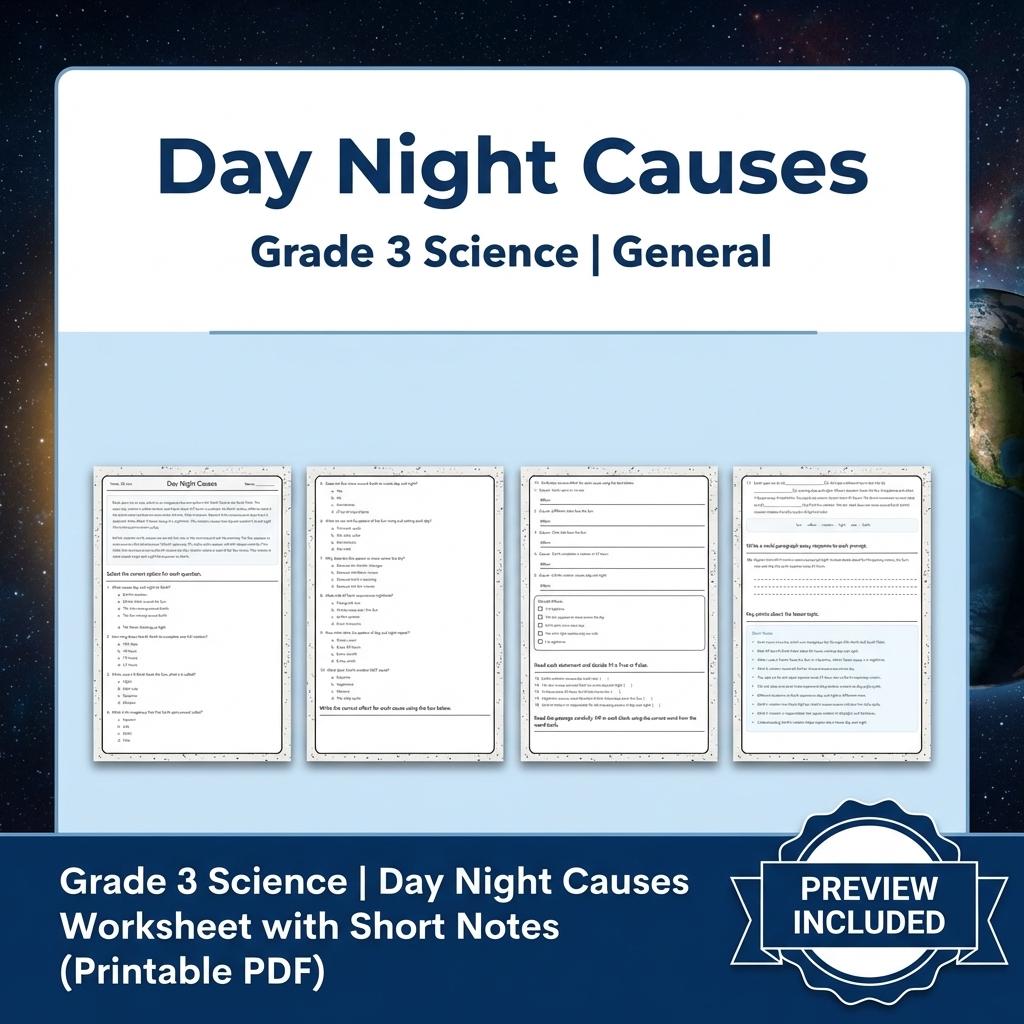
Grade 3 Science | Day Night Causes Worksheet with Short Notes (Printable PDF)
 Created byMeadowlark Worksheets
Learning Objectives
- Understand how Earth's rotation causes day and night.
- Identify the role of the Sun's light in creating daytime and nighttime.
- Explain that Earth's motion, not the Sun's movement, causes the daily cycle.
Also included in: Grade 3 Science Lesson Group | Weather, Water Cycle, and More +1 more
Instant download

Load Bearing Structures Worksheets | Grade 3 Engineering Science
 Created byBRIGHT PATH RESOURCES
Learning Objectives
- Explain how engineers help structures support forces without collapsing
- Identify features that increase stability, such as triangles and wider bases
- Describe how testing results guide design improvements for stronger structures
Also included in: Grade 3 Science Simple Machines & Engineering Worksheets Bundle +2 more
Instant download

Safe Tool Use for Measuring and Building Worksheets Grade 3 Science
Created byBRIGHT PATH RESOURCESLearning Objectives
- Identify safe tool-use practices that help people avoid injury and damage to materials.
- Explain why using the right tool for a task improves accuracy and results.
- Choose correct actions for an organized, safe workspace during building activities.
Also included in: Grade 3 Science Simple Machines & Engineering Worksheets Bundle +2 more
Instant download
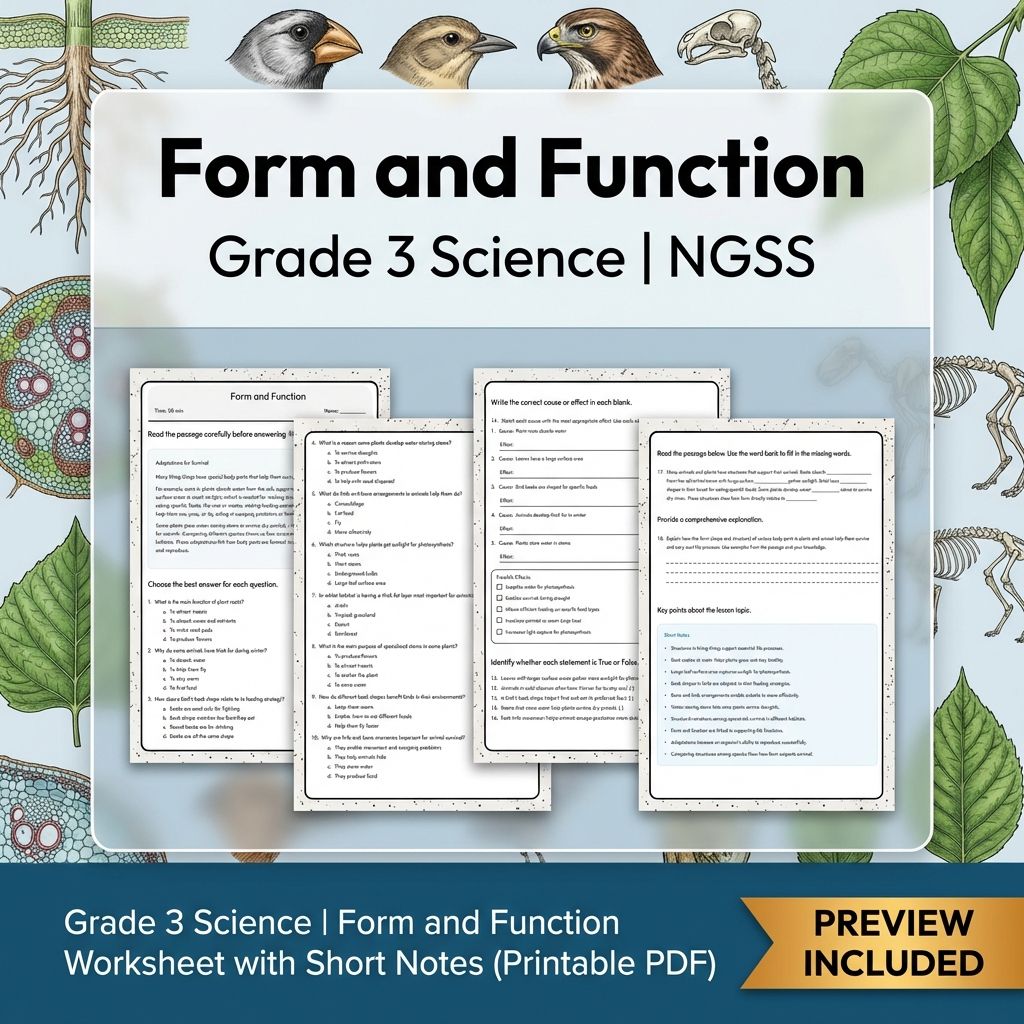
Grade 3 Science | Form and Function Worksheet with Short Notes (Printable PDF)
Created byMeadowlark WorksheetsLearning Objectives
- Identify how specific structures in plants and animals support their life processes.
- Understand the link between form and function through examples in nature.
- Compare different species to observe variations in structures related to survival.
Also included in: Grade 3 Science NGSS Unit | From Molecules to Organisms Bundle +1 more
Instant download

Grade 3 Mixture Properties Worksheet | California Standards Practice PDF
 Created byClear Sky Classroom
Learning Objectives
- Explain how mixture properties reflect the contributions of each component
- Identify evidence that components keep their own properties in a mixture
- Describe observable changes in mixtures without creating a new substance
Instant download

Grade 3 Structural Forms Worksheet | Ontario Practice & PDF
Created byClear Sky ClassroomLearning Objectives
- Identify common structural forms (arches, beams, frames) and describe how their shapes help them support loads.
- Explain how compressive and bending forces affect different structures in real-world examples.
- Compare span, curvature, and connection types to predict strength and stability.
Instant download

Grade 3 Structural Forms and Load Behavior Science Worksheet Ontario
 Created byChalk and Compass
Learning Objectives
- Identify common structural forms (arches, beams, frames) and describe how their shapes help carry loads.
- Compare compressive and bending behavior using simple, real-world construction examples.
- Explain how span and connections affect strength and stability in basic structures.
Also included in: Grade 3 Science Simple Structures Lesson Bundle | Ontario +1 more
Instant download

Grade 3 Design Criteria Worksheet | NGSS Practice PDF
Created byClear Sky ClassroomLearning Objectives
- Define design criteria and explain how they guide engineering decisions.
- Identify success measures and constraints in a design problem.
- Describe trade-offs when multiple requirements compete.
Instant download
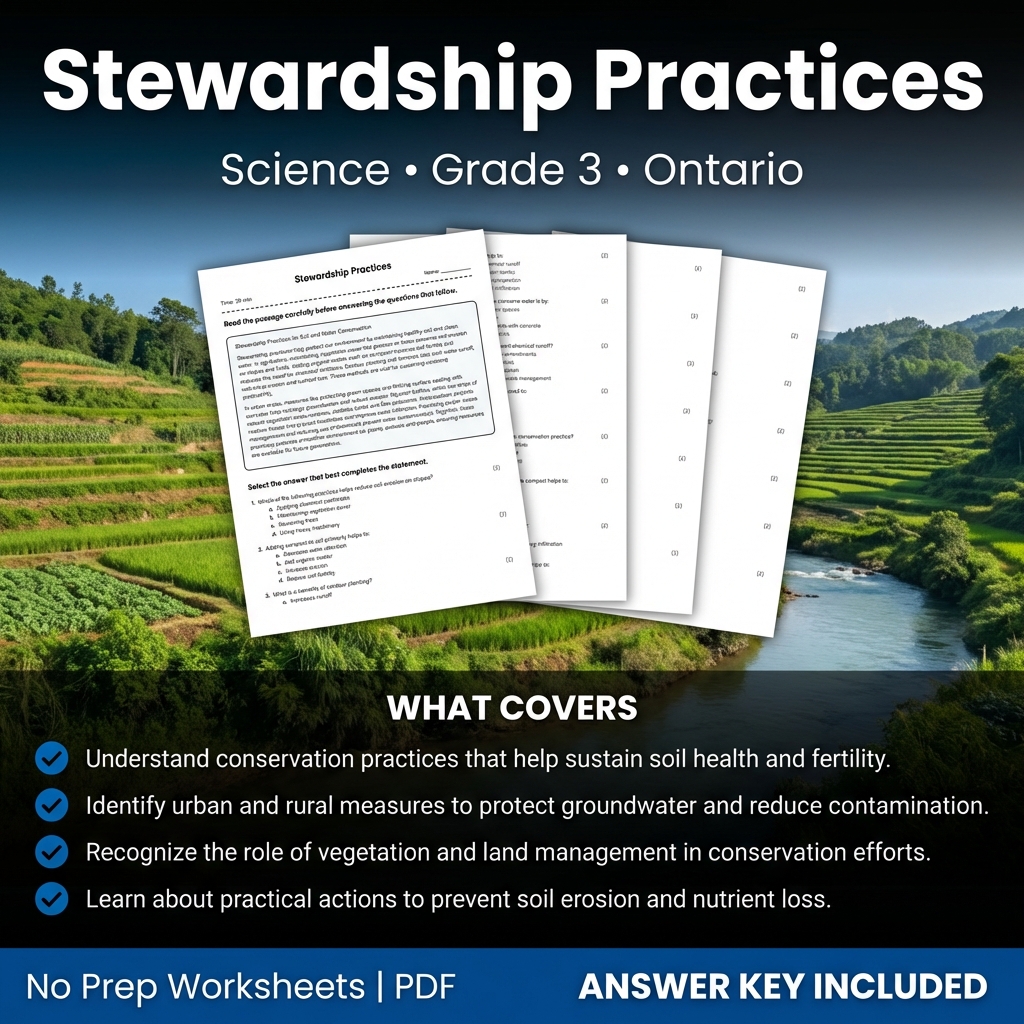
Grade 3 Science Worksheet on Stewardship Practices | Ontario Standards
 Created byCoral Reef Learning
Learning Objectives
- Understand conservation practices that help sustain soil health and fertility.
- Identify urban and rural measures to protect groundwater and reduce contamination.
- Recognize the role of vegetation and land management in conservation efforts.
Instant download

Grade 3 Soil Formation Processes Worksheet | Ontario Science Activity Pack
Created byChalk and CompassLearning Objectives
- Explain how rock weathering, deposition, and organic matter help form soil
- Identify physical, chemical, and biological processes that break rock into smaller particles
- Describe how earthworms and microbes contribute to soil structure and fertility
Also included in: Grade 3 Science Soil Properties & Formation Lesson Bundle | Ontario +1 more
Instant download

Grade 3 Defense in Numbers Worksheet | California Standards Practice PDF
Created byClear Sky ClassroomLearning Objectives
- Explain how group behaviors can reduce the risk of harm to individual animals during predator attacks
- Identify examples of collective defense such as schooling, flocking, watchful attention, and protective clustering
- Use evidence from a passage to determine the main idea and to answer questions about survival strategies
Instant download

Grade 3 Direction Patterns Worksheet | Practice & Assessment PDF
Created byClear Sky ClassroomLearning Objectives
- Identify how an object's direction can stay the same or change over time.
- Use observations from regular time moments to describe a direction or position pattern.
- Predict a likely next position when direction changes follow a repeating pattern.
Instant download
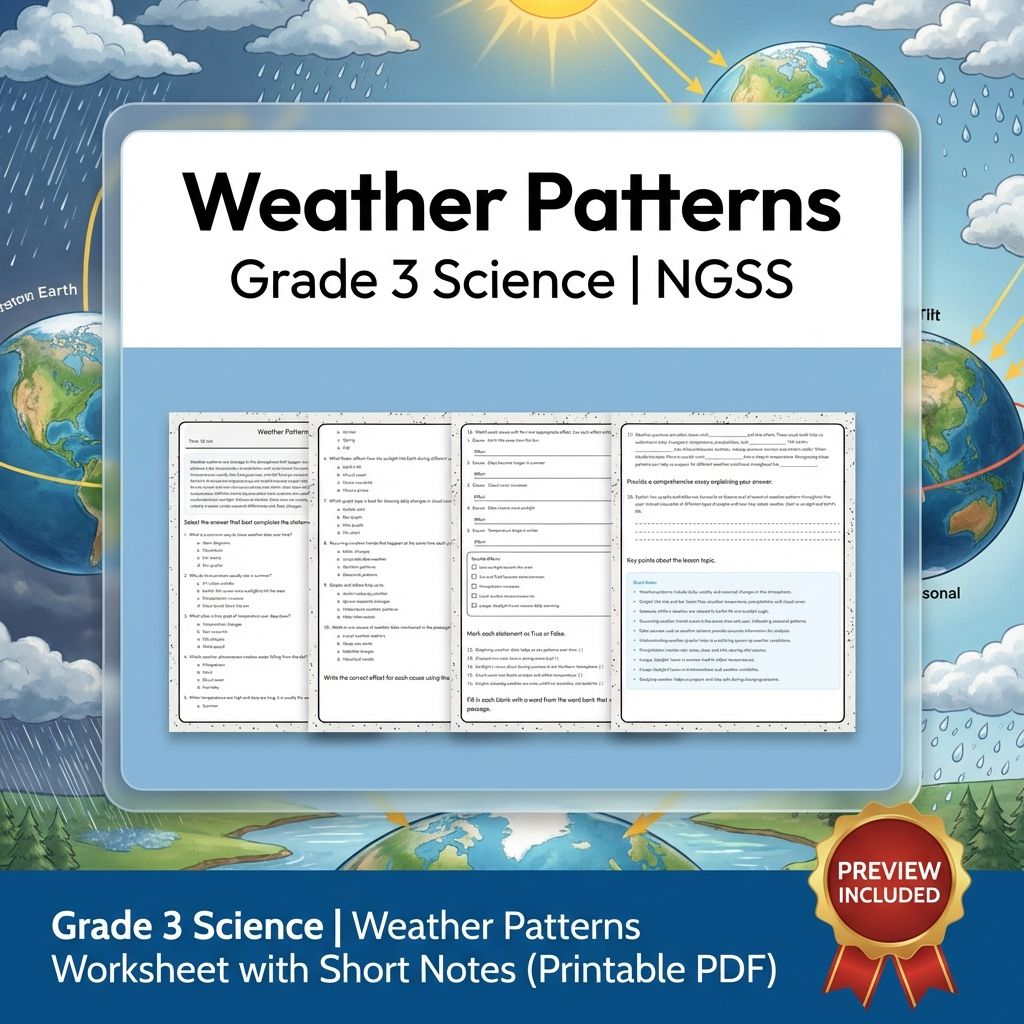
Grade 3 Science | Weather Patterns Worksheet with Short Notes (Printable PDF)
Created byMeadowlark WorksheetsLearning Objectives
- Understand how daily and seasonal weather patterns can be represented using graphs and tables.
- Interpret graphical data to identify patterns in temperature, precipitation, and cloud cover.
- Relate observed weather trends to phenomena such as Earth's tilt and sunlight angle.
Also included in: Grade 3 Science | Earth's Systems Unit Bundle (NGSS-Aligned Worksheets) +1 more
Instant download
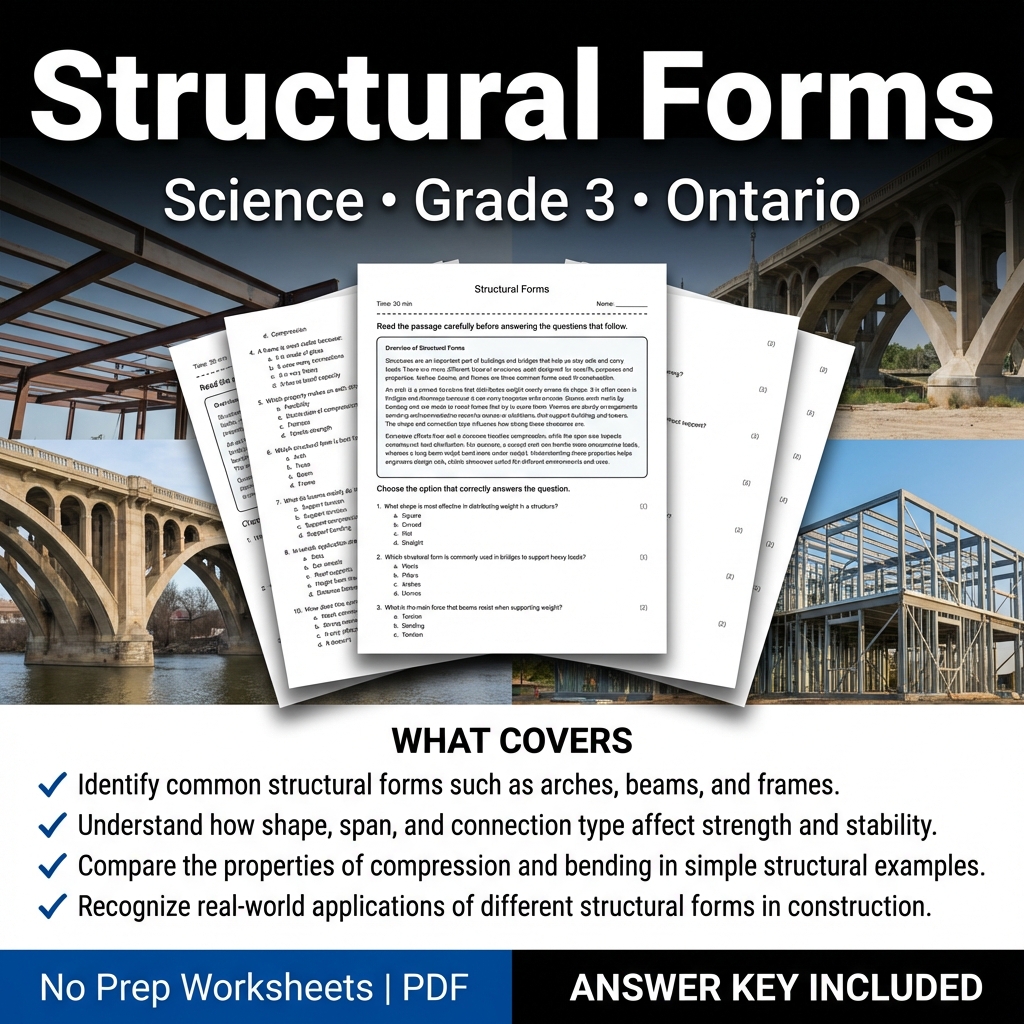
Grade 3 Science Worksheet on Structural Forms | Ontario Standards
Created byCoral Reef LearningLearning Objectives
- Identify common structural forms such as arches, beams, and frames.
- Understand how shape, span, and connection type affect strength and stability.
- Compare the properties of compression and bending in simple structural examples.
Instant download

Grade 3 Science – Force and Vibrations Worksheet (PDF) | General Standards
 Created byEvergreen Desk Education
Learning Objectives
- Explain how a force can cause an object to vibrate
- Describe how vibration size affects the loudness of sound
- Identify how sound travels through a medium
Also included in: Grade 3 Science: Light, Sound & Matter Lesson Bundle for General Framework +1 more
Instant download

Grade 3 Science Worksheet | Material Properties and Descriptions (PDF)
Created byEvergreen Desk EducationLearning Objectives
- Identify observable material properties such as color, texture, size, shape, and how materials respond to light or touch.
- Compare two material samples by describing both similarities and differences in their properties.
- Use evidence from observations to explain why properties help people describe and identify materials.
Also included in: Grade 3 Science: Light, Sound & Matter Lesson Bundle for General Framework +1 more
Instant download

Grade 3 Science Worksheet | Pitch and Vibration Rate (PDF)
Created byEvergreen Desk EducationLearning Objectives
- Explain how the vibration rate of an object affects the pitch we hear
- Describe how stronger vibrations relate to loudness
- Use evidence from observations to connect heard sound characteristics to vibrating motion
Also included in: Grade 3 Science: Light, Sound & Matter Lesson Bundle for General Framework +1 more
Instant download
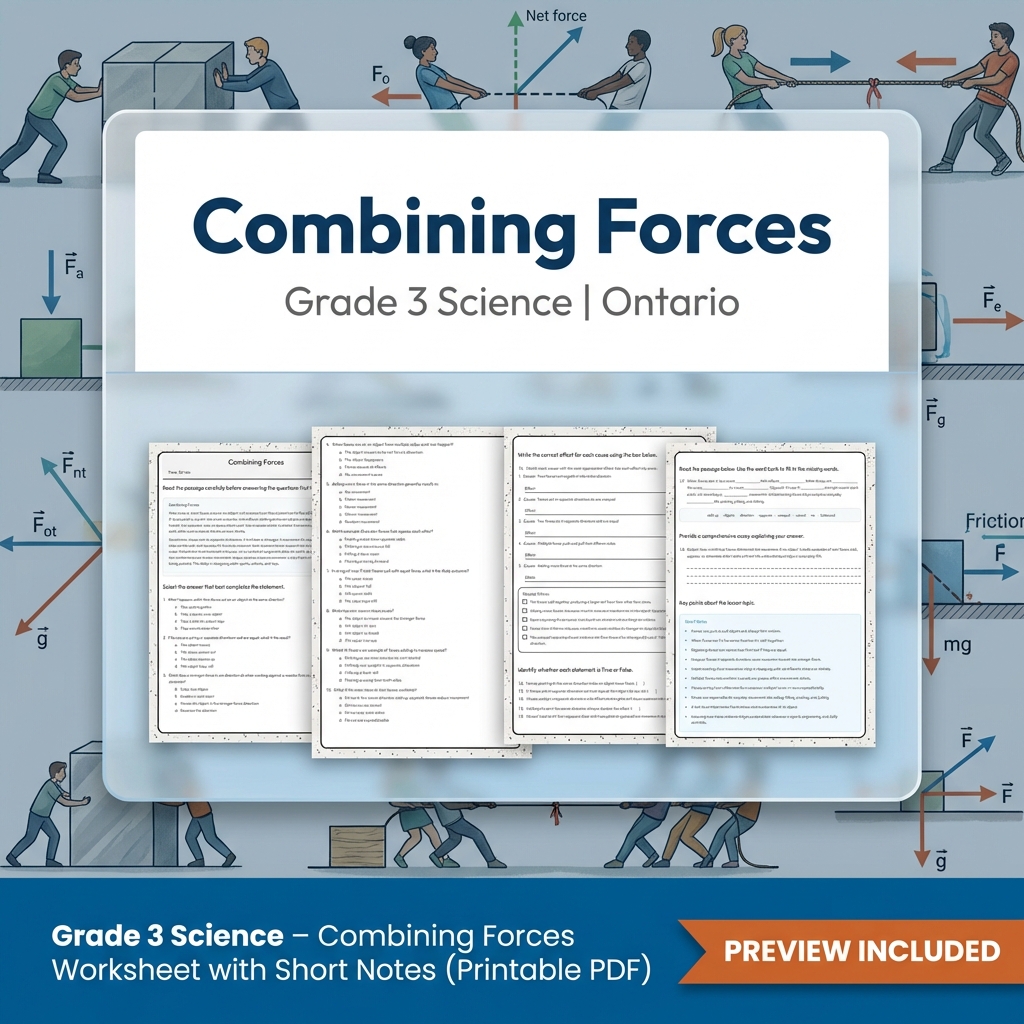
Grade 3 Science – Combining Forces Worksheet with Short Notes (Printable PDF)
Created byMeadowlark WorksheetsLearning Objectives
- Understand how multiple forces acting at the same time affect the motion of an object.
- Identify examples of forces in different directions and their effects.
- Explain how forces that act together produce different results depending on their direction and magnitude.
Also included in: Grade 3 Science Lesson Group | Ontario Forces and Motion Worksheets Bundle +1 more
Instant download
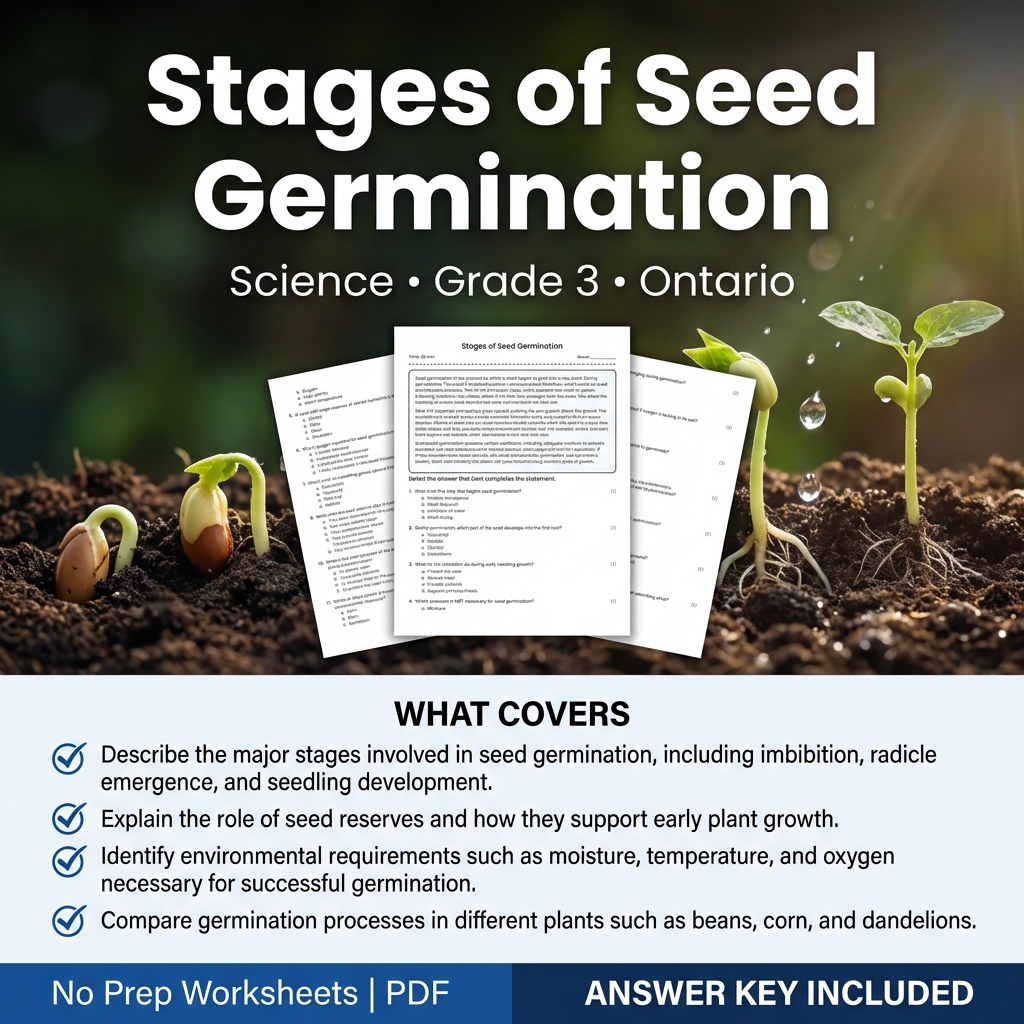
Stages of Seed Germination Worksheet | Grade 3 Science | Ontario
Created byCoral Reef LearningLearning Objectives
- Describe the major stages involved in seed germination, including imbibition, radicle emergence, and seedling development.
- Explain the role of seed reserves and how they support early plant growth.
- Identify environmental requirements such as moisture, temperature, and oxygen necessary for successful germination.
Instant download
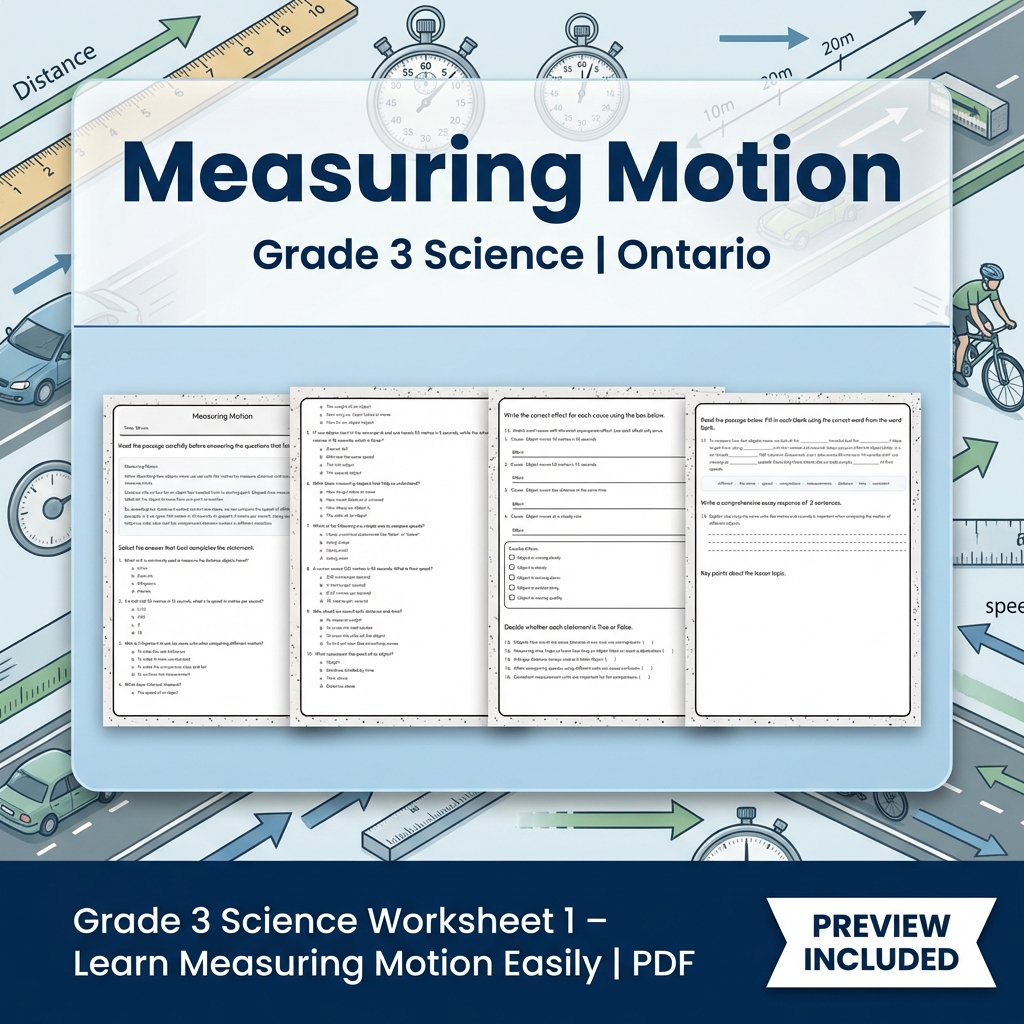
Grade 3 Science Worksheet 1 – Learn Measuring Motion Easily | PDF
Created byMeadowlark WorksheetsLearning Objectives
- Understand methods for describing and recording how objects move using units like metres and seconds.
- Explain the concepts of distance and elapsed time as key measures of motion.
- Compare the speeds of different objects using simple numerical statements.
Also included in: Grade 3 Science Lesson Group | Ontario Forces and Motion Worksheets Bundle +1 more
Instant download
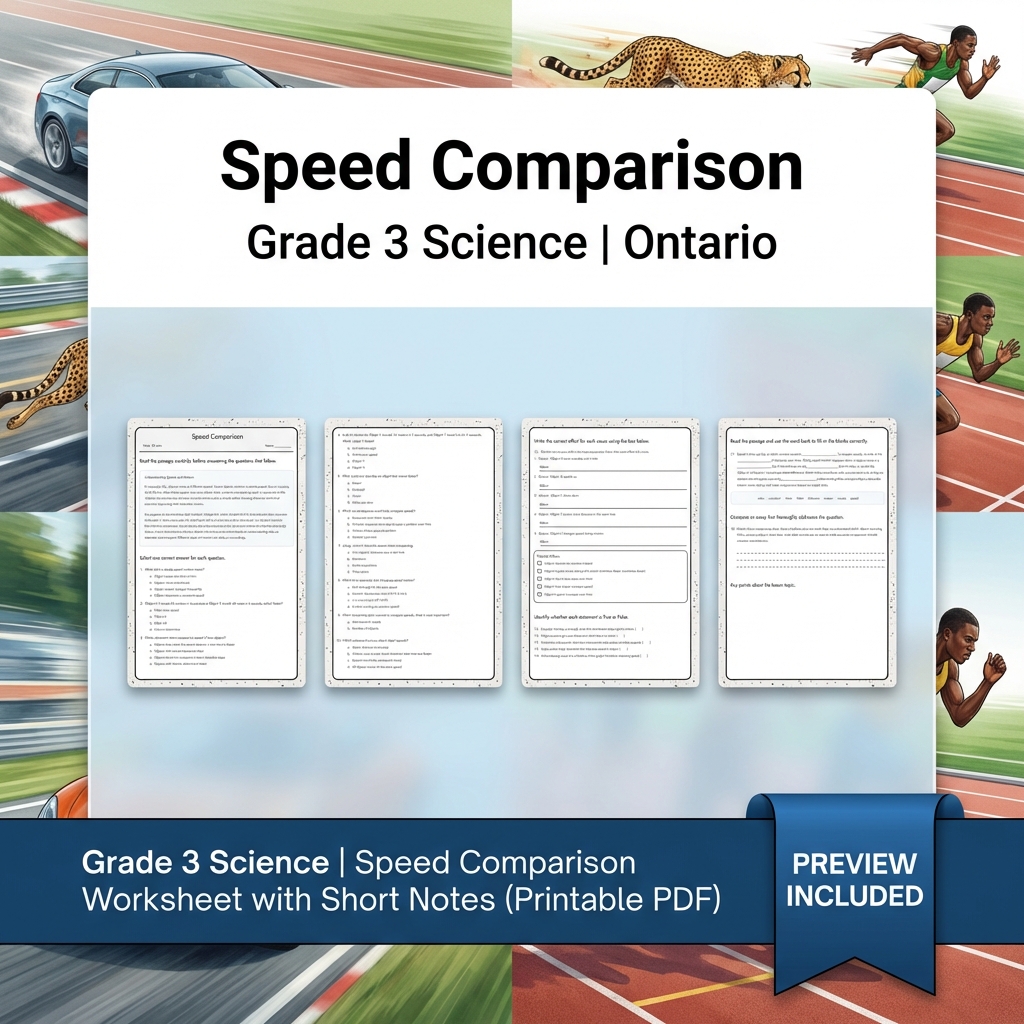
Grade 3 Science | Speed Comparison Worksheet with Short Notes (Printable PDF)
Created byMeadowlark WorksheetsLearning Objectives
- Understand how to compare the motion of objects using simple data summaries.
- Distinguish between steady-speed and changing-speed motion visually and numerically.
- Use ratios and relative language to compare speeds without complex calculations.
Also included in: Grade 3 Science Lesson Group | Ontario Forces and Motion Worksheets Bundle +1 more
Instant download
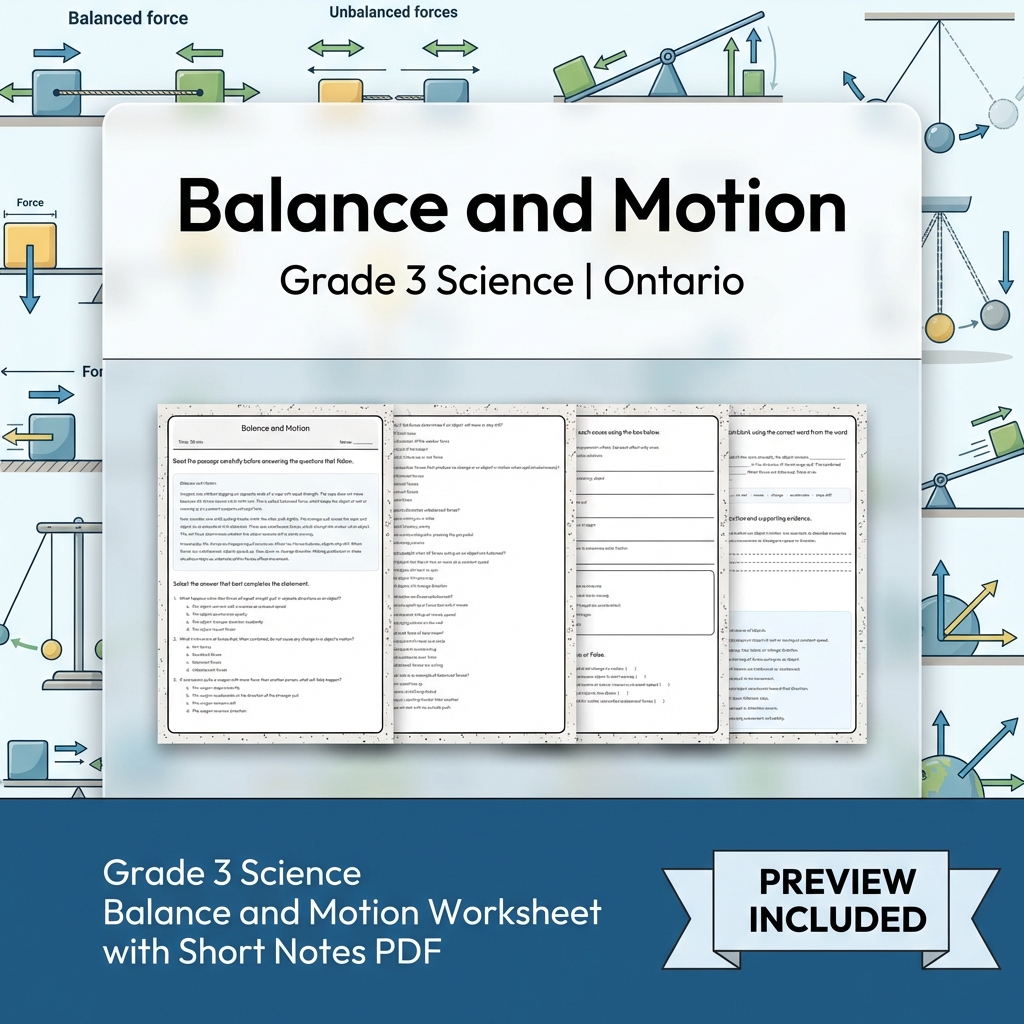
Grade 3 Science Balance and Motion Worksheet with Short Notes PDF
Created byMeadowlark WorksheetsLearning Objectives
- Understand the concepts of balanced and unbalanced forces on objects.
- Predict whether an object will stay at rest or change motion based on forces applied.
- Learn how net influence determines motion or stillness.
Also included in: Grade 3 Science Lesson Group | Ontario Forces and Motion Worksheets Bundle +1 more
Instant download
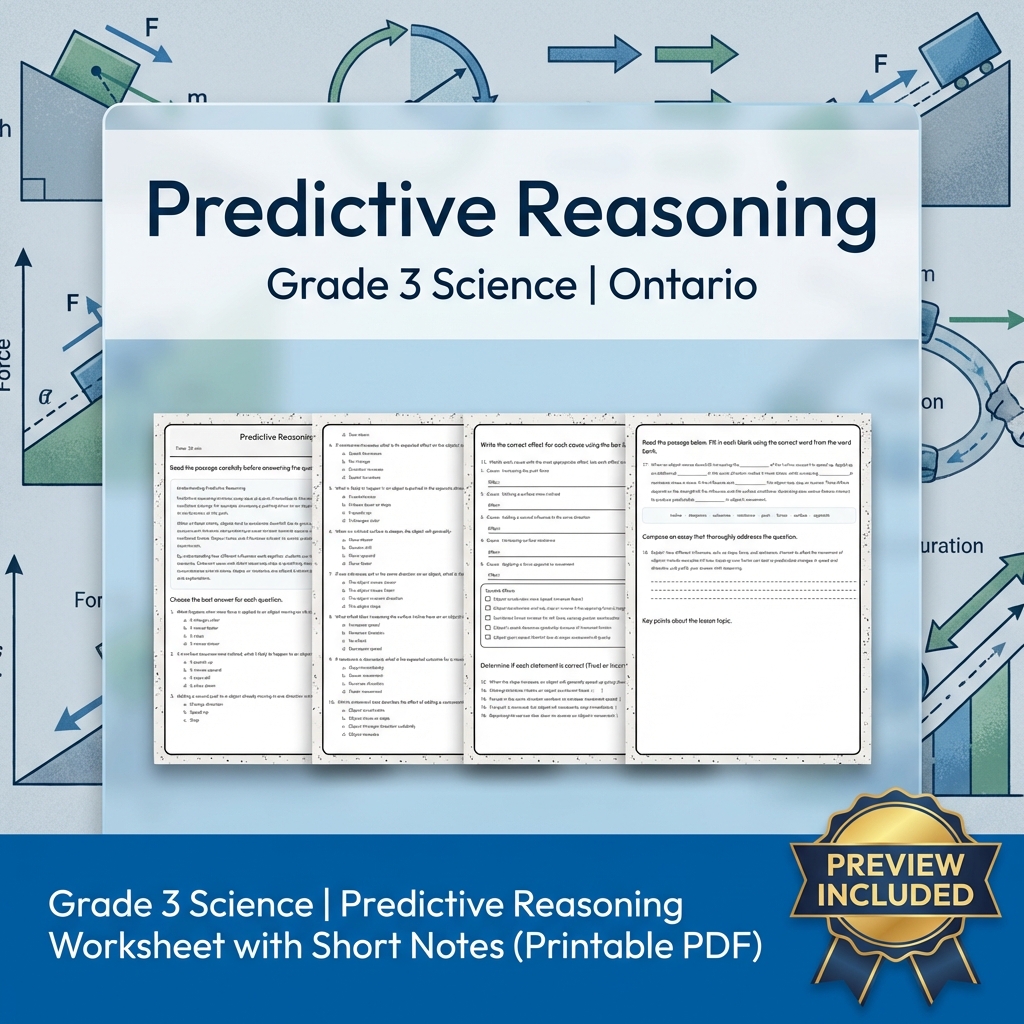
Grade 3 Science | Predictive Reasoning Worksheet with Short Notes
Created byMeadowlark WorksheetsLearning Objectives
- Understand the basic concepts of cause-and-effect relationships in physical scenarios.
- Predict outcomes of changes in influence, surface incline, or added influences.
- Apply qualitative reasoning to interpret slope tendencies, resistance, and overall effects.
Also included in: Grade 3 Science Lesson Group | Ontario Forces and Motion Worksheets Bundle +1 more
Instant download

Grade 3 Design Improvements Worksheet | Practice & PDF
Created byClear Sky ClassroomLearning Objectives
- Explain how test results provide evidence for improving a design
- Describe how engineers use small changes to improve performance toward a goal
- Identify what to adjust when outcomes do not match the design goal
Instant download

Grade 3 Science – Patterns From Data Worksheet (PDF) – General Standards
Created byEvergreen Desk EducationLearning Objectives
- Organize and interpret information from simple tables and graphs to find patterns.
- Use evidence from data to support a claim about a scientific question.
- Explain how reasoning connects a pattern to what the data show.
Also included in: Grade 3 Scientific Evidence & Data Science Lesson Bundle: General +1 more
Instant download

Grade 3 Comparing Against Criteria Worksheet | NGSS Practice PDF
Created byClear Sky ClassroomLearning Objectives
- Explain how to compare two solutions using the same criteria and constraints.
- Identify observable evidence that shows which solution meets criteria better.
- Describe which features likely caused a solution to perform better or worse.
Instant download
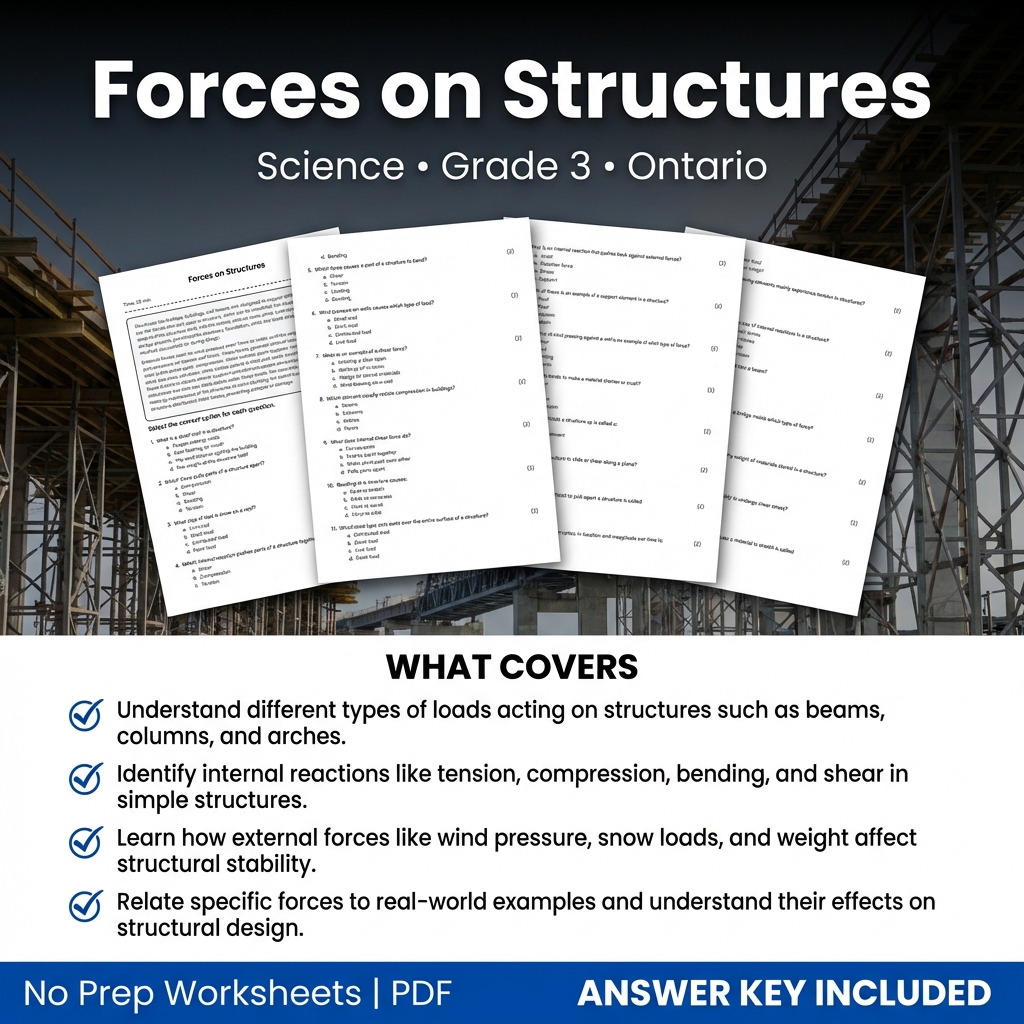
Forces on Structures Worksheet for Grade 3 Science Ontario
Created byCoral Reef LearningLearning Objectives
- Understand different types of loads acting on structures such as beams, columns, and arches.
- Identify internal reactions like tension, compression, bending, and shear in simple structures.
- Learn how external forces like wind pressure, snow loads, and weight affect structural stability.
Instant download
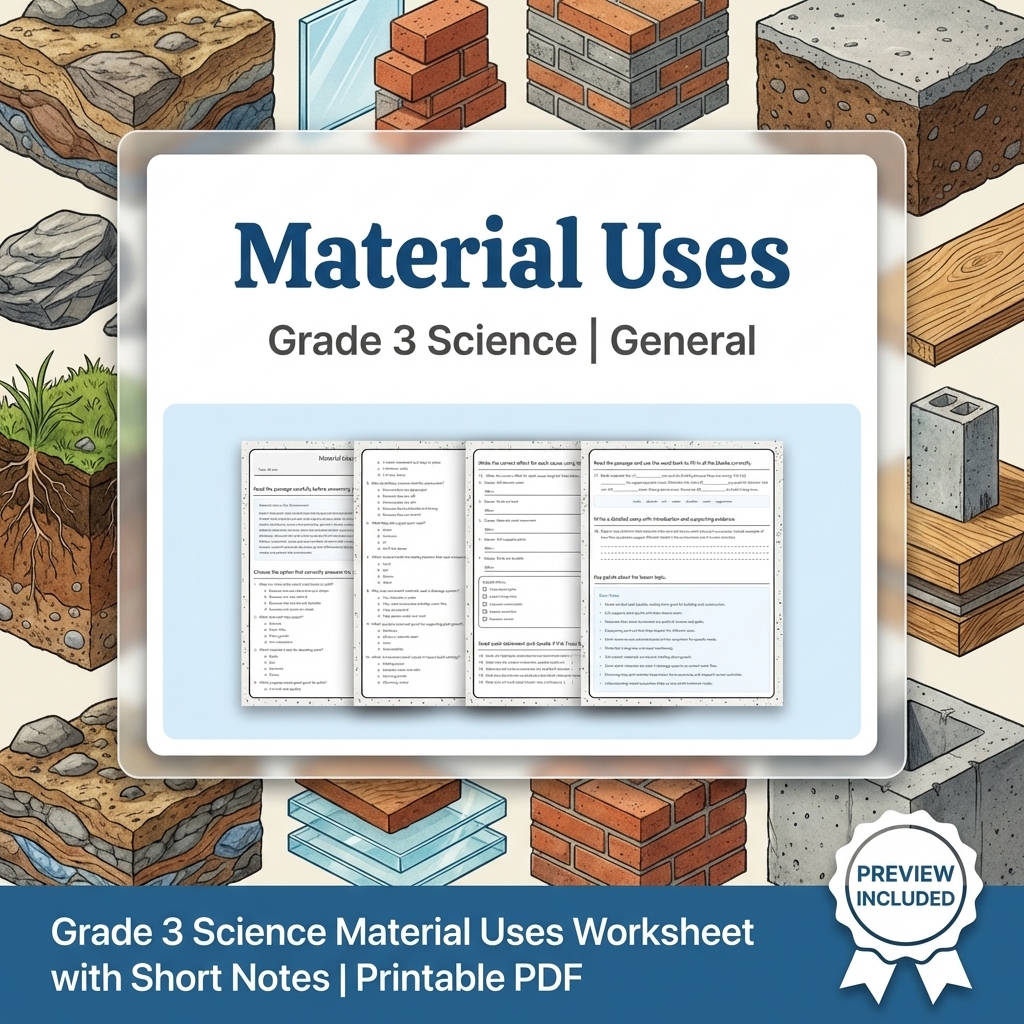
Grade 3 Science Material Uses Worksheet with Short Notes | Printable PDF
Created byMeadowlark WorksheetsLearning Objectives
- Understand how earth materials like rocks and soil are used for specific purposes.
- Compare the properties of rocks and soil and how they support different needs.
- Explain why different materials are chosen for construction and environmental uses.
Also included in: Grade 3 Science Lesson Group | Weather, Water Cycle, and More +1 more
Instant download

Grade 3 Science Worksheet | Evidence Supported Claims (PDF)
Created byEvergreen Desk EducationLearning Objectives
- Explain how an evidence-supported claim connects a question to observations or results.
- Identify evidence types such as comparisons, repeated observations, and patterns over time.
- Revise an explanation so that it matches gathered evidence instead of personal opinion.
Also included in: Grade 3 Scientific Evidence & Data Science Lesson Bundle: General +1 more
Instant download
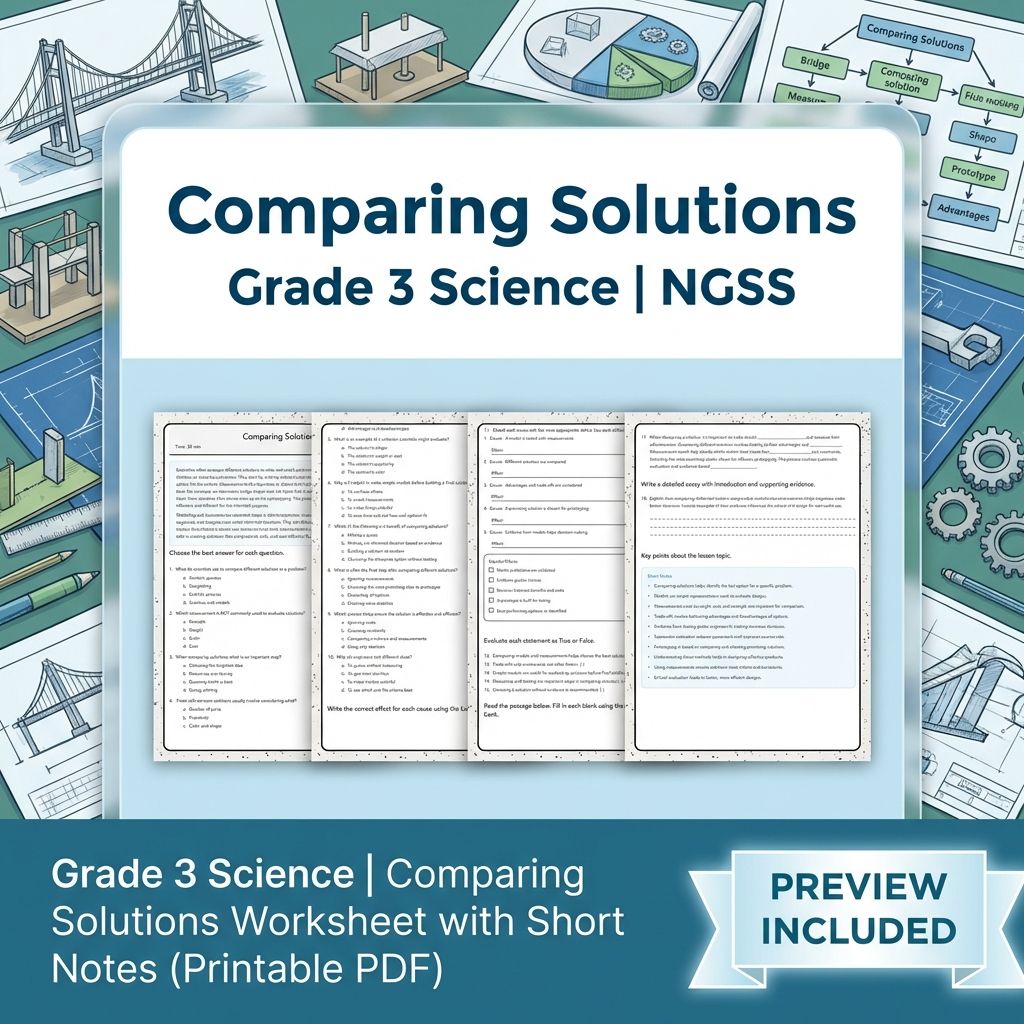
Grade 3 Science | Comparing Solutions Worksheet with Short Notes (Printable PDF)
Created byMeadowlark WorksheetsLearning Objectives
- Understand how to generate and compare simple solutions using models and measurements.
- Evaluate different options to meet specific criteria and constraints.
- Identify advantages and trade-offs of various solutions in practical contexts.
Also included in: Grade 3 Science NGSS Engineering Design Unit | Classroom Worksheets & Activities +1 more
Instant download
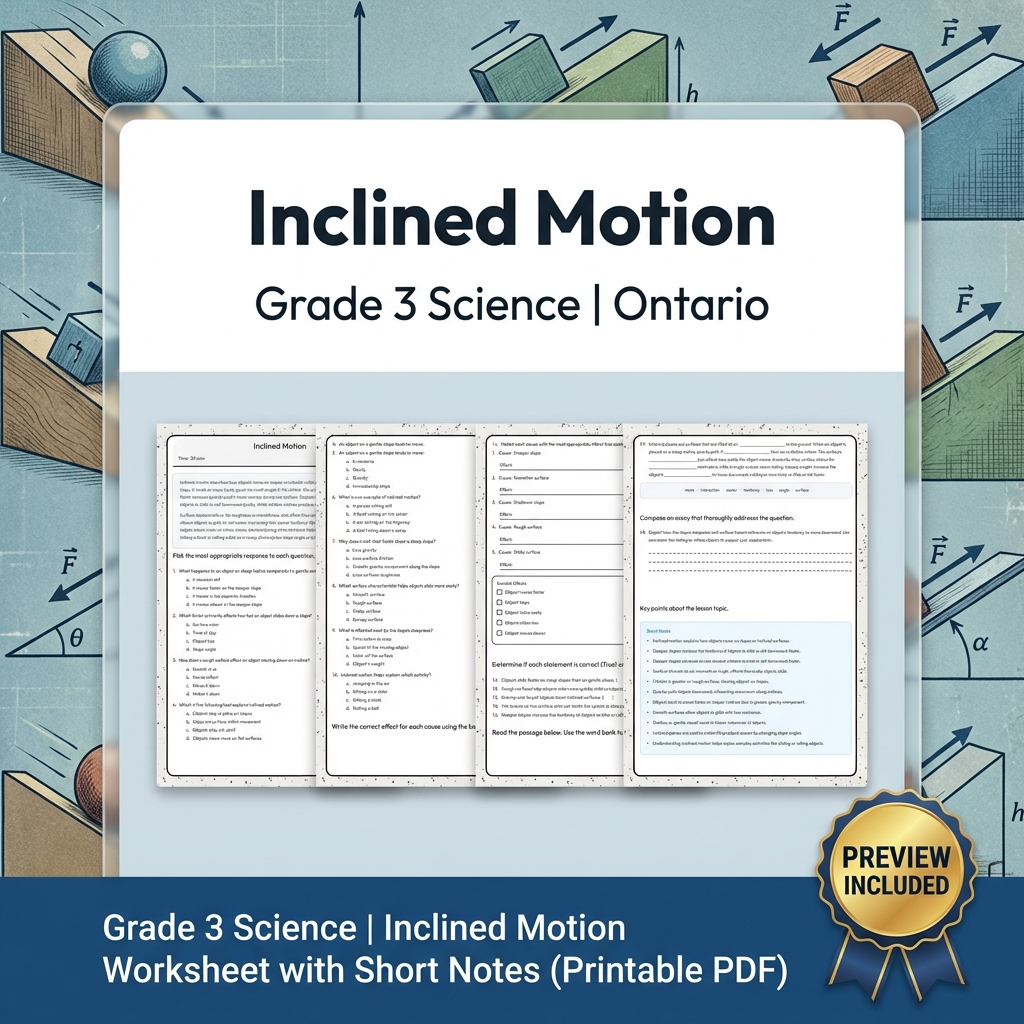
Grade 3 Science | Inclined Motion Worksheet with Short Notes (Printable PDF)
Created byMeadowlark WorksheetsLearning Objectives
- Understand how inclined surfaces influence an object's tendency to move.
- Differentiate between gentle and steep inclines and their effects on motion.
- Identify factors, such as slope angle, that affect speed in inclined motion.
Also included in: Grade 3 Science Lesson Group | Ontario Forces and Motion Worksheets Bundle +1 more
Instant download
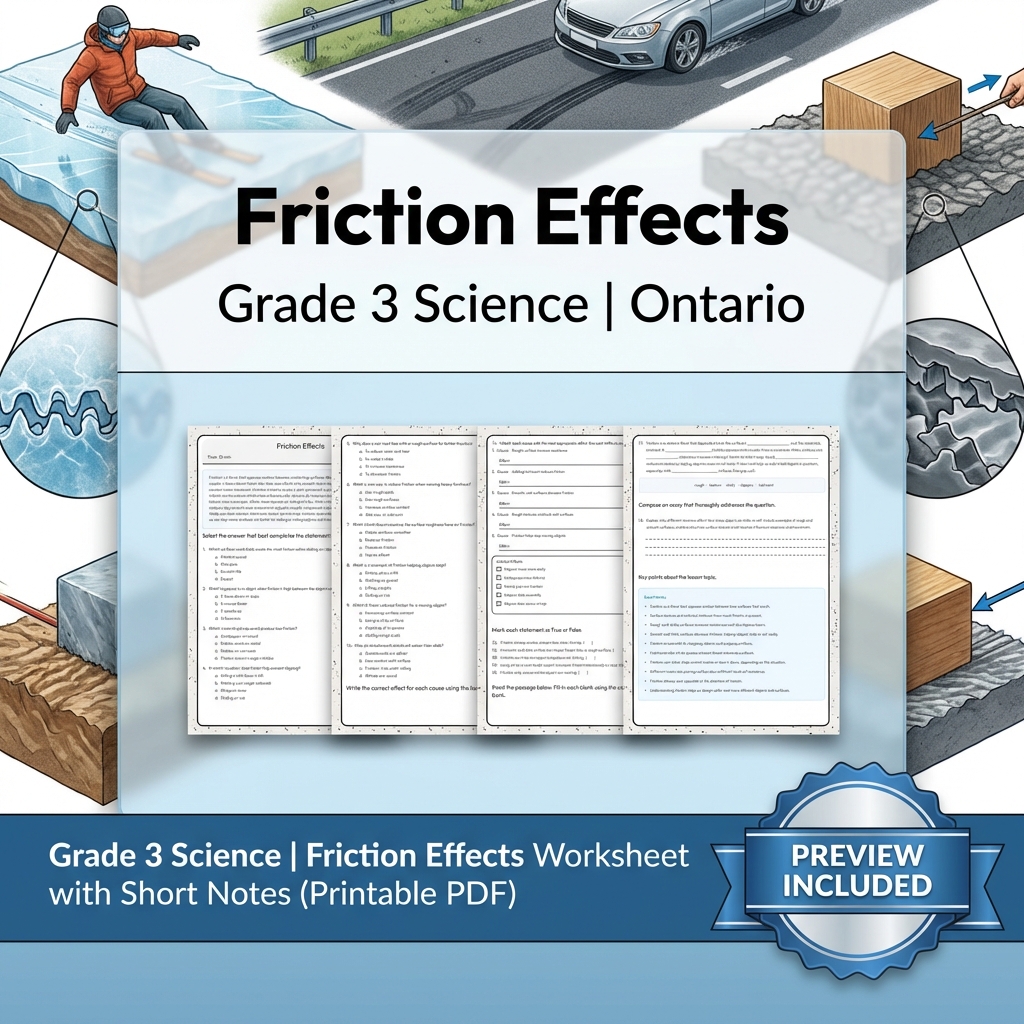
Grade 3 Science | Friction Effects Worksheet with Short Notes (Printable PDF)
Created byMeadowlark WorksheetsLearning Objectives
- Explain what friction is and how it affects moving objects.
- Describe how surface texture and material influence resistance to motion.
- Identify real-world examples where friction plays an important role.
Also included in: Grade 3 Science Lesson Group | Ontario Forces and Motion Worksheets Bundle +1 more
Instant download
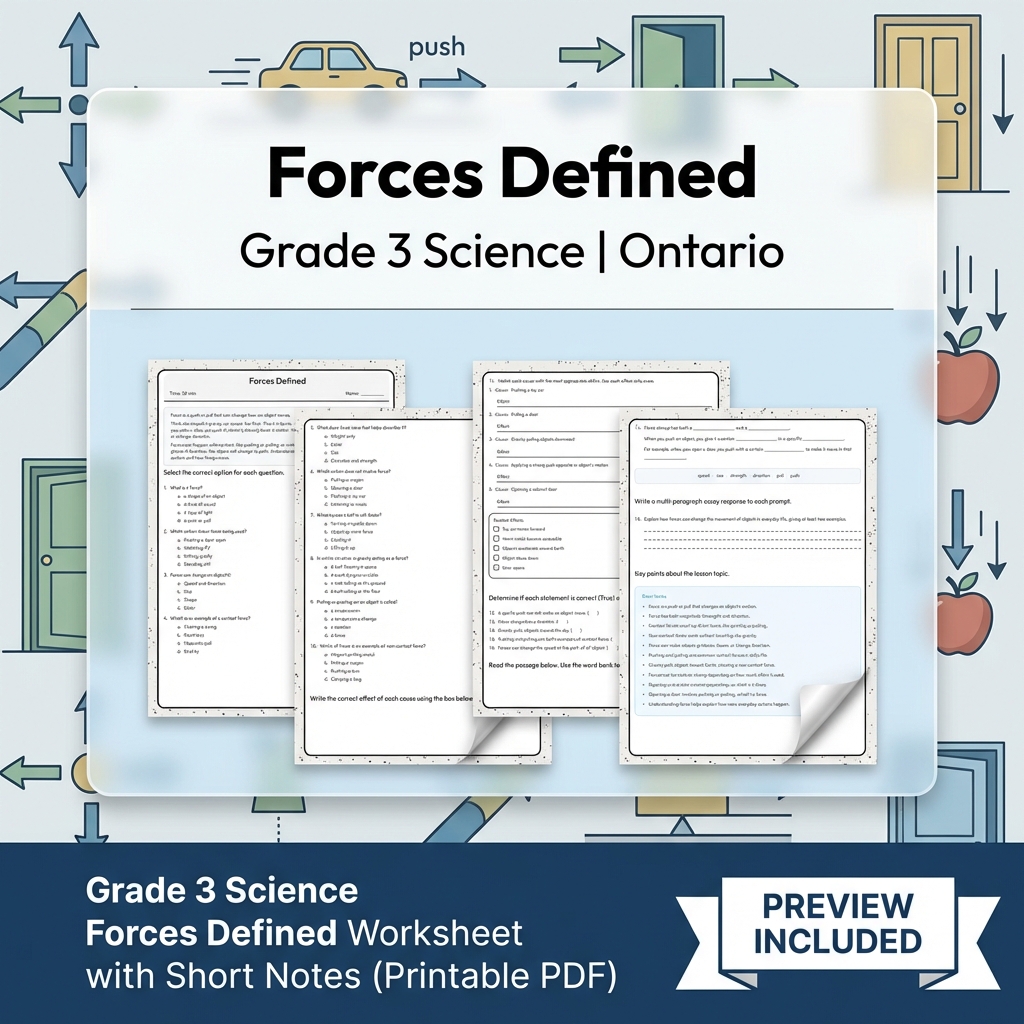
Grade 3 Science Forces Defined Worksheet with Short Notes (Printable PDF)
Created byMeadowlark WorksheetsLearning Objectives
- Understand the concept of force as a push or pull.
- Identify examples of forces in everyday life.
- Learn that force has both direction and strength (magnitude).
Also included in: Grade 3 Science Lesson Group | Ontario Forces and Motion Worksheets Bundle +1 more
Instant download

Grade 3 Science | Testing Improvements Worksheet with Short Notes (PDF)
Created byMeadowlark WorksheetsLearning Objectives
- Understand how to plan and conduct fair tests for prototypes.
- Identify variables, failure points, and design modifications in testing.
- Record and analyze outcomes to improve project performance.
Also included in: Grade 3 Science NGSS Engineering Design Unit | Classroom Worksheets & Activities +1 more
Instant download
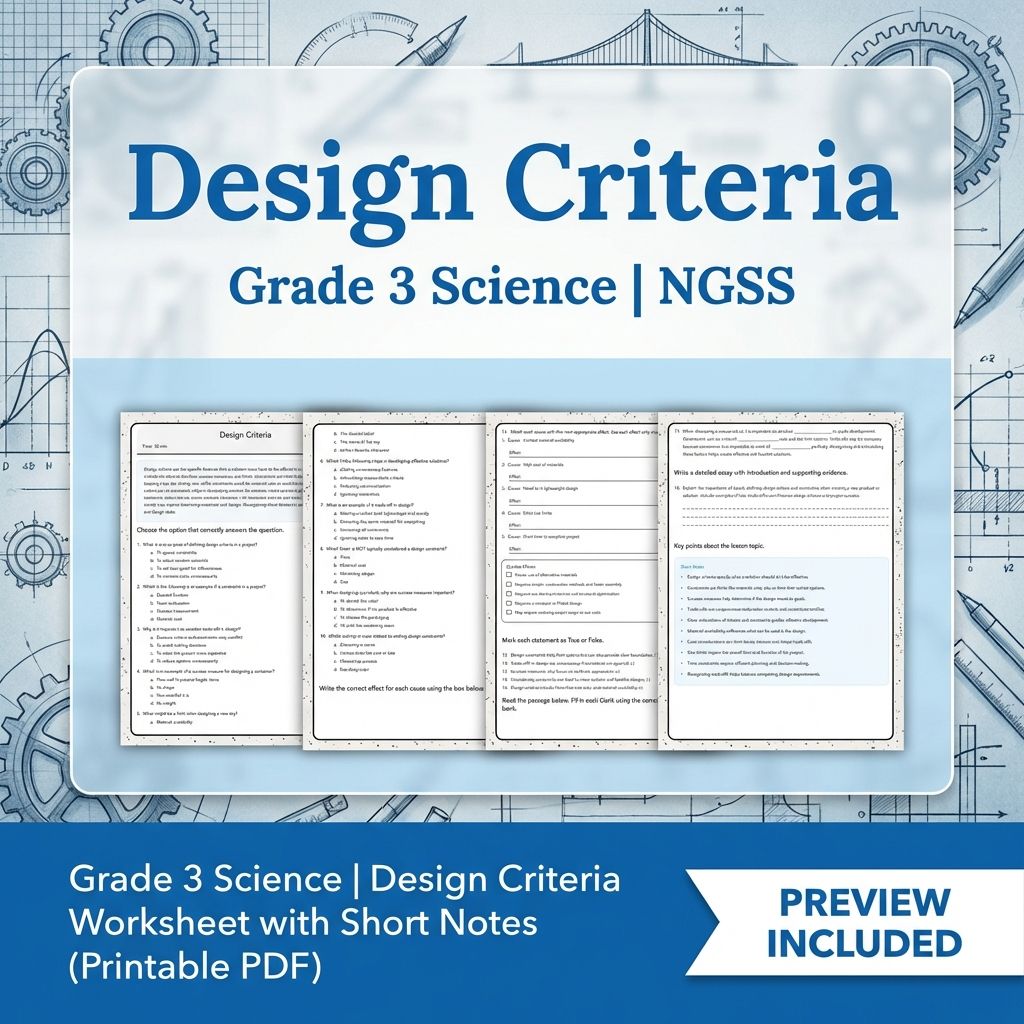
Grade 3 Science | Design Criteria Worksheet with Short Notes (Printable PDF)
Created byMeadowlark WorksheetsLearning Objectives
- Identify and define design criteria and constraints for projects.
- Articulate measurable functions and success measures.
- Recognize limits such as material availability, cost, size, and time.
Also included in: Grade 3 Science NGSS Engineering Design Unit | Classroom Worksheets & Activities +1 more
Instant download
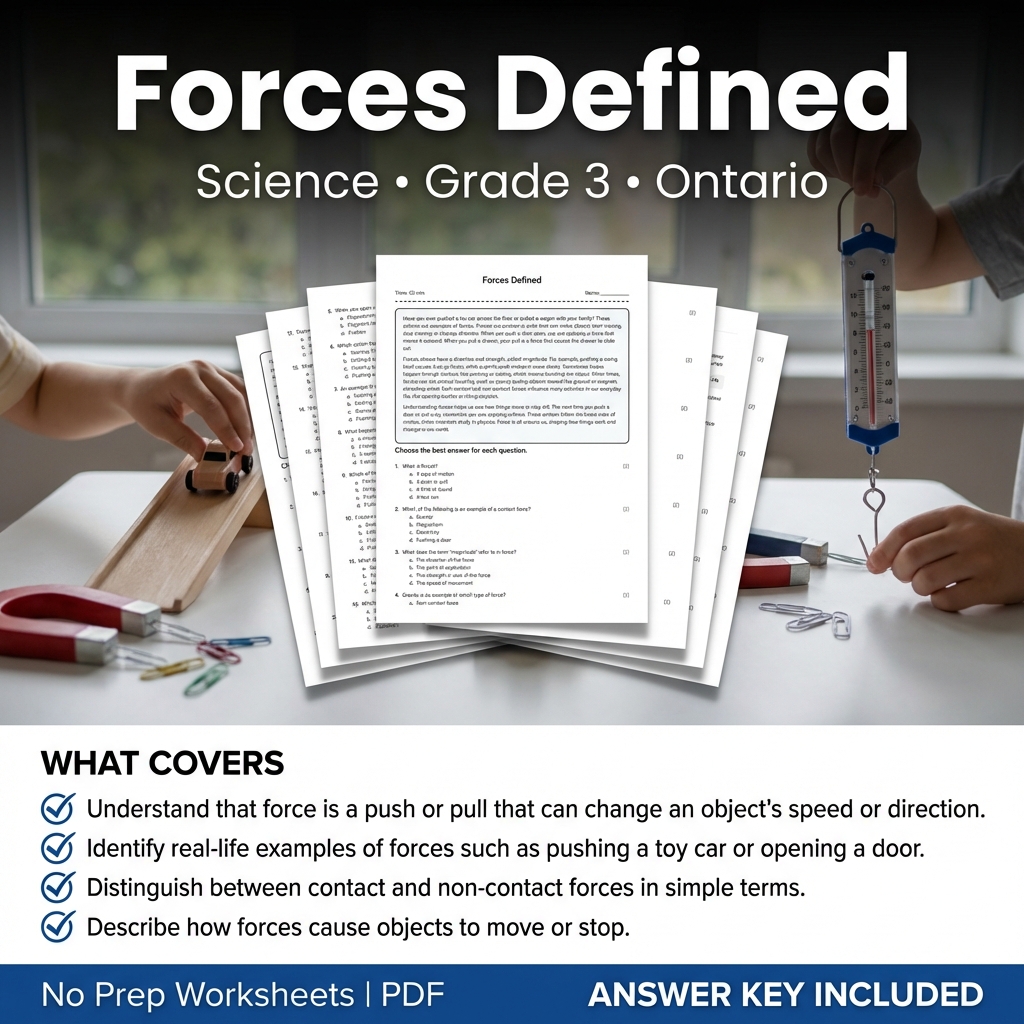
Forces Defined Grade 3 Science Worksheet | Ontario Standards Practice
Created byCoral Reef LearningLearning Objectives
- Understand that force is a push or pull that can change an object's speed or direction.
- Identify real-life examples of forces such as pushing a toy car or opening a door.
- Distinguish between contact and non-contact forces in simple terms.
Instant download

Force and Sound Vibrations Worksheets | Grade 3 Physical Science
Created byBRIGHT PATH RESOURCESLearning Objectives
- Explain how a stronger force can create larger vibrations and louder sound
- Describe how sound depends on vibrations traveling through a medium
- Identify examples of force changing how an object vibrates
Also included in: Grade 3 Science Worksheets Bundle | Matter, Light and Sound Unit +2 more
Instant download
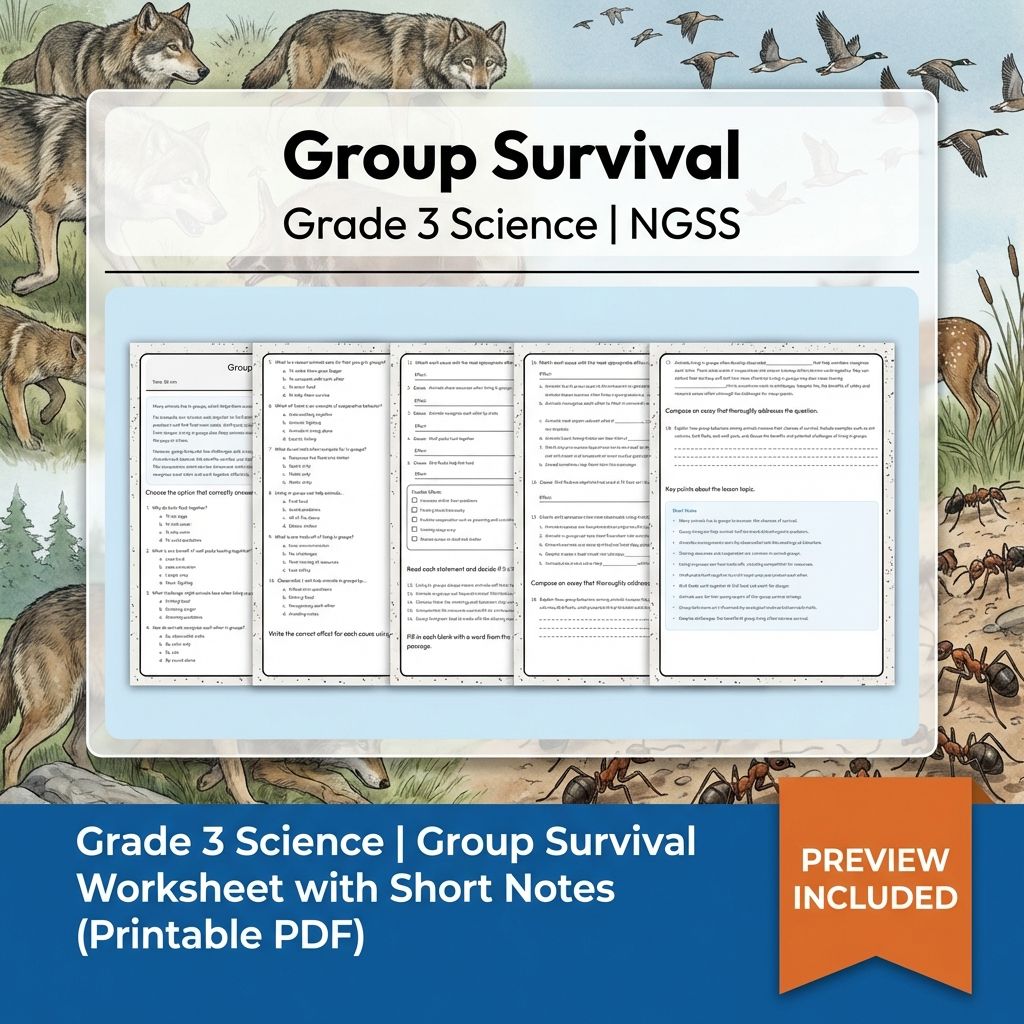
Grade 3 Science | Group Survival Worksheet with Short Notes (Printable PDF)
Created byMeadowlark WorksheetsLearning Objectives
- Understand how organisms interact and cooperate for survival.
- Identify examples of group behaviors like fighting for resources and defending against predators.
- Explain how sharing resources and cooperation increase survival chances.
Also included in: Grade 3 Science NGSS Ecosystems Unit Bundle – Interactions & Energy +1 more
Instant download

Grade 3 Form and Function Worksheet | NGSS Practice PDF
Created byClear Sky ClassroomLearning Objectives
- Explain how an organism’s structures help it survive by linking form to function.
- Use evidence to describe how internal and external structures support life processes.
- Compare structural differences between species and predict how those differences affect survival and reproduction.
Instant download

State Changes of Matter Science Worksheets for Grade 3 Physical Science
Created byBRIGHT PATH RESOURCESLearning Objectives
- Explain how thermal energy changes matter’s state (solid, liquid, gas)
- Identify melting, freezing, evaporation, and condensation as state changes
- Describe how a sample’s shape and volume can change when it changes state
Also included in: Grade 3 Science Worksheets Bundle | Matter, Light and Sound Unit +2 more
Instant download
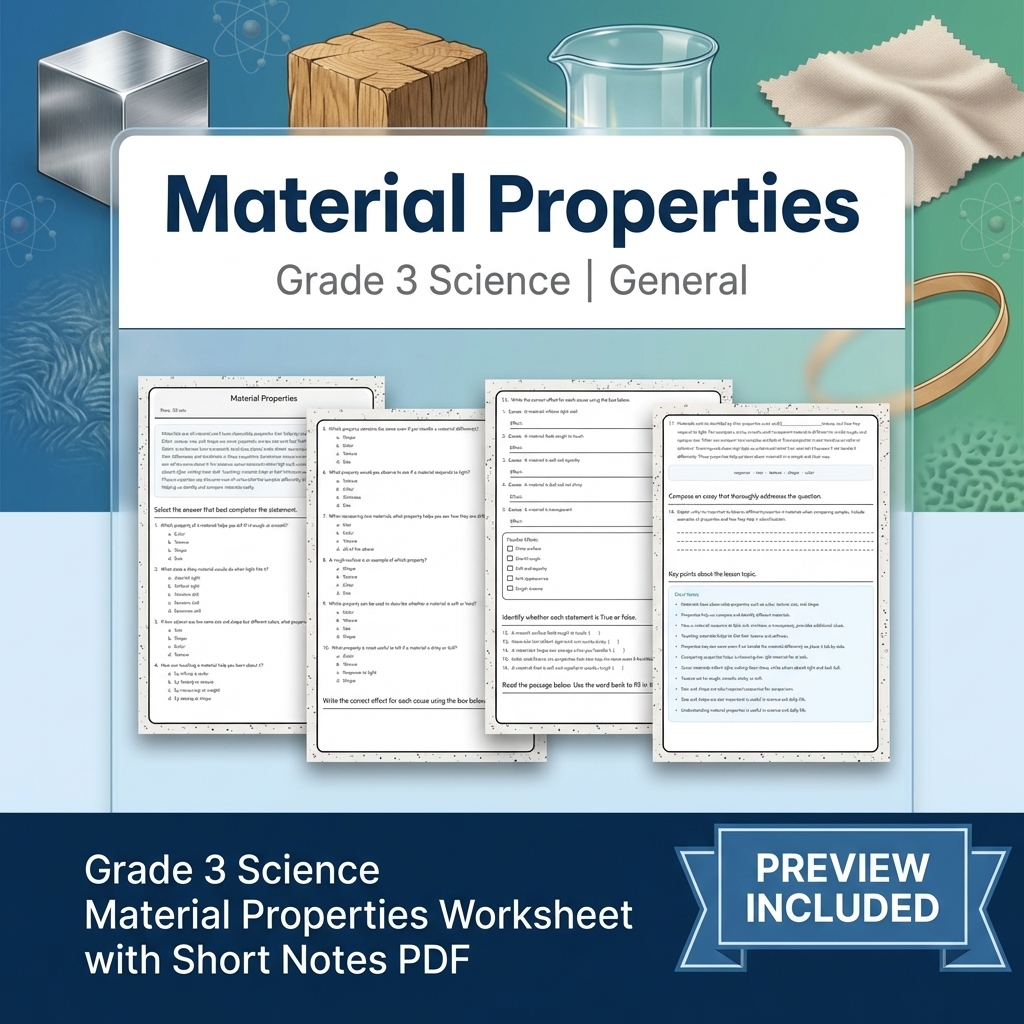
Grade 3 Science Material Properties Worksheet with Short Notes PDF
Created byMeadowlark WorksheetsLearning Objectives
- Identify observable properties of materials such as color, texture, size, and shape.
- Compare two material samples based on their properties.
- Understand how materials respond to light and touch.
Also included in: Grade 3 Science Lesson Group: Worksheets for Properties, Water, Sound & Light +1 more
Instant download

Grade 3 Balance And Motion Worksheet | Ontario Practice PDF
Created byClear Sky ClassroomLearning Objectives
- Explain how equal forces in opposite directions can balance to keep an object’s motion unchanged
- Predict whether an object will remain at rest or change speed or direction based on net influence
- Describe net influence as the combined effect of all forces acting at the same time
Instant download

Science Grade 3 Friction & Motion
 Created byTeacherNest
Learning Objectives
- Identify the meaning of motion in everyday situations
- Explain how friction affects an object's movement
- Find everyday examples of friction and match them to outcomes
Instant download

Grade 3 Balanced Forces Worksheet | NGSS Practice PDF
Created byClear Sky ClassroomLearning Objectives
- Explain how balanced forces keep an object’s motion the same (no change).
- Describe how unbalanced forces cause changes in speed or direction.
- Differentiate contact forces (pushes and friction) from net force effects.
Instant download
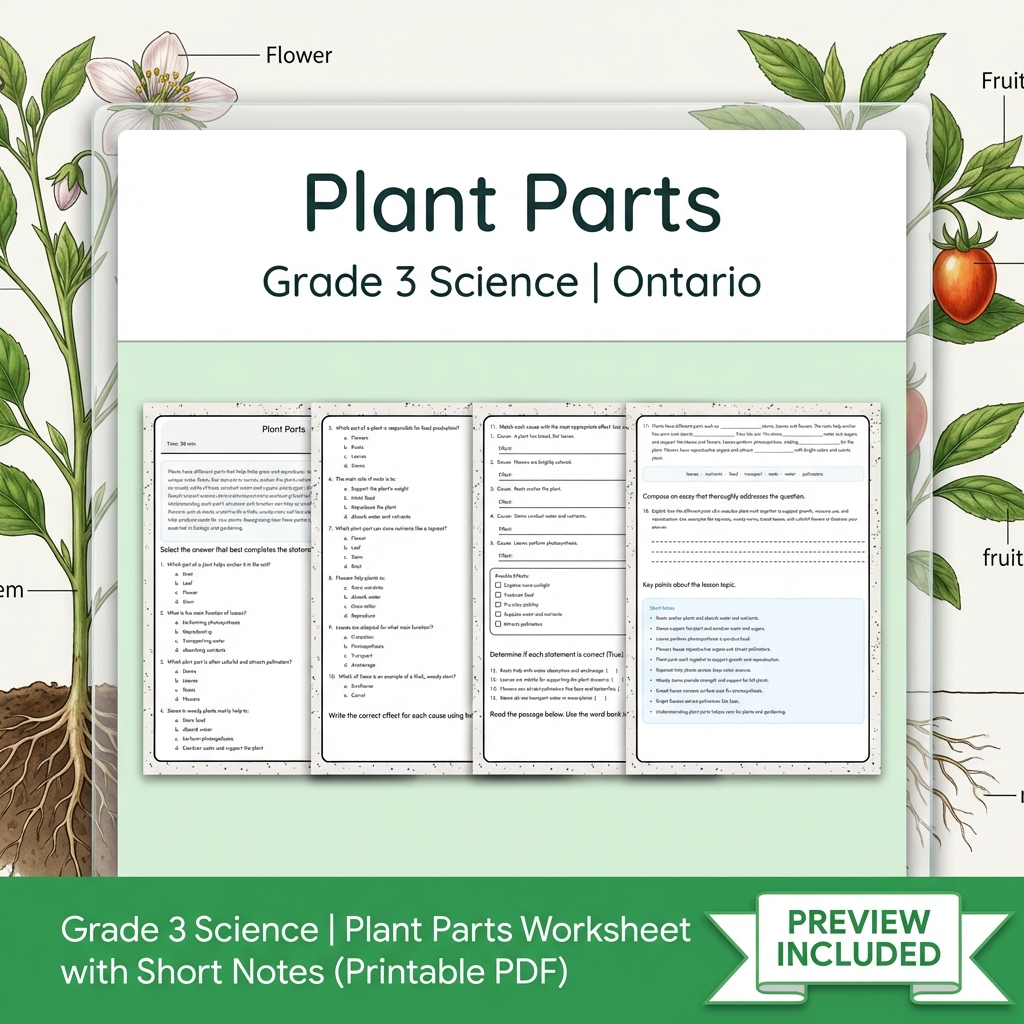
Grade 3 Science | Plant Parts Worksheet with Short Notes (Printable PDF)
Created byMeadowlark WorksheetsLearning Objectives
- Identify and describe the structure of roots, stems, leaves, and flowers in plants.
- Explain the functions of plant organs in growth, resource absorption, and reproduction.
- Relate plant organ characteristics to their roles in plant survival and reproduction.
Also included in: Grade 3 Science Lesson Group | Ontario STEM Worksheets Bundle Transport & Plants +1 more
Instant download
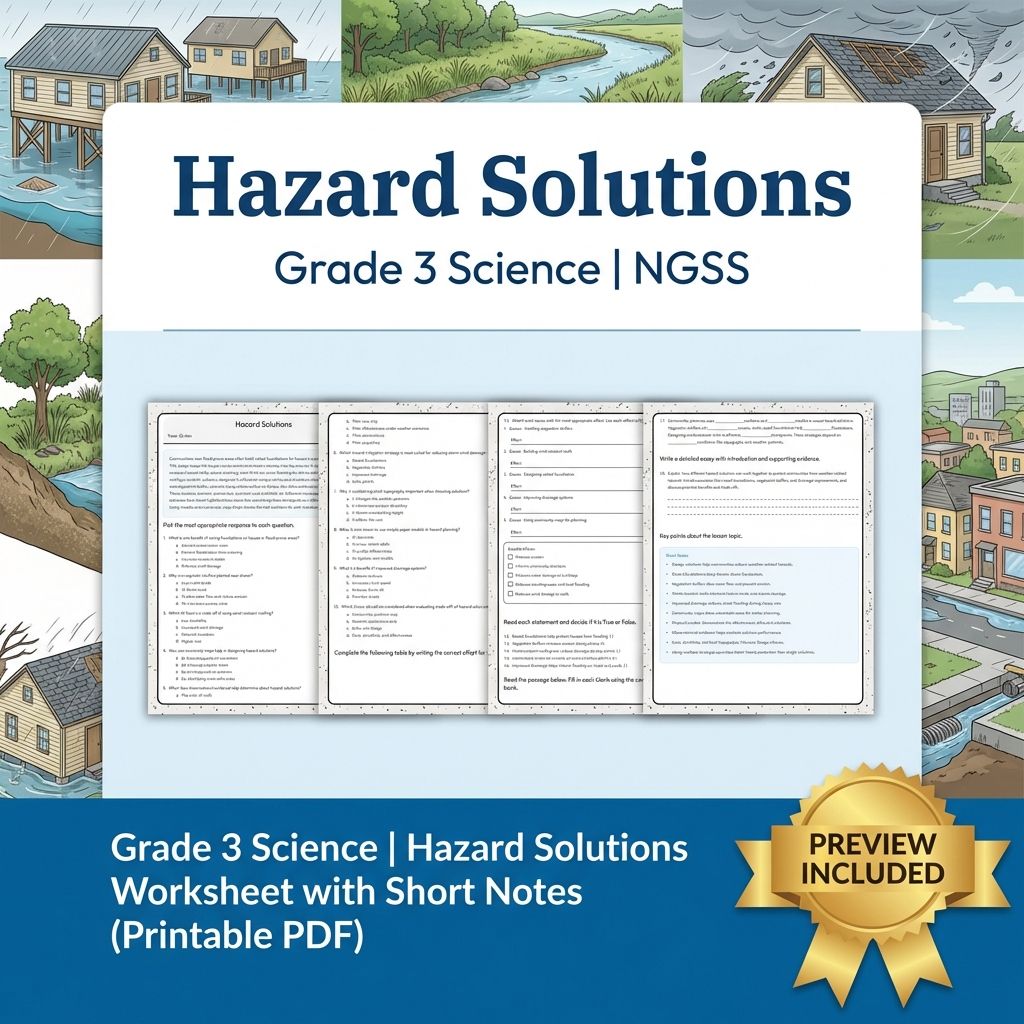
Grade 3 Science | Hazard Solutions Worksheet with Short Notes (Printable PDF)
Created byMeadowlark WorksheetsLearning Objectives
- Identify different design solutions that reduce weather-related hazards.
- Make reasoned claims about the effectiveness of hazard mitigation strategies.
- Use observational evidence and models to compare hazard mitigation options.
Also included in: Grade 3 Science | Earth and Human Activity NGSS Unit Bundle (Worksheet Included) +1 more
Instant download
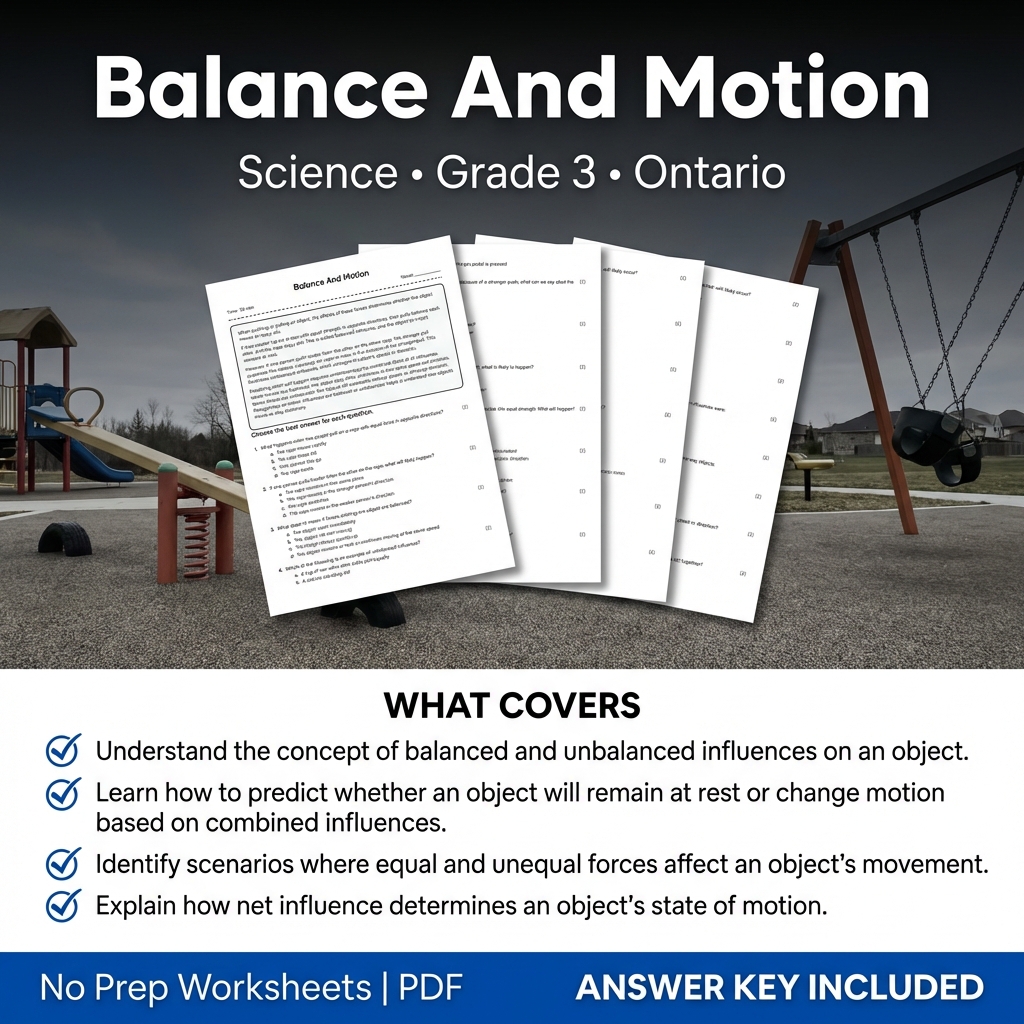
Balance And Motion Grade 3 Science Worksheet | Ontario Standards
Created byCoral Reef LearningLearning Objectives
- Understand the concept of balanced and unbalanced influences on an object.
- Learn how to predict whether an object will remain at rest or change motion based on combined influences.
- Identify scenarios where equal and unequal forces affect an object's movement.
Instant download
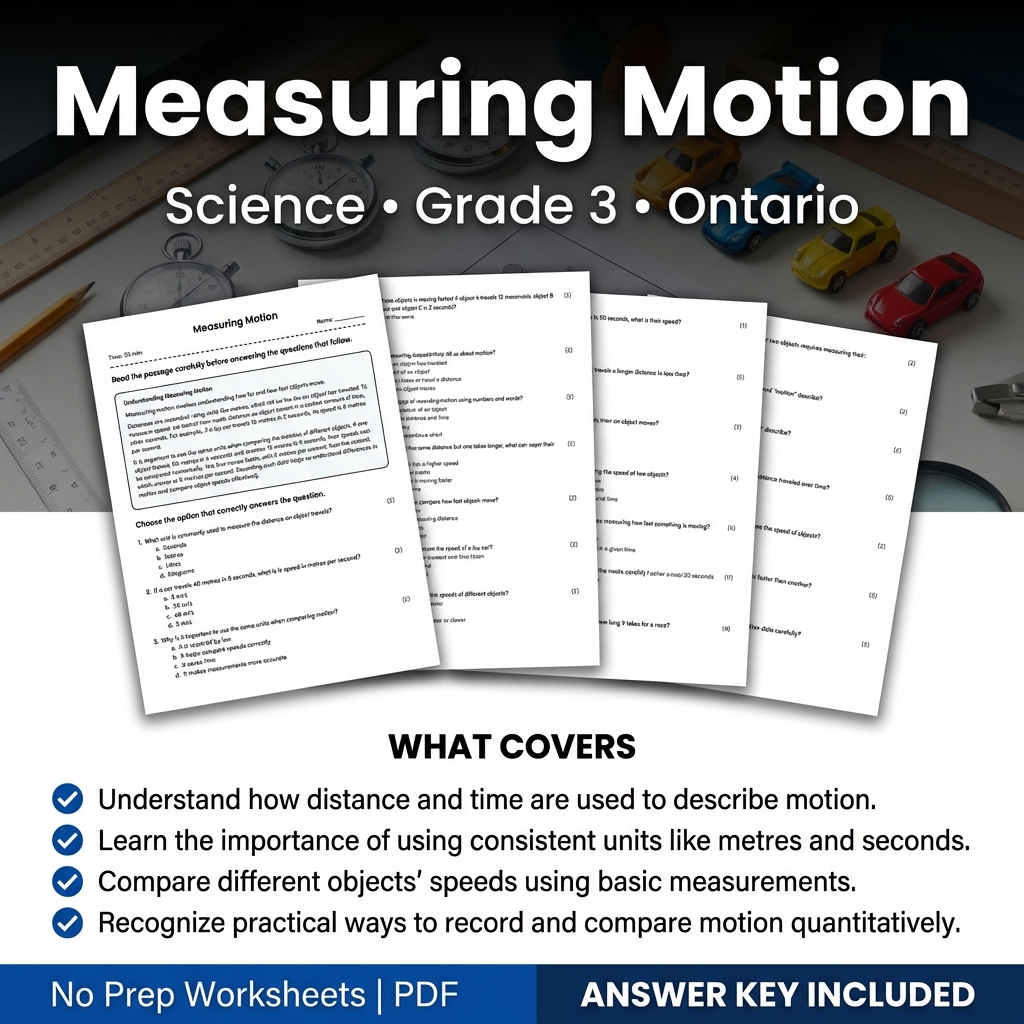
Measuring Motion Grade 3 Science Worksheet | Ontario Standards
Created byCoral Reef LearningLearning Objectives
- Understand how distance and time are used to describe motion.
- Learn the importance of using consistent units like metres and seconds.
- Compare different objects’ speeds using basic measurements.
Instant download
About Grade 3 Science Worksheets
Browse 425 printable Grade 3 Science worksheets — ready-to-print PDFs with answer keys where available.
Each resource here is built by an independent educator and reviewed for quality. Worksheets print straight from PDF and suit classroom use, homework, or extra practice; most come with answer keys, and you can preview before purchasing.