
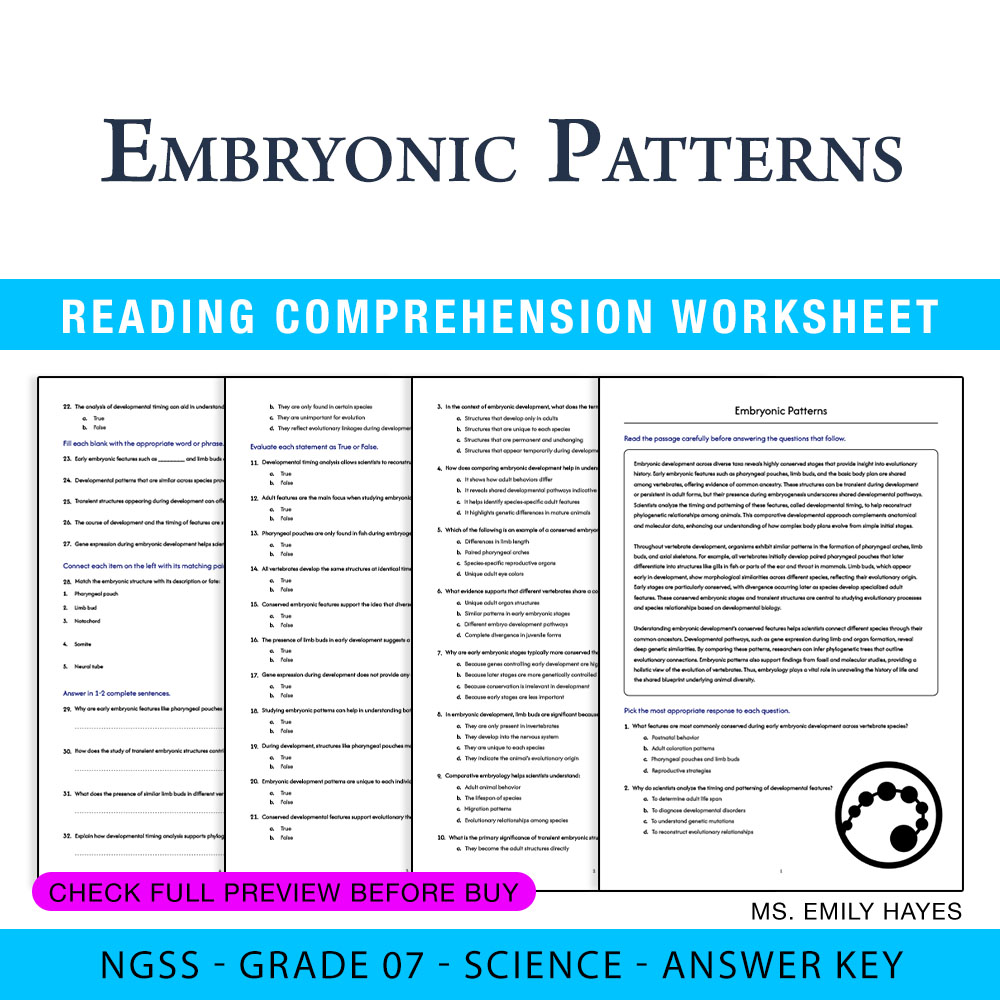


7th Grade Science | Embryonic Patterns Worksheet (PDF + Answer Key)
$3.00
Copper Leaf Classroom
New·2 followers·8 sales
SubjectScienceGradeGrade 7
Learning Objectives
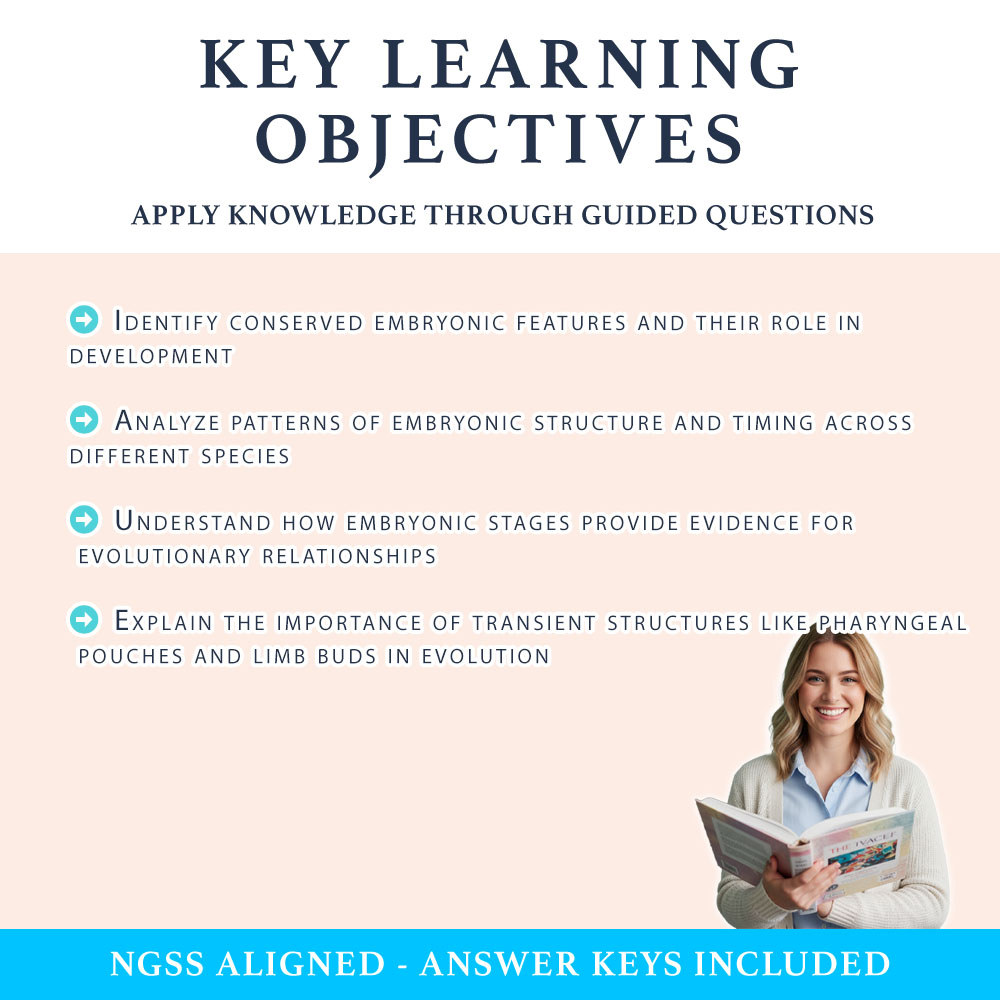
Describe key developmental stages observed across different taxa during embryonic development.
Analyze the significance of conserved embryonic features in understanding evolutionary relationships.
Identify specific morphological similarities such as pharyngeal pouches and limb buds in various vertebrates.
Reviews & Feedback
Loading reviews...
Questions & Answers
Loading questions…
About this worksheet
Related categories
Frequently asked questions
Who is 7th Grade Science | Embryonic Patterns Worksheet (PDF + Answer Key) designed for?
7th Grade Science | Embryonic Patterns Worksheet (PDF + Answer Key) is designed for Grade 7 students and Science learners and can be used in classrooms, homeschool, or independent practice.
How do I download 7th Grade Science | Embryonic Patterns Worksheet (PDF + Answer Key)?
Add it to your cart and complete checkout. After payment, you can download immediately from your account, and you'll also receive a download link by email.
What type of worksheet is this?
7th Grade Science | Embryonic Patterns Worksheet (PDF + Answer Key) is a worksheet worksheet for Science, suitable for Grade 7 level.
Similar Products

7th Grade Science | Climate Patterns Worksheet & Answer Key (PDF)
$2.00

7th Grade Science | Bonding Patterns Reading Worksheet & Answer Key (PDF)
$3.00

Grade 7 Science | Embryonic Patterns Worksheet PDF | NGSS-Aligned
$3.00

7th Grade Science | Embryonic Patterns Worksheet (Answer Key) NGSS Aligned
$3.00

Grade 7 Science | Embryonic Development Patterns NGSS Worksheet (PDF)
$3.00