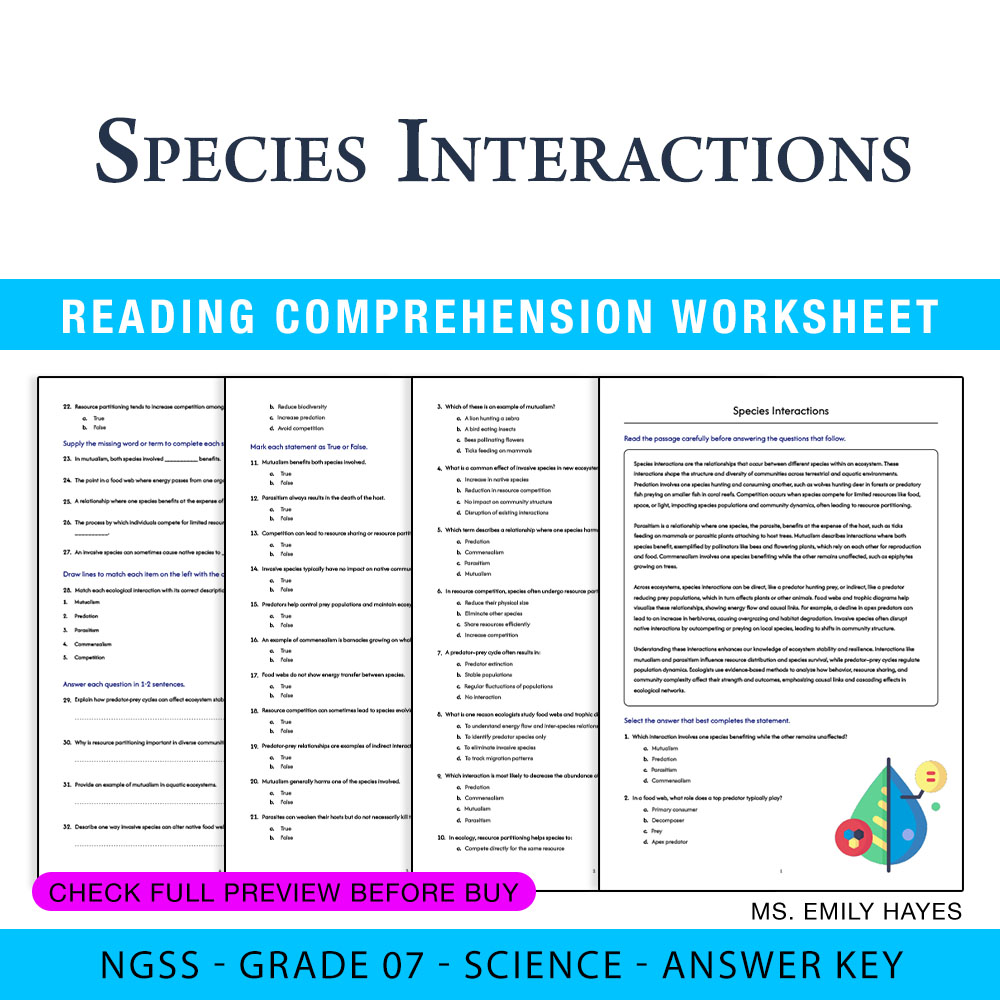
Are you looking for a dynamic, effective way to deepen your students' understanding of complex ecological concepts? This Grade 7 Science worksheet on Species Interactions is designed to tackle a common classroom challenge: engaging students with vital ecosystem relationships while strengthening their critical thinking skills. Specifically aligned with Next Generation Science Standards (NGSS), this print-ready PDF worksheet makes it easy for teachers to deliver comprehensive lessons on the interactions that shape ecosystems, such as mutualism, parasitism, predation, and competition. By focusing on real-world examples and integrating various question formats, this resource helps students master key concepts, improve their analytical abilities, and build confidence in scientific reasoning.
Why Teachers Love This ✅ Saves valuable prep time with a ready-to-use, high-quality PDF worksheet designed for immediate classroom application
✅ Promotes active learning through a variety of question types, including reading comprehension, multiple-choice, true/false, fill-in-the-blank, matching, and short answer prompts
✅ Fully aligned with NGSS standards, ensuring lessons meet essential curriculum requirements
✅ Supports diverse teaching strategies whole class, small group, or independent work making it ideal for busy educators seeking versatile resources
Why Students Succeed With This ✅ Clear, engaging instructions and relevant content boost student understanding of intricate biological interactions
✅ Progressive difficulty builds critical skills—from basic recall to higher-order thinking, fostering mastery and confidence
✅ Real-life ecological examples help students see the relevance of science in their everyday lives
✅ Encourages analytical thinking and written communication through thought-provoking essay questions
What You Get Complete, print-ready PDF materials include:
• An engaging reading passage that introduces the concept of species interactions and their importance in ecosystems
• 10 multiple-choice questions that test understanding of key concepts such as symbiosis and food web roles
• 12 true/false statements designed to reinforce critical distinctions between different interactions
• 5 fill-in-the-blank exercises to deepen comprehension of vocabulary like mutualism and energy transfer
• 1 matching activity matching types of ecological interactions with their descriptions
• 5 short answer questions prompting students to explain the effects of predator-prey dynamics and resource partitioning
• 2 essay prompts encouraging detailed discussion on the importance of species relationships in maintaining ecosystem stability
• PDF answer key with rubric for quick assessment
Key Learning Objectives Students will master these essential skills:
➡️ Understanding different types of species interactions and their roles in ecosystems
➡️ Analyzing how predator-prey relationships influence biodiversity and ecosystem stability
➡️ Applying ecological vocabulary accurately in context
➡️ Evaluating the impact of interspecies relationships through critical thinking and written communication
Ideal Usage This worksheet is perfect for classroom lessons on ecology, biodiversity, and ecosystem dynamics. It can serve as a comprehensive practice activity, homework assignment, or assessment tool. Its print-ready format ensures quick distribution and seamless integration into your lesson plans. Use it during whole-group instruction, small groups, or independent study to reinforce core concepts and facilitate meaningful discussions about how species interactions maintain or disrupt ecological balance. The variety of question formats encourages diverse learning styles and provides multiple opportunities for formative assessment.
Wrap up your lesson with this engaging, standards-aligned worksheet to promote student understanding of the vital roles species interactions play in the natural world. Help your students develop a deep, functional understanding of ecology—set them on the path to scientific literacy and lifelong curiosity 🚀