Struggling to ensure your 8th-grade science students grasp the vital concept of modeling data? This comprehensive, print-ready worksheet is designed to help students master the essential skills of creating, analyzing, and understanding scientific models. With real-world scenarios, diverse question formats, and clear visuals, this worksheet addresses common classroom challenges by building students' abilities to interpret data accurately, recognize model limitations, and apply their knowledge confidently in experiments and investigations. Perfect for classroom practice, homework, or review sessions, this resource provides a seamless way to reinforce critical NGSS standards and deepen students’ understanding of scientific modeling.
Why Teachers Love This ✅ Ready-to-use, print-ready PDF worksheet and answer key with rubric for quick setup
✅ Engaging variety of question formats multiple choice, true/false, fill in the blank, matching, short answer, and essays
✅ Focuses on essential concepts like types of models, data consistency, and measurement uncertainties
✅ Designed to foster critical thinking, scientific reasoning, and data interpretation skills
✅ Easily integrated into lessons, homework, or science centers for flexible classroom use
✅ Promotes student confidence through scaffolded questions and real-world examples
Why Students Succeed With This ✅ Clear, straightforward instructions and varied question formats keep students engaged and motivated
✅ Progressive difficulty challenges students to deepen their understanding and apply concepts actively
✅ Connects modeling concepts to real world applications, making lessons relevant and meaningful
✅ Enhances problem-solving and analytical skills vital for success in science and STEM careers
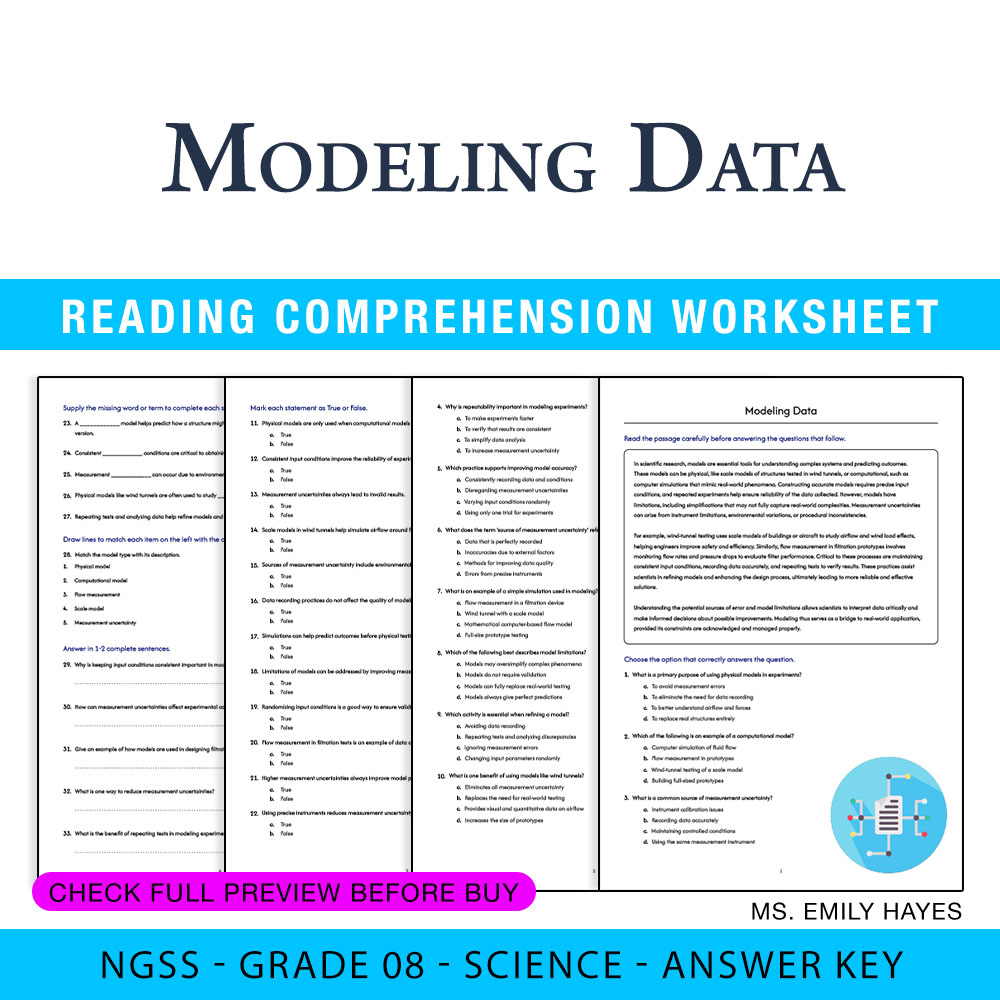
What You Get Complete, printable PDF worksheet and answer key with rubric, including:
• A compelling reading passage on the significance of models in scientific research
• 10 multiple-choice questions to assess understanding of model purposes and types
• 12 true/false questions emphasizing reliability, data consistency, and model applications
• 5 fill-in-the-blank questions focused on predicting outcomes and experimental conditions
• 1 matching activity connecting model types with their descriptions
• 5 short-answer questions encouraging critical thinking about measurement and experimental reliability
• 2 comprehensive essay prompts on model limitations, measurement uncertainties, and best practices
All materials are designed for immediate classroom implementation, making lesson planning effortless and effective. This worksheet is ideal for reinforcing NGSS science standards related to modeling data, data analysis, and experimental accuracy.
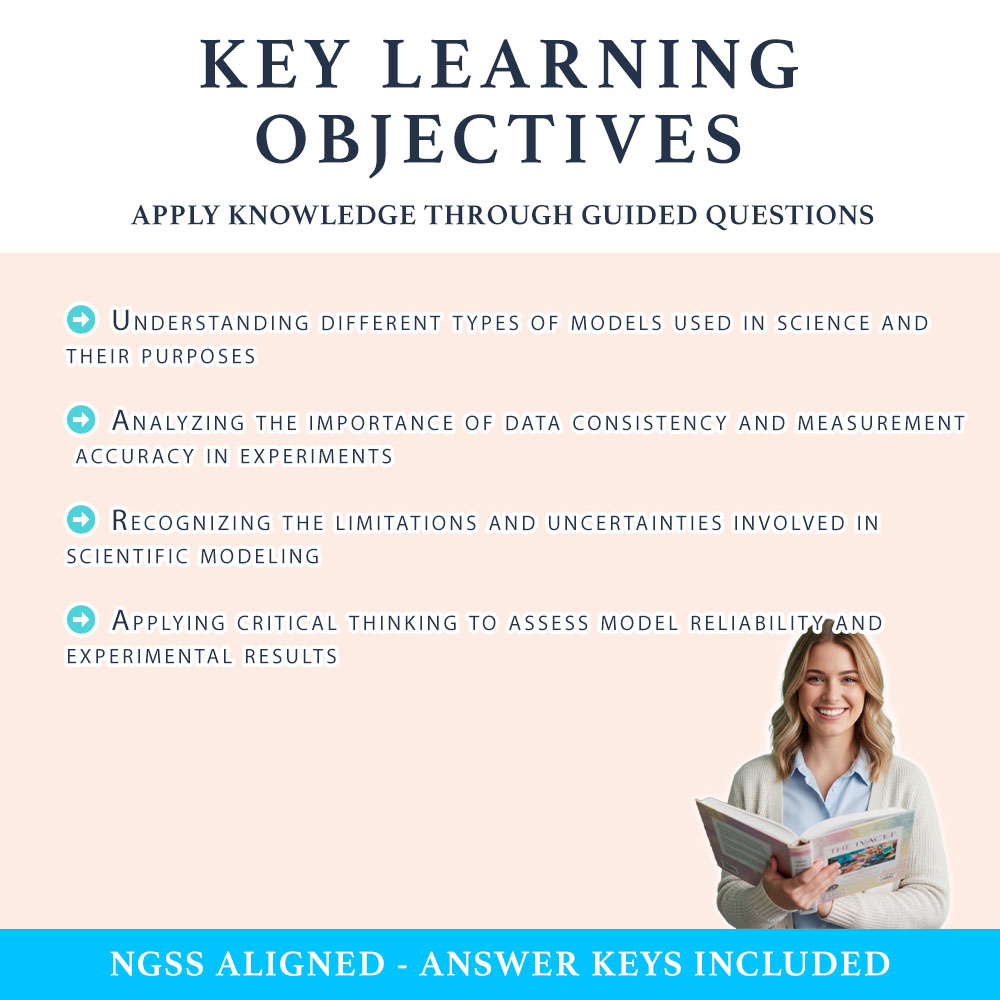
Key Learning Objectives Students will master these core skills:
➡️ Understanding different types of models used in science and their purposes
➡️ Analyzing the importance of data consistency and measurement accuracy in experiments
➡️ Recognizing the limitations and uncertainties involved in scientific modeling
➡️ Applying critical thinking to assess model reliability and experimental results
Ideal Usage This worksheet is perfect for classroom instruction, homework assignments, and science review centers. It works seamlessly for whole-class lessons, small-group activities, or independent student practice. The colourful layout and diverse question formats make it suitable for engaging a wide range of learners, from beginners to advanced students. With a printable, professional design, teachers can easily incorporate it into existing lesson plans to reinforce key NGSS standards and build students’ competencies in scientific modeling and data analysis.
Kickstart your students’ journey toward mastering scientific modeling today! With targeted questions, real-world connections, and scaffolded challenges, this worksheet will help students develop the critical skills they need to succeed in science and beyond. Let this resource be your go-to solution for elevating your classroom instruction and ensuring student achievement in understanding complex scientific concepts 🚀