

9th Grade Science | Feedback Principles Worksheet (PDF+ Answer Key)
Description
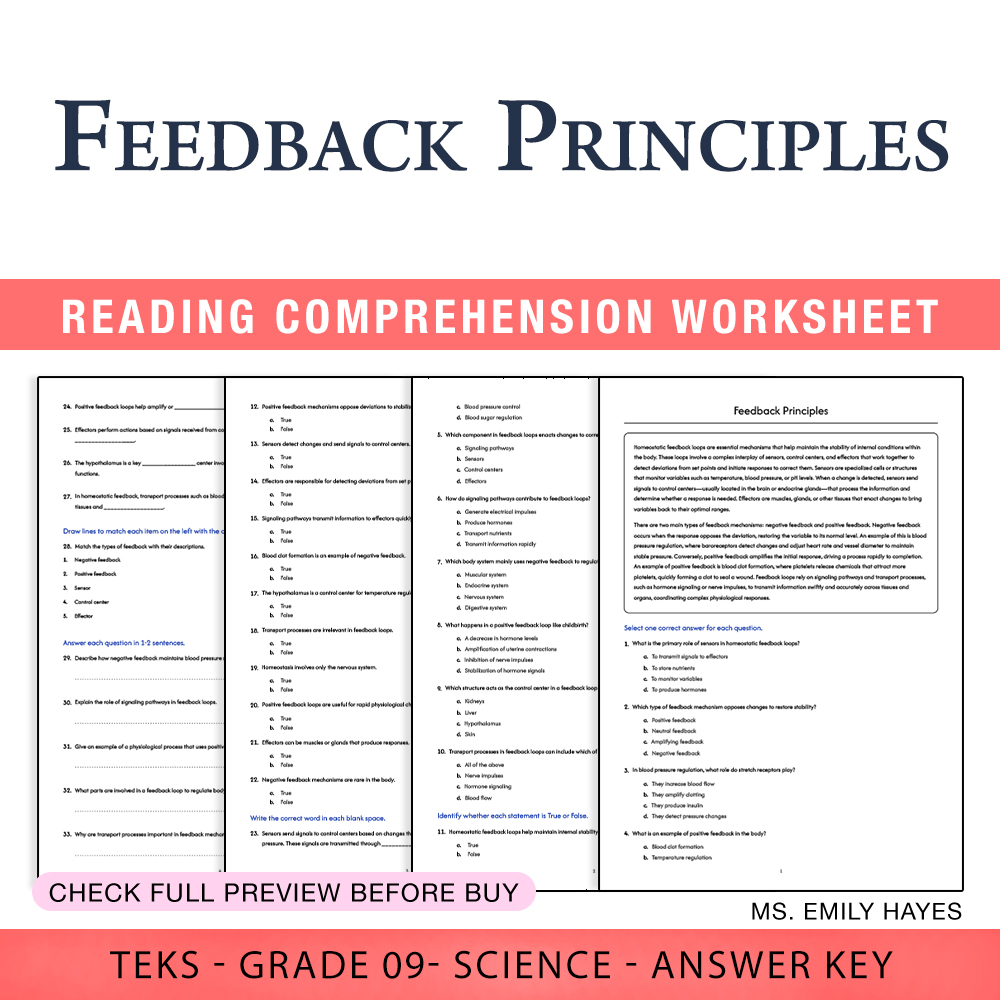
Address a critical classroom challenge with this comprehensive Grade 9 Science Worksheet on Feedback Principles. Designed to help teachers effectively teach complex concepts like homeostatic feedback loops and regulatory mechanisms, this resource simplifies intricate biological processes into engaging, print-ready activities. By focusing on core skills, this worksheet supports mastery in understanding the vital role of feedback systems in maintaining internal stability, a foundational goal for Grade 9 students exploring the human body and biological regulation.
Why Teachers Love This
✅ Fully prepared PDF worksheet and answer key save valuable planning time
✅ Clear, scaffolded questions guide students through understanding both basic and advanced concepts
✅ Promotes critical thinking with a variety of question formats, including comprehension, multiple choice, true/false, matching, short answer, and essays
✅ Emphasizes essential TEKS standards with standards-aligned content that enhances science instruction
Why Students Succeed With This
✅ Engaging reading passages and relatable examples make complex topics understandable
✅ Diverse question formats encourage active participation and reinforce learning
✅ Opportunities for explanation and discussion build deep comprehension of feedback mechanisms
✅ Designed to develop critical scientific thinking and communication skills necessary for success in biology and general science coursework
What You Get
Complete, print-ready PDF worksheet and answer key with rubrics include:
• An informational reading passage explaining homeostatic feedback loops
• 10 multiple choice questions testing key knowledge
• 12 true/false questions designed to reinforce understanding
• 5 fill-in-the-blank exercises to assess grasp of feedback roles
• 1 matching activity connecting feedback types to descriptions
• 5 short answer questions encouraging detailed explanations
• 2 essay prompts for higher-level critical thinking and synthesis
Key Learning Objectives
Students will master these core skills:
➡️ Describe the function of homeostatic feedback loops in regulating internal conditions
➡️ Identify the roles of sensors, control centers, and effectors within feedback mechanisms
➡️ Differentiate between positive and negative feedback processes
➡️ Explain the significance of signaling pathways and transport in maintaining biological stability
Ideal Usage
This worksheet serves as an excellent resource for in-class practice, homework assignments, or review sessions. Its PDF format makes it easy to print and use in any in-person classroom setting. Suitable for whole-class lessons, small-group discussions, or individual student work, it effectively supports diverse instructional needs. Teachers can use this material to facilitate active learning, assessment, or revision, ensuring students grasp the complexities of feedback mechanisms in human biology.
Help your students develop critical scientific understanding and build confidence in analyzing biological systems. Use this resource to foster engaging discussions on feedback principles and prepare students for higher-level science courses. Download your print-ready PDF worksheet today to enhance your science program and inspire inquiry-driven learning! 🚀
