
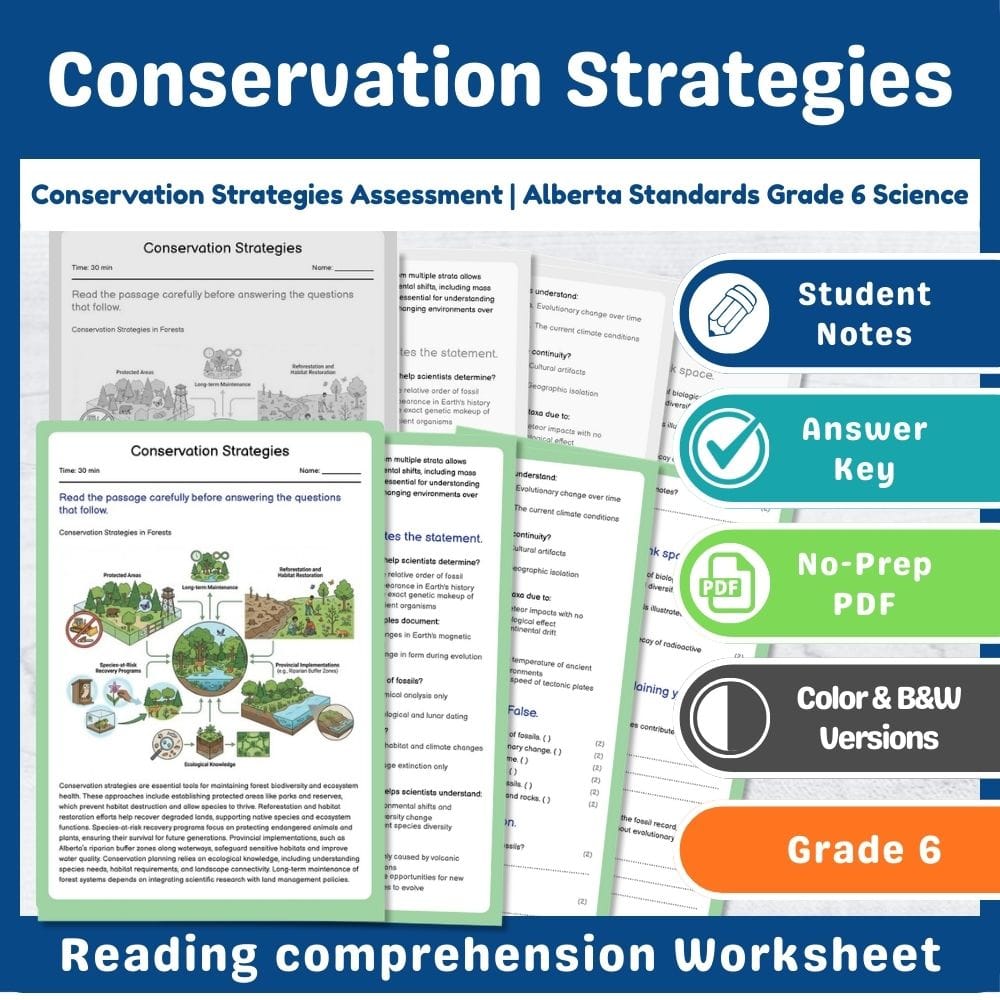

Conservation Strategies Assessment | Alberta Standards Grade 6 Science
$5.00
Prism Point Learning
·2 followers·13 sales
SubjectScienceGradeGrade 6
Learning Objectives
Understand different conservation strategies used to protect forest biodiversity.
Identify provincial examples of habitat protection and restoration.
Explain how ecological knowledge informs conservation planning.
Reviews & Feedback
Loading reviews...
Questions & Answers
Loading questions…
About this worksheet
Related categories
Frequently asked questions
Who is Conservation Strategies Assessment | Alberta Standards Grade 6 Science designed for?
Conservation Strategies Assessment | Alberta Standards Grade 6 Science is designed for Grade 6 students and Science learners and can be used in classrooms, homeschool, or independent practice.
How do I download Conservation Strategies Assessment | Alberta Standards Grade 6 Science?
Add it to your cart and complete checkout. After payment, you can download immediately from your account, and you'll also receive a download link by email.
What type of worksheet is this?
Conservation Strategies Assessment | Alberta Standards Grade 6 Science is a assessment worksheet for Science, suitable for Grade 6 level.
Similar Products

Mass Conservation Assessment Grade 6 Science Standards-Aligned Worksheet
$5.00

Grade 9 Science Worksheet | Mass Conservation in Alberta Standards (PDF)
$4.00

Particle Conservation Assessment Grade 9 Science | Standards-Aligned
$5.00

Grade 8 Science Worksheet | Conservation Strategies (Ontario Standards) (PDF)
$3.00

Atom Conservation Science Worksheet | Standards-Aligned Grade 6 Assessment
$5.00