
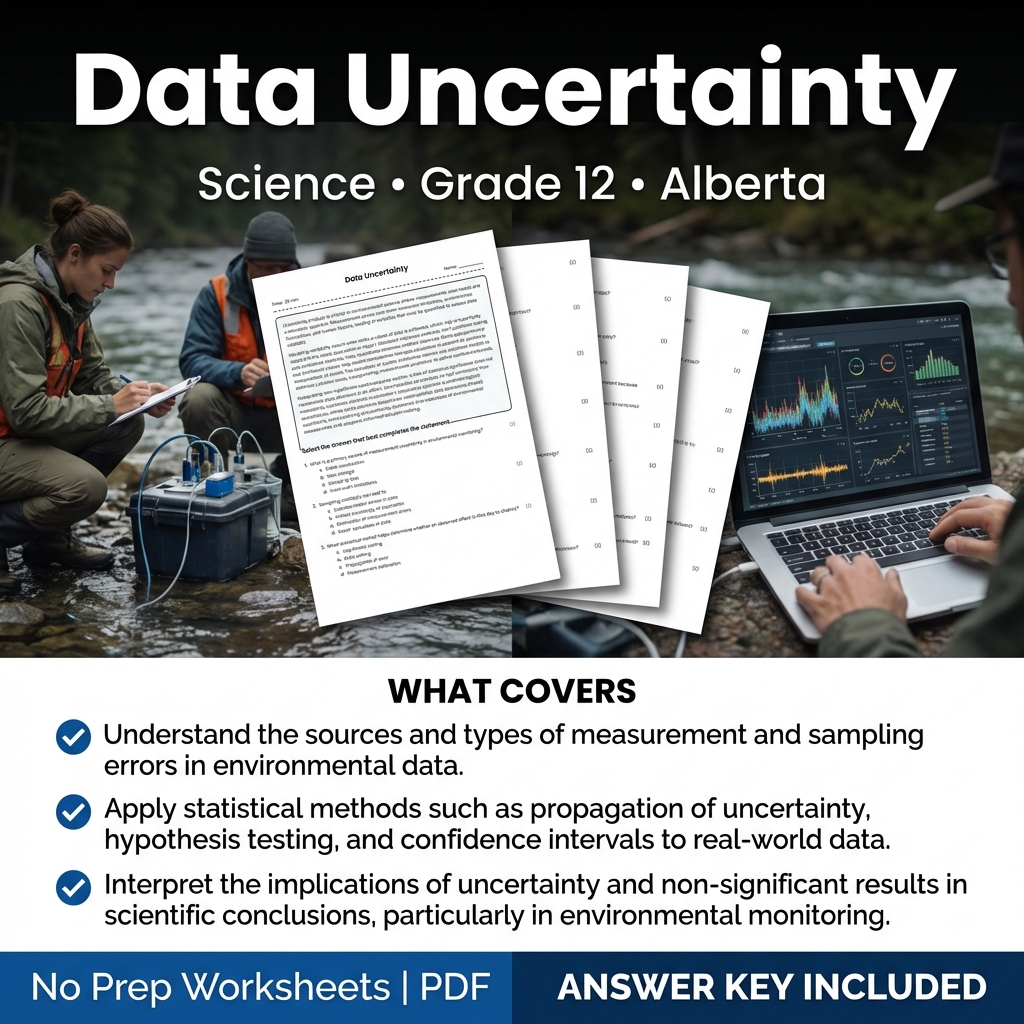
Data Uncertainty Worksheet for Grade 12 Science | Alberta Standards
$2.00
Coral Reef Learning
·2 followers·23 sales
SubjectScienceGradeGrade 12
Learning Objectives
Understand the sources and types of measurement and sampling errors in environmental data.
Apply statistical methods such as propagation of uncertainty, hypothesis testing, and confidence intervals to real-world data.
Interpret the implications of uncertainty and non-significant results in scientific conclusions, particularly in environmental monitoring.
Reviews & Feedback
Loading reviews...
Questions & Answers
Loading questions…
About this worksheet
Related categories
Frequently asked questions
Who is Data Uncertainty Worksheet for Grade 12 Science | Alberta Standards designed for?
Data Uncertainty Worksheet for Grade 12 Science | Alberta Standards is designed for Grade 12 students and Science learners and can be used in classrooms, homeschool, or independent practice.
How do I download Data Uncertainty Worksheet for Grade 12 Science | Alberta Standards?
Add it to your cart and complete checkout. After payment, you can download immediately from your account, and you'll also receive a download link by email.
What type of worksheet is this?
Data Uncertainty Worksheet for Grade 12 Science | Alberta Standards is a worksheet worksheet for Science, suitable for Grade 12 level.
Similar Products

Data Uncertainty Assessment | Alberta Standards Grade 12 Science
$5.00

Grade 12 Science | Data Uncertainty Worksheet | Alberta Standards
$3.00

Grade 12 Science | Data Uncertainty Worksheet (PDF) – Alberta Standards
$3.00

Science Worksheet Climate Data Patterns | Standards-Based Grade 6 Practice
$5.00

Grade 12 Data Uncertainty Worksheet Science Skills Alberta Curriculum
$4.00