🛠️ Grade 7 Science Worksheets | NGSS Aligned | Engineering Design Bundle
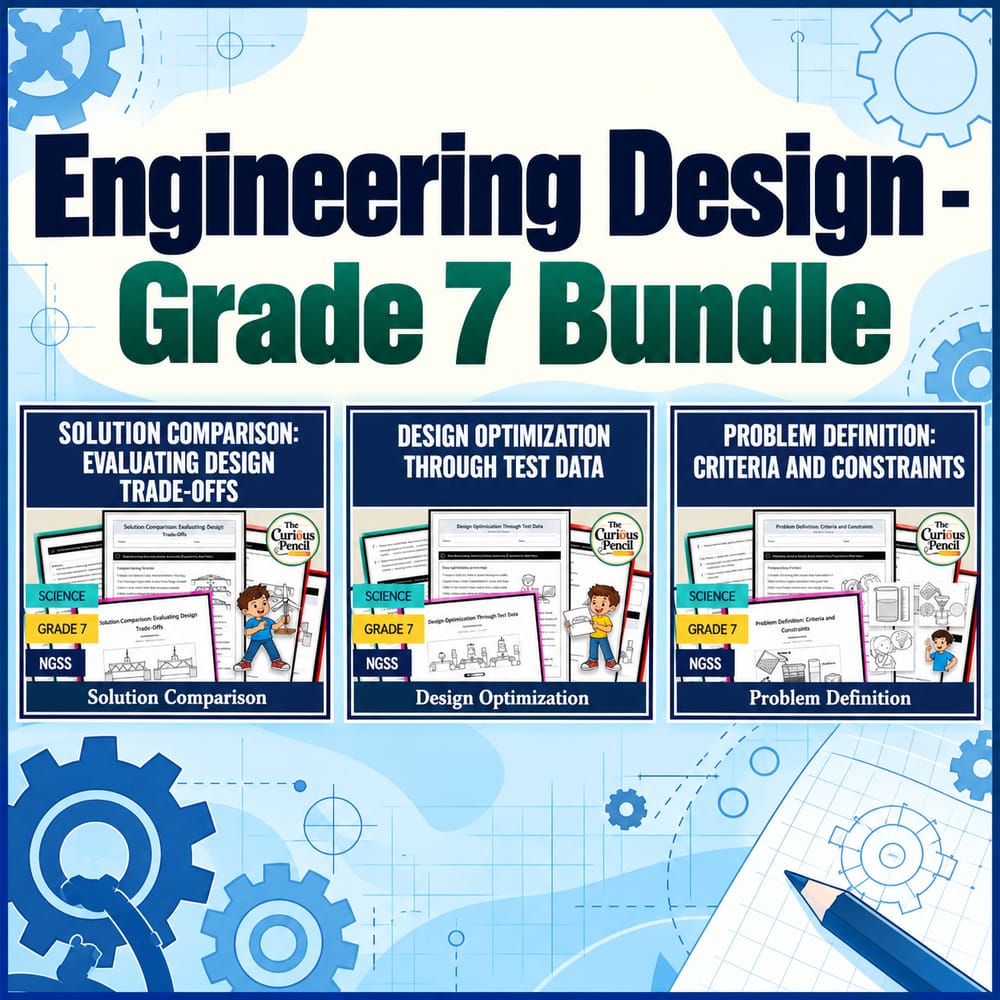
Teach the engineering design process with this focused Grade 7 Science Worksheets Bundle, featuring 3 resources covering problem definition, design trade-offs, and optimization. Created for middle school science and aligned with the NGSS Engineering Design framework, this bundle helps students develop practical engineering thinking while giving teachers a ready-to-use collection for planning instruction. Save 30% compared with purchasing separately and spend less time assembling materials for your engineering design unit.
🔧 What's Included
This Grade 7 Science Worksheets Bundle provides a connected sequence of engineering design concepts, moving from defining a problem to evaluating trade-offs and optimizing a solution.
🎯 Problem Definition
• Explore how engineers identify and clearly define an engineering problem.
• Focus on understanding needs, requirements, constraints, and the key factors that shape a design challenge.
⚖️ Design Trade-Offs
• Examine engineering design trade-offs and the decisions involved in developing solutions.
• Help students consider competing requirements and evaluate how design choices can affect outcomes.
⚙️ Engineering Optimization
• Explore optimization in engineering design and how solutions can be improved.
• Develop students' understanding of evaluating possible solutions and identifying ways to improve a design.
📚 Topics Covered
This Grade 7 Engineering Design Bundle focuses on the core thinking skills students need when approaching engineering challenges and evaluating possible solutions.
Key concepts include:
• Engineering problems and problem definition
• Design requirements and constraints
• Engineering design trade-offs
• Evaluating competing design considerations
• Comparing potential solutions
• Engineering optimization
• Improving and refining solutions
• Engineering decision-making and solution evaluation
• Applying systematic thinking to design challenges
These NGSS-aligned engineering design worksheets help students understand that engineering involves defining problems, considering constraints and trade-offs, evaluating solutions, and improving designs based on specific criteria.
🎓 How Teachers Use It
Use this Grade 7 Science Worksheets Bundle as part of an engineering design unit, as targeted practice after instruction, or as review of key engineering concepts.
• Unit and lesson planning: Build instruction around the progression from defining an engineering problem to evaluating and optimizing solutions.
• Engineering design lessons: Reinforce essential concepts before, during, or after design challenges.
• Bell ringers and warm-ups: Introduce engineering vocabulary and decision-making concepts with focused practice.
• Independent practice: Give students opportunities to apply engineering thinking to problem-solving concepts.
• Science review and test prep: Review problem definition, trade-offs, constraints, and optimization.
• Sub plans: Provide structured engineering design activities when you need a ready-to-use classroom resource.
• Design challenge preparation: Establish key concepts before students begin a larger engineering task or project.
💡 Build Engineering Thinking Without Extra Planning
Engineering design is about more than creating a product—it requires students to define problems, make informed decisions, evaluate alternatives, and improve solutions. This Grade 7 Engineering Design Worksheets Bundle brings three essential concepts together so you can address these skills in a connected sequence rather than searching for separate materials for each lesson.
⏱️ Save Time and Money
Get all 3 Grade 7 engineering design resources for just $8.40, with a 30% bundle savings compared with purchasing them separately. This NGSS-aligned collection gives you focused resources for problem definition, design trade-offs, and optimization while reducing the time needed to plan and organize your engineering design instruction.
🚀 Add this Engineering Design Grade 7 Science Bundle to your curriculum for a practical, focused way to help students develop the problem-solving and design-thinking concepts at the heart of engineering.

 Engineering Design Trade-Offs Worksheets | Grade 7 Science
 Engineering Design Optimization Worksheets | Grade 7 Science
 Engineering Design Problem Definition Worksheets | Grade 7 Science


