
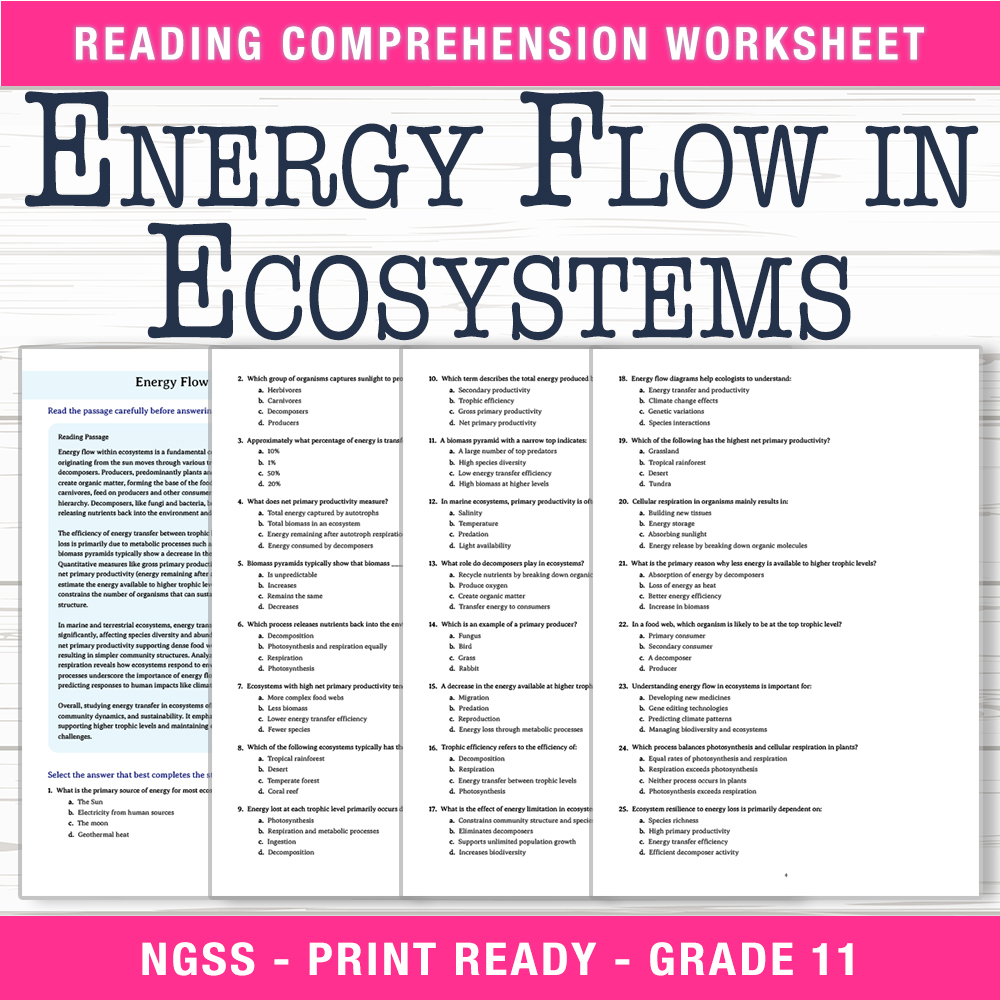
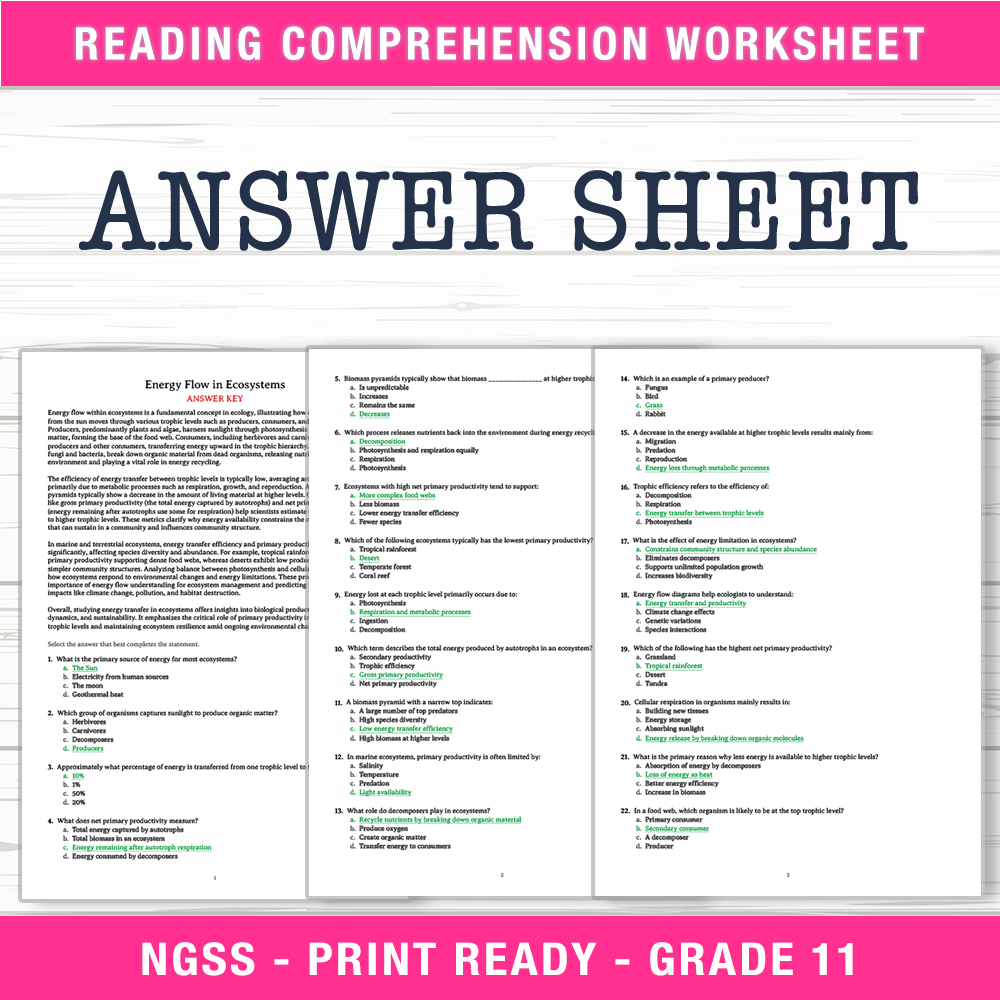

Grade 11 Science | Energy Flow in Ecosystems Worksheet (PDF + Answer Key)
$2.00
Riverstone Classroom
New·0 followers·1 sales
SubjectScienceGradeGrade 11
Learning Objectives
Understand the concept of energy transfer among producers, consumers, and decomposers within food webs.
Analyze trophic levels, biomass pyramids, and energy loss through metabolic processes.
Quantify primary productivity, gross and net production, and trophic transfer efficiency.
Reviews & Feedback
Loading reviews...
Questions & Answers
Loading questions…
About this worksheet
Related categories
Frequently asked questions
Who is Grade 11 Science | Energy Flow in Ecosystems Worksheet (PDF + Answer Key) designed for?
Grade 11 Science | Energy Flow in Ecosystems Worksheet (PDF + Answer Key) is designed for Grade 11 students and Science learners and can be used in classrooms, homeschool, or independent practice.
How do I download Grade 11 Science | Energy Flow in Ecosystems Worksheet (PDF + Answer Key)?
Add it to your cart and complete checkout. After payment, you can download immediately from your account, and you'll also receive a download link by email.
What type of worksheet is this?
Grade 11 Science | Energy Flow in Ecosystems Worksheet (PDF + Answer Key) is a worksheet worksheet for Science, suitable for Grade 11 level.
Similar Products

Energy Flow in Ecosystems: Food Webs and Energy Pyramids Worksheet | NGSS
$4.00

Grade 8 Science – Energy Flow & Ecosystems | Daily Reading Worksheet
$4.00

Grade 6 Science – Energy Flow & Ecosystems | Daily Reading Worksheet
$4.00

Energy Flow in Ecosystems Worksheets for Grade 7 Science
$4.00

Energy Flow in Ecosystems Worksheets | Grade 7 Science Review
$3.00