
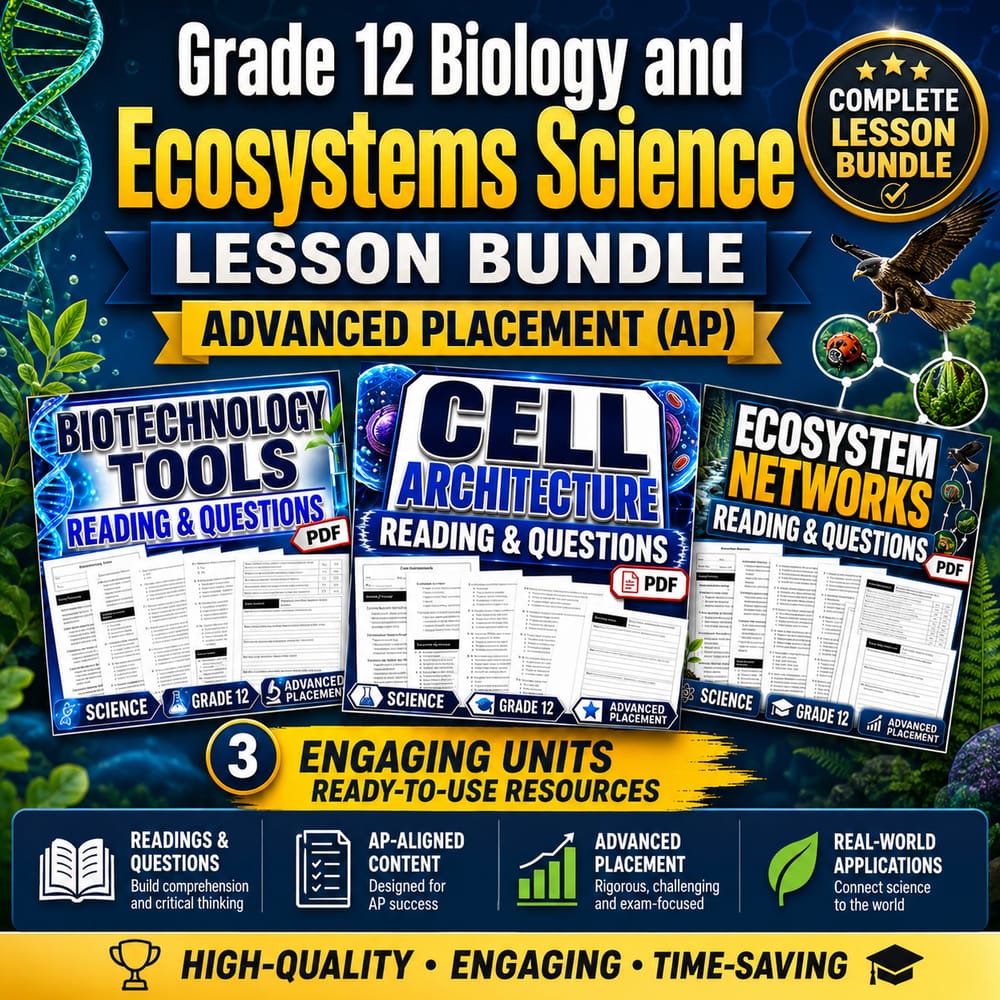
Grade 12 Biology and Ecosystems Science Lesson Bundle – Advanced Placement (AP)
$9.60$12.00Save $2.40
Evergreen Desk Education
·2 followers·17 sales
SubjectScienceGradeGrade 12
What’s included
3 worksheets · Save $2.40 (20%) · prices shown inside the bundle
 Grade 12 Science | Biotechnology Tools Worksheet (AP Standards) (PDF)
- Explain how nucleic acid amplification (e.g., PCR) and sequencing generate measurable biological data.
- Interpret how sequencing read mappings and expression profiles support or limit conclusions about genetic function.
- Compare genome modification approaches (conceptually) and describe evidence criteria for linking edits to outcomes.
$3.20$4.00 Grade 12 Science | Cell Architecture Worksheet (AP Standard PDF)
- Explain how cytoskeletal networks determine cell shape and mechanical properties through filament dynamics and tensile forces.
- Describe how membrane–extracellular matrix (ECM) interactions connect structural components to intracellular signaling and transport pathways.
- Compare the roles of intercellular junctions in controlling permeability, tissue integrity, and coordinated cell behavior.
$3.20$4.00 Grade 12 Science – Ecosystem Networks Worksheet (AP Standard) (PDF)
- Explain how energy flows through trophic levels and how primary productivity relates to biomass formation.
- Describe decomposition and nutrient cycling, including nutrient fluxes across producers, consumers, and decomposers.
- Use ecosystem network representations to connect topology with resilience and stability of communities.
$3.20$4.00
Reviews & Feedback
Loading reviews...
Questions & Answers
Loading questions…
About this bundle
Related categories
Frequently asked questions
Who is Grade 12 Biology and Ecosystems Science Lesson Bundle – Advanced Placement (AP) designed for?
Grade 12 Biology and Ecosystems Science Lesson Bundle – Advanced Placement (AP) is designed for Grade 12 students and Science learners and can be used in classrooms, homeschool, or independent practice.
How do I download Grade 12 Biology and Ecosystems Science Lesson Bundle – Advanced Placement (AP)?
Add it to your cart and complete checkout. After payment, you can download immediately from your account, and you'll also receive a download link by email.
Similar Products

Grade 9 Biology and Ecosystems Science Lesson Bundle for Advanced Placement (AP)
$56.00$70.00

Grade 12 Science Biology and Ecosystems Lesson Bundle | AP Framework
$33.60$42.00

Grade 10 Biology Cells, Genetics, Evolution & Ecosystems Lesson Bundle | Florida NGSSS
$64.00$80.00

Biology and Ecosystems Lesson Bundle – Grade 10 Science Advanced Placement
$44.00$55.00

Grade 10 Biology and Ecosystems Lesson Bundle | AP Science
$26.40$33.00