
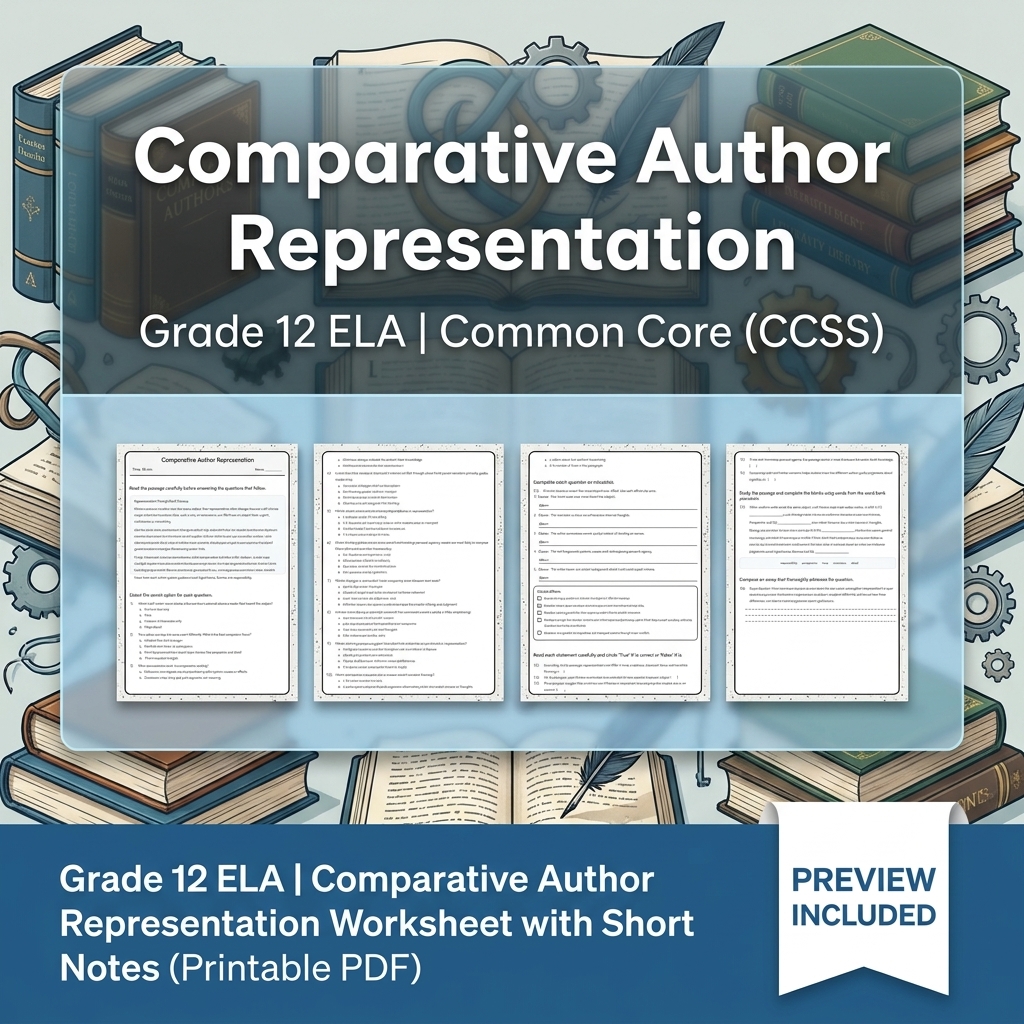
Grade 12 ELA | Comparative Author Representation Worksheet with Short Notes
$3.00
Meadowlark Worksheets
·1 followers·19 sales
SubjectELAGradeGrade 12Pages8 Pages
Learning Objectives
Analyze how different authors represent the same subject through craft choices such as tone, structure, and point of view.
Evaluate how thematic emphasis and narrative framing guide readers toward different interpretations.
Compare what texts highlight, omit, or complicate to explain multiple interpretive possibilities.
Reviews & Feedback
Loading reviews...
Questions & Answers
Loading questions…
About this worksheet
Related categories
Frequently asked questions
Who is Grade 12 ELA | Comparative Author Representation Worksheet with Short Notes designed for?
Grade 12 ELA | Comparative Author Representation Worksheet with Short Notes is designed for Grade 12 students and ELA learners and can be used in classrooms, homeschool, or independent practice.
How do I download Grade 12 ELA | Comparative Author Representation Worksheet with Short Notes?
Add it to your cart and complete checkout. After payment, you can download immediately from your account, and you'll also receive a download link by email.
Does Grade 12 ELA | Comparative Author Representation Worksheet with Short Notes include an answer key?
Yes — an answer key is included with this worksheet to help teachers and parents grade work quickly and accurately.
Can I see a preview before buying?
Yes, a free preview PDF is available on this page so you can check the layout, difficulty, and content before purchasing.
What type of worksheet is this?
Grade 12 ELA | Comparative Author Representation Worksheet with Short Notes is a worksheet 1 worksheet for ELA, suitable for Grade 12 level.
Similar Products

Grade 12 ELA – Comparative Author Representation Daily Reading Worksheet
$4.00

Comparative Author Representation Worksheet | CCSS Grade 12 ELA Practice
$5.00

Comparative Author Representation Worksheet Grade 12 ELA CCSS
$3.00

Comparative Author Representation Worksheet | Grade 12 ELA CCSS
$4.00

Perspective Comparison Worksheet | ELA Text Analysis & Author's Purpose
$3.00