Grade 12 Science | Chemistry Science Unit Bundle | Alberta Curriculum Framework — bundle cover
Grade 12 Science | Chemistry Science Unit Bundle | Alberta Curriculum Framework — included worksheet 1
Grade 12 Science | Chemistry Science Unit Bundle | Alberta Curriculum Framework — included worksheet 2
Grade 12 Science | Chemistry Science Unit Bundle | Alberta Curriculum Framework — included worksheet 3
Grade 12 Science | Chemistry Science Unit Bundle | Alberta Curriculum Framework — included worksheet 4
Grade 12 Science | Chemistry Science Unit Bundle | Alberta Curriculum Framework — included worksheet 5
Grade 12 Science | Chemistry Science Unit Bundle | Alberta Curriculum Framework — included worksheet 6
Grade 12 Science | Chemistry Science Unit Bundle | Alberta Curriculum Framework — included worksheet 7
Grade 12 Science | Chemistry Science Unit Bundle | Alberta Curriculum Framework — included worksheet 8
Grade 12 Science | Chemistry Science Unit Bundle | Alberta Curriculum Framework — included worksheet 9
Grade 12 Science | Chemistry Science Unit Bundle | Alberta Curriculum Framework — included worksheet 10
Grade 12 Science | Chemistry Science Unit Bundle | Alberta Curriculum Framework — included worksheet 11
Grade 12 Science | Chemistry Science Unit Bundle | Alberta Curriculum Framework — included worksheet 12
Grade 12 Science | Chemistry Science Unit Bundle | Alberta Curriculum Framework — included worksheet 13
Grade 12 Science | Chemistry Science Unit Bundle | Alberta Curriculum Framework — included worksheet 14
Grade 12 Science | Chemistry Science Unit Bundle | Alberta Curriculum Framework — included worksheet 15
Grade 12 worksheet — Grade 12 Science | Chemistry Science Unit Bundle | Alberta Curriculum Framework

Description

Overview


Chemistry 30 provides a focused Grade 12 Science unit for Alberta classrooms, supporting students as they build from atomic structure to reaction calculations. Use the 15 Chemistry 30 worksheets to strengthen reasoning, improve accuracy, and connect concepts to classroom tasks 🔬

What’s Included


  • ✅ Grade 12 Science | Atomic Models Worksheet Elena | Alberta Standards – Connect atomic models to observable evidence.
  • ✅ Grade 12 Science | Reaction Rates Worksheet | Alberta Standards – Interpret how conditions affect rate using data.
  • ✅ Grade 12 Science | Solids and Lattices Worksheet | Alberta Standards – Describe particle arrangements and properties.
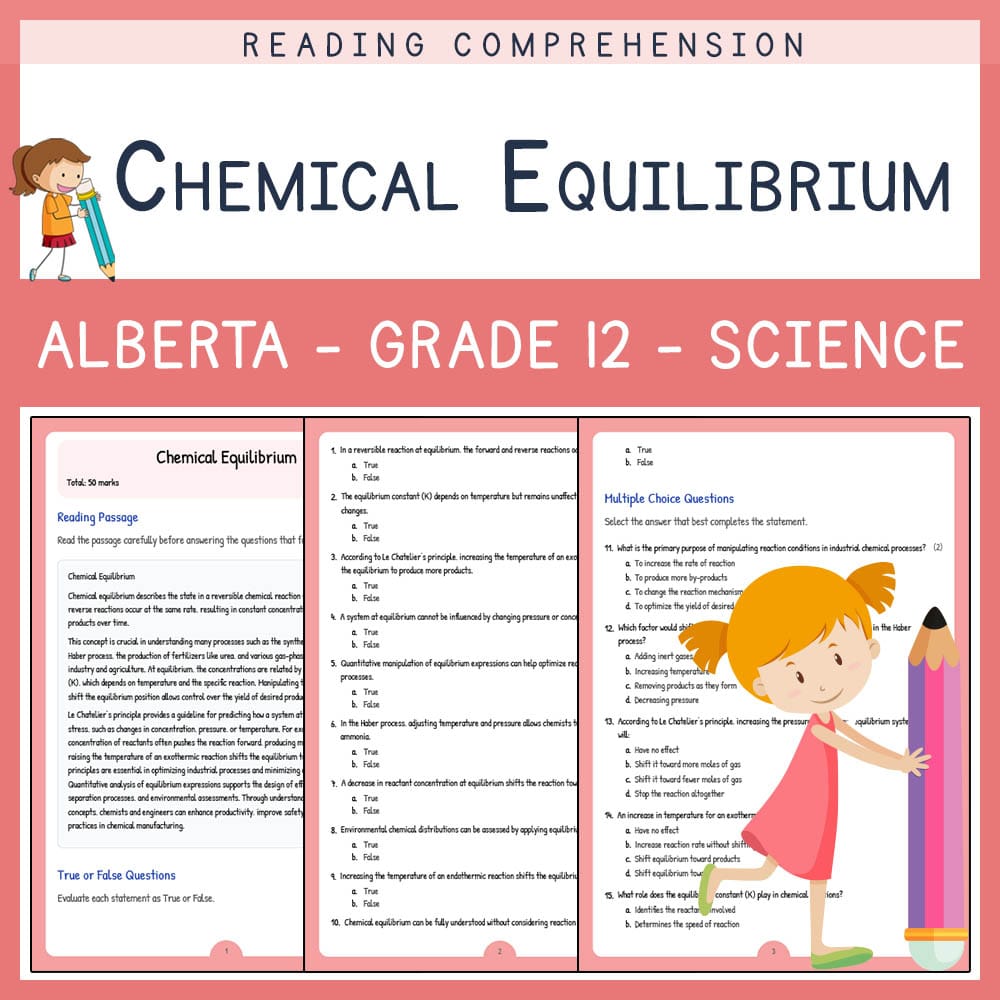
  • ✅ Grade 12 Science | Chemical Equilibrium Worksheet | Alberta Standards – Explain dynamic equilibrium and change over time.
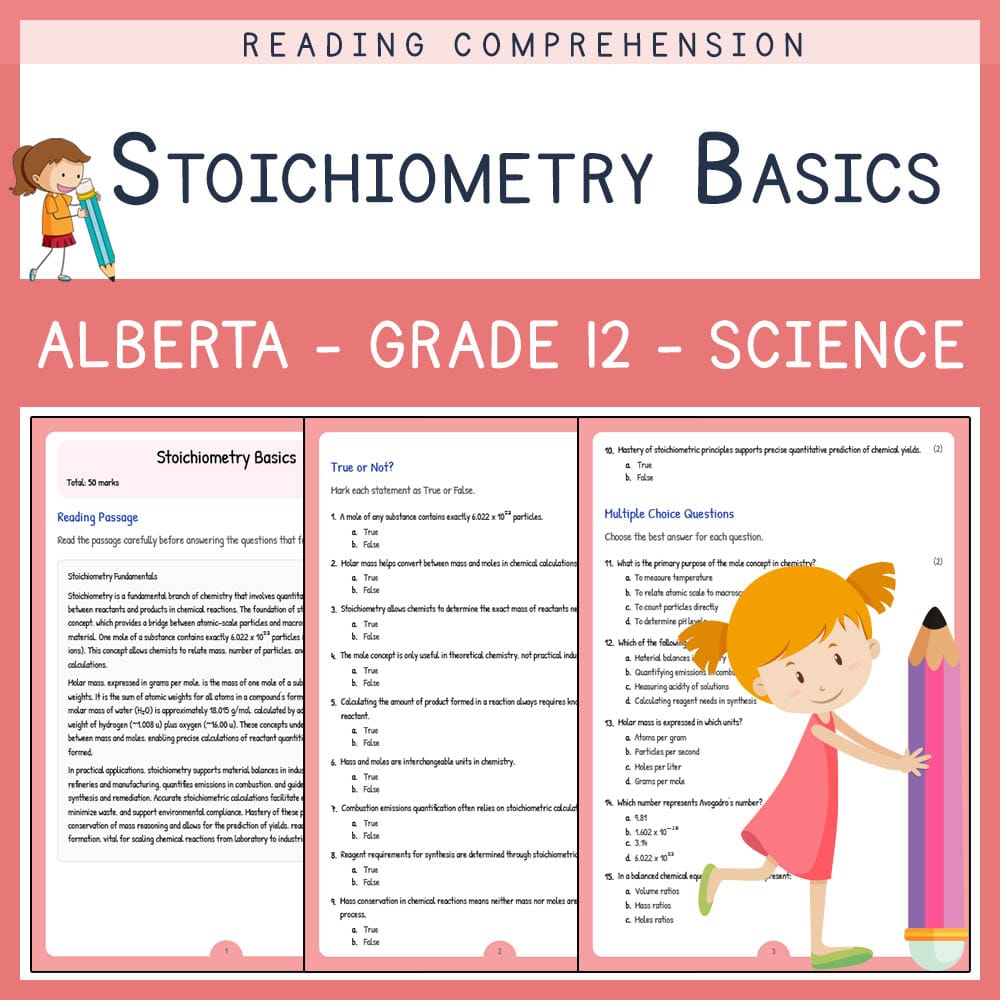
  • ✅ Grade 12 Science | Stoichiometry Basics Worksheet | Alberta Standards – Practice mole ratios and unit conversions.
  • ✅ Grade 12 Science | Redox Processes Worksheet | Alberta Standards – Identify oxidation, reduction, and electron transfer.
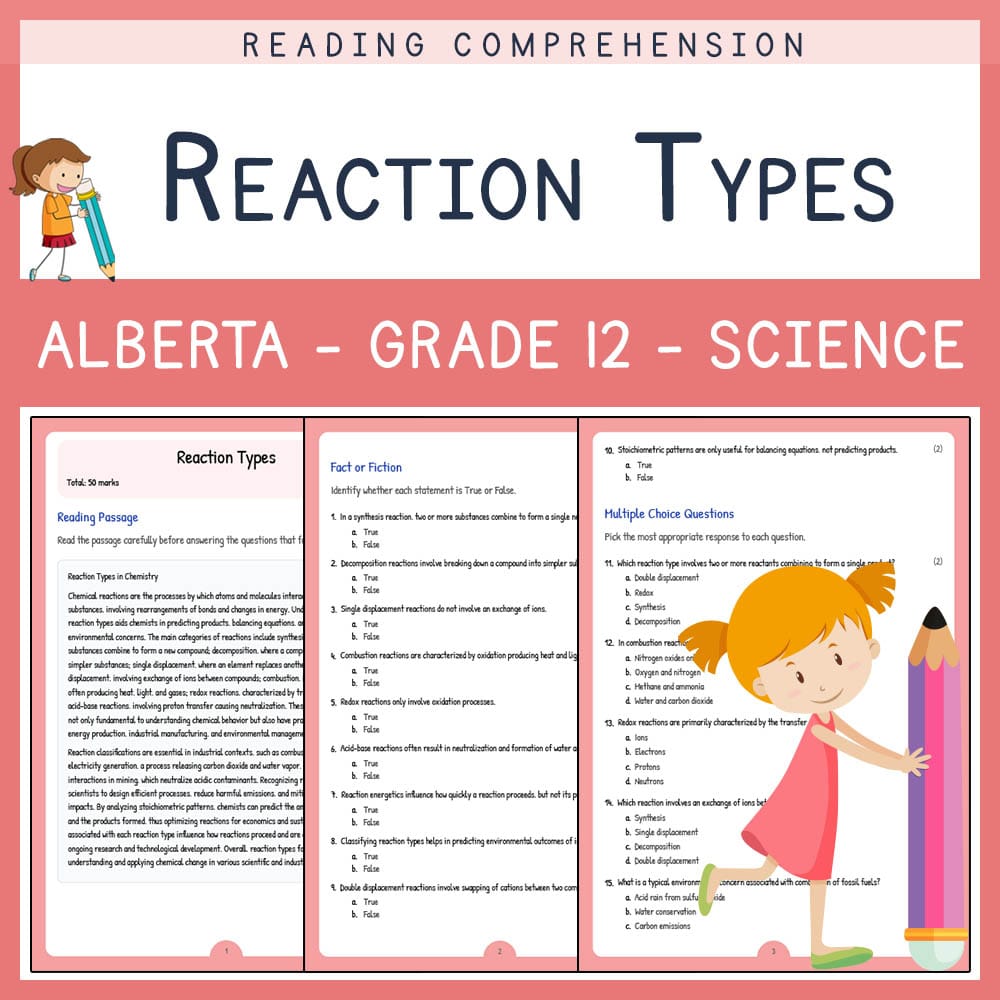
  • ✅ Grade 12 Science | Reaction Types Worksheet | Alberta Standard – Classify reactions and match them to key features.
  • ✅ Grade 12 Science | Periodic Trends Worksheet | Alberta Standards – Analyze trends in atomic properties across periods.
  • ✅ Grade 12 Science | Molecular Geometry Worksheet | Alberta Standards – Predict shape and relate structure to polarity.
  • ✅ Grade 12 Science | Chemistry Limiting Reagent Worksheet | Alberta Standards – Determine limiting reactant and expected product.
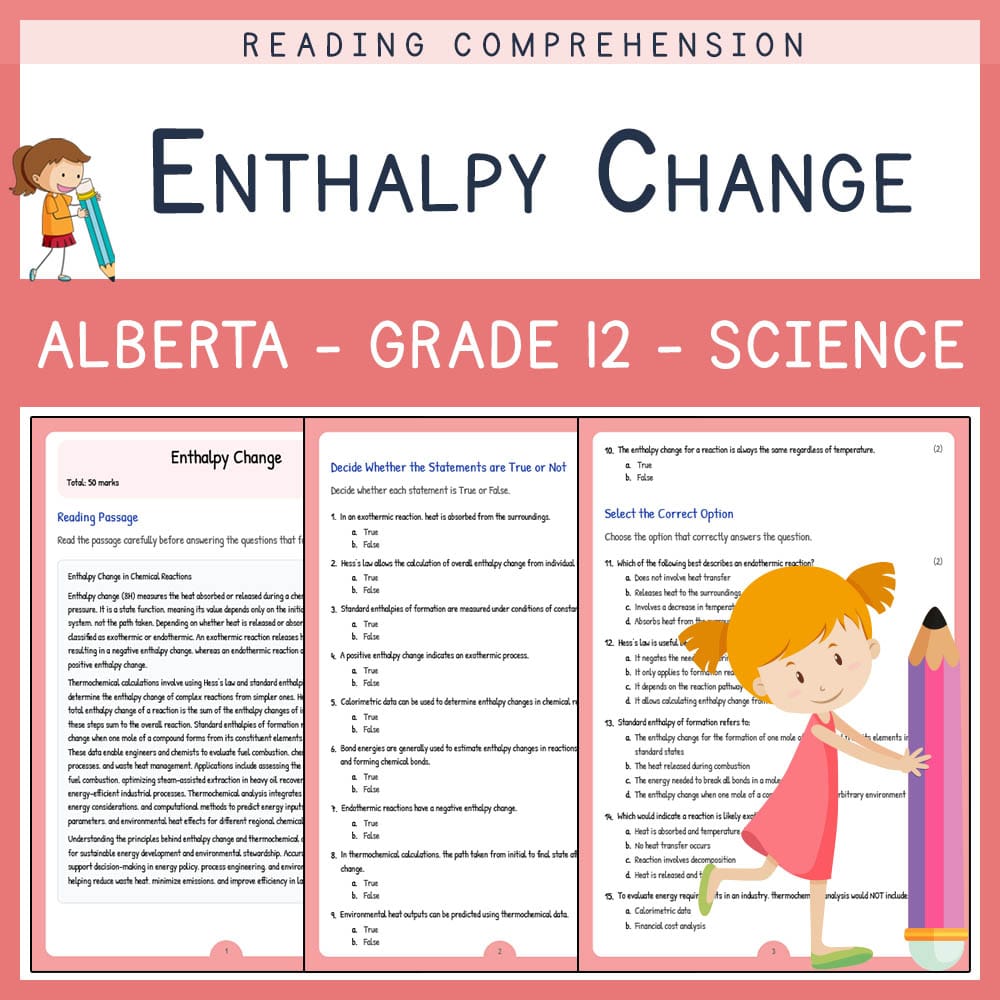
  • ✅ Grade 12 Science | Enthalpy Change Worksheet | Alberta Standards – Use energy concepts to interpret reaction enthalpy.
  • ✅ Grade 12 Science | Electron Configuration Worksheet | Alberta Standard – Write electron configurations and explain stability.
  • ✅ Grade 12 Science Worksheet | Bond Polarity | Alberta Standards – Evaluate electronegativity differences and polarity.
  • ✅ Grade 12 Science | Bond Types Worksheet | Alberta Standards – Distinguish ionic vs covalent bonding patterns.
  • ✅ Grade 12 Science | Atomic Spectra Worksheet | Alberta Standards – Interpret spectra and relate lines to transitions.

Skills & Standards


Aligned to the Alberta framework, this Chemistry 30 unit emphasizes crosscutting concepts such as patterns in periodicity, cause and effect in reaction behavior, and energy and matter in chemical systems. Students work with disciplinary core ideas including atomic structure and spectra, chemical bonding, reaction types, stoichiometry, equilibrium, and energy changes. Throughout the worksheets, learners use modeling (molecular shape and particle-level explanations), analytical reasoning to plan solution steps, and evidence-based explanations grounded in data tables, diagrams, and written justification.

Perfect For


  • Teachers seeking structured instruction
  • Sub plans
  • Homework or review
  • Intervention or centers
  • Assessment preparation

How to Use


Plan a multi-day pace by grouping related worksheets into short cycles: start with atomic structure and bonding (atomic models, electron configuration, periodic trends, bond polarity/types, molecular geometry), then move to reaction reasoning (reaction types, rates, redox, limiting reagent, equilibrium, enthalpy). Assign one worksheet per class period for guided practice, then use the next day for targeted review, re-teaching common errors, and quick checks for understanding. For centers, rotate small groups through 3–4 worksheets at a time while you confer on stoichiometry and equilibrium explanations; for homework, choose the calculation-based worksheet that matches the day’s modeling and reasoning strategy.

Closing


Bring consistency to your Grade 12 Chemistry instruction with Chemistry 30 and use the ready-to-teach worksheets to support clear reasoning from atomic evidence to reaction outcomes.

Grade 12 Science | Chemistry Science Unit Bundle | Alberta Curriculum Framework

$36.00$45.00Save $9.00
Lumora Learning
·3 followers·12 sales
GradeGrade 12

What’s included

15 worksheets · Save $9.00 (20%) · prices shown inside the bundle
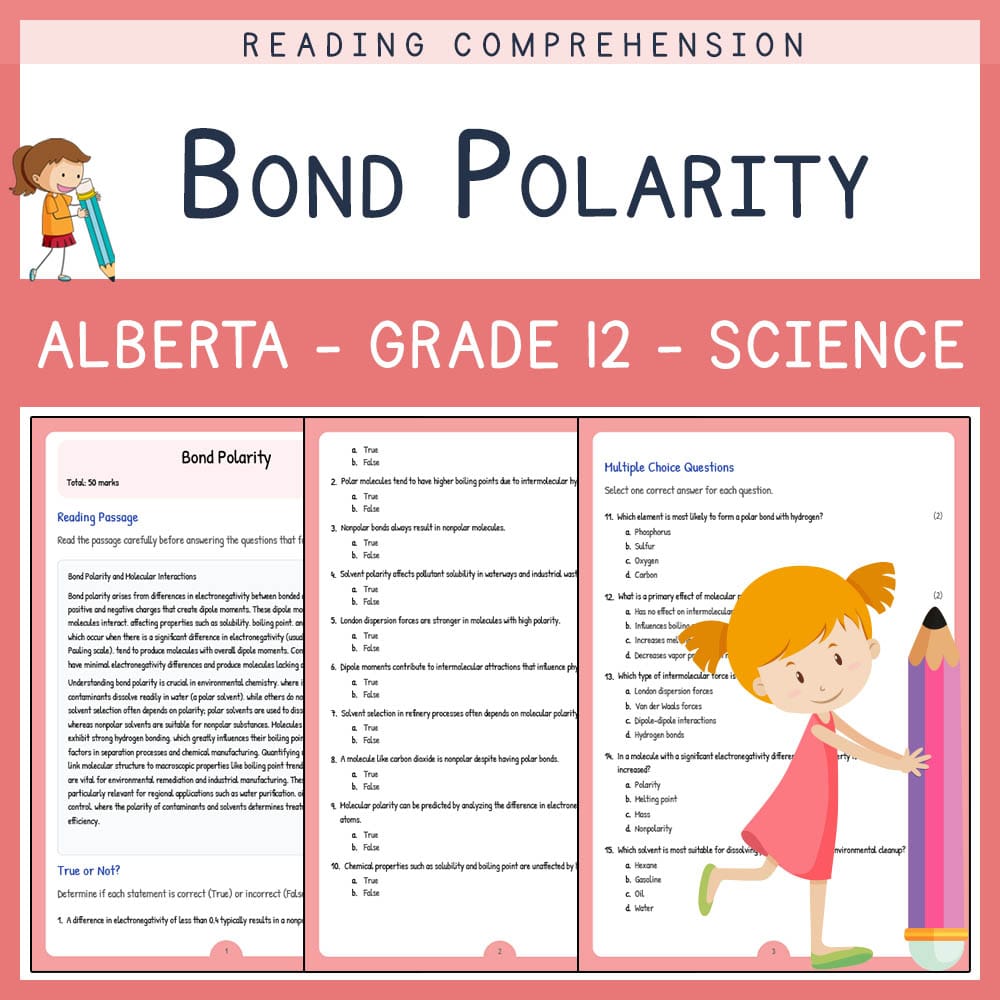
  1. Grade 12 Science Worksheet | Bond Polarity | Alberta Standards
    Grade 12 Science Worksheet | Bond Polarity | Alberta Standards

    Grade 12 · Science

    • Explain the concept of bond polarity and how differences in electronegativity create dipole moments.
    • Identify and classify bonds as polar or nonpolar based on molecular structure and electronegativity differences.
    • Apply understanding of bond polarity to predict solvent behaviors, molecular interactions, and industrial applications.
    $2.40$3.00
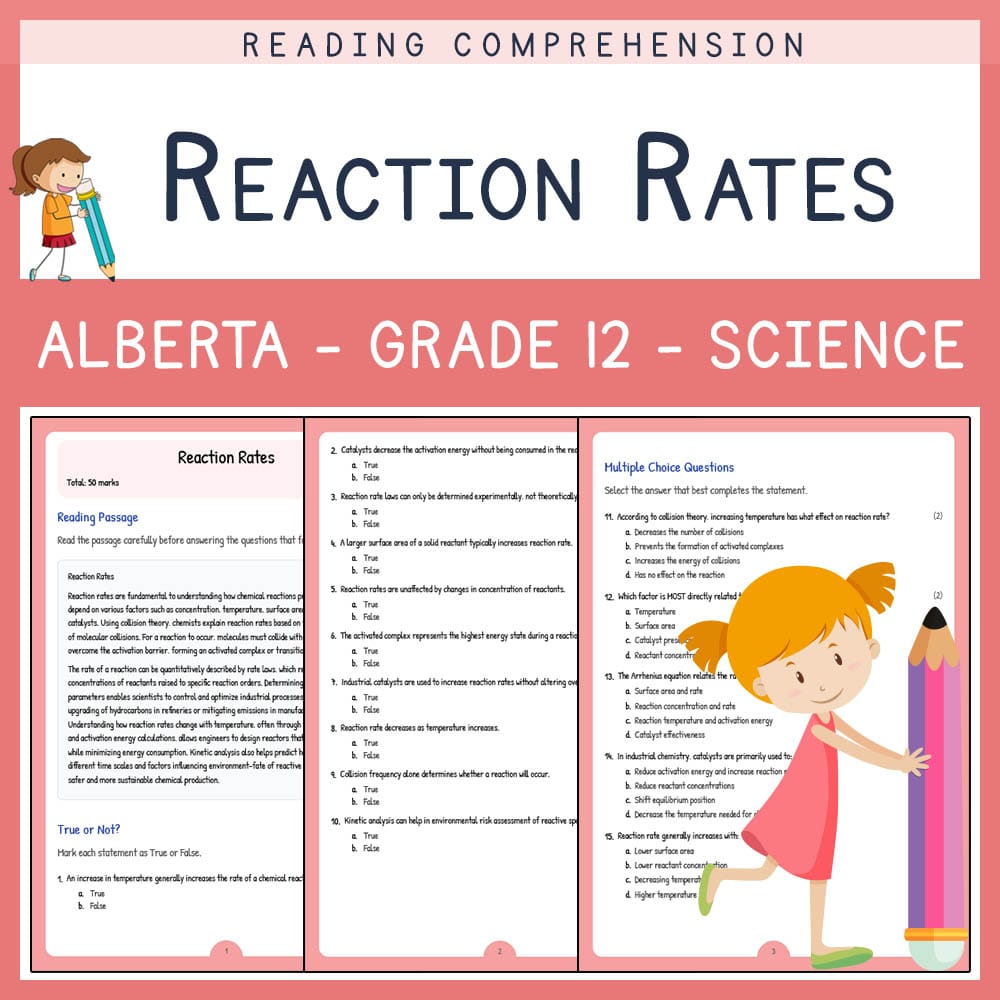
  2. Grade 12 Science | Reaction Rates Worksheet | Alberta Standards
    Grade 12 Science | Reaction Rates Worksheet | Alberta Standards

    Grade 12 · Science

    • Explain how concentration, temperature, surface area, and catalysts influence reaction rates.
    • Interpret collision theory and activated complex concepts to assess reaction behaviour.
    • Determine rate laws, reaction order, and activation energy relevant to industrial processes.
    $2.40$3.00
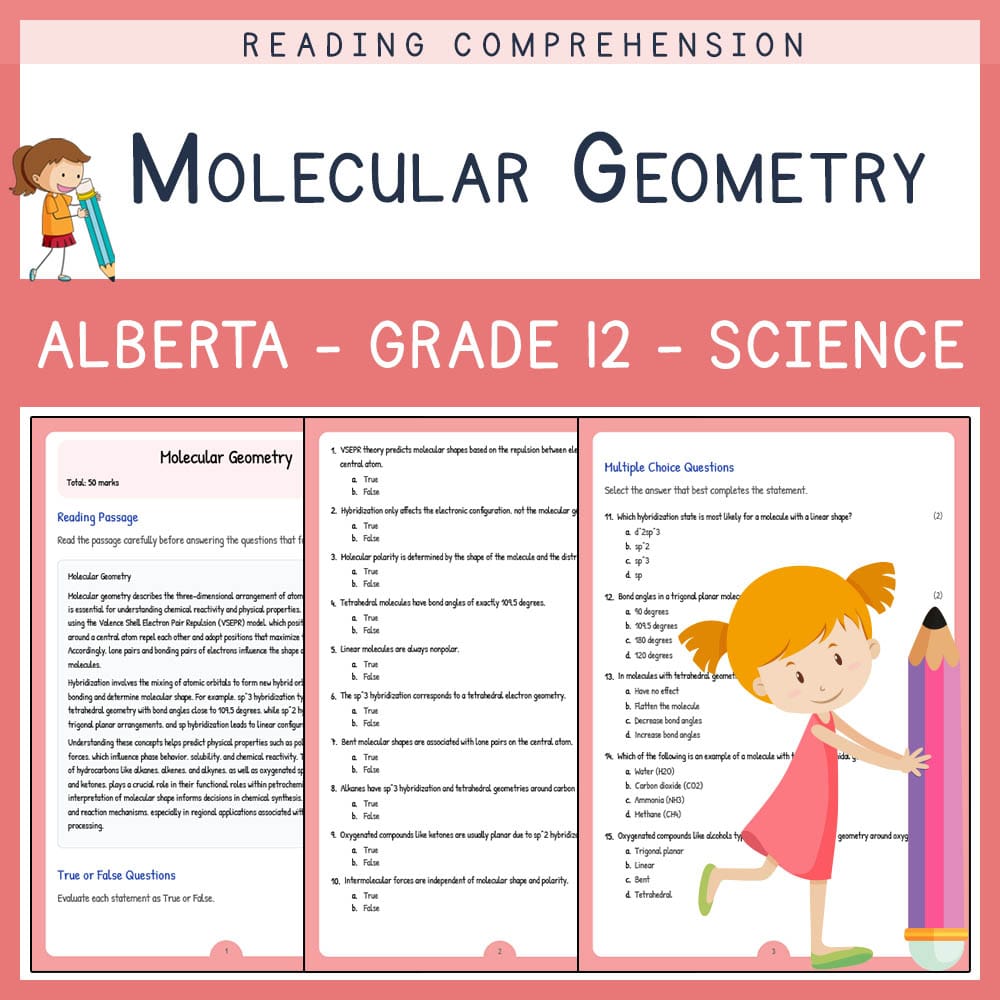
  3. Grade 12 Science | Molecular Geometry Worksheet | Alberta Standards
    Grade 12 Science | Molecular Geometry Worksheet | Alberta Standards

    Grade 12 · Science

    • Understand the principles of VSEPR theory and how electron-pair repulsion determines molecular shape.
    • Apply hybridization concepts to predict molecular geometry and bond angles.
    • Analyze how molecular geometry influences physical properties, polarity, and reactivity.
    $2.40$3.00
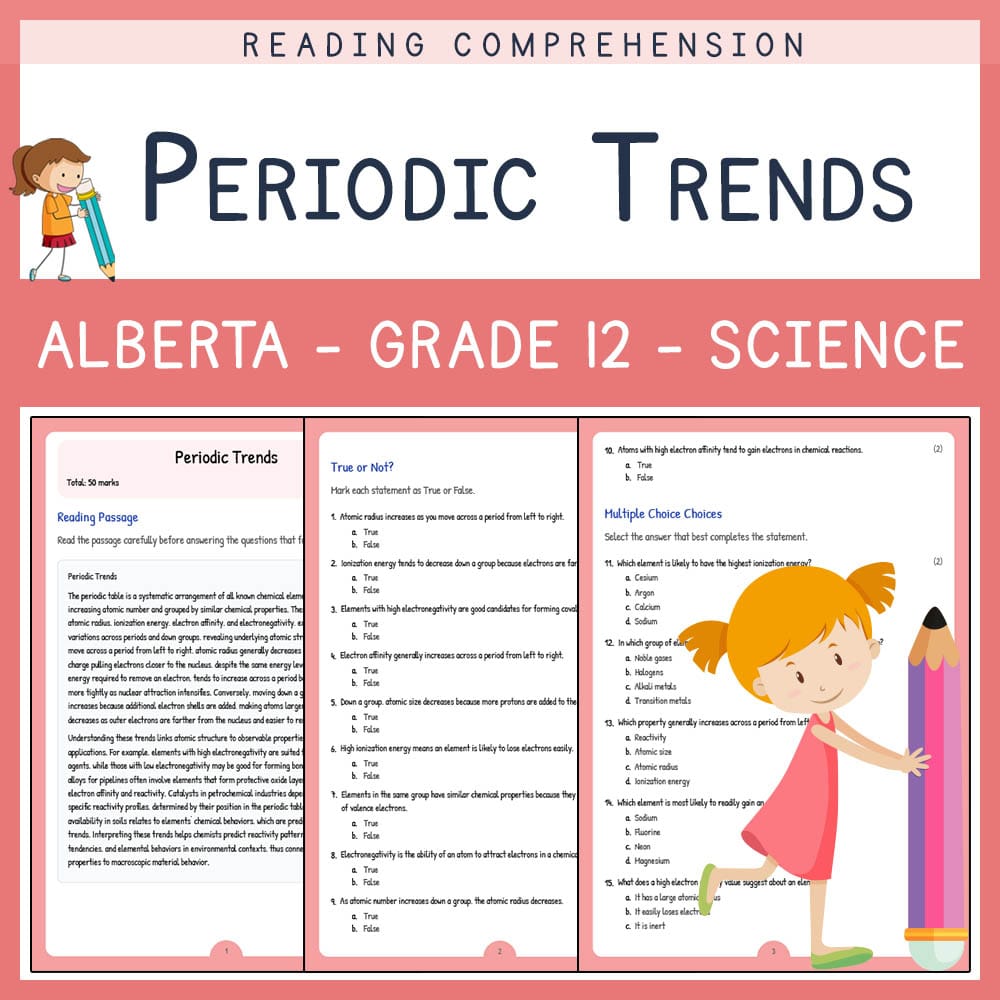
  4. Grade 12 Science | Periodic Trends Worksheet | Alberta Standards
    Grade 12 Science | Periodic Trends Worksheet | Alberta Standards

    Grade 12 · Science

    • Understand the concept of periodic trends and their significance in chemistry.
    • Analyze patterns of atomic radius, ionization energy, electron affinity, and electronegativity across periods and down groups.
    • Interpret how atomic structure influences macroscopic properties and applications of elements.
    $2.40$3.00
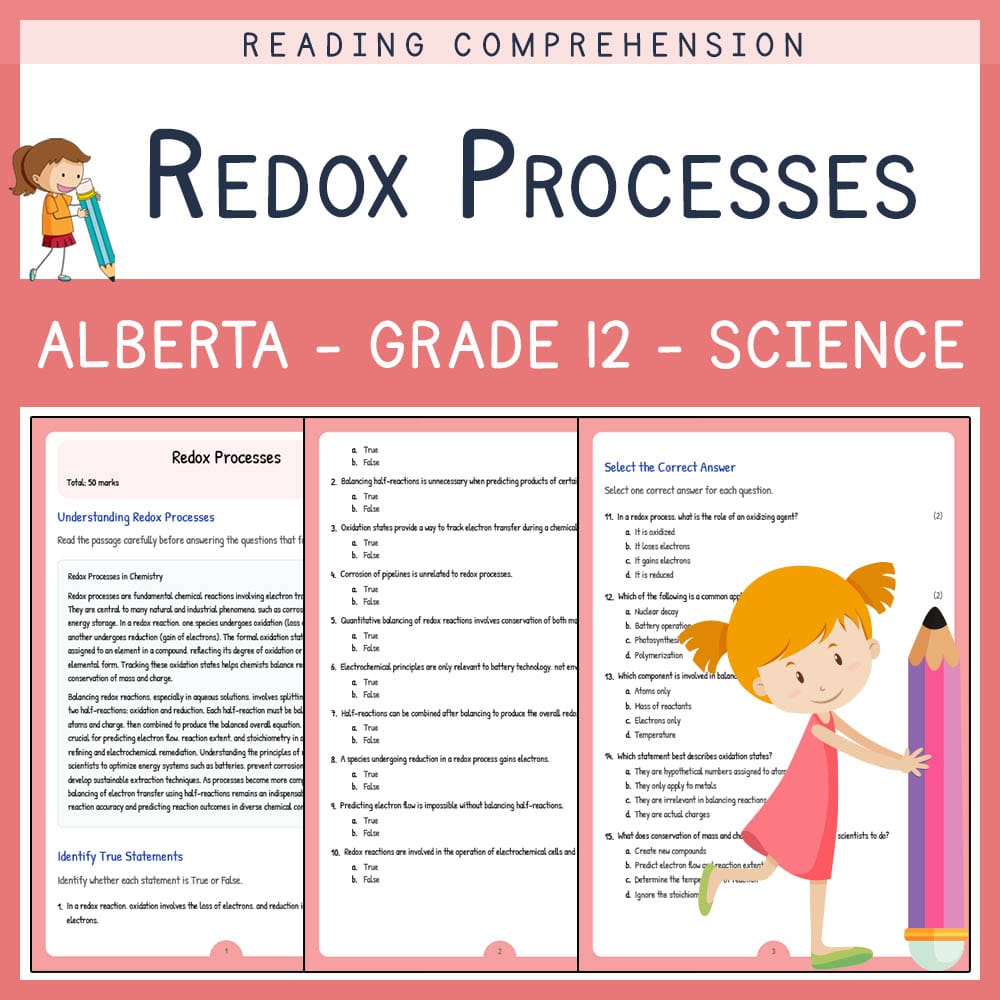
  5. Grade 12 Science | Redox Processes Worksheet | Alberta Standards
    Grade 12 Science | Redox Processes Worksheet | Alberta Standards

    Grade 12 · Science

    • Explain the fundamentals of oxidation-reduction (redox) reactions, including electron transfer and oxidation states.
    • Balance redox half-reactions accurately using conservation of mass and charge.
    • Apply electrochemical principles to real-world scenarios such as corrosion, battery operation, and metal refining.
    $2.40$3.00
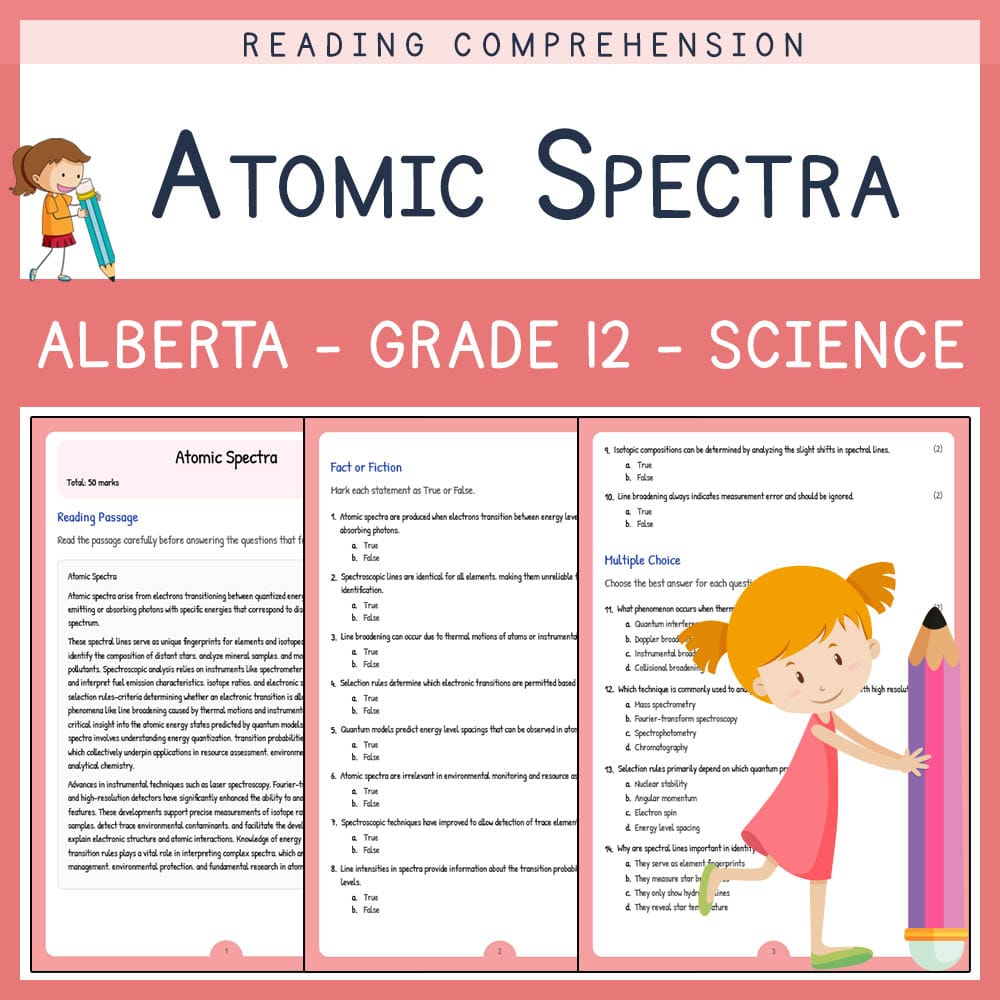
  6. Grade 12 Science | Atomic Spectra Worksheet | Alberta Standards
    Grade 12 Science | Atomic Spectra Worksheet | Alberta Standards

    Grade 12 · Science

    • Understand the process of electronic transitions that produce atomic spectra.
    • Identify the importance of spectral patterns in element and isotope identification.
    • Explain concepts such as selection rules, line broadening, and energy quantization in spectroscopy.
    $2.40$3.00
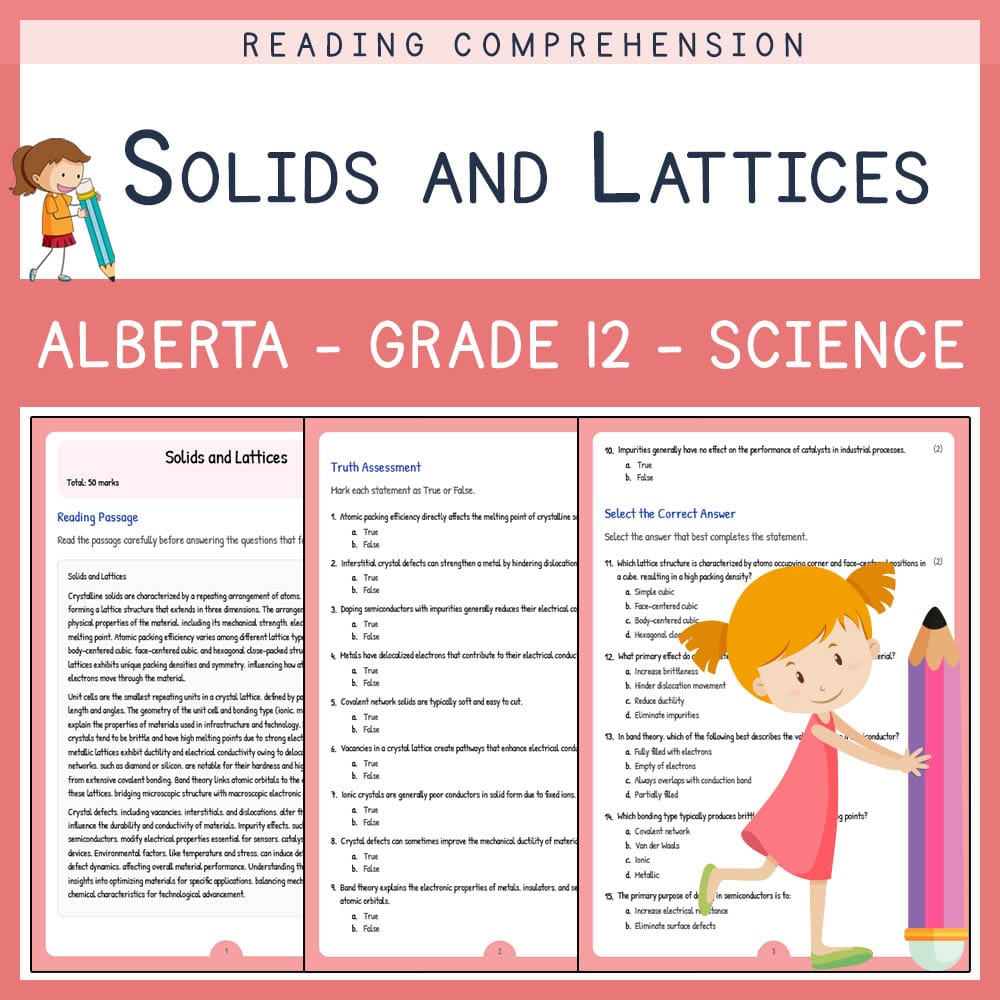
  7. Grade 12 Science | Solids and Lattices Worksheet | Alberta Standards
    Grade 12 Science | Solids and Lattices Worksheet | Alberta Standards

    Grade 12 · Science

    • Explain atomic packing, unit cell geometries, and bonding types in crystalline solids.
    • Describe how lattice structures influence material properties like strength and conductivity.
    • Apply band theory concepts to understand electronic behaviors of different solids.
    $2.40$3.00
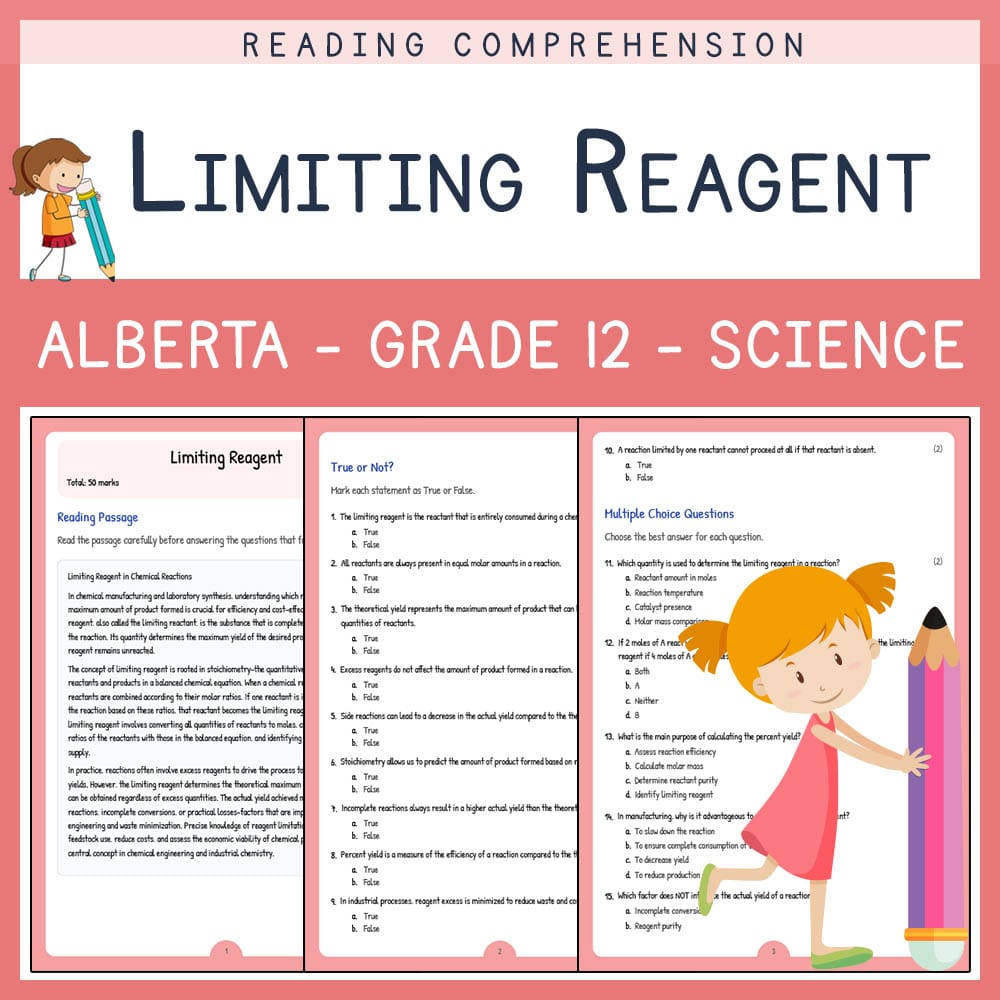
  8. Grade 12 Science | Chemistry Limiting Reagent Worksheet | Alberta Standards
    Grade 12 Science | Chemistry Limiting Reagent Worksheet | Alberta Standards

    Grade 12 · Science

    • Understand the concept of limiting reagent in chemical reactions.
    • Identify the limiting reagent from balanced chemical equations.
    • Calculate theoretical and percent yields based on reagent limitations.
    $2.40$3.00
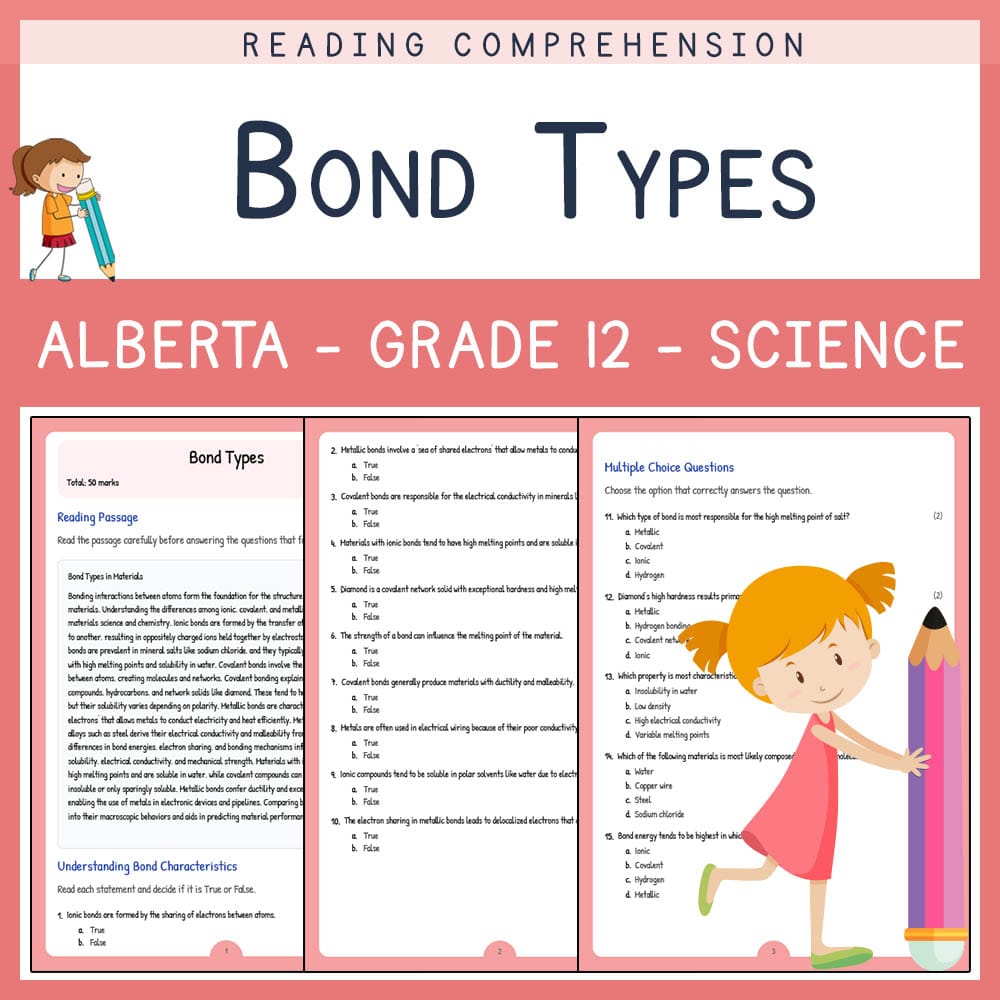
  9. Grade 12 Science | Bond Types Worksheet | Alberta Standards
    Grade 12 Science | Bond Types Worksheet | Alberta Standards

    Grade 12 · Science

    • Classify interactions between atoms into ionic, covalent, and metallic bonds.
    • Explain the assembly of compounds and solids based on bond types.
    • Compare bond energies, electron sharing, and typical properties of each bond type.
    $2.40$3.00
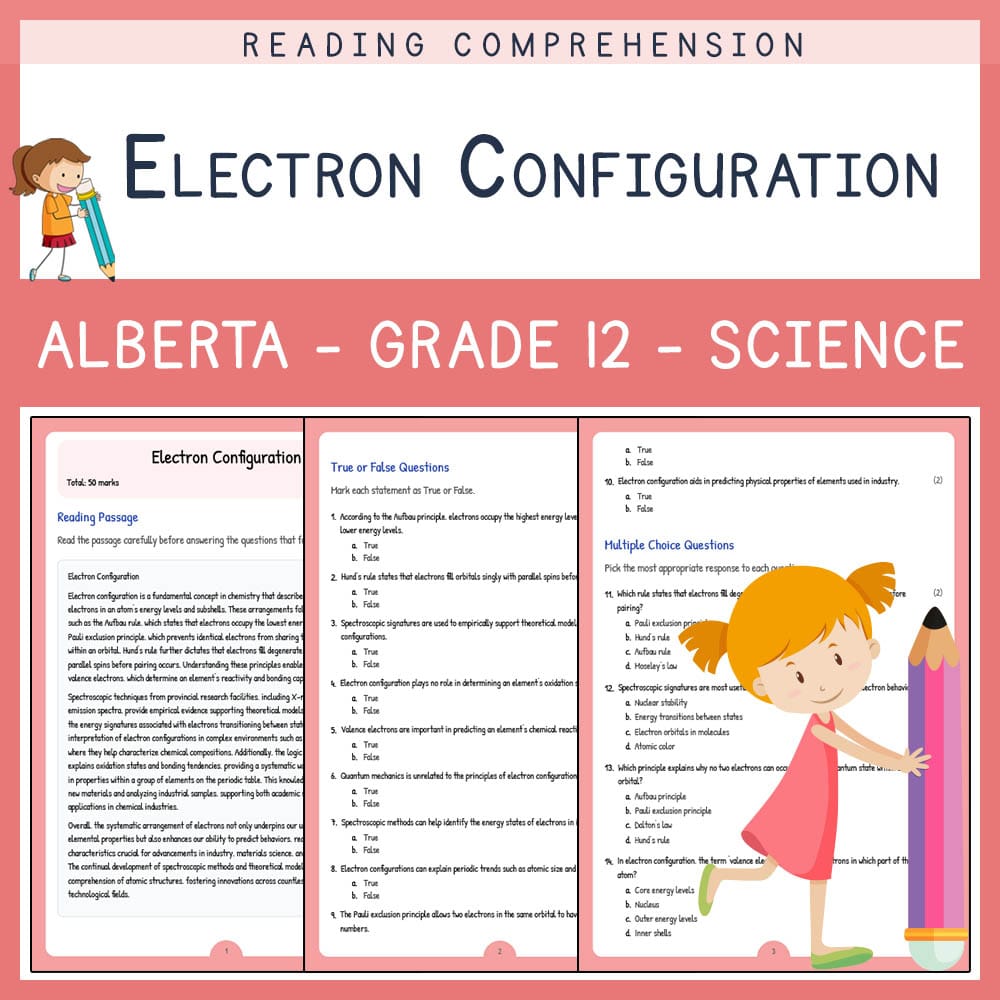
  10. Grade 12 Science | Electron Configuration Worksheet | Alberta Standard
    Grade 12 Science | Electron Configuration Worksheet | Alberta Standard

    Grade 12 · Science

    • Explain the principles behind electron configuration, including Aufbau, Pauli exclusion, and Hund's rules.
    • Predict element valence and chemical behavior based on electron configurations.
    • Understand how spectroscopic signatures support electron configuration theories in research.
    $2.40$3.00

Reviews & Feedback

Loading reviews...

Questions & Answers

Loading questions…

About this bundle

Related categories

Frequently asked questions

Who is Grade 12 Science | Chemistry Science Unit Bundle | Alberta Curriculum Framework designed for?
Grade 12 Science | Chemistry Science Unit Bundle | Alberta Curriculum Framework is designed for Grade 12 students and can be used in classrooms, homeschool, or independent practice.
How do I download Grade 12 Science | Chemistry Science Unit Bundle | Alberta Curriculum Framework?
Add it to your cart and complete checkout. After payment, you can download immediately from your account, and you'll also receive a download link by email.