

Grade 12 Science | Instrumentation Use & Measurement Systems (PDF + Answer Key)
Description
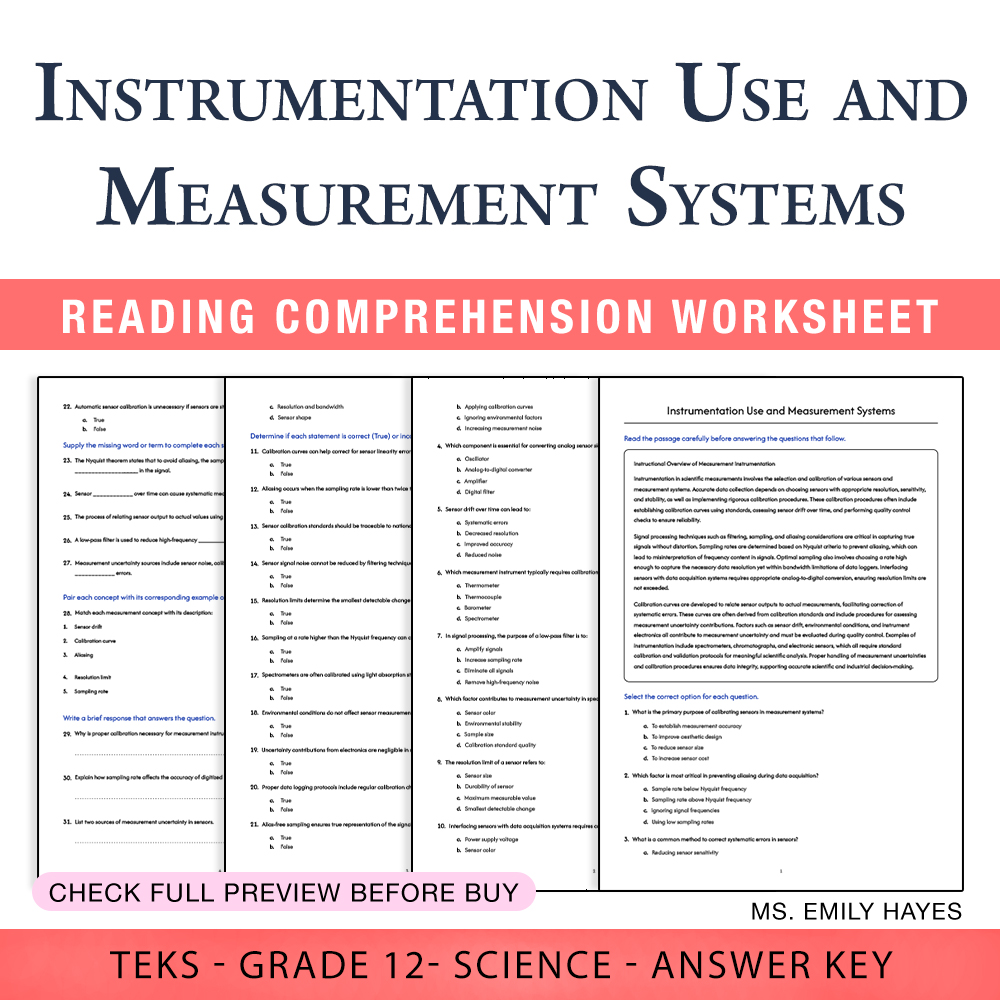
Are you seeking a practical and comprehensive way to enhance your students' understanding of complex scientific measurement systems? This Grade 12 Science worksheet on Instrumentation Use and Measurement Systems is specifically designed to address the critical classroom challenge of mastering accurate data collection, sensor calibration, and signal processing techniques. Perfect for in-class practice or homework assignments, this printable PDF worksheet with an accompanying rubric provides a robust resource to build students' real-world skills essential for advanced scientific inquiry.
Why Teachers Love This
✅ Fully print-ready PDF worksheet and answer key with rubric, designed for immediate classroom use
✅ Aligned with TEKS standards, ensuring curriculum compliance and relevance
✅ Fosters critical thinking through diverse question formats, from multiple choice to essay questions
✅ Enhances student engagement with real-world measurement scenarios and practical problems
✅ Saves preparation time, allowing teachers to focus on instruction rather than material creation
Why Students Succeed With This
✅ Clear, straightforward instructions that demystify complex topics like sensor calibration and Nyquist sampling
✅ Progressive questions that develop from foundational concepts to advanced application and analysis
✅ Engages learners with practical examples relevant to modern scientific research and technology
✅ Builds deep competence in measurement techniques, uncertainty analysis, and data interpretation
✅ Boosts confidence in handling measurement systems and conducting scientific experiments
What You Get
Prepare your classroom with this comprehensive, print-ready PDF worksheet, which includes:
• Carefully crafted questions covering key measurement concepts like sensor calibration, aliasing, and systematic errors
• 10 multiple choice questions to reinforce critical understanding
• 12 true/false statements to assess comprehension of measurement accuracy
• 5 fill-in-the-blank exercises focused on fundamental measurement principles
• 1 matching activity to strengthen concept recognition
• 2 thought-provoking short answer prompts for deeper reflection
• 2 essay questions to promote analytical thinking and applied knowledge
• An answer key with rubric to facilitate efficient assessment and feedback
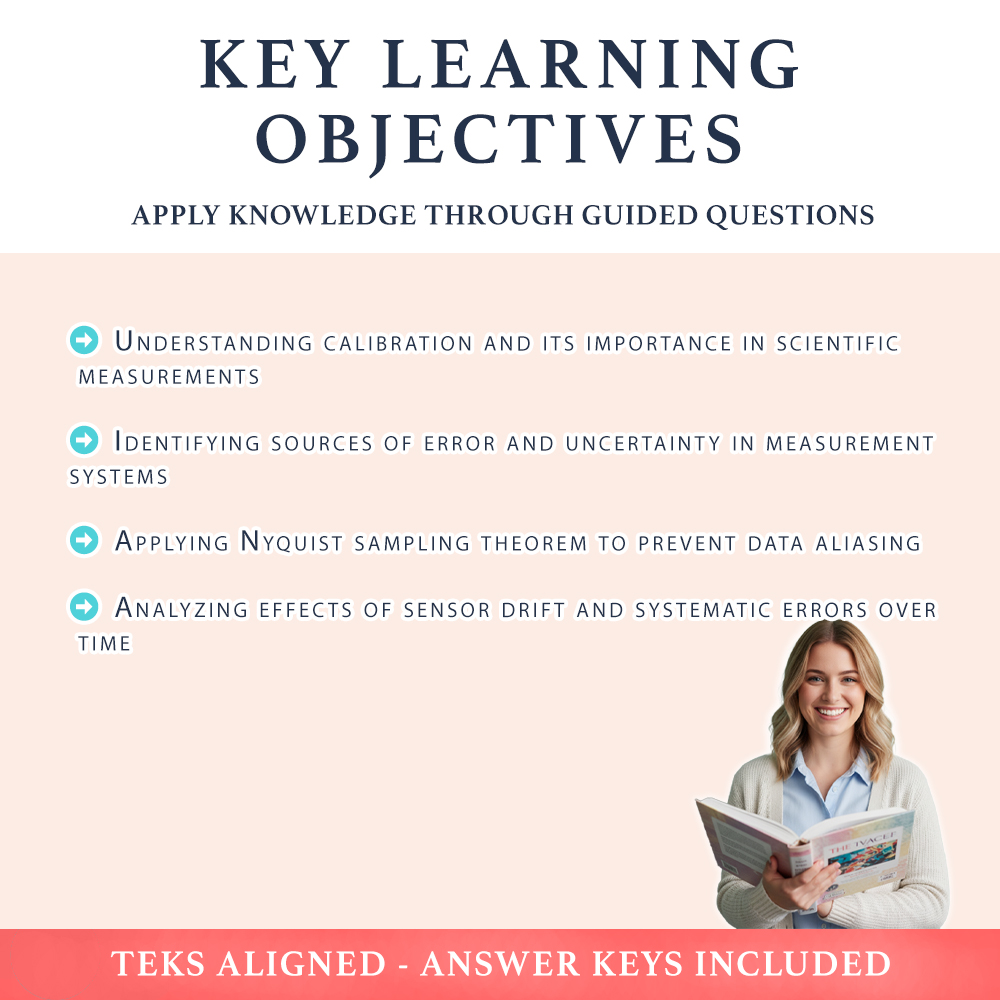
Key Learning Objectives
Students will master these core skills:
➡️ Understanding calibration and its importance in scientific measurements
➡️ Identifying sources of error and uncertainty in measurement systems
➡️ Applying Nyquist sampling theorem to prevent data aliasing
➡️ Analyzing effects of sensor drift and systematic errors over time
➡️ Interpreting measurement data and ensuring data integrity in scientific research
Ideal Usage
Designed for in-class practice, homework, or exam preparation, this worksheet provides versatile, print-ready materials for any high school science classroom. Use it during lectures to reinforce key concepts, assign as independent practice, or incorporate into lab exercises focusing on measurement and instrumentation techniques. Its clear structure makes it ideal for whole-class instruction, small-group discussions, or individual student work, ensuring every student develops a solid understanding of measurement systems and their applications in science.
Get your students confidently mastering scientific measurement systems today—build their critical thinking and data analysis skills for long-term success in STEM careers! 🚀
