Grade 6 Science | Digital Sources Worksheet Elena | Alberta Standards
Description
Are your Grade 6 students exploring the vital role of digital sources in environmental science and data analysis?
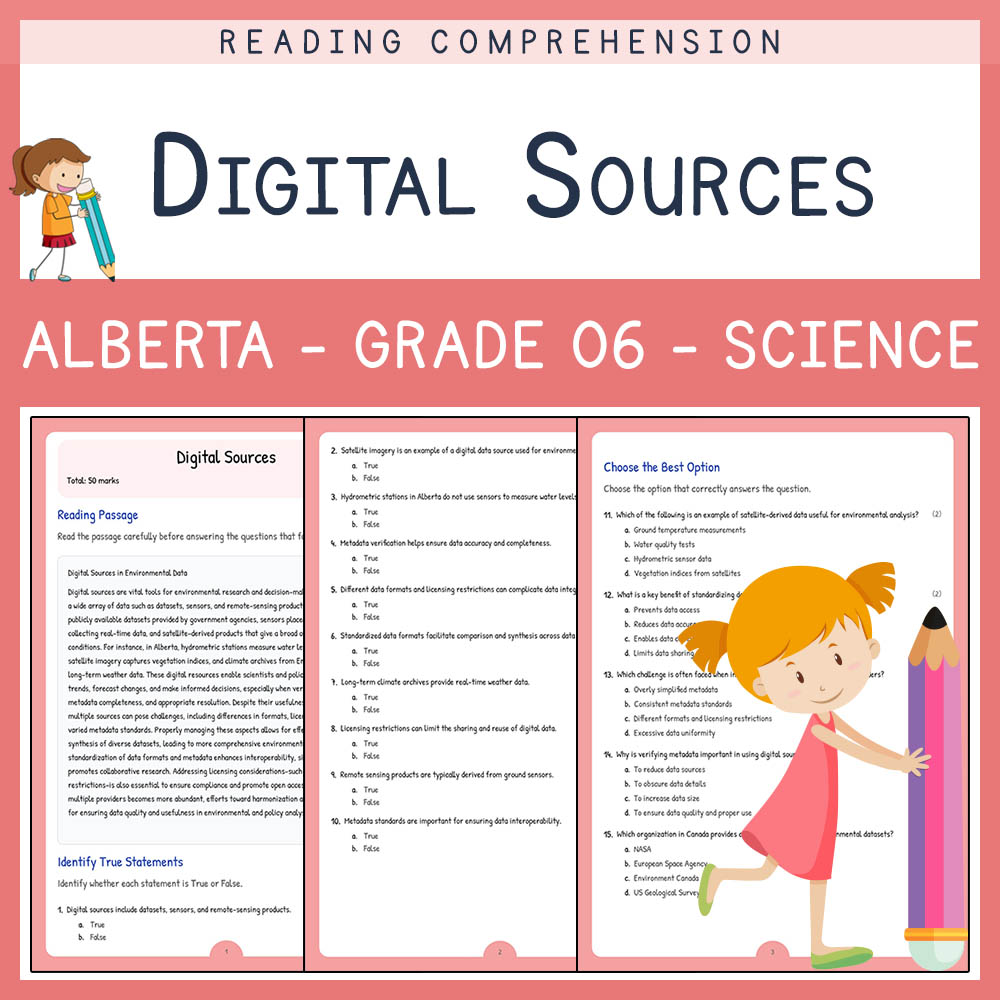
๐ฟ This printable worksheet, aligned with Alberta science standards, provides a comprehensive practice task to enhance understanding of digital data sources used in environmental research. Designed specifically for Grade 6 science educators, this PDF worksheet and answer key with rubric offers a structured approach to assessing students' knowledge on digital data collection, analysis, and interpretation.
What's Included
โ
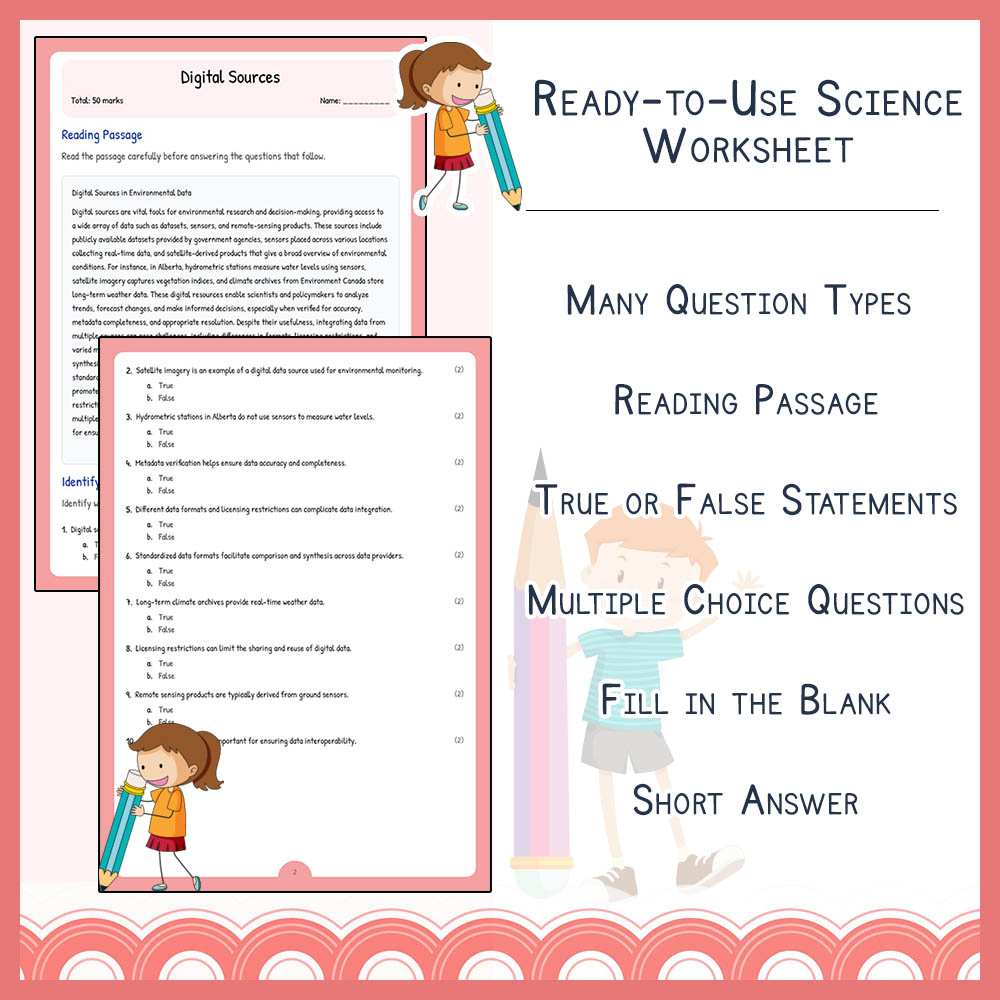
Reading passage to introduce key concepts about digital sources and their importance in environmental science
โ
Ten true or false questions testing understanding of datasets, sensors, and remote sensing tools
โ
Five multiple choice questions focusing on real-world examples and benefits of digital data formats
โ
Five fill-in-the-blank exercises to reinforce terminology related to remote sensing and metadata
โ
Five short answer questions encouraging critical thinking and reflection on data verification and challenges
โ
PDF worksheet for easy printing and distributing in class
โ
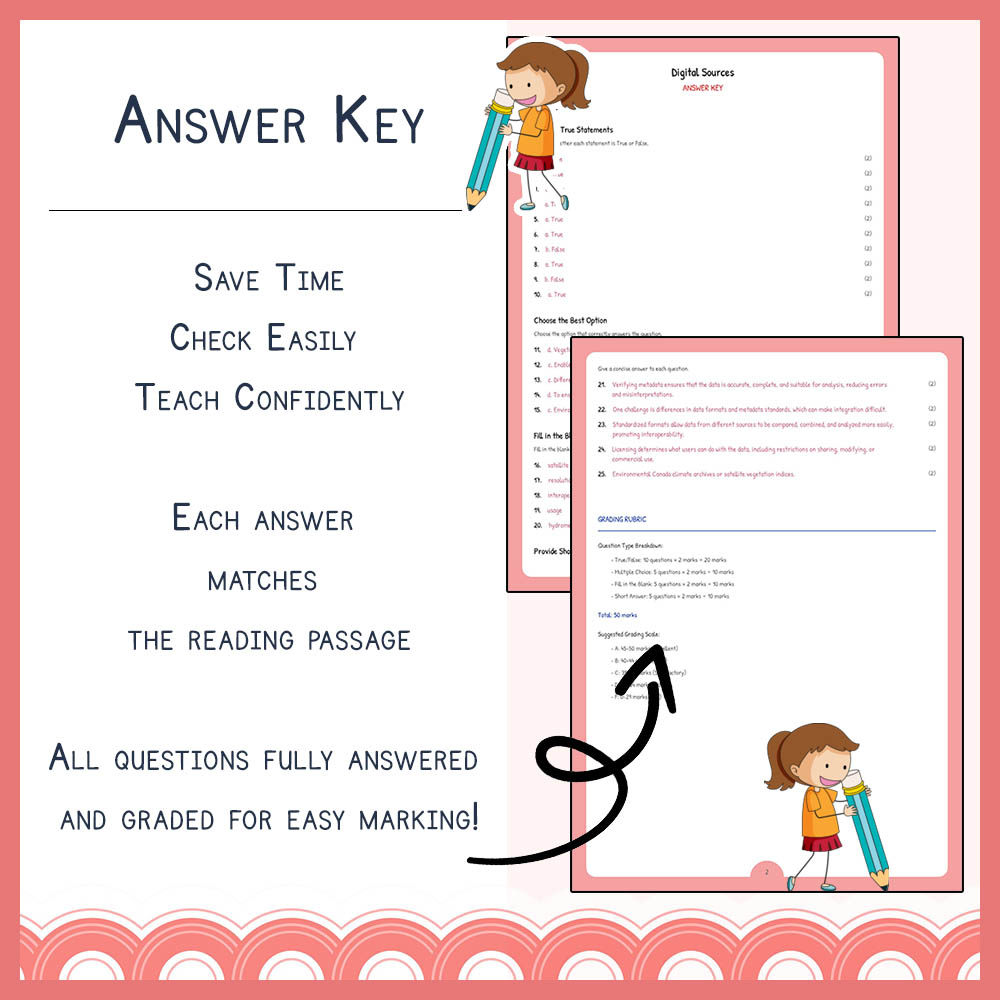
PDF answer key with detailed rubrics for quick assessment
Key Concepts Covered
โก๏ธ Digital Data Sources โ Understanding various digital tools used for environmental monitoring
โก๏ธ Remote Sensing โ Exploring sensors orbiting Earth and satellite imagery applications
โก๏ธ Data Standardization โ Recognizing the importance of uniform data formats for analysis
โก๏ธ Metadata โ Comprehending the details needed to interpret digital data accurately
โก๏ธ Data Verification Challenges โ Identifying issues related to data accuracy and integration
Question Types / Formats
1. Reading comprehension passage for context
2. True or false statements to assess factual understanding
3. Multiple choice questions to evaluate critical thinking and application
4. Fill-in-the-blank exercises for key vocabulary reinforcement
5. Short answer questions fostering explanation and reflection
Teacher Benefits
โ
Provides a ready-to-use resource aligned with Alberta science standards, saving prep time
โ
Supports varied question types to assess different skills and understanding levels
โ
Clear PDF format allows for easy printing and distribution during multiple class sessions
โ
Promotes student engagement with real-world digital data applications
โ
Facilitates formative and summative assessment of digital literacy in science
Student Benefits
โ
Enhances understanding of digital sources and their role in environmental science
โ
Develops critical thinking through analysis of data and metadata
โ
Strengthens vocabulary related to sensors, remote sensing, and data formats
โ
Fosters reflection on challenges and ethical considerations in digital data use
โ
Builds skills in interpreting and verifying scientific digital sources
Perfect For
โก๏ธ Classroom instruction on digital data sources and remote sensing
โ
Homework assignments reinforcing key concepts
โก๏ธ Independent or small group practice to deepen understanding
โ
Science stations focusing on data interpretation
โก๏ธ Early units dealing with modern technology in science investigations
Ready to enhance your Science teaching? Download this dynamic worksheet today and inspire your students to understand and analyze digital sources in environmental science! ๐
