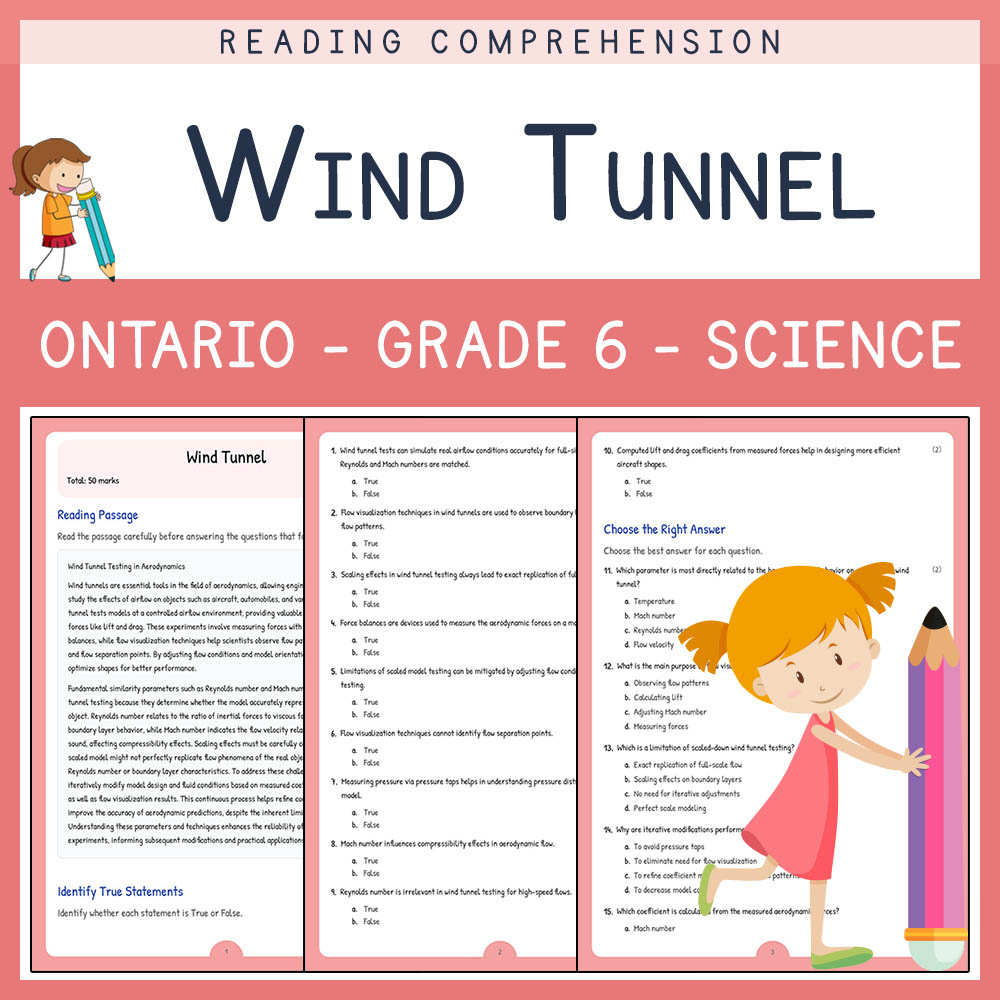
Are your Grade 6 students exploring the fascinating world of aerodynamics and wind flow? 🌬️ This comprehensive worksheet is designed to deepen their understanding of how wind tunnels are used in engineering and scientific research. Aligned with Ontario's curriculum standards, this resource helps students grasp key concepts while engaging in hands-on learning through a variety of question formats. Perfect for classroom instruction or independent study, the worksheet combines informative reading passages, analytical exercises, and critical thinking questions to inspire curiosity and mastery in the science of airflow and aerodynamics.
What's Included
✅ Reading passage explaining the purpose and function of wind tunnels
✅ Identify true statements section with 10 questions to assess comprehension
✅ Multiple choice questions (5) focusing on key concepts like boundary layers and flow visualization
✅ Fill-in-the-blank sentences (5) designed to reinforce understanding of fluid dynamics terminology
✅ Short answer questions (5) requiring students to explain concepts like Reynolds numbers and flow visualization techniques
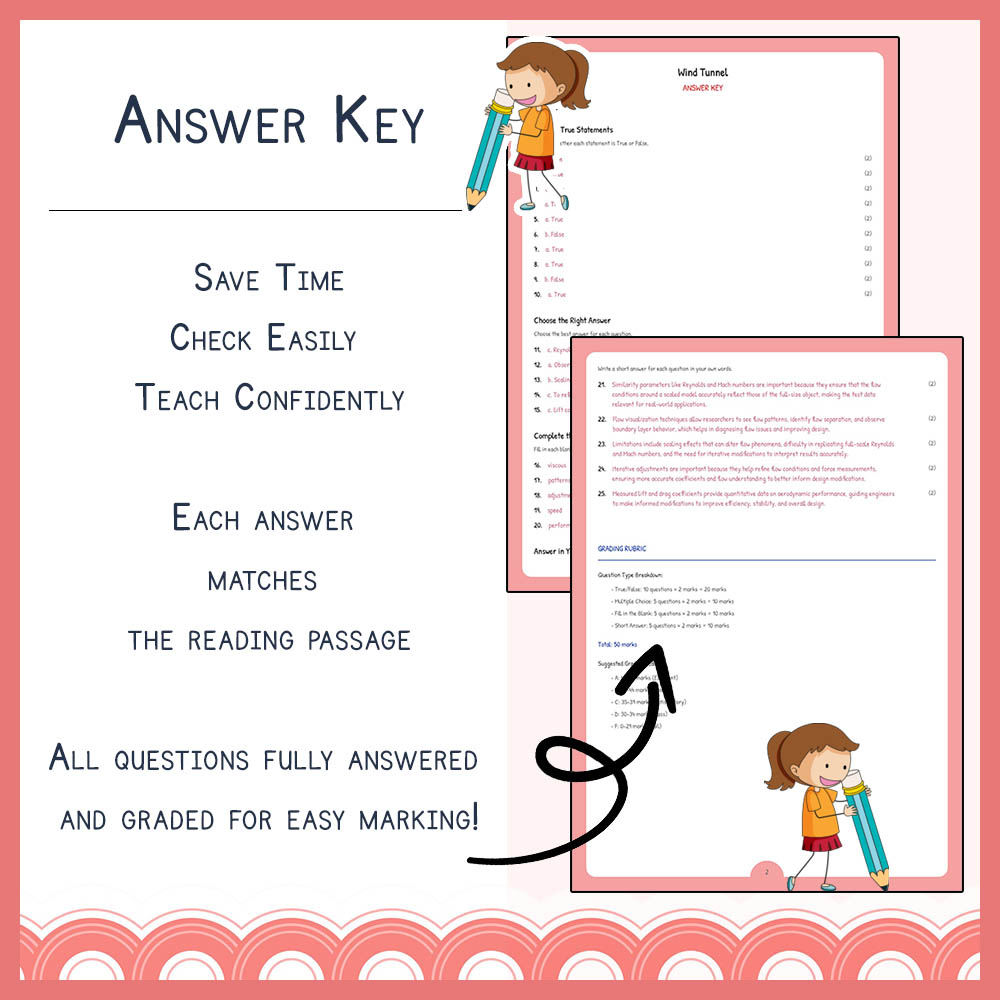
✅ PDF worksheet and PDF answer key with rubrics – ideal for printing and easy distribution in the classroom
Key Concepts Covered
➡️ Wind Tunnel Operation – How wind tunnels simulate airflow for testing aerodynamic models
➡️ Flow Visualization – Techniques used to observe airflow patterns and flow separation
➡️ Boundary Layer and Reynolds Number – Fundamental principles governing flow behavior and test conditions
➡️ Similarity Parameters – Parameters like Mach and Reynolds numbers that ensure accurate scale modeling in experiments
➡️ Aerodynamic Testing Standards – The importance of standardized procedures in wind tunnel experiments
Question Types / Formats
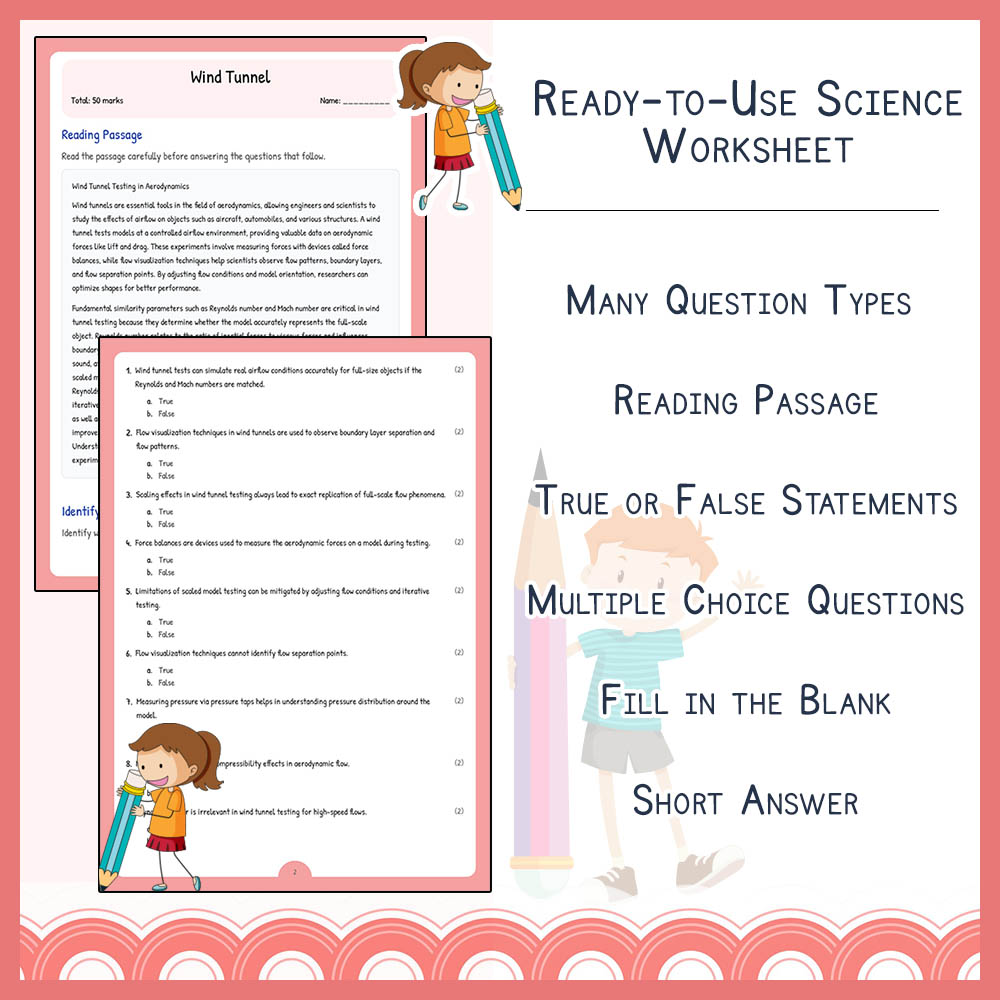
1. Reading comprehension passage to introduce basic concepts
2. True or false questions to assess understanding of key facts
3. Multiple choice questions to evaluate knowledge of technical details
4. Fill-in-the-blank sentences to reinforce terminology and definitions
5. Short answer prompts to develop explanation and synthesis skills
Teacher Benefits
✅ Provides a ready-to-use, print-ready PDF worksheet and answer key that align with Ontario curriculum standards
✅ Engages students with varied question formats that promote critical thinking and comprehension
✅ Supports differentiation by offering questions at different difficulty levels
✅ Facilitates easy classroom setup with clear sections and answer rubrics
✅ Enhances lesson planning with comprehensive, structured content that covers fundamental aerodynamics concepts
Student Benefits
✅ Deepens understanding of aerodynamic principles through reading and interactive questions
✅ Builds critical thinking skills by analyzing flow behavior and interpreting visualization data
✅ Improves scientific vocabulary and technical language in fluid dynamics
✅ Encourages explanation and synthesis of complex ideas in their own words
✅ Fosters curiosity about engineering and physics through engaging, hands-on style questions
Perfect For
➡️ Classroom instruction to introduce aerodynamics and wind tunnel testing
✅ Homework assignments to reinforce key concepts learned in class
➡️ STEM and engineering units focused on fluid dynamics
✅ Extension activities for higher-level learners
➡️ Substitution or substitute lessons on physical science topics
✅ Science project preparation on aerodynamics or testing methods
Ready to enhance your Science teaching? Download this dynamic worksheet today and inspire your students to explore the fascinating world of airflow and aerodynamic testing! 🚀