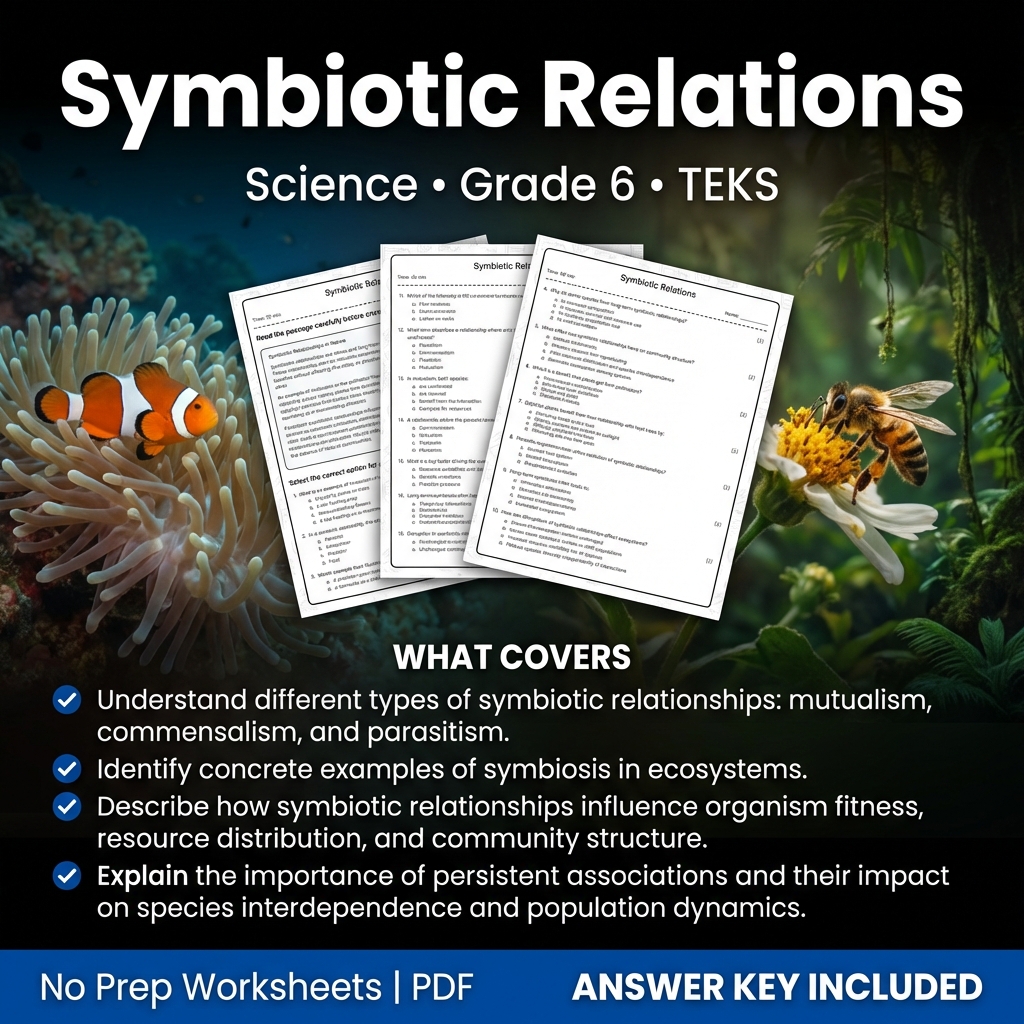
Grade 6 Science Worksheet on Symbiotic Relations – Standard TEKS Practice
Description
Overview
This printable PDF worksheet is designed for Grade 6 Science instruction, focusing on the concept of Symbiotic Relations. It supports educators in reinforcing student understanding of key ecological interactions and aligns with TEKS standards for sixth grade science. The worksheet provides a structured approach to practicing essential concepts through a variety of question formats, making it a valuable addition to classroom teaching, independent work, or review sessions.
Learning Objectives
- Develop a clear understanding of the different types of symbiotic relationships, including mutualism, parasitism, and commensalism
- Strengthen subject-specific vocabulary and comprehension of ecological interactions
- Apply learned concepts through diverse question types that promote critical thinking and mastery
What’s Included
- A printable PDF worksheet featuring engaging questions designed for student use in the classroom
- A PDF answer key with rubric for easy grading and assessment
- A total of 31 scaffolded questions that guide students through comprehension, analysis, and application
Classroom Applications
- Use for independent student practice to reinforce learning objectives
- Implement during whole-class instruction as a conceptual review
- Assign as homework to extend understanding outside of class
- Utilize during review or assessment sessions to gauge student mastery of symbiotic relationships
Teacher Notes
This print-ready worksheet is designed for effortless classroom implementation with minimal preparation required. Its clear instructions and structured questions enable students to work independently and with confidence, facilitating effective differentiation and targeted instruction. The variety of question types supports diverse learning styles and encourages deeper engagement with ecological concepts. Teachers can easily integrate this resource into lesson plans aligned with TEKS standards, making it a practical tool for assessment and review.
The first section includes a reading passage that introduces students to the concept of symbiotic relationships, providing foundational knowledge. The passage explains that symbiosis involves close and long-term interactions between two different species. This solid foundation prepares students for subsequent questions and activities.
The second section offers 30 multiple-choice questions designed to assess student understanding of specific examples and the roles of organisms within symbiotic relationships. Questions include identifying real-world examples of mutualism, understanding the benefits to organisms in parasitic relationships, and distinguishing among the types of symbiosis.
Educators can use this worksheet as part of a larger unit on ecology, a supplement to textbook lessons, or as a standalone assessment. Its printable format makes it ideal for classrooms that prefer traditional paper-based activities. The answer key with rubric allows teachers to quickly evaluate student responses, ensuring efficient grading and feedback.
Overall, this resource offers a comprehensive, easy-to-use tool for teaching Grade 6 students about the vital ecological concept of symbiotic relationships, helping them build scientific literacy and critical thinking skills in a clear and organized manner.
