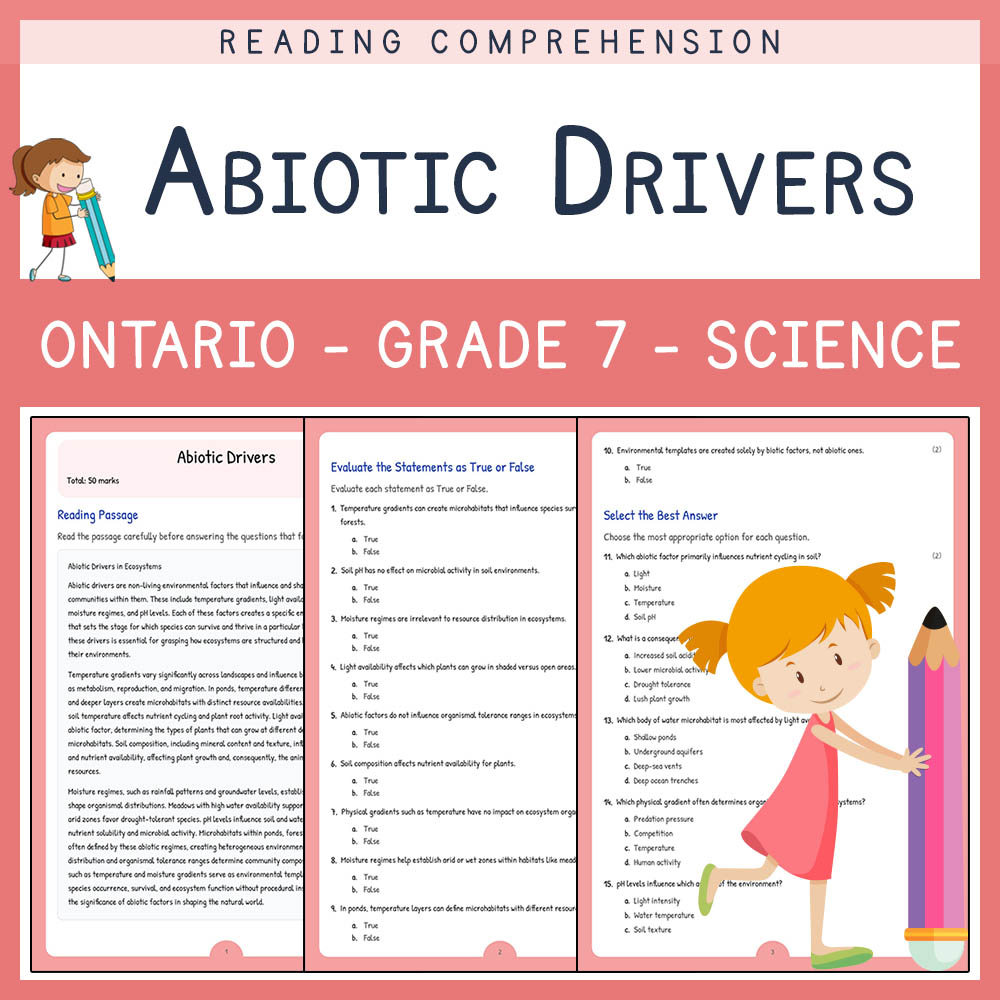
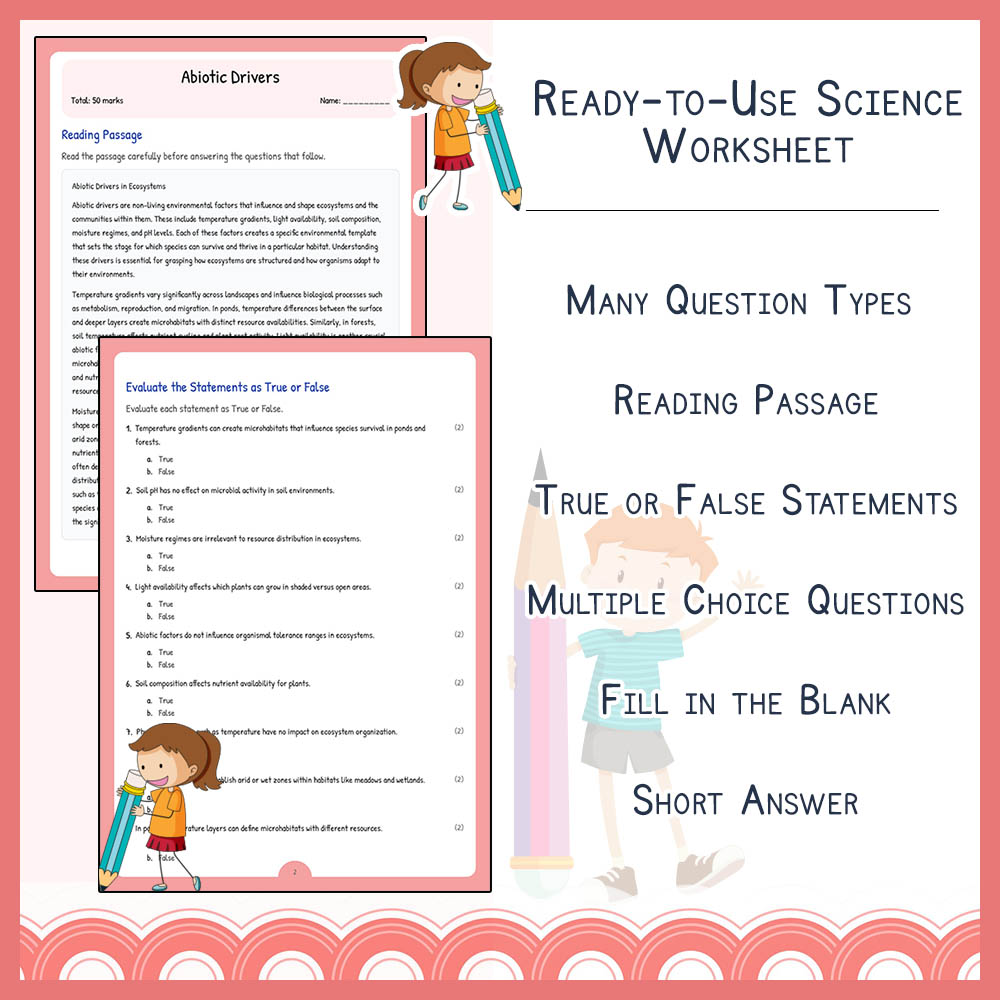
Are your Grade 7 students exploring the fascinating world of abiotic drivers and how non-living environmental factors shape ecosystems? 📚 This engaging worksheet aligns perfectly with the Ontario curriculum, helping students build a comprehensive understanding of abiotic influences on ecosystems through a variety of question formats. Designed for easy classroom integration, this PDF resource offers structured activities that promote critical thinking and deepen knowledge of environmental science concepts.
What's Included
✅ Reading passage that introduces the concept of abiotic drivers and their importance in ecosystems
✅ Evaluate the statements as True or False — 10 questions to assess understanding of key principles
✅ Select the Best Answer — 5 multiple-choice questions focused on abiotic factors and their effects
✅ Fill in the Blank — 5 exercises to reinforce vocabulary and concept comprehension
✅ Write Short Answers — 5 prompts encouraging students to explain and analyze abiotic influences in ecosystems
✅ PDF worksheet and answer key with rubric, providing a comprehensive resource for assessment and review
Key Concepts Covered
➡️ Abiotic factors – Non-living environmental elements such as temperature, light, moisture, and soil pH that influence ecosystems
➡️ Microhabitats – Small-scale environments within ecosystems shaped by abiotic gradients like temperature differences
➡️ Environmental gradients – Variations in abiotic factors across habitats affecting species distribution
➡️ Nutrient cycling – The process affected by abiotic factors such as soil nutrients and moisture levels
➡️ Species distribution – How abiotic drivers influence the location and survival of organisms
Question Types / Formats
1. Reading passage — a detailed paragraph introducing abiotic drivers and ecosystems
2. Evaluate the Statements — True or False questions assessing factual understanding
3. Multiple Choice — questions focusing on key abiotic factors and their impacts
4. Fill in the Blank — exercises to reinforce scientific vocabulary and concepts
5. Short Answer — prompts that encourage explanation, analysis, and critical thinking
Teacher Benefits
✅ Comprehensive assessments aligned with Ontario standards, simplifying testing and evaluation
✅ Variety of question formats to engage diverse learning styles and assess multiple skills
✅ PDF format allows for quick printing and easy distribution in the classroom
✅ Supports differentiated instruction with activities that target different levels of understanding
✅ Enhances lesson planning with ready-to-use, standards-aligned resource materials
Student Benefits
✅ Builds a strong foundation in understanding how abiotic factors influence ecosystems
✅ Develops critical thinking and analytical skills through varied question formats
✅ Reinforces science vocabulary and key concepts for improved retention
✅ Promotes independent learning with short answer prompts and explanatory questions
✅ Prepares students for assessments with targeted practice and detailed answer keys
Perfect For
➡️ Classroom instruction to introduce or review ecosystems and abiotic factors
✅ Homework assignments to reinforce learning outside the classroom
➡️ Group activities to encourage discussion and collaborative learning
✅ Quick assessment tools for formative or summative evaluation
➡️ Science center activities or stations focused on environmental science topics
Ready to enhance your Science teaching? Download this dynamic worksheet today and inspire your students to deepen their understanding of abiotic drivers and their role in ecosystems! 🚀