Grade 7 Science | Design Thinking Worksheet (PDF ) โ Ontario Standards
Description
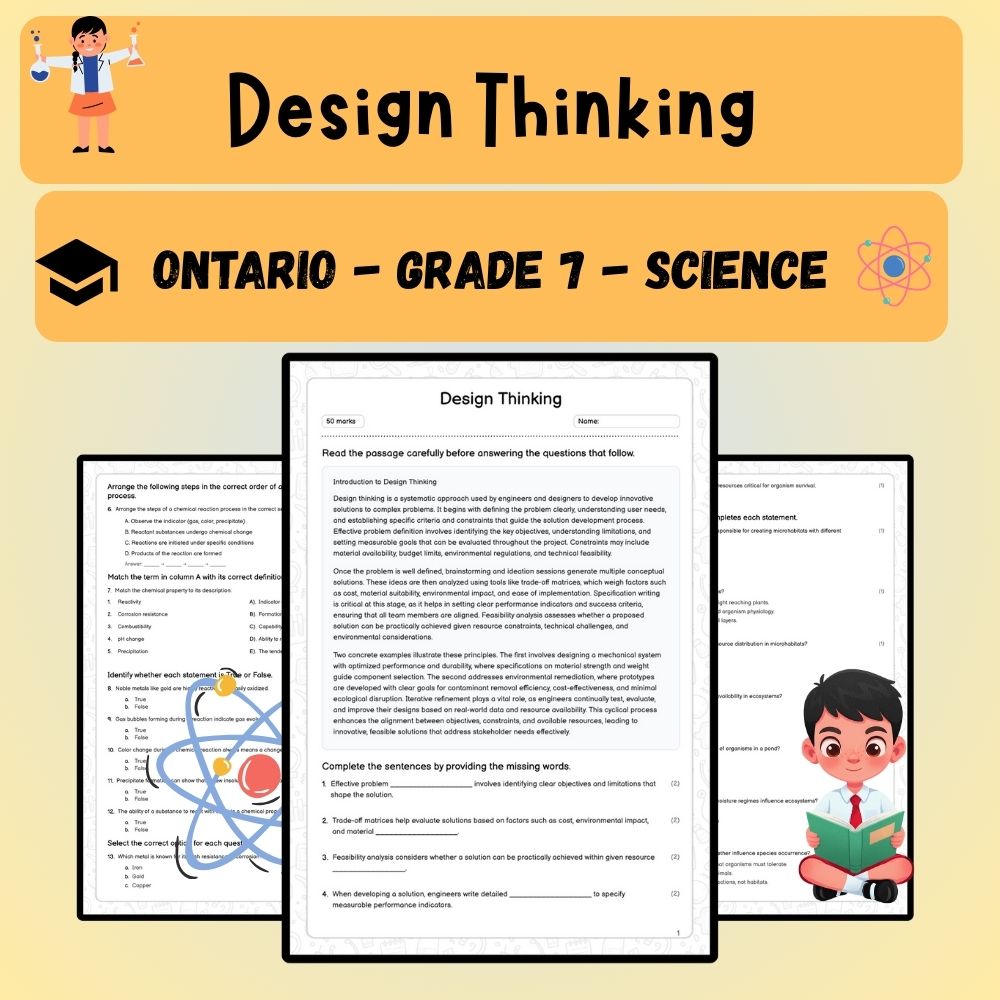
Are your students ready to dive into the innovative world of design thinking? ๐ This comprehensive Grade 7 Science worksheet is tailored to help students understand and apply the fundamental principles of design thinking, aligned with Ontario standards. Perfect for fostering critical thinking, problem-solving skills, and engineering design processes, this worksheet offers an engaging approach to science education that can be used in the classroom or for remote learning.
What's Included
โ
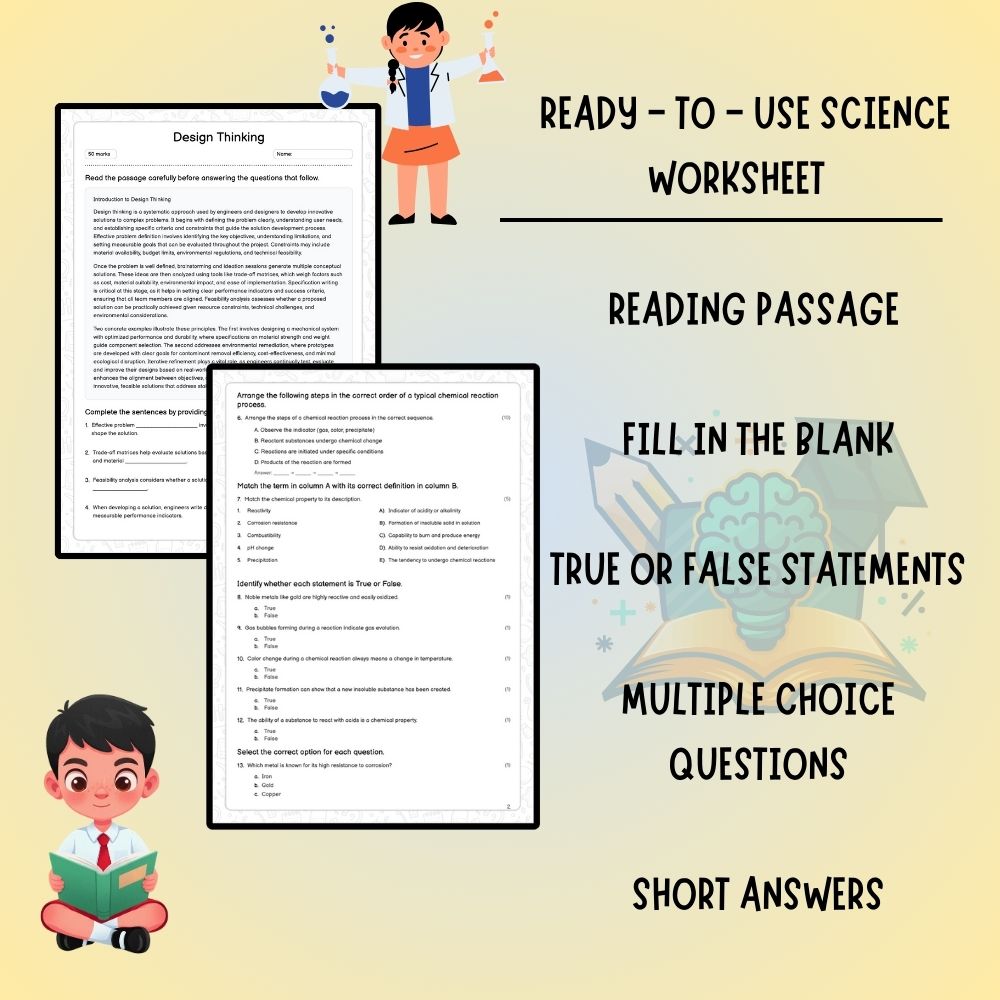
A detailed reading passage explaining the concept of _design thinking_ and its role in science and engineering
โ
Five fill-in-the-blank questions to reinforce understanding of problem identification and solution evaluation
โ
A step-by-step activity requiring students to order the design process steps
โ
Matching questions that connect design phases with their descriptions for deeper comprehension
โ
True/False questions to assess grasp of core concepts like problem definition and trade-off analysis
โ
Ten multiple-choice questions focusing on key tools and steps in design thinking
โ
Five short-answer prompts encouraging students to relate trade-offs and criteria to real-world problems
โ
An essay question to synthesize principles of design thinking and their application to innovative problem solving
Key Concepts Covered
โก๏ธ Design thinking โ A systematic approach for developing innovative solutions by understanding user needs and constraints
โก๏ธ Problem definition and criteria setting โ Essential first steps in the engineering process
โก๏ธ Trade-off matrices โ Tools for evaluating solutions based on costs, environmental impact, and feasibility
โก๏ธ Design phases โ Including problem identification, ideation, prototyping, testing, and refinement
Question Types / Formats
1. Reading comprehension questions to explore design thinking concepts
2. Fill-in-the-blank exercises on key terminology
3. Ordering activities to sequence the design steps
4. Matching design phases with their descriptions for better retention
5. True/False statements to clarify common misconceptions
6. Multiple-choice questions to test understanding of process tools
7. Short answer prompts for critical thinking and application
8. An essay-writing task for higher-level synthesis and reflection
Teacher Benefits
โ
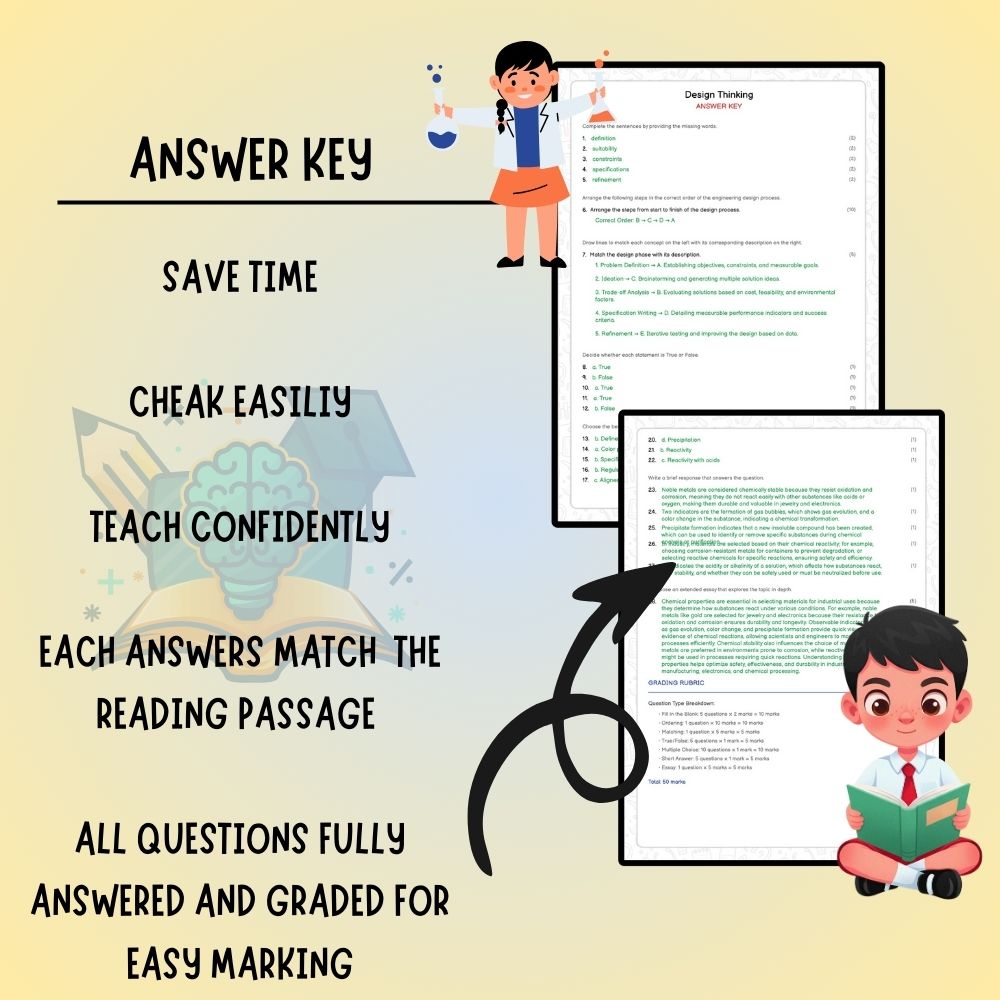
Facilitates engaging, standards-aligned lessons on design thinking and engineering processes
โ
Enhances student comprehension with varied question formats for differentiated learning
โ
Provides ready-to-use materials that promote critical thinking and problem-solving skills
โ
Supports assessment of student understanding through comprehension, application, and analysis questions
Student Benefits
โ
Builds a solid understanding of the engineering design process and key tools like trade-off matrices
โ
Improves critical thinking, reasoning, and decision-making abilities
โ
Promotes active learning through diverse question formats and meaningful prompts
โ
Prepares students for future STEM challenges with practical, applied knowledge
Perfect For
โก๏ธ Science teachers implementing project-based learning in Grade 7 classrooms
โก๏ธ Remote or hybrid learning environments requiring digital supplement materials
โก๏ธ STEM activities focused on engineering design and innovation
โก๏ธ Standards-based assessment aligned with Ontario's science curriculum
Get started today! Download this engaging worksheet to foster creativity and critical thinking in your science classroom! ๐ฏ
