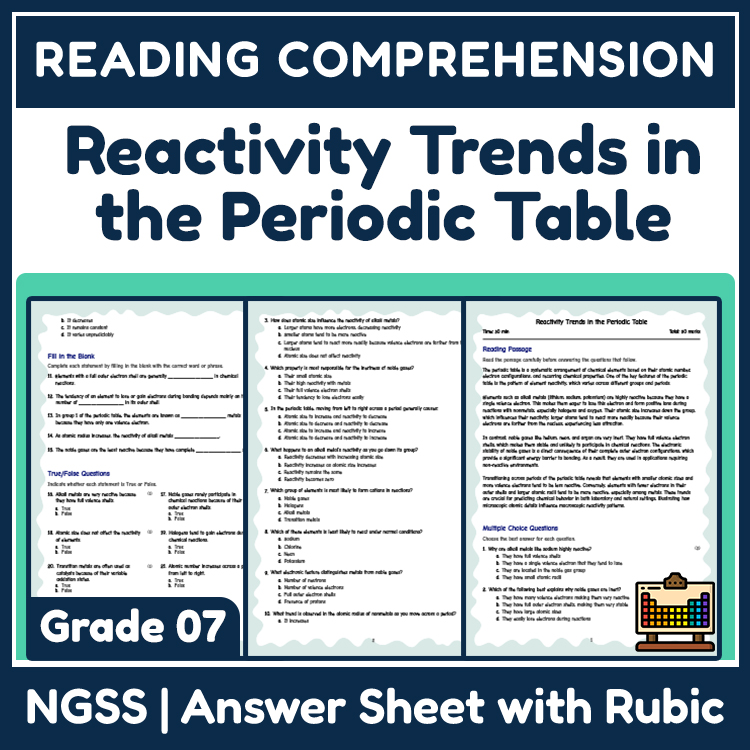
Understanding the reactivity of elements in the periodic table is a fundamental skill for middle school science students. This comprehensive Grade 7 science reading worksheet on Reactivity Trends in the Periodic Table is designed to develop students' critical thinking and comprehension skills while aligning with the Next Generation Science Standards (NGSS). With this worksheet, students will grasp complex concepts through engaging reading passages and varied question formats, making their learning both effective and enjoyable.
Why Teachers Love This
✅ Specific time-saving benefits: Ready-to-use worksheet saves valuable planning and preparation time.
✅ Easy implementation: Clear, organized sections make it simple to introduce concepts and guide student learning.
✅ Proven effectiveness: Interactive questions and varied formats ensure concepts are well-understood.
✅ Standards-aligned with Next Generation Science Standards (NGSS): Supports curriculum goals seamlessly.
Why Students Succeed With This
✅ Clear, engaging format: Visually appealing and straightforward layout keeps students motivated.
✅ Scaffolded difficulty: Questions progress from basic comprehension to higher-order thinking.
✅ Real-world connections: Relating reactivity to everyday experiences enhances relevance.
✅ Builds confidence in chemistry and periodic table concepts: Encourages independent thinking and mastery.
What You Get
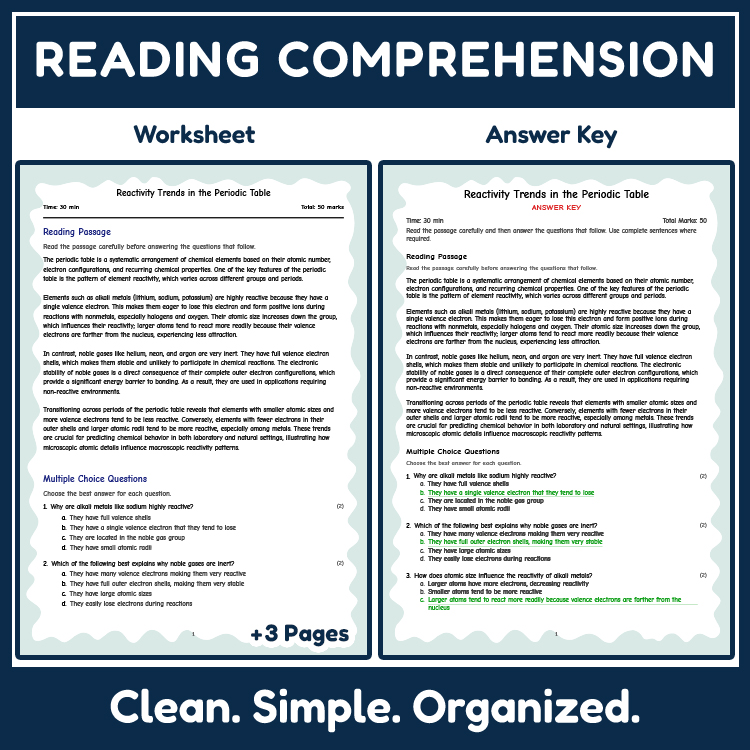
- Complete reading passage explaining reactivity trends in the periodic table
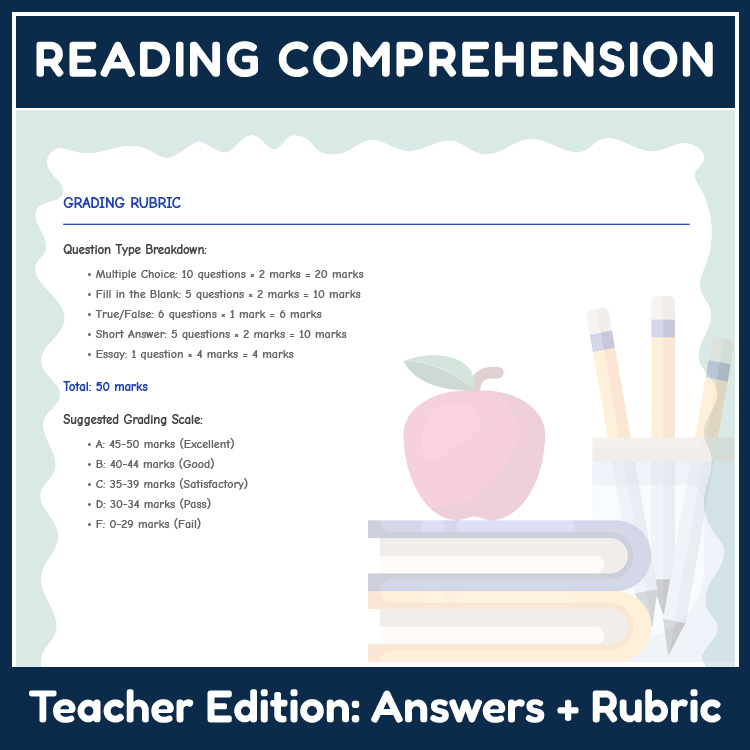
- 28 questions covering multiple formats: multiple choice, fill in the blank, true/false, short answer, and essay
- Answer key to facilitate quick grading and student feedback
- Printable PDF format for easy distribution and classroom integration
Key Learning Objectives
➡️ Describe the structure of the periodic table and how it relates to element reactivity
➡️ Explain why alkali metals like sodium are highly reactive
➡️ Identify the factors influencing reactivity, including atomic size and electron configuration
➡️ Analyze trends in noble gases and their inert behavior
➡️ Evaluate how atomic structure influences chemical bonding and reactions in different groups
Ideal Usage
Perfect for in-class lessons, as homework assignments, or supplementary practice during units on the periodic table and chemical reactivity. This worksheet is also ideal for review sessions, science clubs, or STEM activities to reinforce core chemistry concepts and encourage critical thinking among middle school students.
🚀 Dive into the world of chemical elements and make learning about reactivity exciting and accessible for your grade 7 students today!