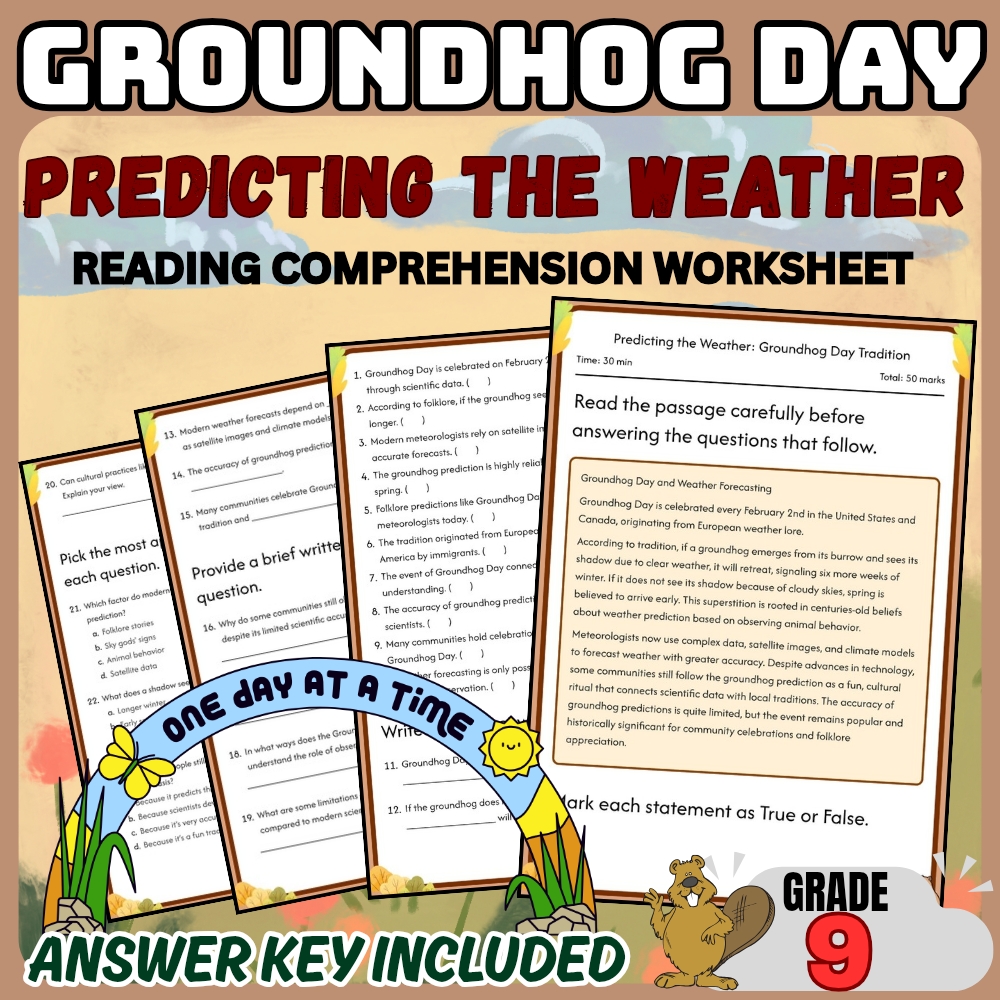
In a typical classroom during the early February weeks, teachers often find themselves looking for engaging ways to discuss the cultural aspects of weather forecasting while also reinforcing scientific concepts. Students may struggle to differentiate between traditional folklore and scientific methods used in meteorology. This worksheet provides a clear, print-ready resource that guides students through understanding the history of Groundhog Day, its cultural significance, and the scientific principles behind weather prediction.
What This Resource Helps Students Do
This worksheet encourages students to analyze the origins of Groundhog Day and assess how folklore compares to modern meteorological practices. It leads students to critically think about traditional beliefs versus scientific evidence, build reading comprehension skills, and articulate their understanding through short answers and multiple-choice questions. The progressive question structure promotes independent thinking, allowing students to apply what they learn about weather prediction methods and folklore traditions. Overall, it helps students connect cultural stories with scientific concepts, fostering both understanding and curiosity.
Inside the PDF
• 26 structured questions designed for step-by-step learning
• A print-ready format that requires no preparation
• PDF answer key with rubric
• Layout designed for easy photocopying and classroom use
How It Improves Learning
This worksheet enhances learning by providing a structured pathway from reading comprehension to critical thinking about weather prediction. The initial passage introduces the cultural background of Groundhog Day, engaging students with familiar traditions. The true-false questions reinforce understanding of the folklore and science differences, while the fill-in-the-blank and short-answer questions deepen critical analysis and encourage explanation. Multiple-choice questions allow for formative assessment, helping teachers identify misconceptions about scientific meteorology versus folklore. The overall design promotes clarity, confidence in distinguishing myth from science, and reinforces key concepts through varied question types. This resource makes learning about weather prediction accessible and meaningful, supporting students in developing both factual knowledge and analytical skills.
Core Skills Students Will Develop
- ➡️ Reading comprehension of informational texts about cultural traditions and science
- ➡️ Critical thinking about folklore versus scientific evidence
- ➡️ Analyzing cause-effect relationships in weather prediction
- ➡️ Using evidence to support scientific reasoning
- ➡️ Applying understanding through different question formats
Ways Teachers Use This Worksheet
This worksheet can be used in class as part of a cultural or science lesson, as an exit ticket, or for independent practice during a weather unit. It serves well for homework assignments, small-group discussions, or review sessions before assessments. Teachers also find it useful for early finishers as a meaningful enrichment activity that reinforces content while requiring minimal setup. Its print-and-go format makes it easy to incorporate into daily lesson plans effortlessly, providing a structured approach to exploring the intersection of folklore and science in weather prediction.
Why This PDF Saves Time
This resource arrives in a ready-to-print PDF format that eliminates the need for extensive preparation. Its clean layout ensures quick photocopying and immediate classroom use. The inclusion of an answer key with rubric offers a reliable grading guide for teachers, streamlining assessment. The format’s simplicity reduces classroom stress and helps maintain lesson flow, giving teachers a dependable tool for instructing about Groundhog Day and weather prediction in one integrated activity.
Overall, this worksheet is designed to support classroom instruction by providing a clear, comprehensive, and easy-to-implement resource. It encourages student engagement with a familiar cultural tradition, deepens understanding of scientific methods, and builds critical thinking skills all in a format that teachers can confidently use to enhance early February lessons. Ready to print and support student success with confidence! 😊