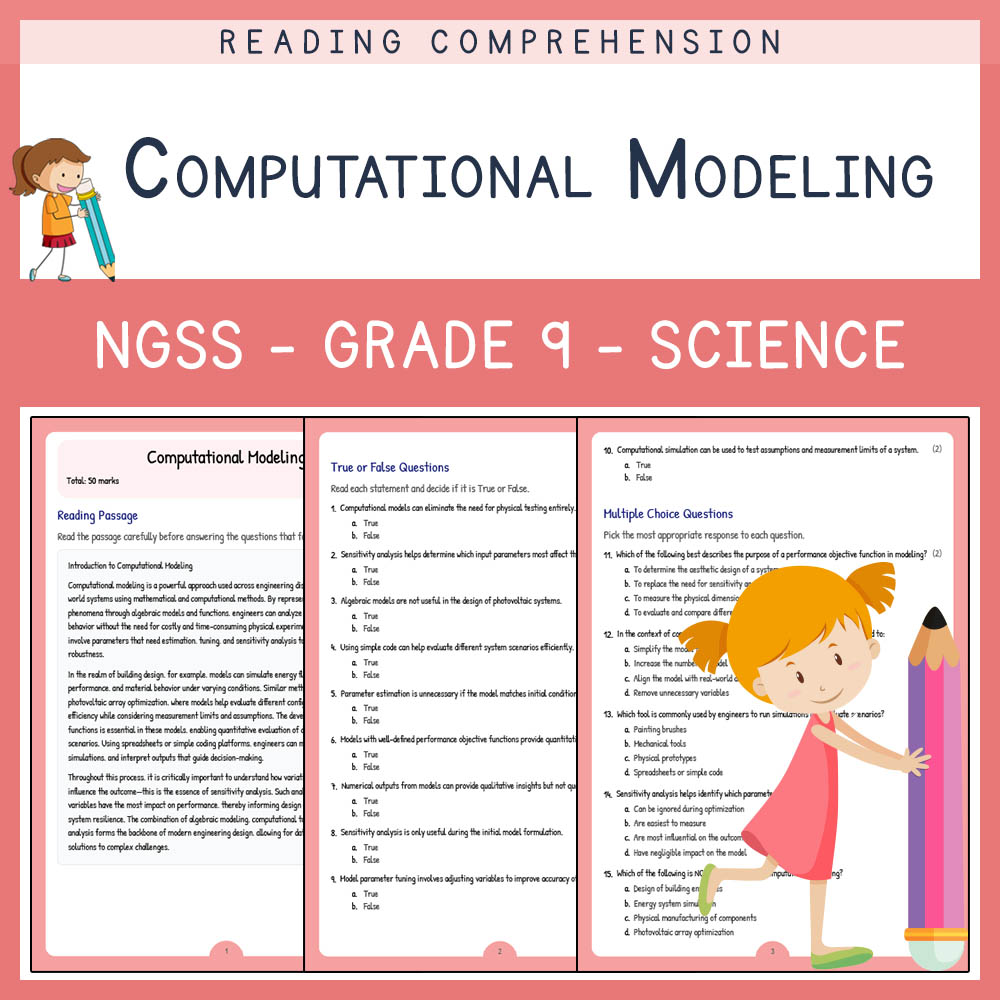
Are your Grade 9 students exploring the fascinating world of computational modeling in science? This engaging worksheet offers a comprehensive way to deepen understanding of how simulations and mathematical representations are transforming engineering and scientific practices today. Aligned with the Next Generation Science Standards (NGSS), this resource introduces students to the core concepts and applications of computational modeling, fostering critical thinking and real-world problem-solving skills. Whether used for classroom instruction or independent study, this worksheet guides students through reading, analysis, and practical application of computational modeling techniques—all within a PDF format that’s easy to print and distribute for a seamless teaching experience. ✅
What's Included
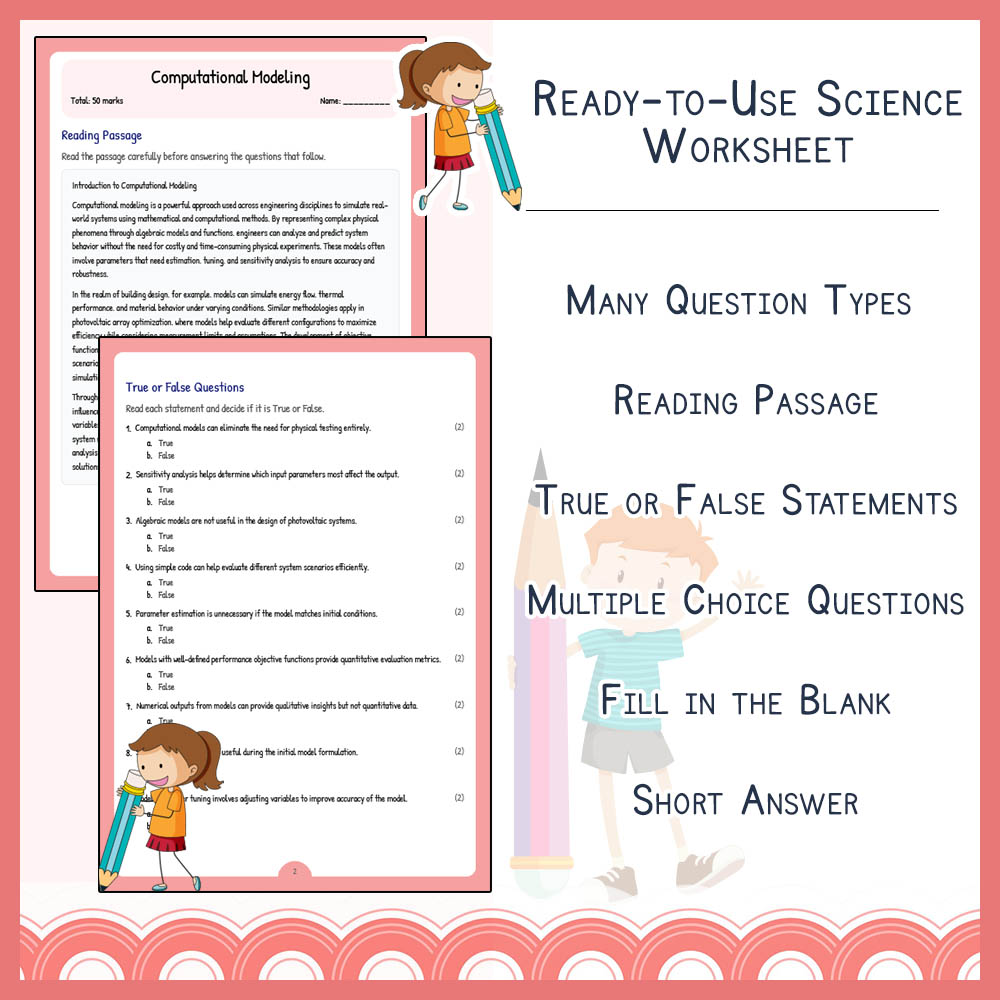
✅ Reading passage explaining the role and importance of computational modeling in modern engineering and science
✅ 10 true/false questions to assess understanding of key concepts
✅ 5 multiple-choice questions to evaluate comprehension of modeling purpose and techniques
✅ 5 fill-in-the-blank exercises to reinforce terminology and processes
✅ 5 short answer questions to develop explanatory and analytical skills
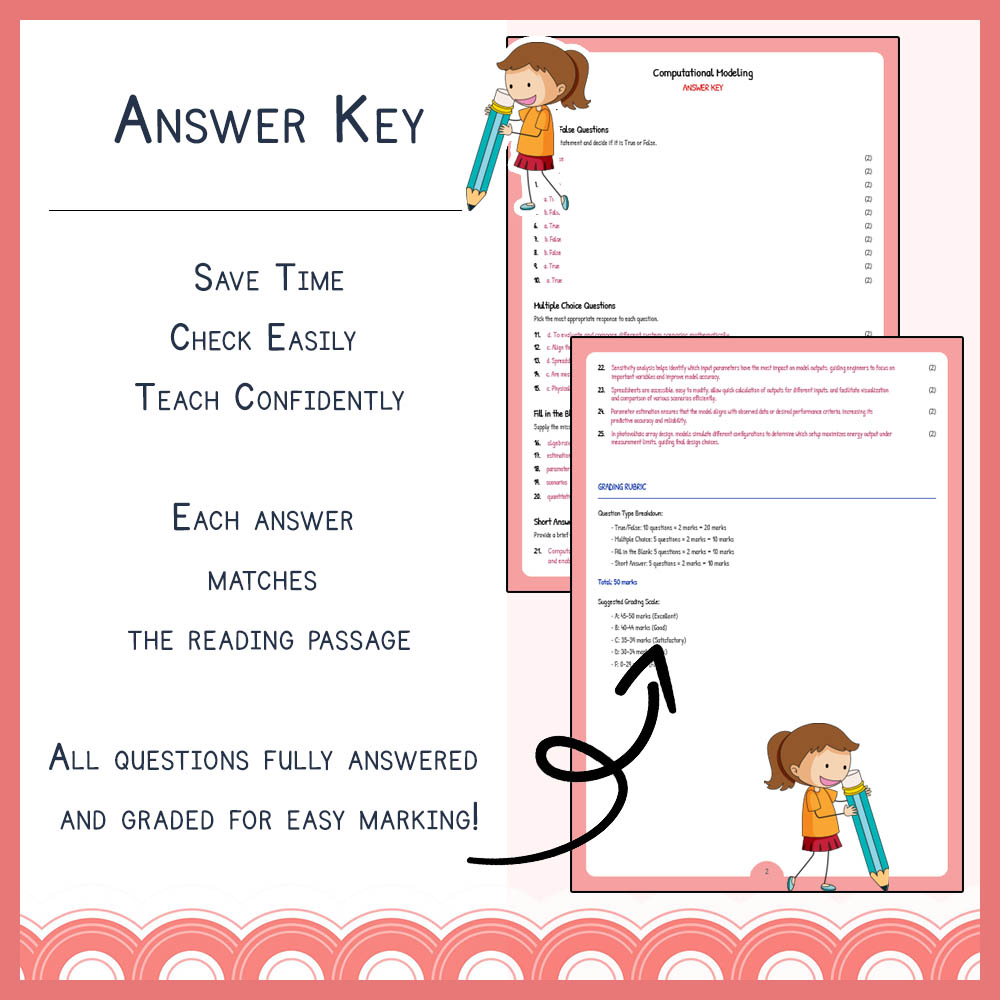
✅ All components provided as printable PDF worksheets with an answer key and rubric for easy grading and review
✅ Designed without digital dependencies, ensuring compatibility with any classroom environment
Key Concepts Covered
➡️ Computational modeling – Using mathematical and computer-based techniques to simulate real-world systems for analysis and prediction
➡️ Sensitivity analysis – Identifying which input parameters most influence output accuracy in models
➡️ Parameter estimation – Adjusting model variables to fit observed data or achieve desired outcomes
➡️ Model formulation – Creating mathematical representations to depict complex systems
➡️ Performance objective functions – Defining criteria to evaluate model effectiveness and accuracy
Question Types / Formats
1. Reading comprehension based on a detailed passage discussing the significance of computational modeling
2. True or false questions to quickly assess understanding of fundamental principles
3. Multiple-choice questions to evaluate knowledge of specific techniques and concepts
4. Fill-in-the-blank exercises designed to reinforce vocabulary and processes
5. Short answer prompts to encourage students to explain concepts and applications in their own words
Teacher Benefits
✅ Provides a structured, standards-aligned resource that enhances lesson planning and delivery
✅ Facilitates targeted assessment of students’ grasp of computational modeling concepts
✅ Includes detailed answer key with rubric, simplifying grading and feedback
✅ Printable PDF format allows for easy distribution and flexible classroom use
✅ Supports differentiated instruction through varied question types and difficulty levels
Student Benefits
✅ Deepens understanding of how modeling supports engineering and scientific discovery
✅ Builds critical thinking and problem-solving skills through applied questions
✅ Reinforces key terminology and concepts with varied question formats
✅ Encourages analytical writing and explanation of complex ideas
✅ Prepares students for future STEM challenges by fostering practical understanding of modeling techniques
Perfect For
➡️ Classroom instruction and guided practice
✅ Homework assignments to reinforce class material
➡️ Independent study or review sessions
✅ Modeling and engineering club activities
➡️ Test preparation and formative assessments
✅ Reinforcement of NGSS-aligned science standards in a clear, engaging format
Ready to enhance your Science teaching? Download this dynamic worksheet today and inspire your students to explore the power of computational modeling! 🚀