Are your Grade 9 students exploring trophic structure and ecological relationships?
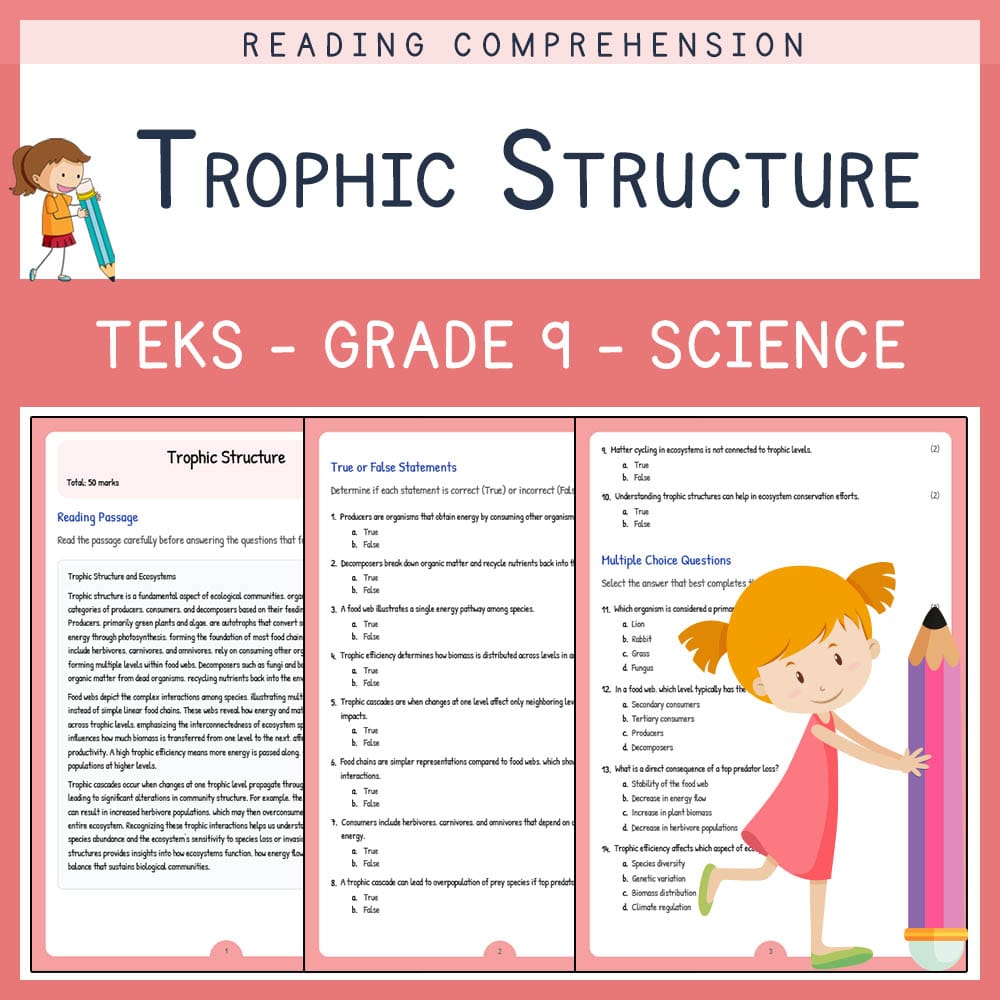
🌿 This comprehensive PDF worksheet Elena is designed to deepen understanding of trophic levels, food webs, and energy flow, all aligned with TEKS standards. It provides a structured, engaging way for students to analyze ecological hierarchies through a variety of question formats while offering teachers a ready-to-use assessment or practice activity. The included answer key with rubric makes grading straightforward and effective, making this resource ideal for motivating and assessing student comprehension.
What’s Included
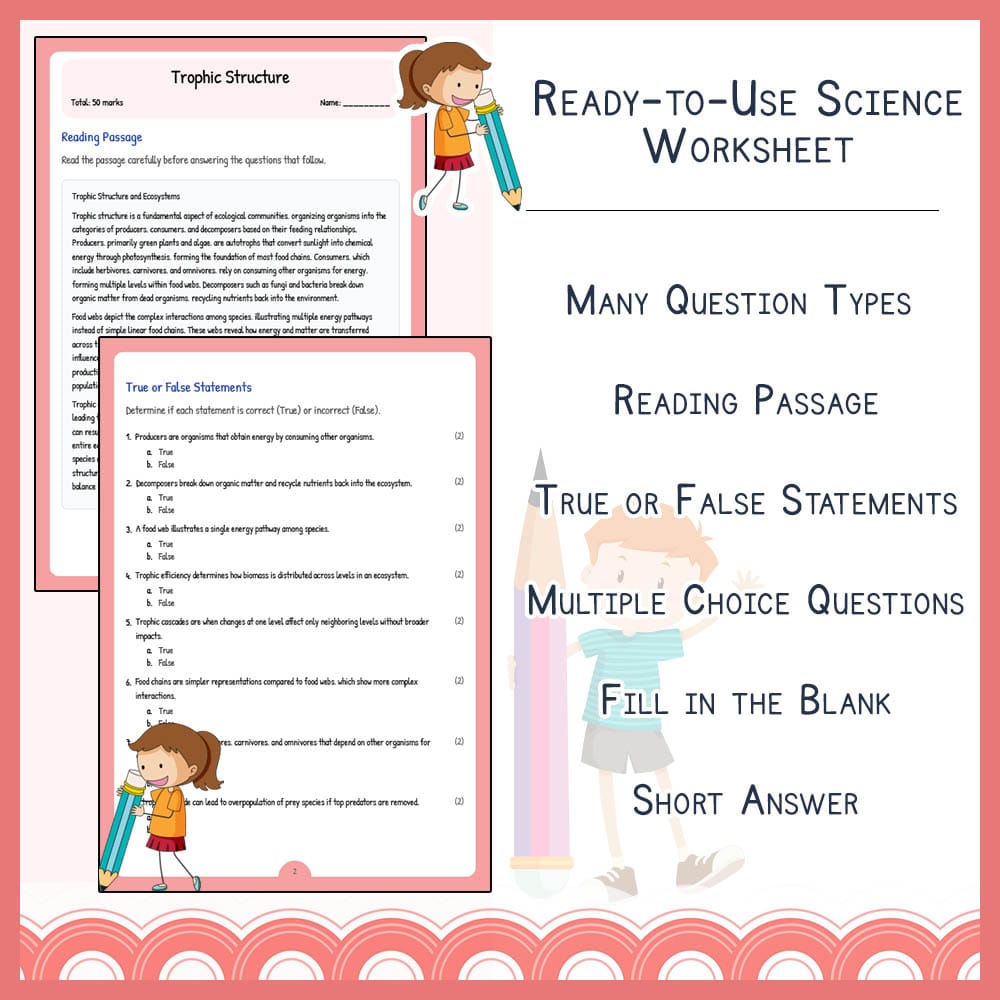
✅ Reading passage explaining trophic structure and ecological relationships
✅ 1 comprehension question based on the passage
✅ 10 true or false statements to reinforce key concepts
✅ 5 multiple-choice questions targeting critical thinking about food webs and energy transfer
✅ 5 fill-in-the-blank exercises focusing on vocabulary and core concepts
✅ 5 short answer questions assessing students' ability to articulate understanding
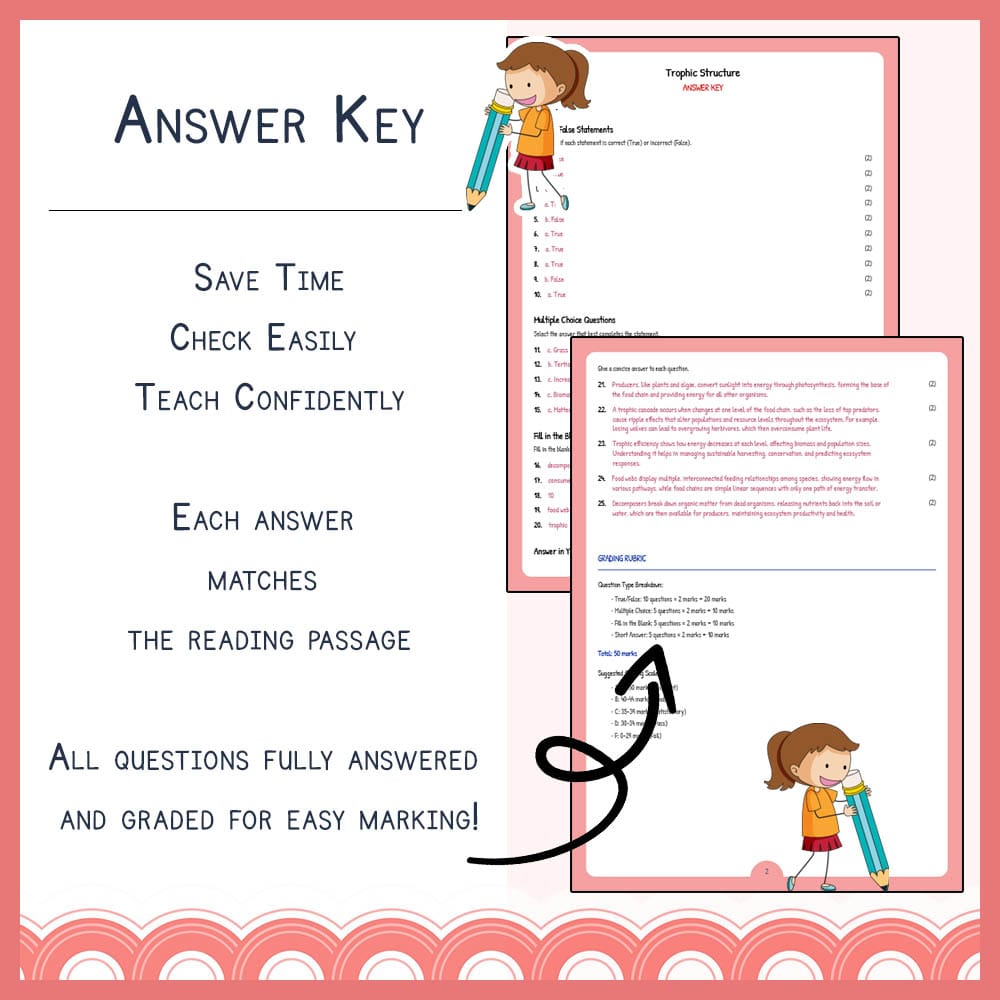
✅ PDF worksheet and PDF answer key with rubric for easy printing and consistent assessment
✅ Designed specifically for classroom instruction, homework, or review sessions
Key Concepts Covered
➡️ Trophic levels – Organisms are classified into levels based on their feeding relationships in an ecosystem, starting with producers and moving upward through herbivores and predators.
➡️ Food webs and chains – Visual representations of feeding relationships that illustrate how energy is transferred through an ecosystem.
➡️ Producers and consumers – Organisms that produce energy from sunlight versus those that consume other organisms for energy.
➡️ Nutrient recycling and decomposers – The vital role decomposers play in breaking down organic matter and returning nutrients to the environment.
➡️ Trophic cascades – Ecological phenomena where changes at one trophic level impact multiple levels, influencing overall ecosystem stability.
Question Types / Formats
1. Reading comprehension passage for context
2. True or false statements to test foundational knowledge
3. Multiple-choice questions to challenge analytical skills
4. Fill-in-the-blank exercises to reinforce vocabulary and key concepts
5. Short answer prompts encouraging explanation and critical thinking
Teacher Benefits
✅ Easy-to-use PDF format allows for quick printing and distribution in the classroom
✅ Includes varied question types to accommodate different learning styles and assessment needs
✅ Clarifies understanding of complex ecological concepts aligned with TEKS standards
✅ Provides an answer key with rubric for efficient grading and feedback
✅ Supports both formative and summative assessment strategies to enhance science instruction
Student Benefits
✅ Promotes active engagement through diverse question formats
✅ Reinforces understanding of trophic relationships and energy flow
✅ Encourages critical thinking and explanation skills with short answer questions
✅ Builds vocabulary and conceptual knowledge vital for ecology studies
✅ Supports independent learning and review outside direct instruction
Perfect For
➡️ Classroom instruction and independent practice
✅ Homework assignments that reinforce daily lessons
➡️ Small group activities for collaborative learning
➡️ Assessments to measure understanding of ecological concepts
✅ Exit tickets or quick checks for formative evaluation
➡️ Subplans or substitute teacher activities for consistent coverage
Ready to enhance your Science teaching? Download this dynamic worksheet today and inspire your students to explore ecological relationships and energy flow! 🚀