
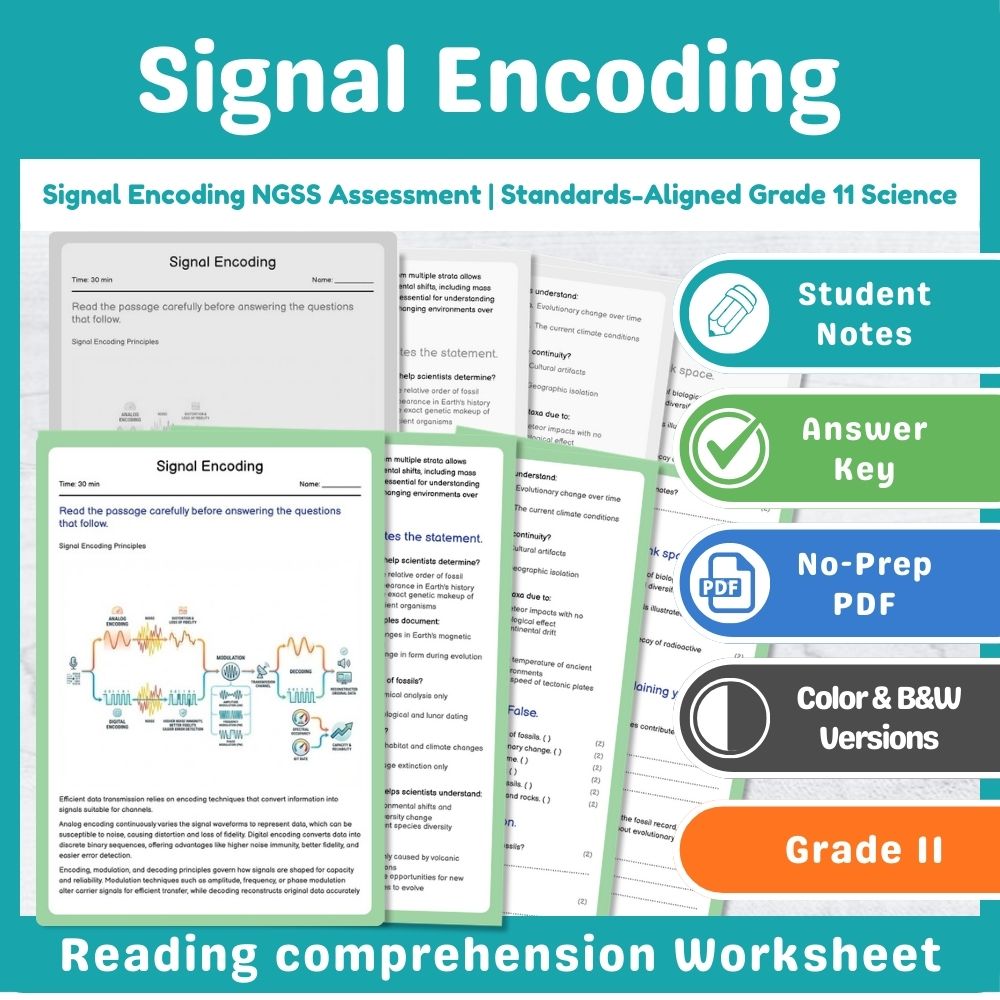
Signal Encoding NGSS Assessment | Standards-Aligned Grade 11 Science
$5.00
Prism Point Learning
·2 followers·13 sales
SubjectScienceGradeGrade 11
Learning Objectives
Compare advantages of digital and analog transmission and storage focusing on bandwidth, noise, and fidelity.
Explain the principles of encoding, modulation, and decoding in communication systems.
Evaluate capacity and reliability of transmission methods using quantitative measures such as bit rate and signal-to-noise ratio.
Reviews & Feedback
Loading reviews...
Questions & Answers
Loading questions…
About this worksheet
Related categories
Frequently asked questions
Who is Signal Encoding NGSS Assessment | Standards-Aligned Grade 11 Science designed for?
Signal Encoding NGSS Assessment | Standards-Aligned Grade 11 Science is designed for Grade 11 students and Science learners and can be used in classrooms, homeschool, or independent practice.
How do I download Signal Encoding NGSS Assessment | Standards-Aligned Grade 11 Science?
Add it to your cart and complete checkout. After payment, you can download immediately from your account, and you'll also receive a download link by email.
What type of worksheet is this?
Signal Encoding NGSS Assessment | Standards-Aligned Grade 11 Science is a assessment worksheet for Science, suitable for Grade 11 level.
Similar Products

Grade 9 Science Worksheet: Seismic Signals | Standards-Aligned Assessment
$5.00

Signal Encoding Worksheet | NGSS Grade 9 Science Assessment
$5.00

Signal Integration BC Assessment | Standards-Aligned Grade 9 Science Worksheet
$5.00

Grade 11 Science | Signal Encoding Worksheet (NGSS Aligned + PDF)
$3.00

Grade 11 Science | Signal Encoding Worksheet & Answer Key – NGSS Aligned
$2.00