
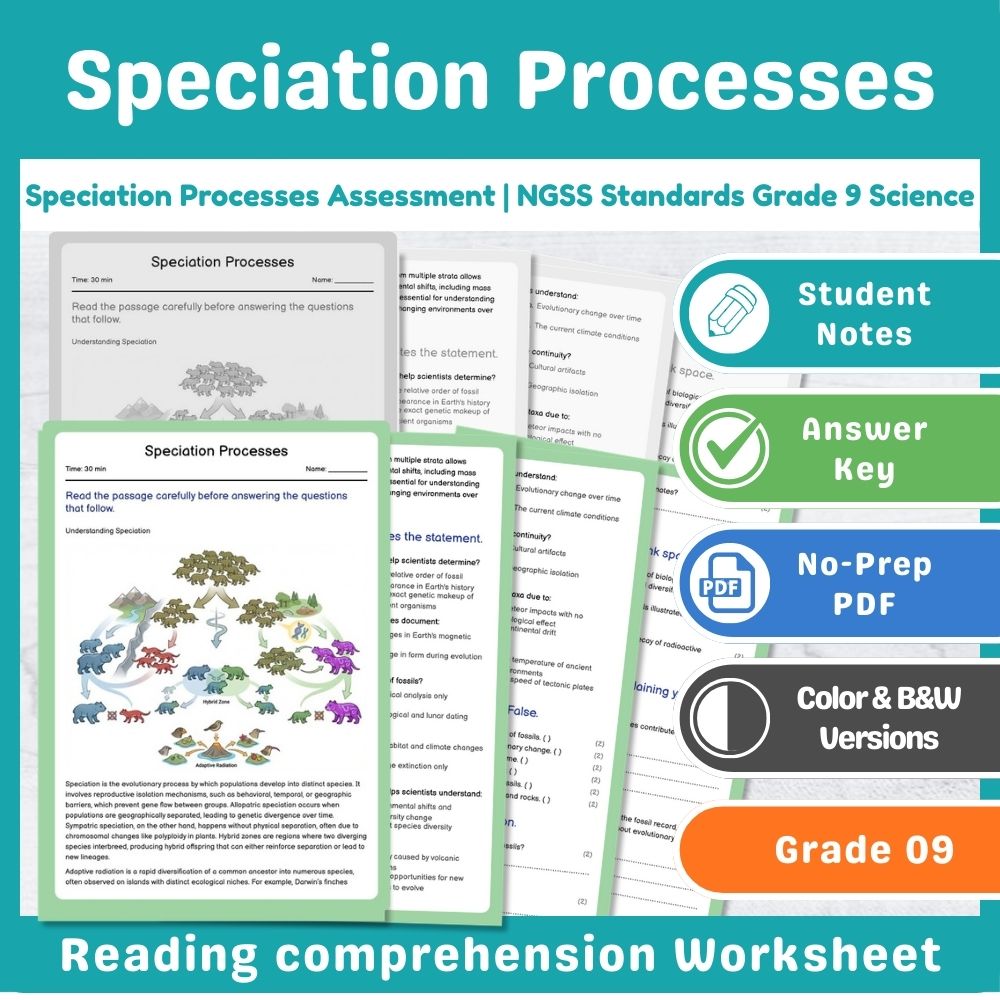
Speciation Processes Assessment | NGSS Standards Grade 9 Science
$5.00
Prism Point Learning
·2 followers·14 sales
SubjectScienceGradeGrade 9
Learning Objectives
Explain the mechanisms leading to the formation of new species, including reproductive isolation and genetic divergence.
Differentiate between allopatric and sympatric speciation models with examples.
Describe how hybrid zones, polyploidy, and adaptive radiation contribute to speciation.
Reviews & Feedback
Loading reviews...
Questions & Answers
Loading questions…
About this worksheet
Related categories
Frequently asked questions
Who is Speciation Processes Assessment | NGSS Standards Grade 9 Science designed for?
Speciation Processes Assessment | NGSS Standards Grade 9 Science is designed for Grade 9 students and Science learners and can be used in classrooms, homeschool, or independent practice.
How do I download Speciation Processes Assessment | NGSS Standards Grade 9 Science?
Add it to your cart and complete checkout. After payment, you can download immediately from your account, and you'll also receive a download link by email.
What type of worksheet is this?
Speciation Processes Assessment | NGSS Standards Grade 9 Science is a assessment worksheet for Science, suitable for Grade 9 level.
Similar Products

Speciation Processes Assessment | TEKS Standards Grade 10 Science
$5.00

Speciation Processes Worksheet | Science Assessment for Grade 12 BC Standards
$5.00

Grade 10 Science | Speciation Processes Worksheet (NGSS10 PDF)
$5.00

Grade 7 Speciation Processes Worksheet | NGSS Practice & PDF
$5.00

Speciation Processes worksheet | Assessment Grade 10 Science printable PDF
$5.00