
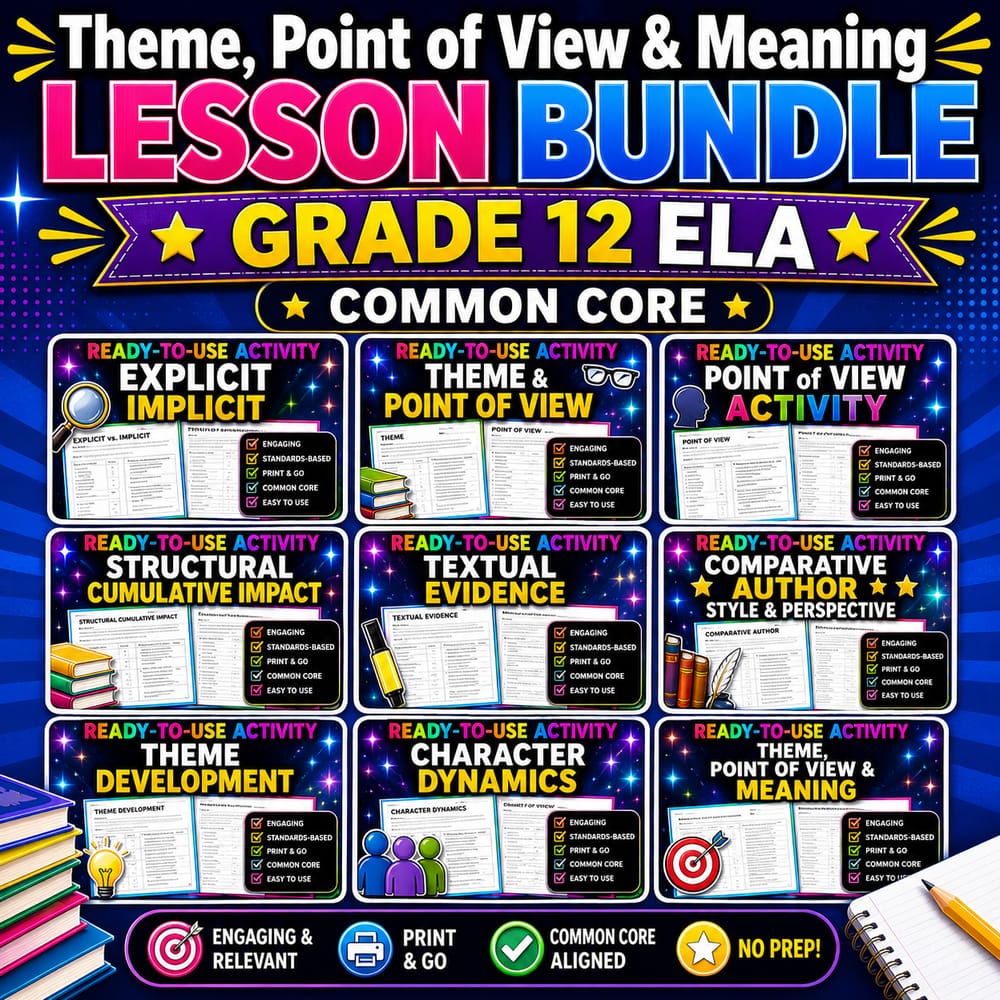
Theme, Point of View & Meaning Lesson Bundle | Grade 12 ELA | Common Core
$21.60$27.00Save $5.40
Sunny Desk Resources
·2 followers·18 sales
SubjectELAGradeGrade 12Pages99 Pages
What’s included
9 worksheets · 99 pages · Save $5.40 (20%) · prices shown inside the bundle
 Explicit vs Implicit Meaning Worksheet Grade 12 ELA CCSS Analysis
- Distinguish explicit meaning from implicit meaning in literary texts
- Use textual evidence to explain how quoted statements may differ from the ideas suggested underneath them
- Analyze how patterns, tensions, and subtext shape interpretation
$2.40$3.00 Theme Interaction Worksheet Grade 12 ELA CCSS Analysis Activity
- Analyze how two or more themes interact within a literary work to create layered meaning.
- Explain how the development of one theme can reinforce, complicate, or reshape another theme.
- Support theme-interaction claims with specific textual evidence and well-reasoned interpretation.
$2.40$3.00 Point of View Worksheet Grade 12 ELA CCSS Literary Analysis Activity
- Analyze how point of view shapes what a reader knows, feels, and assumes about events and characters.
- Evaluate narrator reliability by using evidence from word choice, access to thoughts, and what information is withheld.
- Explain how perspective influences characterization and the distribution of sympathy or skepticism.
$2.40$3.00 Structural Cumulative Impact Worksheet Grade 12 ELA CCSS Analysis
- Analyze how an author’s structural choices (sequencing, pacing, and connections) shape meaning
- Explain cumulative impact by tracing how early details gain new significance later in a text
- Evaluate how repetition with variation and patterned transitions influence suspense and moral judgment
$2.40$3.00 Textual Evidence Worksheet Grade 12 ELA CCSS Reading Analysis
- Define textual evidence and distinguish it from plot summary or personal opinion.
- Use explicit details from a passage to support a claim with clear connections.
- Explain how inferences can be grounded in the language of a text using specific words and phrases.
$2.40$3.00 Comparative Author Representation Worksheet Grade 12 ELA CCSS
- Compare how two authors represent the same subject through craft choices such as tone, point of view, and imagery.
- Explain how thematic emphasis and narrative framing shape interpretation and reader judgment.
- Evaluate what each text highlights, omits, or complicates to support different meanings and significance.
$2.40$3.00 Figurative Language Meaning Worksheet Grade 12 ELA CCSS Analysis
- Identify how figurative language (metaphor, symbolism, imagery) shapes meaning beyond the literal level
- Explain how recurring imagery and devices guide readers toward particular interpretations
- Use textual evidence to support claims about theme, character development, and interpretive possibilities
$2.40$3.00 Theme Development Worksheet Grade 12 ELA CCSS Literary Analysis
- Identify a theme by tracing recurring conflicts, choices, and outcomes across a text rather than treating theme as a single label.
- Explain how specific moments of conflict or resolution contribute to the growth of a theme over time.
- Analyze how a recurring symbol shifts in meaning as stakes and context change.
$2.40$3.00 Character Dynamics Worksheet Grade 12 ELA CCSS Literary Analysis
- Analyze how character motivations drive conflict and shape cause-and-effect outcomes in a text.
- Explain how shifting alliances and power dynamics in dialogue change characters’ decisions over time.
- Evaluate how evolving beliefs contribute to theme and influence turning points in the plot.
$2.40$3.00
Reviews & Feedback
Loading reviews...
Questions & Answers
Loading questions…
About this bundle
Related categories
Frequently asked questions
Who is Theme, Point of View & Meaning Lesson Bundle | Grade 12 ELA | Common Core designed for?
Theme, Point of View & Meaning Lesson Bundle | Grade 12 ELA | Common Core is designed for Grade 12 students and ELA learners and can be used in classrooms, homeschool, or independent practice.
How do I download Theme, Point of View & Meaning Lesson Bundle | Grade 12 ELA | Common Core?
Add it to your cart and complete checkout. After payment, you can download immediately from your account, and you'll also receive a download link by email.
Similar Products

Theme, Point of View & Character Development Bundle: Grade 7 ELA Common Core
$25.60$32.00

Grade 7 Theme, Point of View & Evidence Literary ELA Lesson Bundle (CCSS)
$19.20$24.00

6th Grade ELA Theme, Point of View & Evidence Lesson Bundle - General ELA
$38.40$48.00

Grade 12 Theme & Evidence ELA lesson bundle for Daily Reading | BC
$44.80$56.00

Grade 8 ELA Theme Development & Literary Analysis Lesson Bundle | Common Core
$38.40$48.00