
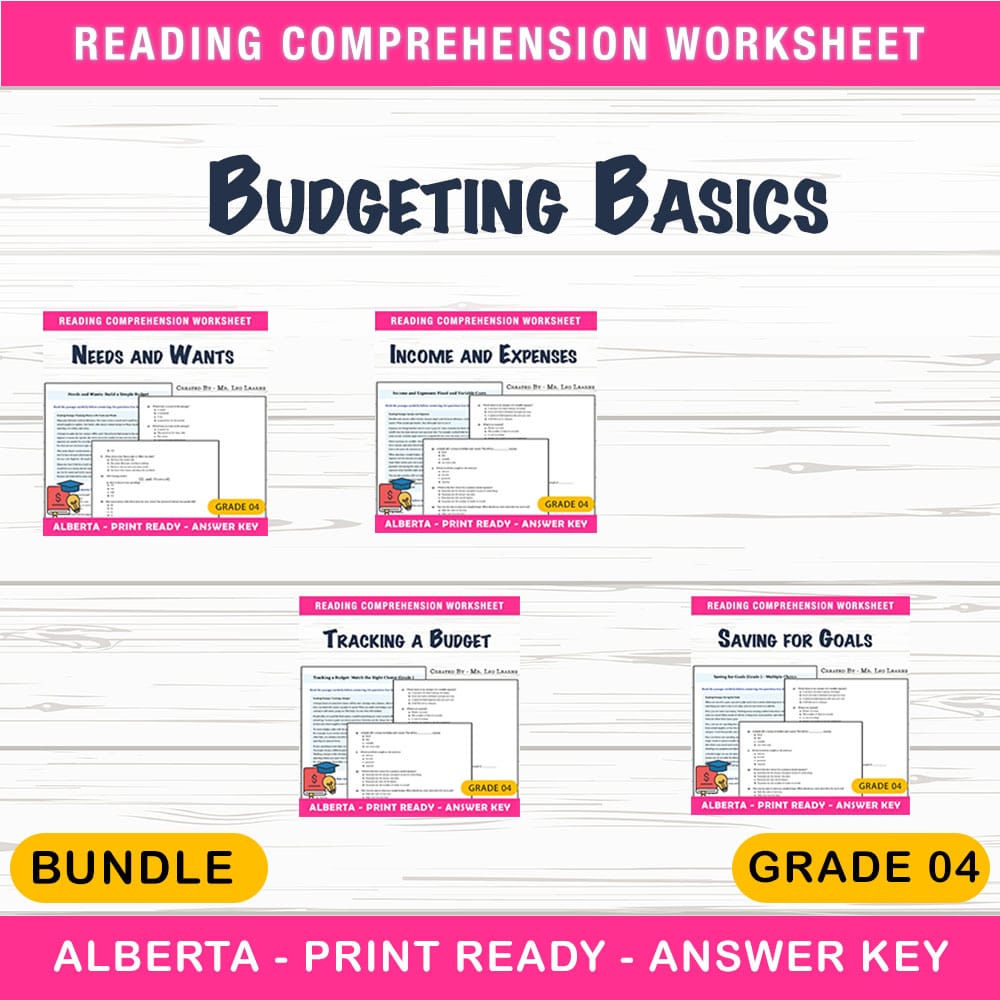
Budgeting Basics Lesson Bundle | Grade 4 Financial Literacy | Alberta
$9.60$12.00Save $2.40
The Resource Hub
·2 followers·9 sales
GradeGrade 4Pages32 Pages
What’s included
4 worksheets · 32 pages · Save $2.40 (20%) · prices shown inside the bundle
 Grade 4 Financial Literacy Budgeting Worksheet | Needs & Wants | Alberta
- Identify the difference between needs and wants using examples
- Match budget terms to their meanings, including income and expense
- Choose a plan for using money to cover needs first
$2.40$3.00 Grade 4 Financial Literacy Income & Expenses Worksheet | Alberta Budgeting
- Define fixed expense and variable expense.
- Identify whether an expense is likely to stay the same or change.
- Choose the best word to complete sentences about payments and amounts.
$2.40$3.00 Grade 4 Financial Literacy Saving Goals Multiple Choice Worksheet | Alberta
- Define and use financial literacy vocabulary such as track, category, record, spend, and save
- Identify how recording and categorizing purchases helps a person track spending
- Choose strategies to save money for a goal by making simple plans and records
$2.40$3.00 Grade 4 Financial Literacy Budget Tracking Matching Worksheet | Alberta
- Define and use budget words such as balance, goal, priority, amount, and leftover
- Identify how to track spending to keep a budget balanced
- Choose the best action for a budget goal using needs, saving, and simple planning
$2.40$3.00
Reviews & Feedback
Loading reviews...
Questions & Answers
Loading questions…
About this bundle
Related categories
Frequently asked questions
Who is Budgeting Basics Lesson Bundle | Grade 4 Financial Literacy | Alberta designed for?
Budgeting Basics Lesson Bundle | Grade 4 Financial Literacy | Alberta is designed for Grade 4 students and can be used in classrooms, homeschool, or independent practice.
How do I download Budgeting Basics Lesson Bundle | Grade 4 Financial Literacy | Alberta?
Add it to your cart and complete checkout. After payment, you can download immediately from your account, and you'll also receive a download link by email.
Similar Products

Grade 5 Financial Literacy Lesson Bundle – Alberta Budgeting & Banking
$33.60$48.00

Grade 9 Math Lesson Group: Financial Literacy and Budgeting Skills Ontario
$60.00$75.00

Grade 4 Financial Literacy Lesson Bundle | Alberta Banking & Budgeting
$33.60$48.00

Planning and Saving Financial Literacy Lesson Bundle – Grade 5 Alberta
$9.60$12.00