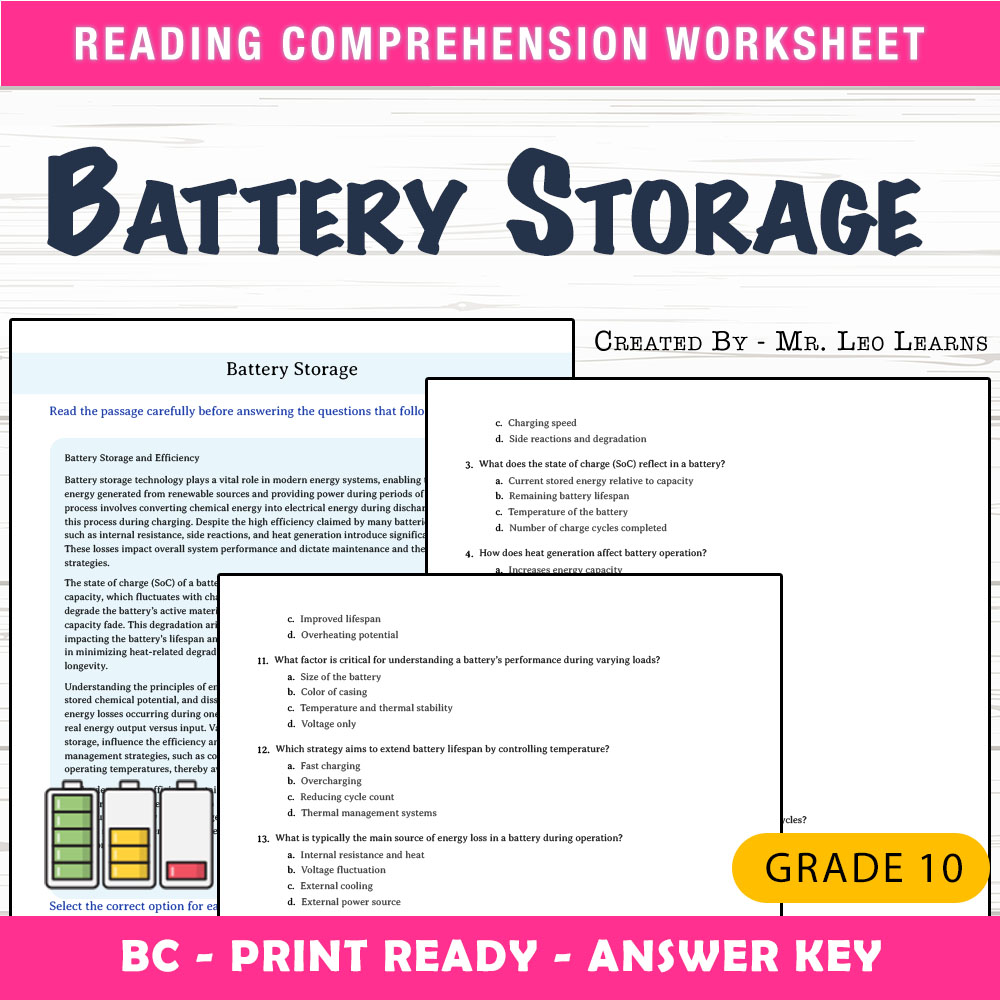
Imagine standing at the front of the classroom as students settle into their seats, ready to engage with a new science topic. Many students find understanding the intricacies of battery storage and energy systems challenging, especially when it comes to grasping the processes involved in energy transformation and factors affecting battery performance. This worksheet provides a clear and straightforward assessment that helps students connect theoretical concepts with real-world applications. Designed to reinforce learning and promote independent thinking, it offers teachers a reliable resource to gauge understanding without added preparation time.
What This Resource Helps Students Do
This worksheet guides students through key aspects of battery technology, clarifying how energy is stored, released, and affected by various factors. Through targeted multiple-choice questions and a reading passage, students develop comprehension of complex concepts such as energy transformation during battery discharge, capacity fade, and the importance of efficient storage systems. It encourages critical thinking as students analyze different scenarios related to energy systems, promoting both recall and application of core science principles. As students work through the questions, they build confidence in explaining technological processes and understanding their impact on energy sustainability.
Inside the PDF
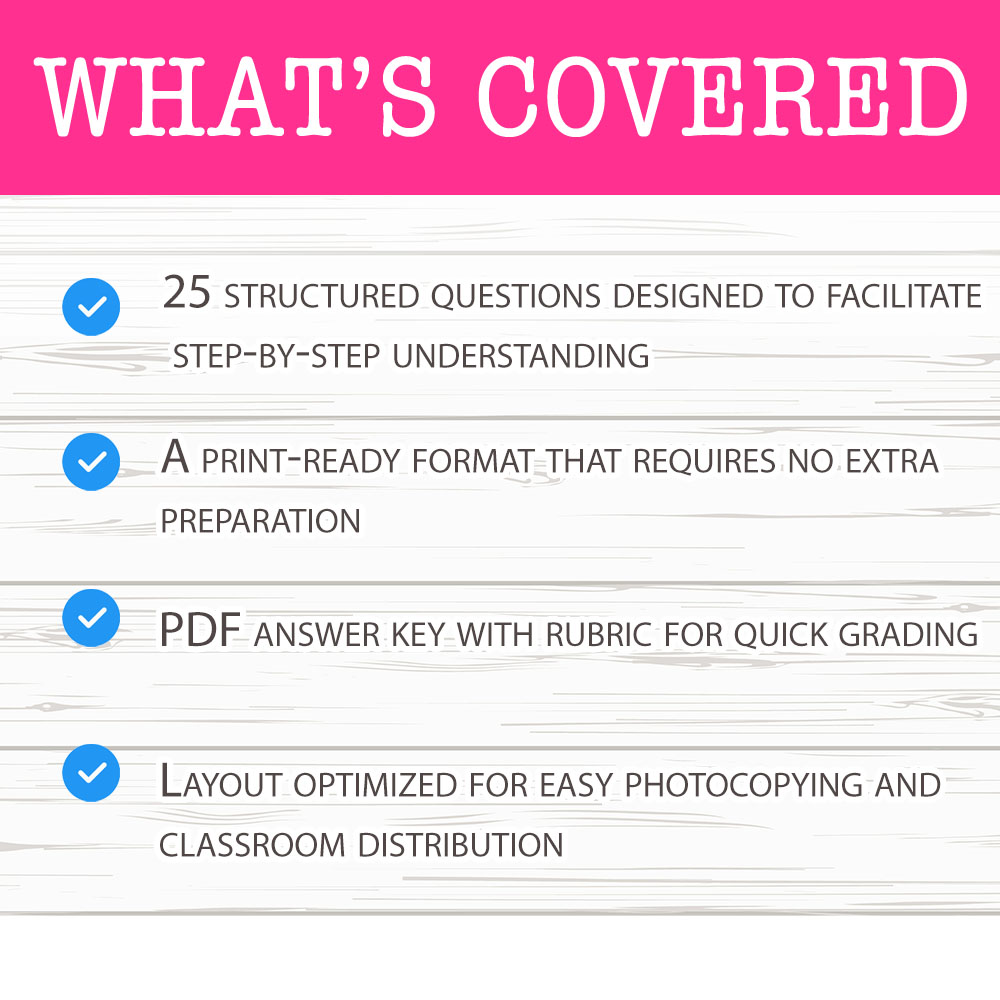
• 25 structured questions designed to facilitate step-by-step understanding
• A print-ready format that requires no extra preparation
• PDF answer key with rubric for quick grading
• Layout optimized for easy photocopying and classroom distribution
How It Improves Learning
This worksheet enhances student understanding by breaking down complex concepts into manageable parts, allowing for gradual mastery. The multiple-choice format fosters active engagement, encourages students to think critically, and applies their knowledge in practical contexts. The presence of a reading passage helps students connect scientific terminology to real-world energy storage applications, reinforcing their comprehension. By working through these questions, students transition from confusion to clarity, gaining confidence in both theoretical understanding and practical reasoning. The clear layout and focused questions support independent reading and self-assessment, making it easier for teachers to monitor progress and identify areas for further exploration.
Core Skills Students Will Develop
- ➡ Understanding energy transformations within batteries
- ➡ Analyzing factors that affect battery capacity
- ➡ Interpreting technical information from reading passages
- ➡ Applying scientific reasoning to real-world energy systems
Ways Teachers Use This Worksheet
This resource is flexible enough to be used in many ways: as part of classwork during lessons on energy systems, for independent practice or review at the end of a lesson, as a formative assessment to check understanding, in small-group settings to facilitate discussion, or as an early finisher activity. It’s an effective tool for reinforcing key concepts, introducing new topics, or providing homework that promotes critical thinking. Teachers appreciate the straightforward format that reduces class preparation time while supporting meaningful student engagement throughout.
Why This PDF Saves Time
This worksheet is designed in a print-and-go format, allowing teachers to distribute it immediately without extra setup. The clear layout, combined with a comprehensive answer key, simplifies assessment and grading. It provides a consistent evaluation tool that aligns with classroom goals and standards, ensuring quick, reliable feedback. This efficiency allows teachers to dedicate more class time to instruction and student interaction, making it an essential addition to busy science classrooms.
Overall, this printable PDF worksheet supports teachers in delivering effective instruction, boosting student confidence and understanding of battery storage technology. Ready to use and easy to reproduce, it helps create a structured learning environment where students can explore core concepts and develop critical skills with confidence. 😊