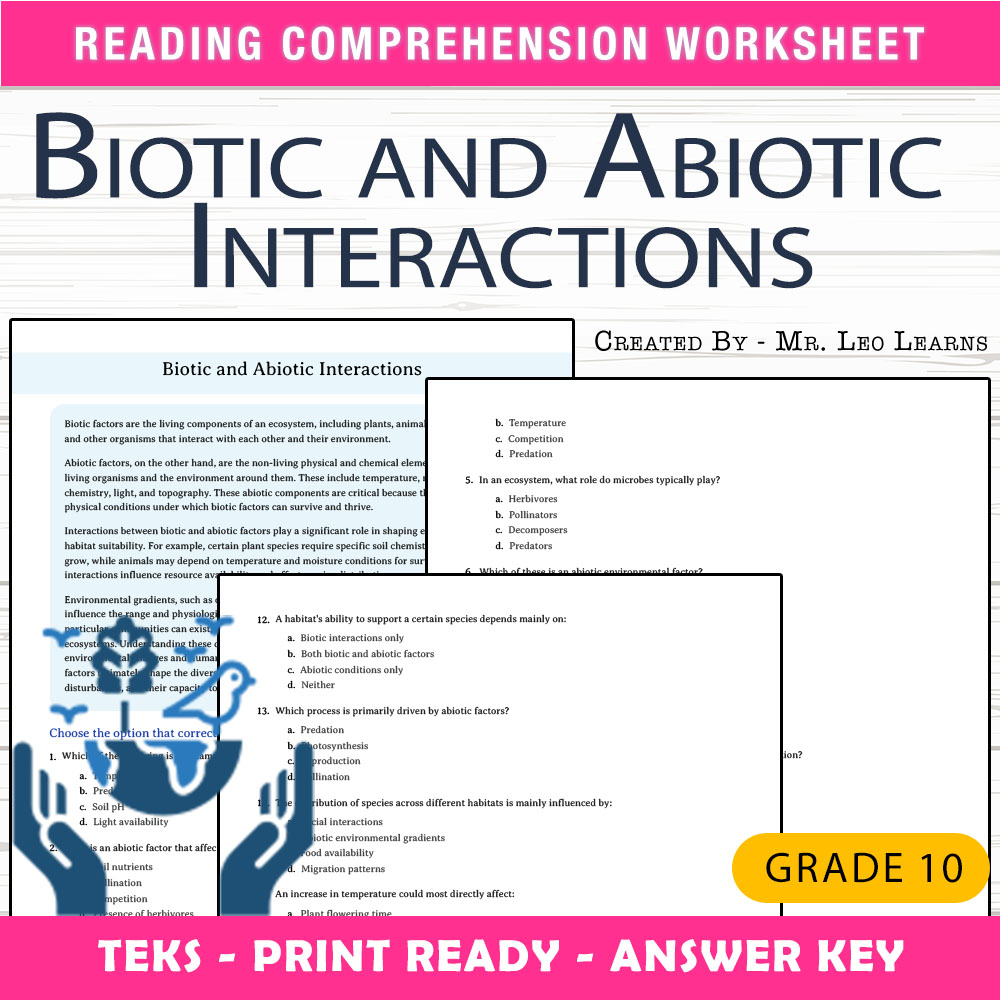
Imagine a classroom where students are exploring the complex relationships within ecosystems, trying to identify how living and non-living elements interact and influence each other. As the teacher facilitates this discussion, it can sometimes be challenging to gauge student understanding or provide immediate, meaningful practice. This worksheet offers a straightforward, print-ready solution for reinforcing the concepts of biotic and abiotic factors, making it easier to clarify misconceptions and deepen comprehension.
What This Resource Helps Students Do
This worksheet guides students through understanding the fundamental differences between biotic and abiotic factors in ecosystems. It provides structured questions that develop critical thinking and support independent learning. Students will be able to identify examples of biotic factors such as plants, animals, fungi, and microbes, as well as recognize abiotic factors like temperature, sunlight, and soil chemistry. The activity aims to build confidence in analyzing ecosystems and understanding how these components interact. It also encourages students to apply their knowledge to new scenarios, fostering deeper comprehension of ecology principles.
Inside the PDF
• A reading passage explaining biotic and abiotic factors
• 25 multiple-choice questions designed for step-by-step understanding
• A clear, printable layout ready for immediate classroom use
• An answer key with rubric for quick assessment and feedback
How It Improves Learning
This worksheet creates a structured environment where students can learn at their own pace, reinforcing key ecological concepts. The reading passage introduces essential vocabulary and concepts, providing context that supports comprehension. Multiple-choice questions challenge students to analyze different examples, strengthening their reasoning skills. The straightforward format helps reduce confusion, allowing students to transition from basic recall to applying concepts confidently. Teachers can use this resource for formative assessment or reinforcement after instruction, knowing it aligns with TEKS standards. The detailed answer key makes grading efficient and transparent, enabling timely feedback and targeted support where needed. Overall, students gain a clearer understanding of ecosystems, which enhances their ability to explain and analyze complex ecological relationships with confidence.
Core Skills Students Will Develop
- ➡️ Identifying biotic and abiotic factors in ecosystems
- ➡️ Applying ecological concepts to real-world scenarios
- ➡️ Developing analytical reasoning skills
- ➡️ Understanding ecosystem interactions
Ways Teachers Use This Worksheet
This resource can be incorporated into various instructional activities: as classwork during ecology lessons, homework to reinforce concepts learned in class, or as a quick assessment to gauge student understanding. It serves well for small-group practice, review sessions, or early finisher tasks to keep students engaged productively. Additionally, it offers a reliable print-and-go option for substitute teachers or for quick formative assessments during busy days, ensuring consistency and continuity in instruction.
Why This PDF Saves Time
The worksheet comes in a ready-to-print PDF format, eliminating the need for preparation time. Its well-organized layout supports efficient photocopying for whole-class use. Teachers can confidently distribute this resource knowing it aligns with curriculum standards and provides a comprehensive, assessment-ready tool. The included answer key with rubric streamlines grading, helping teachers provide prompt, specific feedback without extra effort.
Whether used as a class activity, review, or assessment, this printable PDF worksheet is designed to support understanding of ecological interactions in a clear and practical way. It requires no additional setup and is ideal for maintaining consistent, classroom-centered teaching. With this resource, teachers can focus more on guiding discussions and supporting student learning, knowing that the foundation of understanding is firmly established. 🌱