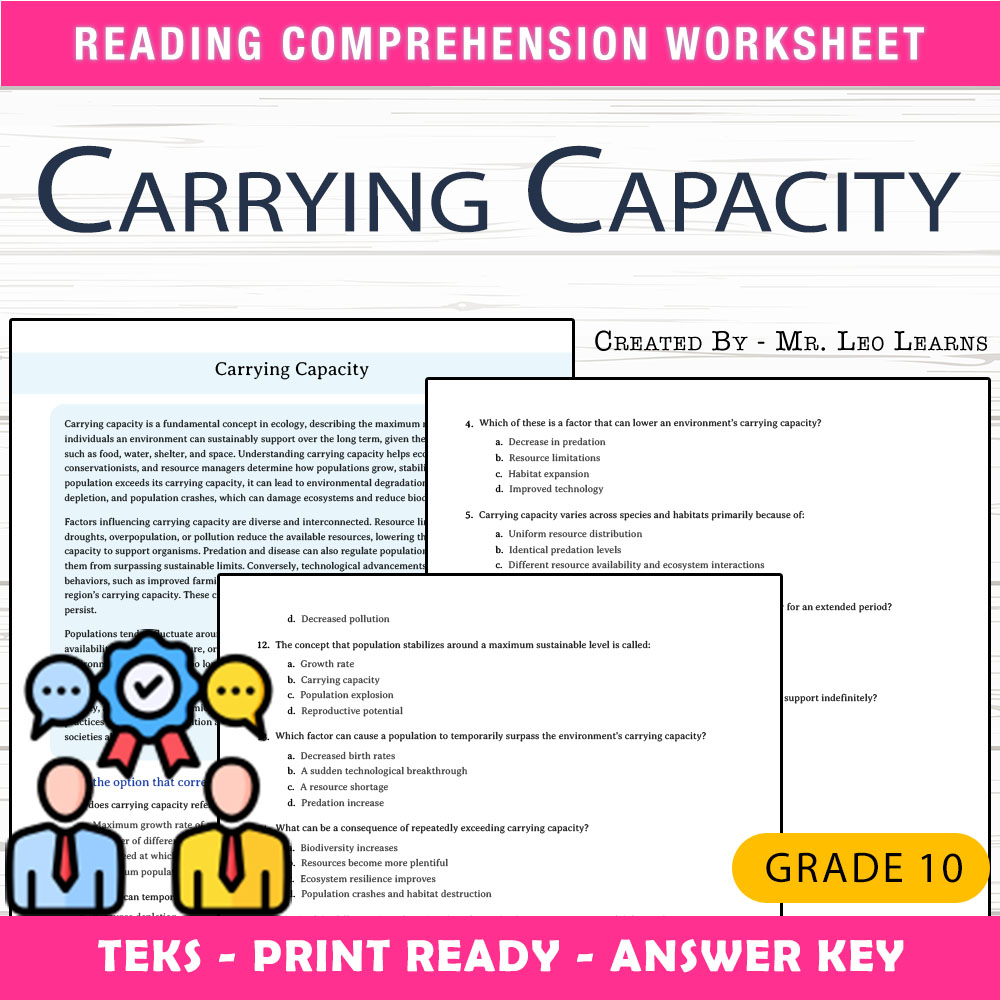
Imagine standing at the front of your classroom, as your students grapple with the complex idea of carrying capacity in ecology. Some students may find it challenging to grasp how ecosystems can support a certain number of organisms, and how fluctuating environmental conditions impact that number. This worksheet offers a straightforward, reliable resource to help clarify those concepts through focused practice. With clear questions and a printable format, it provides an effective way to reinforce understanding and support student confidence in ecological concepts like carrying capacity, limiting factors, and ecosystem dynamics.
What This Resource Helps Students Do
This worksheet guides students through understanding the core idea of carrying capacity — the maximum population size an environment can sustain sustainably. Students will develop the ability to interpret a reading passage about ecological limits and analyze multiple-choice questions that reinforce key ideas. The worksheet fosters independent thinking as students practice identifying factors that influence ecosystem capacity, and encourages them to apply what they learn to real-world examples. It builds foundational skills in ecology, helps students make connections between environmental factors and population growth, and enhances their comprehension of ecosystem stability versus fluctuations.
Inside the PDF
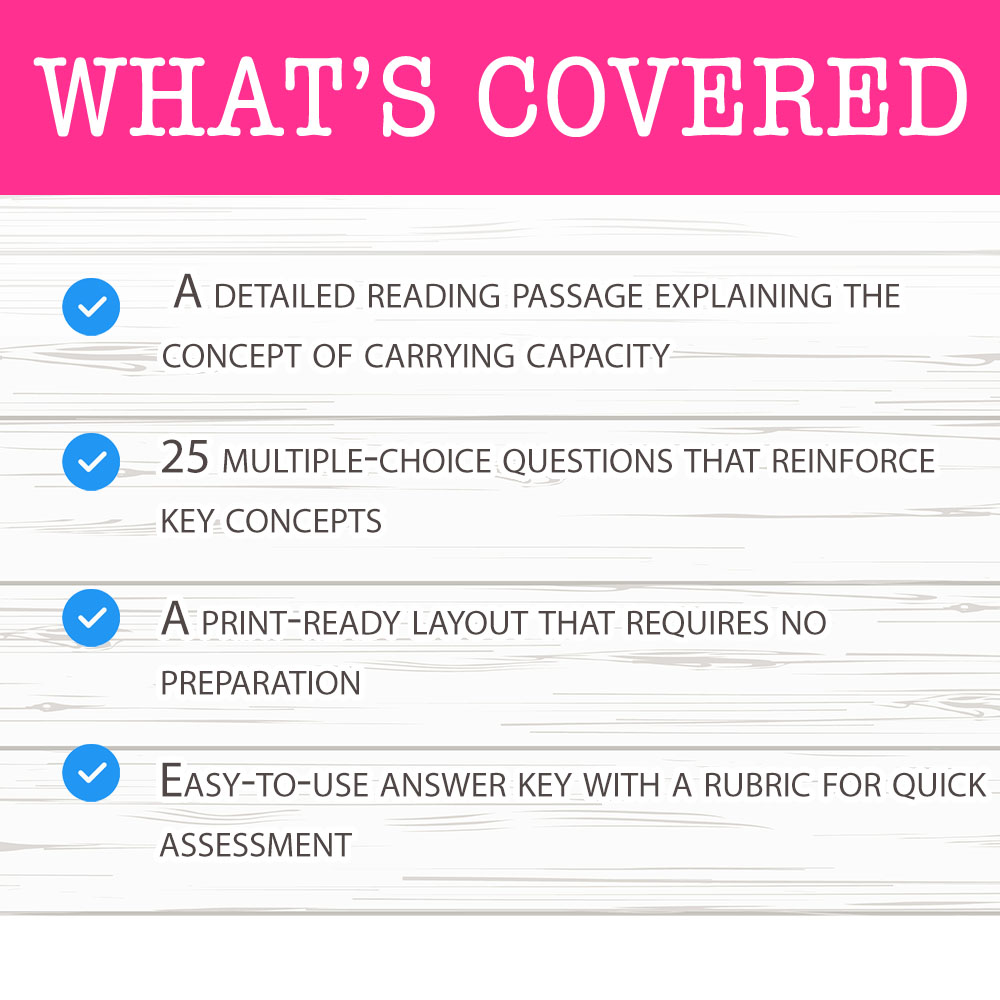
• A detailed reading passage explaining the concept of carrying capacity
• 25 multiple-choice questions that reinforce key concepts
• A print-ready layout that requires no preparation
• Easy-to-use answer key with a rubric for quick assessment
• Designed layout compatible with photocopying and classroom distribution
How It Improves Learning
This worksheet enhances student understanding by providing clear, targeted questions that build on each other, moving from basic comprehension to application. The reading passage serves as a strong foundation, making complex ecological ideas accessible. The multiple-choice questions allow students to test their understanding and receive immediate reinforcement, which promotes retention and confidence. As students analyze factors like environmental changes and human impacts, they develop critical thinking skills about ecological balance. Teachers can use this resource for formative assessment or supplement instruction, knowing it offers a reliable way to deepen students' grasp of ecosystem principles. The printable format means it can be used instantly without additional prep, ensuring a smooth and efficient lesson flow.
Core Skills Students Will Develop
- ➡️ Understanding ecological concepts
- ➡️ Analyzing environmental factors
- ➡️ Interpreting scientific passages
- ➡️ Applying critical thinking skills
Ways Teachers Use This Worksheet
Teachers often incorporate this worksheet into classwork or homework to reinforce concepts discussed during lessons. It can serve as a formative assessment to gauge student understanding or as a small-group activity to facilitate peer explanation. The worksheet is also ideal for review sessions, practicing ecological terminology and reasoning, or as an early finisher activity to keep students engaged. Its straightforward, printable format makes it easy to deploy in various instructional contexts, and its emphasis on comprehension and application makes it a valuable tool for mastery of ecology standards.
Why This PDF Saves Time
This resource provides a ready-to-use, print-and-go format that saves teachers valuable preparation time. The clear layout requires no customization or additional materials, making it simple to distribute to students. With the included answer key and rubric, teachers can quickly and accurately assess student performance, ensuring consistency across classroom use. This reliable worksheet offers a practical, straightforward way to support ecological education without the need for extensive lesson planning or resource creation.
End your lesson with confidence, knowing this printable worksheet is designed to support student success and understanding in ecology. It’s a classroom-friendly, straightforward tool that helps learners see the connection between ecological concepts and real-world environmental issues. 😊