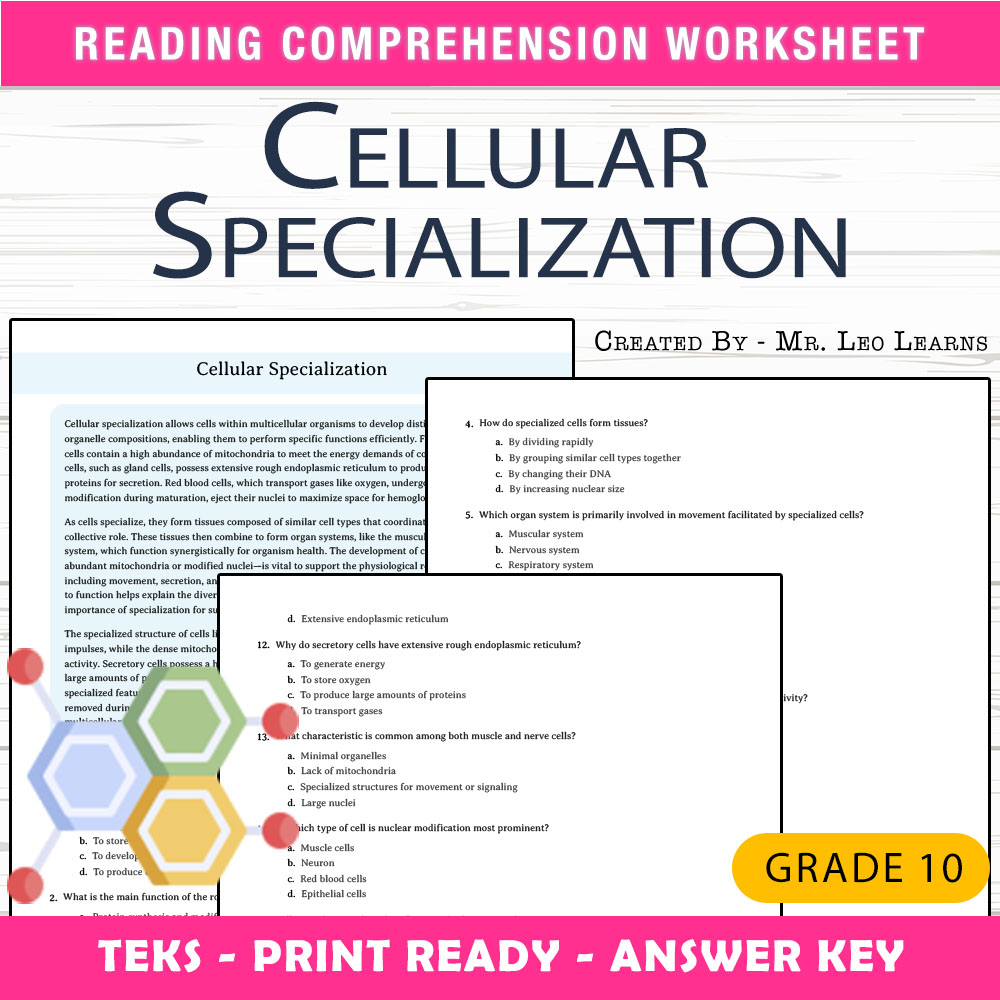
Imagine standing at the front of your classroom, watching your students struggle to grasp how different types of cells develop unique structures and functions within a complex organism. They might find it confusing to understand how muscle cells are packed with mitochondria or how secretory cells rely on the rough endoplasmic reticulum. This worksheet offers a straightforward, print-and-go solution to clarify these concepts, providing clear practice for students to reinforce their understanding of cellular specialization in an engaging and accessible way.
What This Resource Helps Students Do
This worksheet guides students through the essential ideas of cellular specialization, helping them connect structure and function in various cell types. It encourages independent thinking by asking students to interpret a reading passage and apply their knowledge to multiple-choice questions. The activities are designed to build confidence, improve comprehension, and strengthen reasoning skills related to cell biology. Students gain a clearer understanding of how specialized cells contribute to the overall function of living organisms, making complex biological systems more accessible and less daunting.
Inside the PDF
- 1 reading passage explaining cellular specialization and its significance in multicellular organisms
• 25 multiple-choice questions that reinforce key concepts and details
• A printable, ready-to-use format that requires no advance preparation
• PDF answer key with rubric included for easy grading
• Designed layout for effortless photocopying and student engagement
How It Improves Learning
This worksheet provides a structured approach to understanding a core biological subject, which helps students move from initial confusion to confident comprehension. By carefully guiding them through reading and reasoning exercises, it encourages active engagement with the material. The multiple-choice questions reinforce critical ideas, helping students retain information and clarify misconceptions. The clear layout and straightforward questions help students develop reasoning skills, analyze functions, and recognize the importance of cellular specialization within living systems. The immediate practice offered by the worksheet supports mastery and ensures that students can connect theoretical knowledge to real-world biological processes.
Core Skills Students Will Develop
- ➡️ comprehension of cell structure and function
- ➡️ ability to relate cell structure to specific roles in the body
- ➡️ critical thinking through applying reading comprehension skills
- ➡️ recognition of cellular components and their importance in health and disease
Ways Teachers Use This Worksheet
This worksheet is particularly useful for classwork, homework assignments, or review sessions. Teachers may incorporate it into small-group activities to encourage discussion or assign it as independent practice to reinforce instruction. It also serves well as an assessment tool to check understanding or as an early-finishers activity that keeps students engaged productively. Its printed format makes it ideal for quick distribution and minimal prep, supporting smooth classroom management and ongoing learning support.
Why This PDF Saves Time
This resource eliminates the need for extensive lesson planning or creating your own materials. With its ready-to-copy format, you can print it immediately and focus on classroom interaction and discussion instead of preparation. The clear structure ensures consistency in delivery and assessment, saving you time and effort. The included answer key with rubric allows for quick grading, making it easier to monitor student progress and give timely feedback.
Designed to be classroom-friendly and straightforward, this worksheet provides a practical tool for helping your students master the key concepts of cellular specialization. It supports diverse instructional needs and encourages confidence in learning biology, making each lesson more effective and less stressful. Just print, distribute, and watch your students deepen their understanding of how cells develop specific structures to meet their specialized roles — ready to succeed! 😊