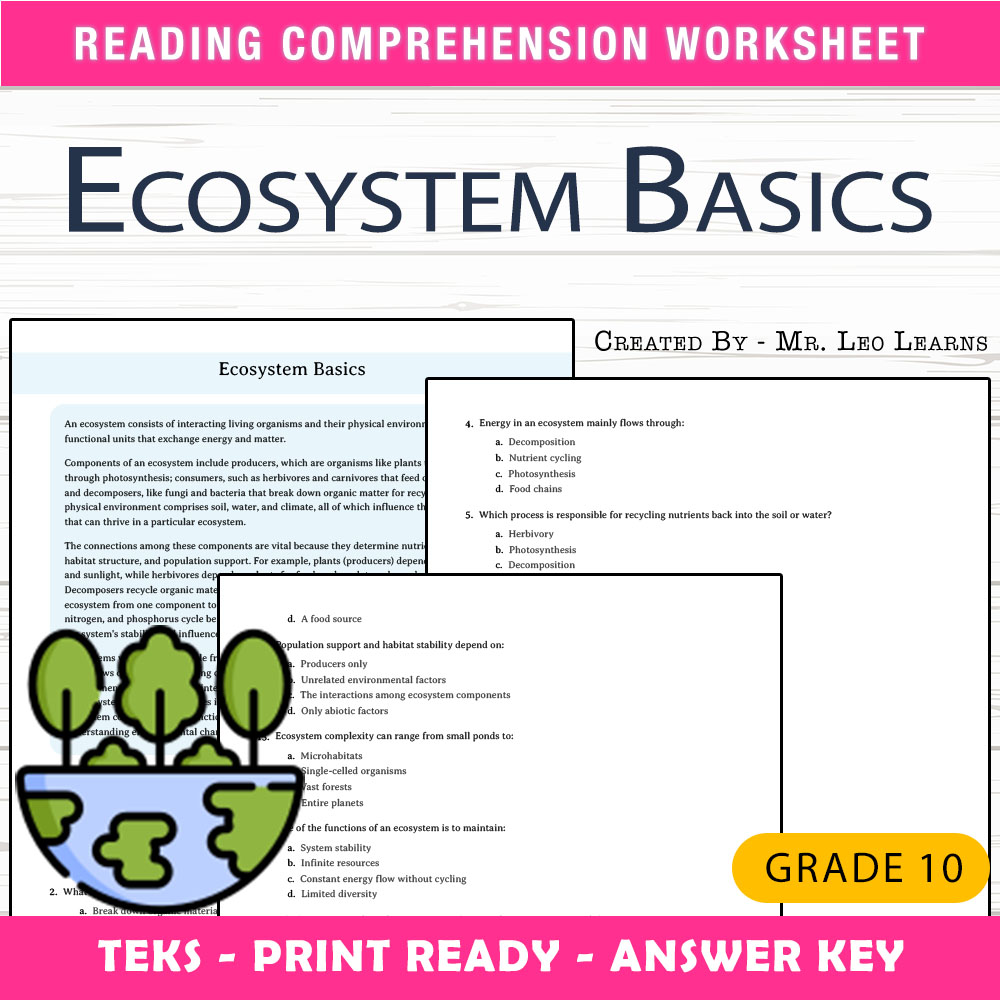
Imagine a busy classroom where students are trying to grasp the complex interactions within ecosystems. They're faced with understanding how living organisms like plants and animals interact with their physical environment to form balanced systems. As the teacher hands out the PDF worksheet titled "Ecosystem Basics," they see students engage with clarity and confidence, guided by a straightforward, print-ready resource designed specifically for classroom use. This worksheet simplifies complex concepts of ecosystems into manageable sections, making learning both accessible and structured.
What This Resource Helps Students Do
This worksheet is crafted to support students in mastering key concepts related to ecosystems, including understanding the roles of producers, consumers, and decomposers. It guides students through reading comprehension with a passage that explains the basic components of an ecosystem, prompting them to identify critical ideas and relationships. The multiple-choice questions encourage independent thinking and reinforce their grasp of essential vocabulary and functions within ecosystems. By engaging with this carefully structured worksheet, students develop skills in comprehension, analysis, and application, which are vital for success in environmental science.
Inside the PDF
• A clear, engaging reading passage about ecosystems
• 25 multiple-choice questions designed to reinforce core concepts
• A print-ready format that requires no additional preparation
• An answer key with a rubric for quick grading
• Layout optimized for easy photocopying and classroom distribution
How It Improves Learning
This worksheet helps students develop a deeper understanding of ecological relationships by providing contextually rich questions that promote active engagement. The reading passage offers foundational knowledge, setting the stage for thoughtful responses. The multiple-choice questions guide students in analyzing and applying what they've learned, fostering critical thinking. Because the worksheet is structured with clear sections, students can build confidence as they progress, transitioning from basic recall to more complex reasoning. Teachers benefit from the consistent format, making it easier to assess student understanding and identify areas needing further support. Overall, this resource makes ecological concepts clearer, encourages independent learning, and reinforces classroom instruction effectively.
Core Skills Students Will Develop
- ➡️ Reading comprehension of scientific texts
- ➡️ Understanding ecological roles and relationships
- ➡️ Critical thinking and analysis
- ➡️ Application of scientific vocabulary
Ways Teachers Use This Worksheet
Many teachers incorporate this worksheet into their lesson plans as an in-class activity, a homework assignment, or a quick formative assessment to gauge student understanding. It works well for small-group discussions, review sessions, or as a reinforcement activity following direct instruction. Additionally, the print-and-go format makes it a practical choice for substitute teachers or time-constrained days, providing a reliable and consistent way to ensure students stay engaged with core concepts about ecosystems without added prep work. It is especially useful for early finishers to deepen their understanding without disrupting classroom flow.
Why This PDF Saves Time
This resource is designed with convenience in mind, offering a ready-to-print PDF that requires no additional formatting. Its simple layout allows teachers to quickly distribute it to students, saving valuable prep time. The included answer key with rubric streamlines grading, ensuring quick, consistent feedback. Because the worksheet covers necessary content in a clear, organized way, it reduces the need for long-term lesson planning while supporting effective instruction across multiple classes or sections.
Teachers can confidently print and distribute this worksheet right away, knowing it aligns with curriculum standards and provides targeted practice. It’s a practical, dependable classroom tool that helps students develop essential ecosystem knowledge with confidence and clarity. 😊