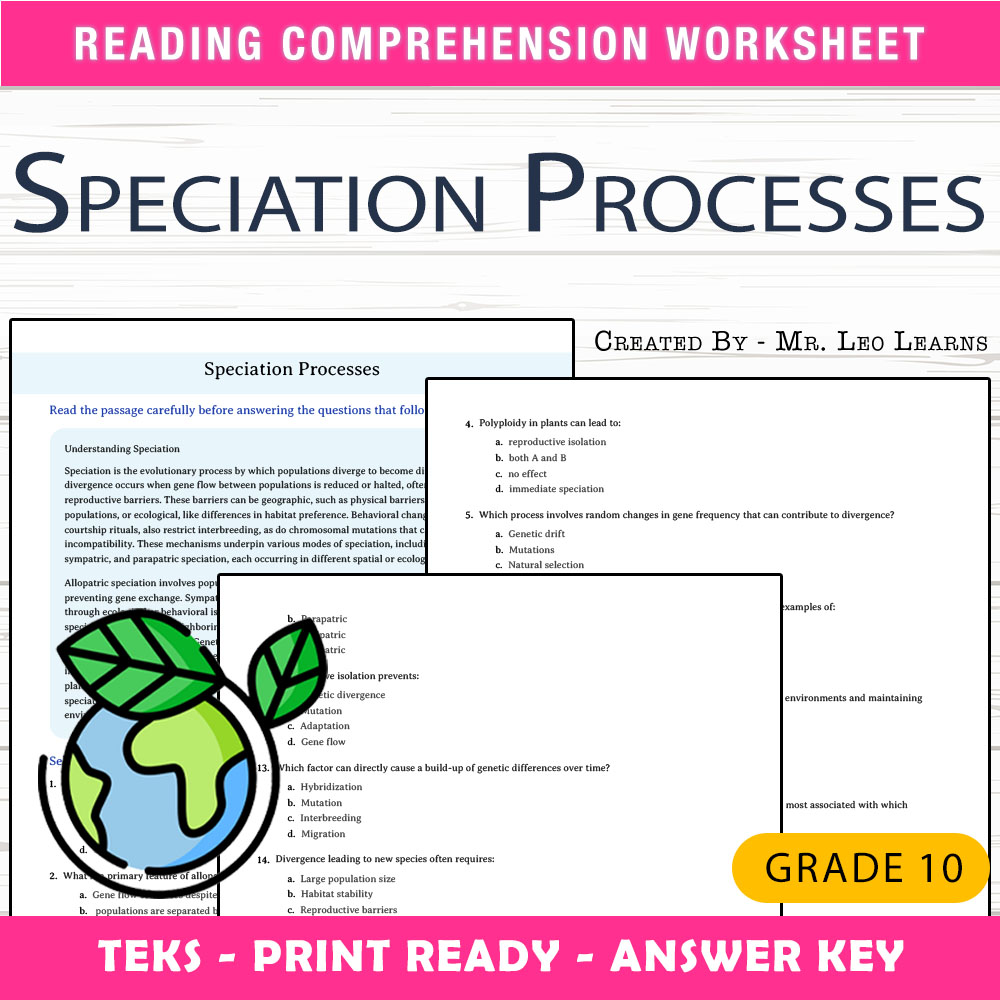
As a science teacher in a lively classroom, you often observe students grappling with complex concepts like how new species form through various evolutionary mechanisms. Explaining speciation, especially the differences between allopatric and sympatric processes, can sometimes lead to confusion or oversimplification. This worksheet provides a straightforward, print-ready resource that simplifies these intricate ideas while encouraging independent thinking. With clear questions and a manageable format, it guides students step-by-step through understanding the key processes involved in speciation, helping to clarify misconceptions and build confidence in their grasp of evolution.
What This Resource Helps Students Do
This worksheet supports students in developing a comprehensive understanding of how species diverge over time. It includes a reading passage that explains the fundamentals of speciation, followed by multiple-choice questions that reinforce critical concepts. Students are encouraged to connect theoretical knowledge with real-world examples, fostering a deeper comprehension of reproductive barriers, geographic isolation, and evolutionary divergence. The structure aligns with learning goals to help students synthesize information independently, making it ideal for review or formative assessment. It also serves as a useful tool for practice, allowing students to check their understanding and develop reasoning skills while staying engaged with the content.
Inside the PDF
• 1 reading passage providing an overview of speciation processes
• 25 multiple-choice questions focused on key concepts of speciation
• A clean, print-ready design that’s ready for immediate classroom use
• Pages formatted for easy photocopying and distribution
How It Improves Learning
This worksheet is designed to transform complex evolution concepts into manageable learning tasks. The reading passage offers concise explanations, ensuring students grasp the core ideas without becoming overwhelmed. The multiple-choice questions challenge students to apply their understanding, reinforcing learning and promoting critical reasoning skills. With each question, students move from basic recall to more complex analysis, gaining confidence in their ability to analyze evolutionary processes. The straightforward format allows teachers to easily integrate this resource into lessons, homework, or review sessions, all while supporting varied learning paces and styles. This structured approach helps to clarify misconceptions and solidify foundational knowledge effectively.
Core Skills Students Will Develop
- ➡️ Understanding mechanisms of speciation
- ➡️ Distinguishing between allopatric and sympatric speciation
- ➡️ Applying concepts of reproductive barriers
- ➡️ Analyzing geographic and reproductive isolation factors
Ways Teachers Use This Worksheet
This worksheet can be effectively used as part of a class discussion, individual practice, or small-group review. It serves well as a homework assignment to reinforce recent lessons or as an in-class assessment to gauge student understanding. Teachers may also incorporate it into early finisher activities or utilize it for quick formative checks during lessons. Its print-and-go format makes it adaptable for a variety of instructional strategies, supporting both direct teaching and student-led exploration of evolutionary science.
Why This PDF Saves Time
This resource is designed for immediate use with minimal preparation. Its clean, print-ready layout means teachers can distribute it right away without customizing or formatting further. The standardized design ensures consistency across classes and simplifies the process of lesson planning. Since it’s a PDF, teachers can easily make multiple copies, saving time and effort while providing students with a reliable, classroom-friendly tool that enhances their understanding of speciation. The answer key with rubric offers quick assessment opportunities, streamlining grading and feedback.
Overall, this worksheet supports teachers in delivering clear, engaging instruction while encouraging students to develop critical thinking skills about evolution and speciation. It’s ready to print, easy to incorporate into your lesson plans, and designed to foster student success with confidence. 😊