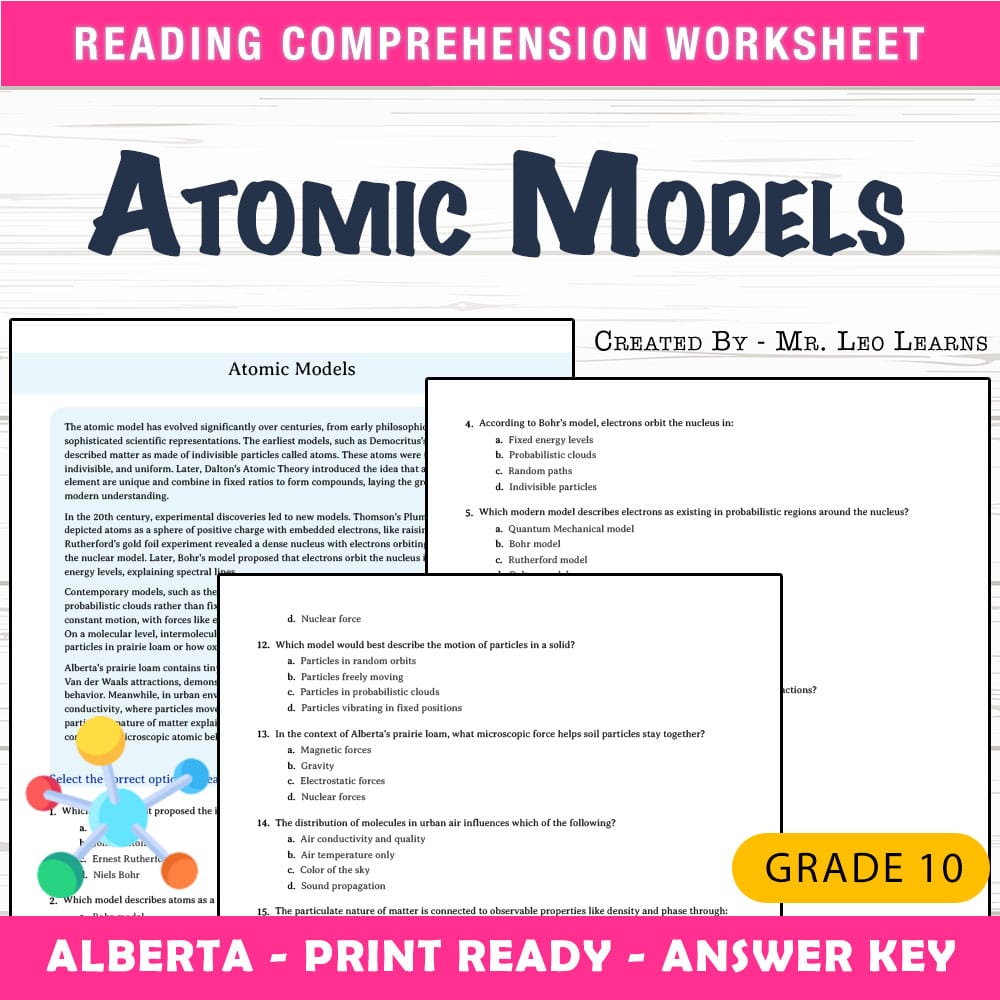
In a busy classroom, teachers often notice students struggling to grasp the evolution of atomic models, especially when trying to connect historical discoveries with current scientific understanding. This worksheet provides a straightforward way for students to review key concepts about atomic models through focused multiple-choice questions. It’s designed to reinforce foundational knowledge while saving teachers time on preparation, offering a clear, printable resource that students can complete independently or in small groups.
What This Resource Helps Students Do
This worksheet encourages students to actively recall and apply their understanding of how atomic models have developed over time. It guides them through analyzing different scientific contributions, comparing various models like the Dalton model, Thomson’s plum pudding, Rutherford’s nuclear model, and Bohr’s planetary model. With carefully curated questions, students build confidence in identifying key scientists and their discoveries, strengthening critical thinking about the nature of atoms and how our understanding has evolved. The multiple-choice format offers immediate reinforcement, helping students clarify misconceptions and solidify their grasp of complex concepts.
Inside the PDF
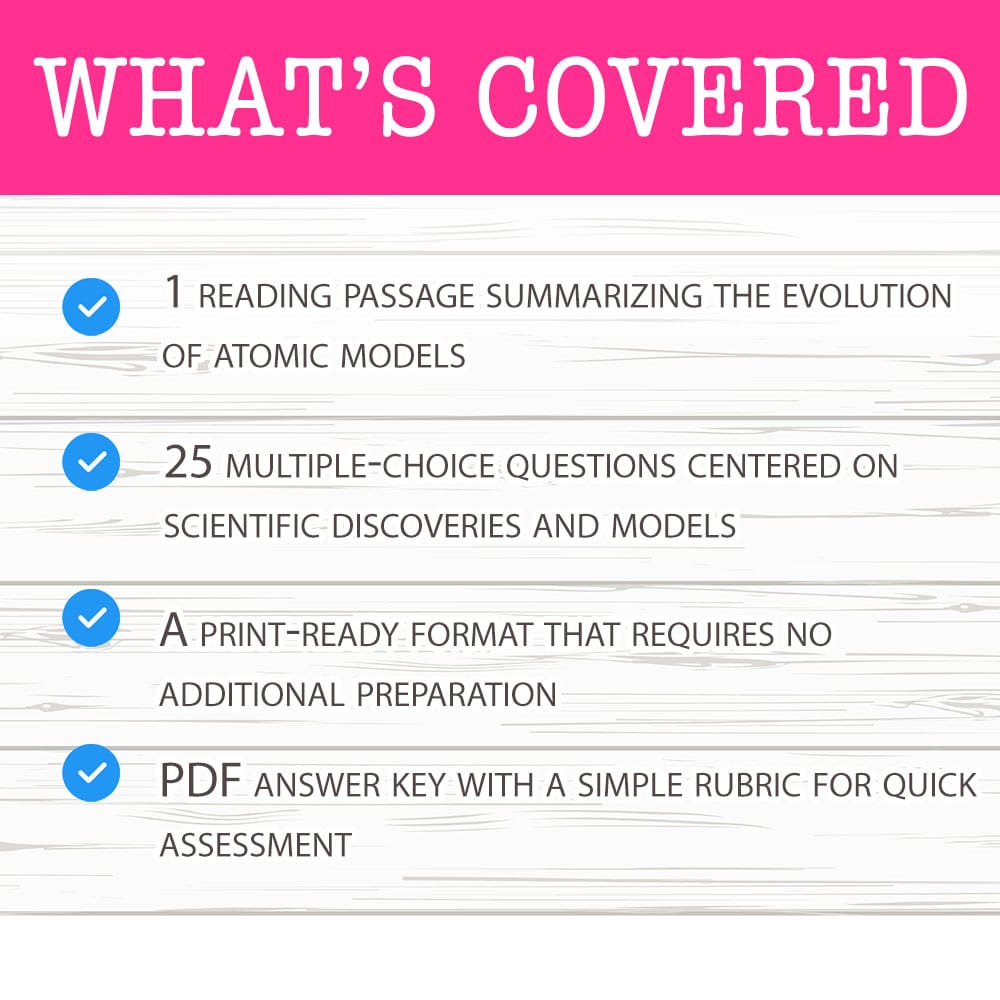
• 1 reading passage summarizing the evolution of atomic models
• 25 multiple-choice questions centered on scientific discoveries and models
• A print-ready format that requires no additional preparation
• PDF answer key with a simple rubric for quick assessment
• Layout intended for easy photocopying and classroom use
How It Improves Learningp>
This resource enhances understanding by encouraging students to analyze the progression of atomic models critically. The reading passage offers essential context, allowing learners to connect historical hypotheses with scientific evidence. The multiple-choice questions promote active decision-making and help students recognize the key differences between models proposed by scientists like Democritus, Thomson, Rutherford, and Bohr. The immediate feedback from the answer key supports learners in self-assessment, building their confidence in explaining how models have changed based on experimental discoveries. Over time, students develop sharper reasoning skills and a deeper appreciation for scientific inquiry, which are vital for their success in higher-level science coursework.
Core Skills Students Will Develop
- ➡️ Analyzing scientific texts and passages
- ➡️ Identifying key scientific contributions and models
- ➡️ Applying knowledge to answer multiple-choice questions
- ➡️ Comparing different scientific theories and models
Ways Teachers Use This Worksheet
This worksheet is versatile and can be incorporated into classwork, homework assignments, or review sessions. It serves as an effective tool for assessing student understanding after a lecture or reading activity. Teachers often use it for small-group practice, helping students work through questions collaboratively. It’s also suitable as an early finisher activity or for reinforcement on topics related to atomic structure and the history of atomic models, supporting students’ independent learning and confidence building.
Why This PDF Saves Time
Designed for immediate use, this printable worksheet minimizes preparation time with a clear layout and ready-to-distribute format. The included answer key allows teachers to quickly evaluate student responses, streamlining the grading process. Its print-and-go design helps ensure consistent delivery of content, freeing teachers to focus more on instruction and student engagement instead of materials creation. This resource reliably supports classroom routines without the need for extra customization or extensive setup.
In summary, this worksheet offers a practical, classroom-ready tool to deepen students' understanding of atomic models while saving valuable planning time. It’s constructed to fit seamlessly into your lesson plans, helping students succeed with clarity and confidence. 📚