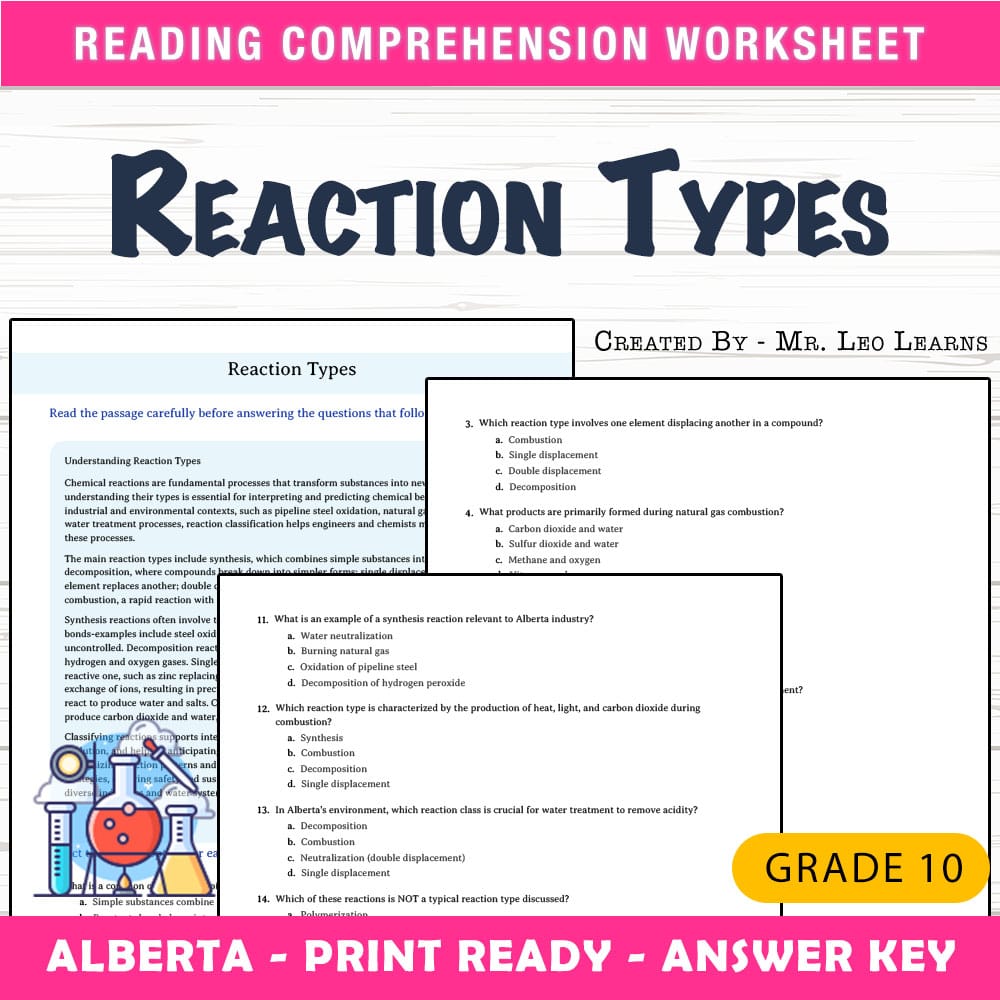
Imagine standing in front of your class as students work through their science assessments, some of them quietly struggling to recall the differences between various reaction types. They might appear uncertain when answering questions about synthesis, decomposition, or combustion. This worksheet provides a straightforward, print-ready resource that helps clarify these concepts through multiple-choice questions, enabling students to practice and reinforce their understanding efficiently.
What This Resource Helps Students Do
This worksheet guides students in reviewing and applying their knowledge of chemical reaction types. By analyzing and selecting the correct answers to multiple-choice questions, students deepen their understanding of key concepts like synthesis, decomposition, and other reaction categories. The questions are designed to promote critical thinking and improve their ability to distinguish between different reaction processes, fostering confidence and independent problem-solving skills. It supports skill-building in chemical reasoning and comprehension, providing a clear pathway from initial misconceptions to accurate understanding through targeted practice.
Inside the PDF
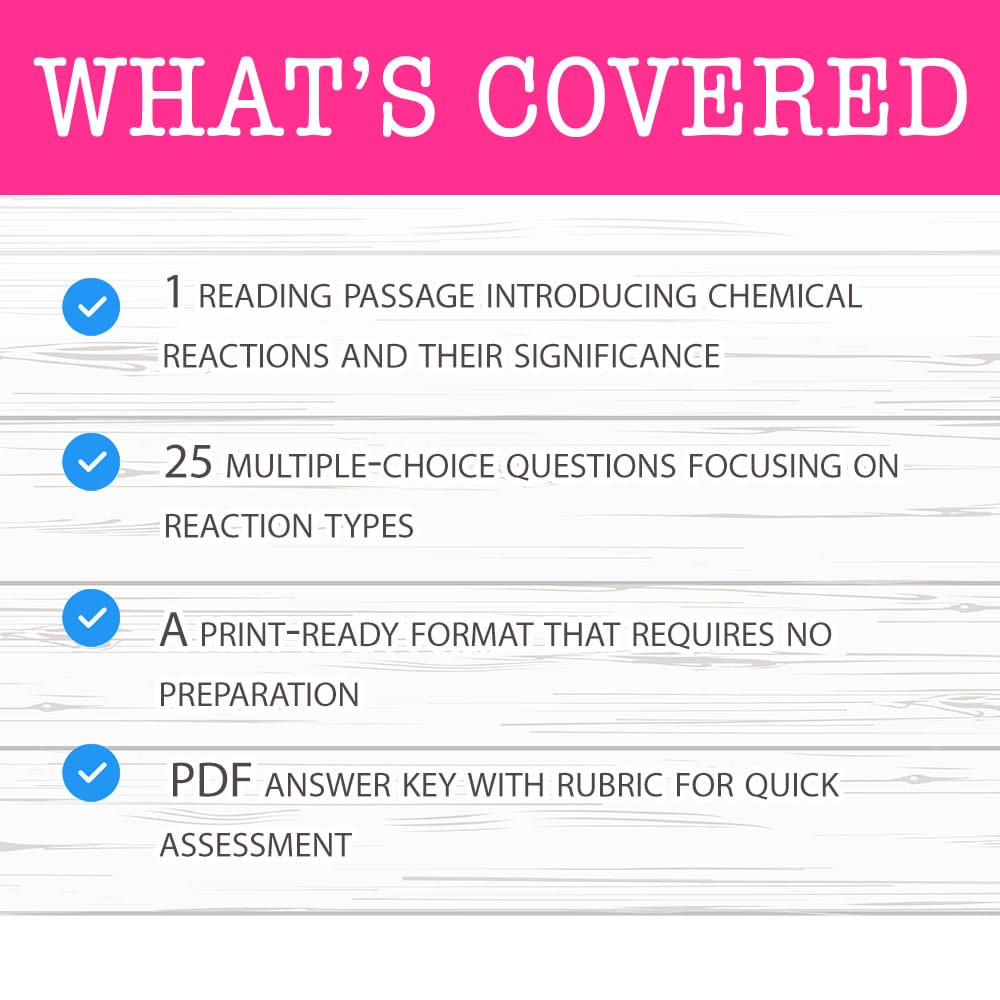
• 1 reading passage introducing chemical reactions and their significance
• 25 multiple-choice questions focusing on reaction types
• A print-ready format that requires no preparation
• PDF answer key with rubric for quick assessment
• Layout designed for easy photocopying and classroom distribution
How It Improves Learning
This worksheet improves student learning by reinforcing core concepts of reaction types through active practice. The multiple-choice format encourages students to think critically about each question, helping them clarify misconceptions and solidify their understanding of how different reactions occur and what distinguishes one from another. The clear and concise questions build confidence as students recognize correct answers through process of elimination and reasoning. Teachers can use this resource to review concepts in class or assign it as homework, knowing students are engaging with material that directly targets essential skills in understanding chemical transformations. The inclusion of a rubric in the answer key allows for quick evaluation and meaningful feedback, supporting student growth and mastery of the topic.
Core Skills Students Will Develop
- ➡️ Understanding types of chemical reactions
- ➡️ Applying knowledge to identify reaction processes
- ➡️ Critical thinking and reasoning skills
- ➡️ Interpreting scientific information accurately
Ways Teachers Use This Worksheet
This worksheet is a versatile tool for classroom use, serving as a structured practice activity, a quick assessment, or review material after instruction. It can be assigned as classwork, used during small-group review sessions, or provided as an early finisher activity to keep students engaged. Teachers often incorporate it into a lesson plan to reinforce key concepts about reaction types or as part of a formative assessment to gauge student understanding. Its self-contained, print-and-go format makes it accessible and easy to implement at any point during the teaching cycle.
Why This PDF Saves Time
This resource is designed to be ready for immediate use—just print and distribute. The clear layout eliminates the need for preparation, saving valuable planning time. With a comprehensive answer key included, teachers can quickly assess student responses and identify areas needing further review. Its simple, reliable format supports consistency across lessons, providing a dependable assessment tool that can be used repeatedly without extra effort. The printable PDF format ensures easy duplication for whole classes or small groups, streamlining your workflow and maximizing instructional time.
Remember, this worksheet is fully prepared to support your teaching needs—easy to print, classroom-friendly, and designed to foster student confidence in understanding reaction types. Students will benefit from targeted practice that makes complex concepts more accessible. 😊