Imagine standing in your classroom as students begin to grapple with the complex concept of speciation. Some are confused about how new species form and what mechanisms drive this process, leading to questions and hesitation. With this worksheet, you have a straightforward, print-ready resource that helps clarify these concepts through focused practice. It simplifies the learning journey by guiding students through key ideas and reinforcing their understanding in a structured way.
What This Resource Helps Students Do
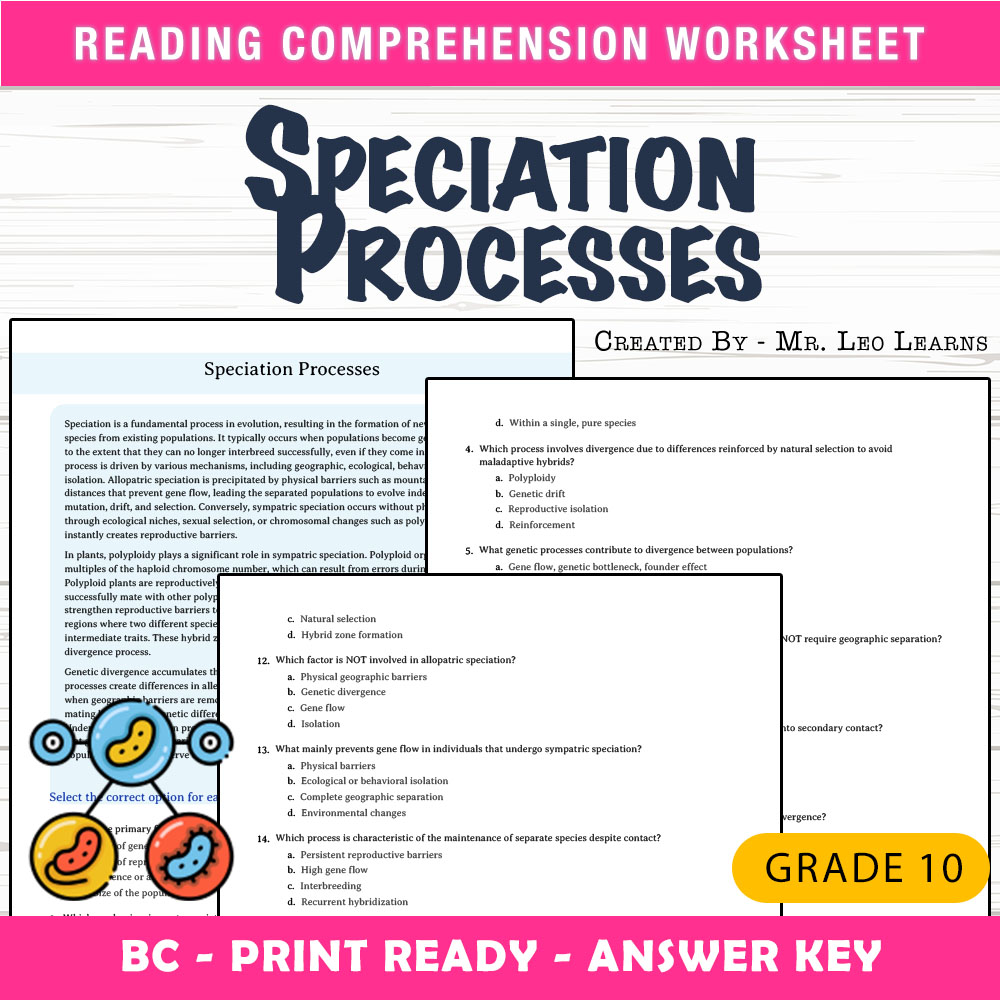
This worksheet provides students with an opportunity to actively engage with the topic of speciation, helping them develop a deeper understanding of how new species evolve. The reading passage introduces core ideas clearly, followed by multiple-choice questions that promote critical thinking. It encourages students to analyze different mechanisms involved in speciation, such as geographic isolation and reproductive barriers. With this practice, students build confidence in distinguishing between types of speciation and understanding the factors that influence evolution. The resource promotes independent learning and makes it easier for students to grasp complex biological processes step-by-step.
Inside the PDF
• A reading passage that introduces key concepts of speciation
• 25 multiple choice questions focused on processes and mechanisms
• A print-ready format that requires no preparation
• PDF answer key with rubric for quick grading
• Designed layout suitable for photocopying and classroom use
How It Improves Learning
This worksheet actively helps students clarify their understanding of speciation through targeted questions, turning abstract concepts into tangible learning steps. The reading passage provides essential background knowledge, which students then apply in multiple-choice questions designed to assess comprehension. The variety of questions encourages reasoning skills, asking students to differentiate between mechanisms such as allopatric and sympatric speciation. Using this worksheet can boost confidence as students see their progress and master key ideas. The immediate practice also supports retention, making the transition from theory to understanding smoother. Overall, it offers a clear, focused way to reinforce essential evolution concepts in a classroom setting.
Core Skills Students Will Develop
- ➡️ Understanding evolution and speciation processes
- ➡️ Analyzing mechanisms like geographic and reproductive isolation
- ➡️ Applying critical thinking to biological concepts
- ➡️ Enhancing comprehension through multiple-choice practice
Ways Teachers Use This Worksheet
Many teachers incorporate this worksheet into classwork or homework assignments to reinforce the lesson on evolution and speciation. It’s also useful as a quick assessment tool to gauge student understanding after introducing the concepts. Small-group discussions can be guided by the questions, encouraging collaborative reasoning. Teachers might assign it as a review activity before a quiz or test, or use it for early finishers seeking extra practice. The resource supports varied instructional strategies, providing a reliable, ready-to-use tool that promotes active learning and student engagement.
Why This PDF Saves Time
The worksheet’s print-and-go format means it is ready for immediate use with minimal prep. The straightforward layout makes photocopying easy, saving valuable planning time. The included answer key with rubric streamlines grading and feedback, providing consistency across different classes or periods. Teachers can confidently rely on this resource to deliver effective instruction without needing to create questions from scratch. It’s a dependable tool for busy classrooms seeking clear, structured practice activities aligned with curriculum goals.
Remember, this worksheet is printed and classroom-ready, designed to support your instruction and help students succeed with confidence. It’s an accessible, practical resource to reinforce understanding of research-based topics in biology. 😊