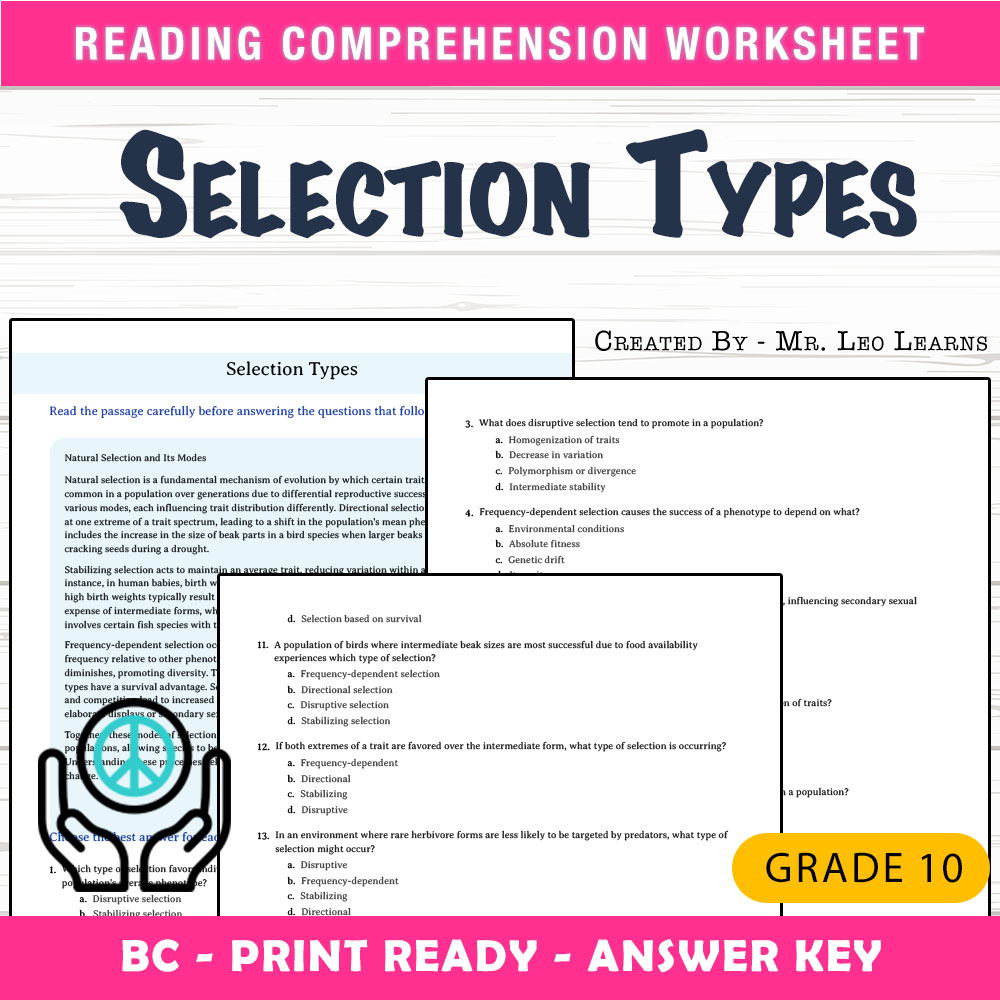
Imagine a classroom where students are engaging with complex concepts of evolution and natural selection. The teacher has just introduced different modes of selection, and students are trying to grasp how each process influences populations over time. When faced with multiple-choice questions, students often struggle to distinguish among the various types, such as directional, stabilizing, and disruptive selection. This worksheet provides a straightforward, print-ready activity designed to clarify these concepts through focused questions, helping students solidify their understanding and develop confidence in applying their knowledge.
What This Resource Helps Students Do
This worksheet guides students through key ideas about selection types, encouraging them to analyze, compare, and evaluate different evolutionary mechanisms. Through a combination of reading comprehension and multiple-choice questions, students practice identifying specific scenarios that exemplify each type of natural selection. The resource supports independent learning by allowing students to work at their own pace, reinforcing their grasp of how each mode affects traits within a population. As students answer progressively challenging questions, they build skills in scientific reasoning and conceptual clarity, laying a strong foundation for deeper study of evolution.
Inside the PDF
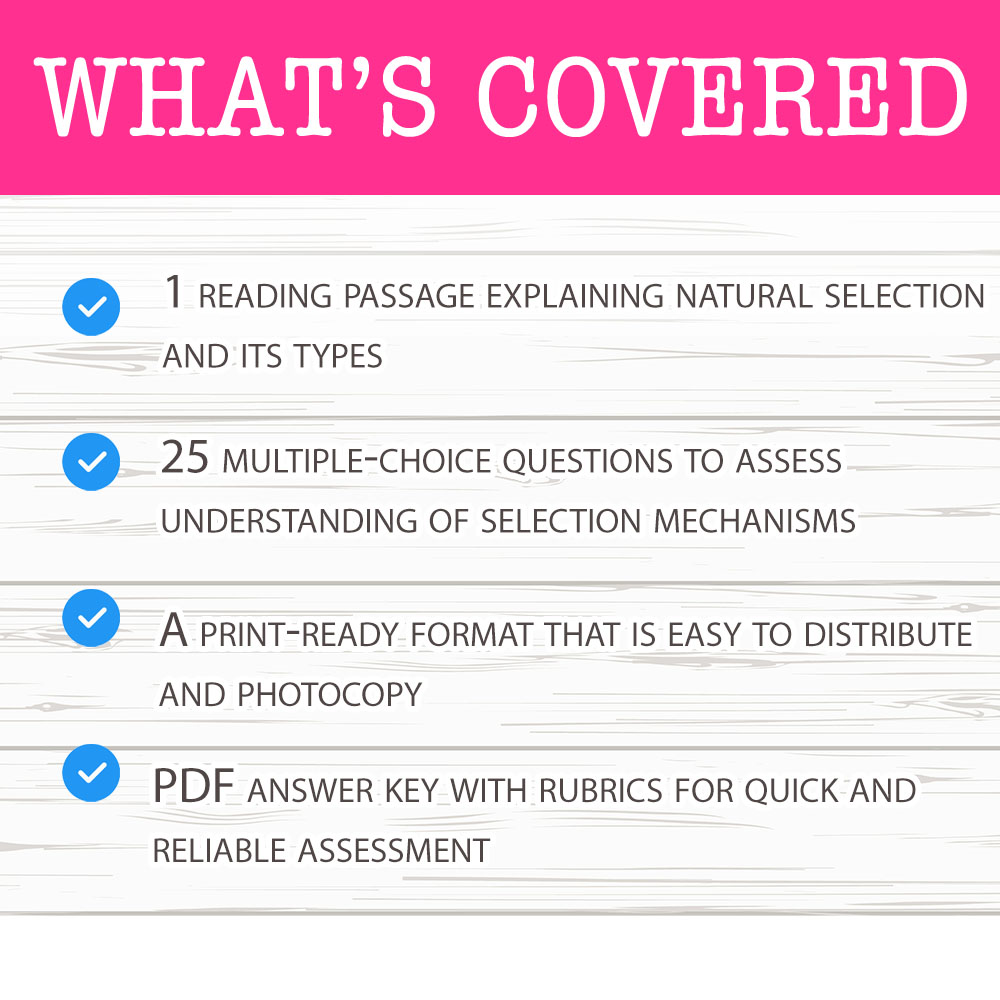
• 1 reading passage explaining natural selection and its types
• 25 multiple-choice questions to assess understanding of selection mechanisms
• A print-ready format that is easy to distribute and photocopy
• PDF answer key with rubrics for quick and reliable assessment
How It Improves Learning
This worksheet helps learners move from unfamiliarity to mastery by gradually guiding them through critical ideas about natural selection. The reading passage introduces key concepts while the questions prompt students to connect theory with real-world examples. Multiple-choice items are structured to challenge thinking, encouraging students to distinguish between different forms of selection based on traits and outcomes. Clear answer options foster confidence in decision-making, enabling students to self-assess and correct misconceptions. The format promotes active engagement, turning abstract concepts into tangible knowledge, which strengthens retention and boosts understanding of evolutionary processes.
Core Skills Students Will Develop
- ➡️ Understanding of natural selection and its types
- ➡️ Ability to analyze evolutionary scenarios
- ➡️ Critical thinking and reasoning skills
- ➡️ Scientific vocabulary related to evolution
Ways Teachers Use This Worksheet
This worksheet can be used as classwork during lessons on evolution, as homework to reinforce learning after instruction, or as part of a review session before a quiz. It is also suitable for small-group work or independent practice for students who need additional support. Teachers may incorporate it into formative assessments or use it to gauge student understanding of natural selection concepts, making it a practical tool for diverse classroom settings. The print-and-go format allows teachers to assign and distribute the activity with ease, ensuring consistent expectations and efficient use of classroom time.
Why This PDF Saves Time
This resource is ready to print and use immediately, reducing preparation time when planning lessons on evolution and natural selection. Its clean, layout-friendly format makes photocopying simple and efficient. With an answer key included, teachers can quickly evaluate student work without needing to create their own assessments or answer sheets. The comprehensive set of questions provides a stable, reliable tool for ongoing review, assessment, or homework, allowing educators to focus more on guiding student learning rather than preparing materials from scratch.
End your teaching session with confidence knowing this worksheet is classroom-ready, supportive of student growth, and designed to make understanding natural selection clearer and more accessible. It’s a practical addition to any evolution unit, helping students develop critical scientific skills and understanding with ease. 😊