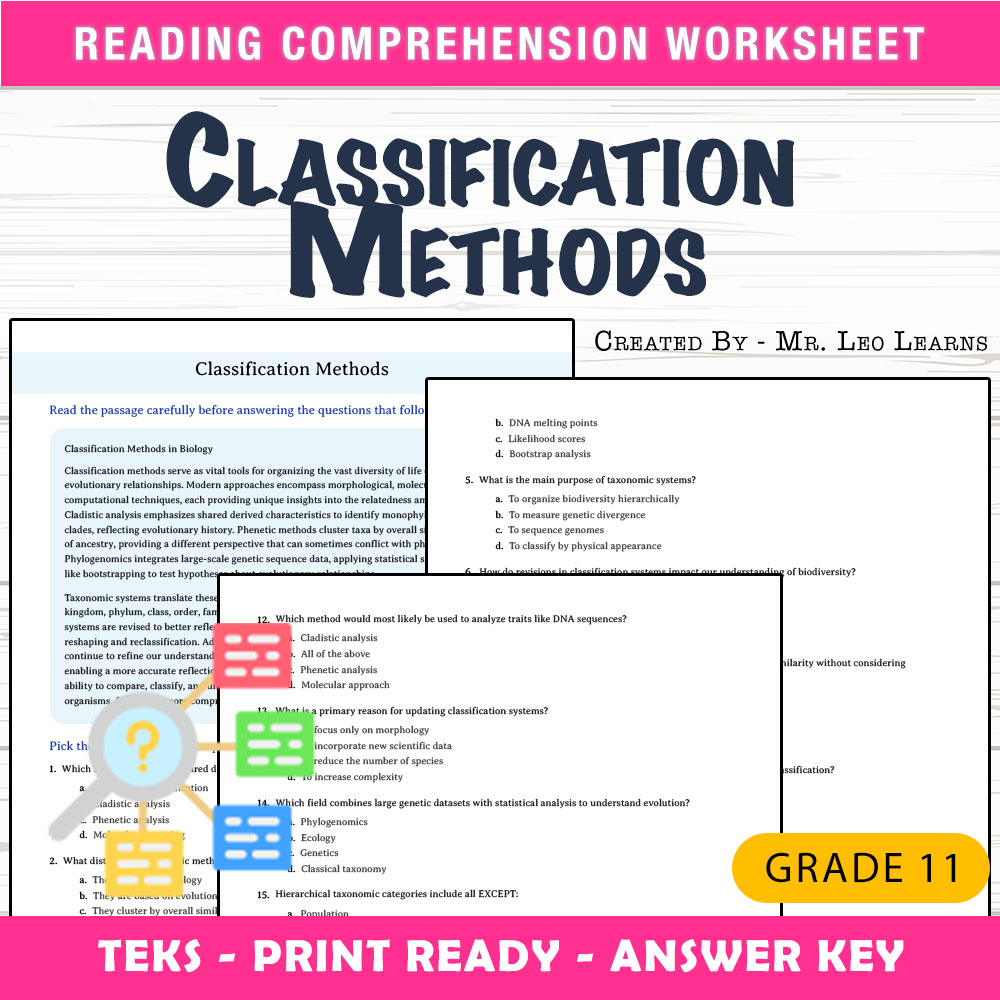
Imagine standing at the front of your classroom, watching students carefully read and analyze a passage about the importance of classification in biology. As they work through the questions, some may pause, confused about how different classification methods are used to sort the diversity of life on Earth. The challenge often lies in helping students grasp complex concepts like phenetic versus cladistic methods. This worksheet provides a clear, structured way to guide them through this foundational topic, making it easier for teachers to facilitate understanding without feeling overwhelmed.
What This Resource Helps Students Do
This worksheet is designed to support students in actively engaging with classification methods in biology. It provides a straightforward reading passage that introduces the core concepts and terminology. The multiple-choice questions then reinforce key ideas, encouraging students to think critically about how different classification techniques function. The worksheet aims to build confidence in students' ability to differentiate between various methods and understand their significance in scientific classification. It’s an effective tool for underlining the main ideas and fostering independent thought about biological diversity.
Inside the PDF
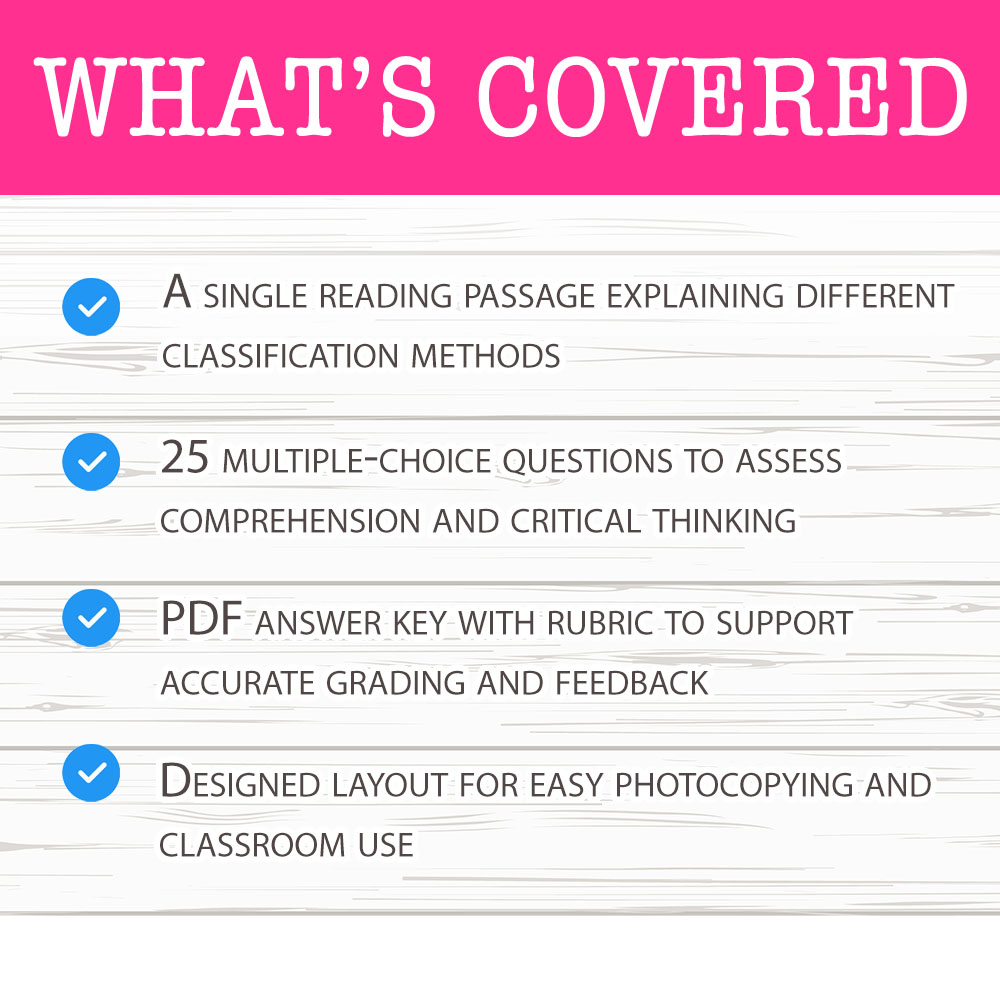
• A single reading passage explaining different classification methods
• 25 multiple-choice questions to assess comprehension and critical thinking
• A print-ready format that requires no additional preparation
• PDF answer key with rubric to support accurate grading and feedback
• Designed layout for easy photocopying and classroom use
How It Improves Learning
This worksheet encourages active reading and comprehension, helping students grasp complex classification concepts with clarity. The reading passage provides essential background, giving all students a solid foundation. The multiple-choice questions target key distinctions, promoting reasoning and ensuring understanding of topics like shared characteristics and evolutionary relationships. By working through these questions independently, students develop confidence in their ability to analyze biological data and classification methods. The immediate assessment at the end allows teachers to identify areas needing further review, making instruction more focused and effective. Overall, this resource supports a gradual transition from confusion to mastery, reinforcing critical thinking skills in the process.
Core Skills Students Will Develop
- ➡️ Critical analysis of classification data
- ➡️ Understanding evolutionary relationships
- ➡️ Distinguishing between classification methods
- ➡️ Applying scientific terminology accurately
Ways Teachers Use This Worksheet
This worksheet can be used effectively during classwork, allowing students to apply the concepts immediately after instruction. It also works well as a homework assignment to reinforce learning at home. Teachers may utilize it during review sessions or assessments to gauge student understanding of classification methods. The printable PDF format makes it ideal for small-group practice or early finisher work, providing a practical, straightforward way to extend learning without additional prep time. Its flexible design supports diverse classroom activities, helping students connect theory with real-world biological classification issues.
Why This PDF Saves Time
Designed for quick adoption, this printable worksheet requires no prior setup, saving teachers valuable preparation time. Its print-and-go format enables immediate classroom use — simply photocopy and distribute. The included answer key enhances efficient grading, providing a clear rubric for evaluating student responses accurately. With a focused, manageable length, it ensures consistency in assessment and reinforcement without the need for extensive customization. This resource offers a reliable, time-saving option for busy teachers seeking effective instructional tools.
Remember, this worksheet is ready to print and use in your classroom today. It’s developed with teachers and students in mind, aiming to build understanding confidently and support success in biology. Happy teaching! 😊