Imagine walking into your classroom and seeing students quietly working on understanding how different species are organized within ecosystems. Some students might be overwhelmed trying to grasp the concept of community structure, especially when confronted with unfamiliar terminology and complex interactions. This worksheet provides a clear, straightforward way to reinforce those ideas, offering a structured, print-ready resource that helps students connect key concepts about ecosystem organization with confidence and clarity.
What This Resource Helps Students Do
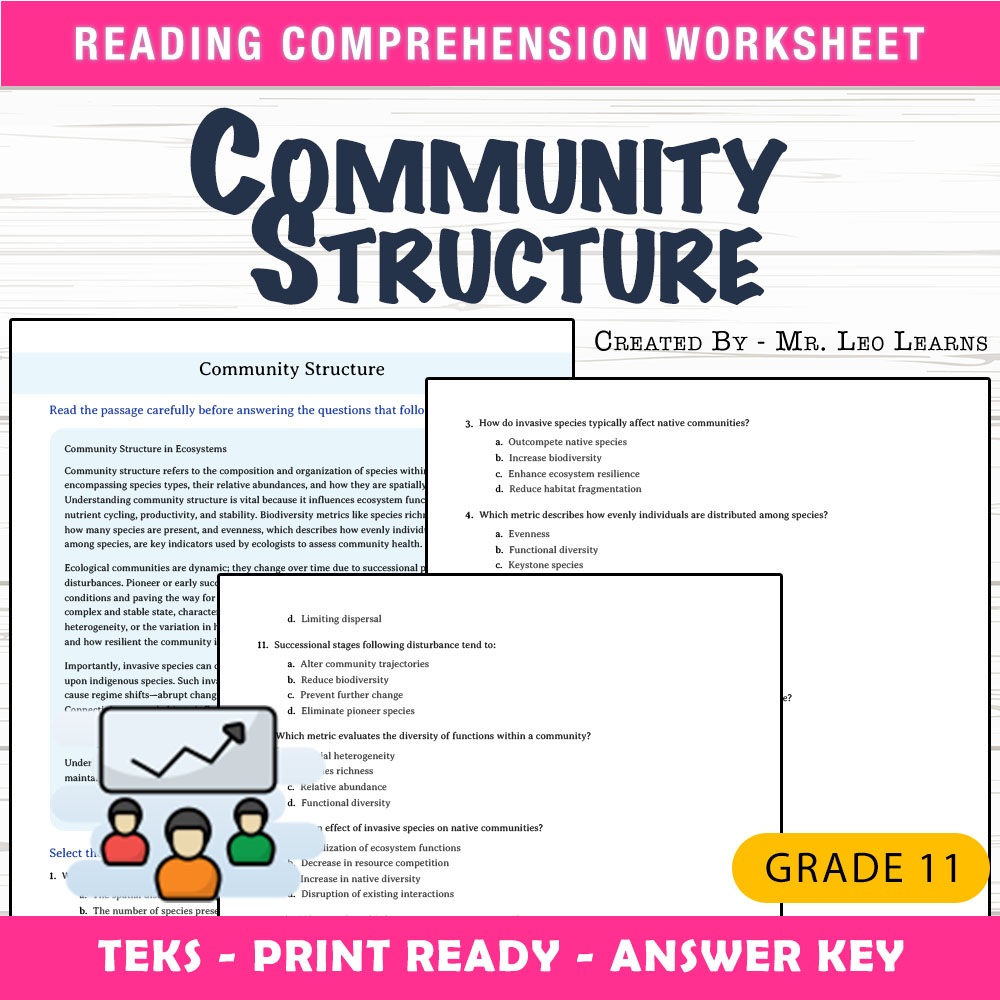
This worksheet is designed to guide students through the fundamental ideas of community structure, including species richness, the roles of different species in an ecosystem, and the processes that shape community development. Through a combination of reading comprehension and multiple-choice questions, students actively analyze a scientific passage, helping them develop critical reading skills alongside their understanding of ecological concepts. It encourages independent thinking, allowing students to process information at their own pace while reinforcing key vocabulary and ideas related to community organization. The worksheet structure supports scaffolded learning, making it easier for students to build their understanding step-by-step from basic definitions to more complex interactions within ecosystems.
Inside the PDF
- 1 engaging reading passage that explains community structure in ecosystems
- 25 multiple-choice questions designed to check comprehension and deepen understanding
- A print-ready format that requires no additional prep work
- PDF answer key with an accompanying rubric to facilitate self-assessment or quick review
- Layout optimized for easy photocopying, ensuring consistent and accessible classroom distribution
How It Improves Learning
This worksheet enhances learning by encouraging students to think critically about the roles different species play within ecosystems. The reading passage serves as a foundation, providing precise, accessible information that removes confusion and misconceptions. The multiple-choice questions are carefully crafted to promote active engagement, helping students evaluate their understanding and recognize key terms like "species richness" and "ecological succession." The visual layout supports focused, independent practice, which builds confidence in grasping scientific vocabulary and core concepts. Using this resource regularly encourages students to develop better reasoning skills and allows teachers to monitor progress effortlessly. The result is a more confident, independent learner who can confidently discuss community dynamics and ecological relationships.
Core Skills Students Will Develop
- ➡️ Understanding ecological community components
- ➡️ Recognizing relationships between species within ecosystems
- ➡️ Analyzing processes that influence community development
- ➡️ Applying scientific vocabulary to explain ecosystem concepts
Ways Teachers Use This Worksheet
Many teachers incorporate this worksheet into their lessons as a key part of instruction, assigning it as classwork or homework to reinforce the day’s topic. It can serve as an effective tool for review after a lecture or lab activity, helping students consolidate their understanding of community structure. Teachers also use it during small-group work to facilitate discussion, or as an assessment to gauge student comprehension. Early finishers can complete this worksheet independently, ensuring productive use of time. Additionally, it can be used for formative assessment or as part of a differentiated instruction plan, making it a flexible resource suited to diverse classroom needs.
Why This PDF Saves Time
This resource requires no preparation beyond printing, making it easy for teachers to implement immediately. The clear formatting and concise layout allow for quick photocopying and distribution, reducing the need for additional materials or lengthy setup. The included answer key with rubric provides a reliable way to quickly and accurately assess student responses, saving valuable grading time while maintaining consistency. Its print-and-go format ensures that teachers have a ready-made, classroom-friendly tool to support student learning without extra fuss or planning.
With this worksheet, teachers can confidently support their students’ understanding of community structure, delivering clear, effective practice that promotes critical thinking and ecological literacy. It’s a helpful addition to any science curriculum focused on ecosystems and biodiversity, designed to foster confidence and mastery in students. 😊