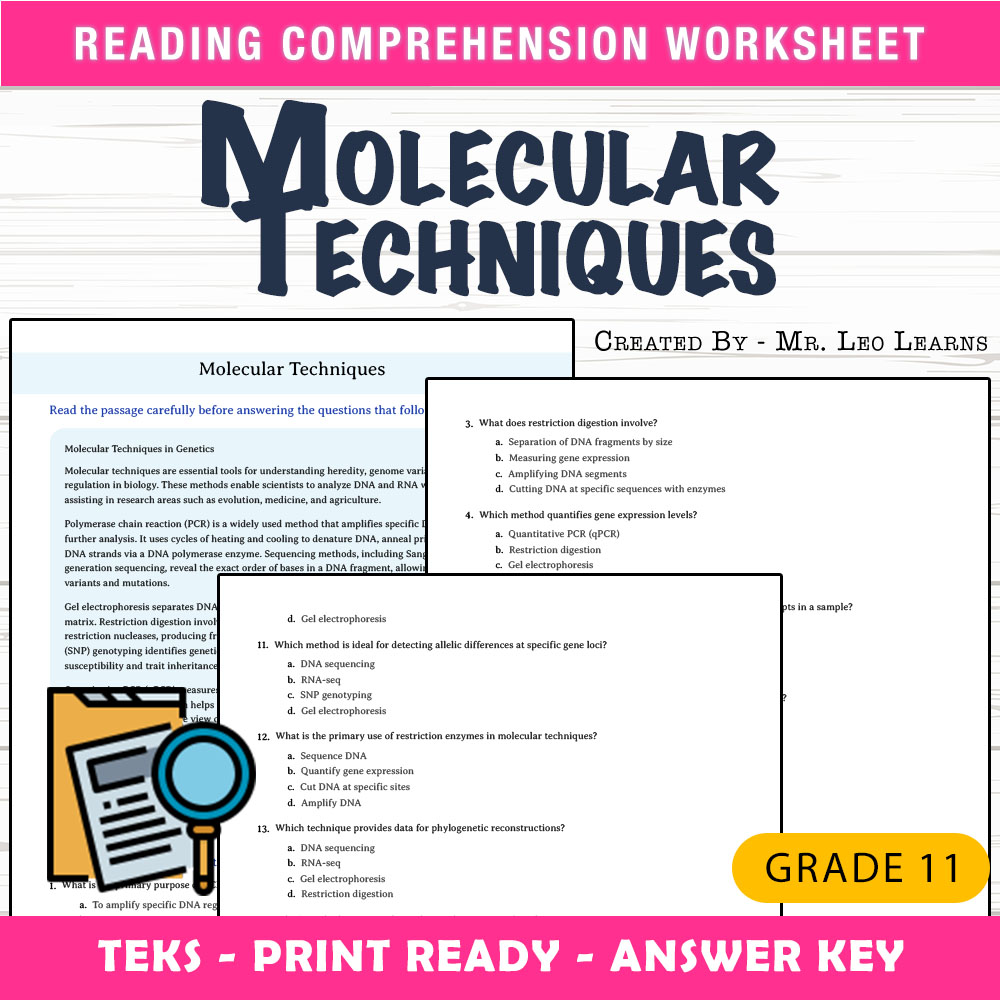
Imagine walking into a classroom where students are engaged with scientific concepts that can often feel complex — such as DNA analysis and gene regulation. They’re working through a worksheet that makes understanding molecular techniques straightforward and manageable. This resource provides a clear, print-and-go PDF worksheet designed specifically for Grade 11 science classes covering essential molecular biology techniques. With real-world applications and thoughtful question design, it helps teachers support student learning without additional prep time or confusing materials.
What This Resource Helps Students Do
This worksheet guides students through foundational concepts about molecular techniques, including PCR, DNA sequencing, gel electrophoresis, and gene cloning. It encourages independent thinking by prompting students to analyze reading passages and answer multiple-choice questions that reinforce key ideas. As students progress through the activities, they develop their ability to interpret laboratory methods, understand scientific processes, and connect techniques to biological principles. The structure ensures learners gain confidence in explaining how each technique is used and why it’s important in modern biology research.
Inside the PDF
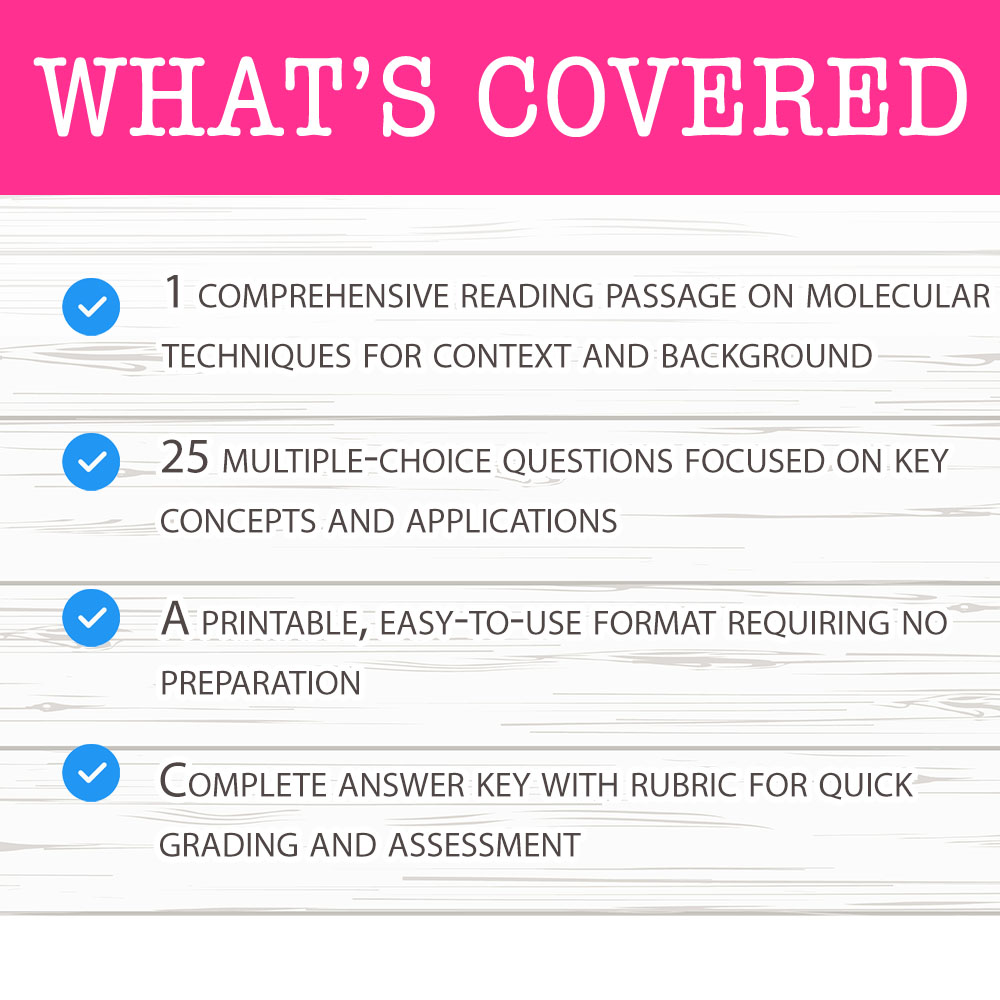
• 1 comprehensive reading passage on molecular techniques for context and background
• 25 multiple-choice questions focused on key concepts and applications
• A printable, easy-to-use format requiring no preparation
• Complete answer key with rubric for quick grading and assessment
• Designed layout for effortless photocopying and classroom distribution
How It Improves Learning
This worksheet enhances understanding by providing students with clear, structured practice that bridges theory and application. The reading passage introduces foundational knowledge, setting the stage for comprehension. The multiple-choice questions challenge students to recall facts, interpret processes, and analyze scenarios involving molecular techniques. This combination supports active learning, hones critical thinking skills, and ensures students can confidently explain lab methods. The answer key offers immediate feedback, making it easier for teachers to track progress and address misconceptions. Overall, this resource helps students move from initial confusion to mastery of complex biological tools and procedures.
Core Skills Students Will Develop
- ➡️ Understanding molecular biology laboratory techniques
- ➡️ Analyzing scientific processes and data
- ➡️ Applying knowledge to real-world biological research
- ➡️ Explaining the purpose and steps of techniques like PCR and gel electrophoresis
Ways Teachers Use This Worksheet
This worksheet serves multiple instructional purposes: it’s ideal for classwork during lessons on molecular biology, a review activity after direct instruction, or as an assessment tool to gauge student understanding. Teachers often assign it as homework for reinforcement or use it in small-group settings to facilitate discussion and peer learning. It also works well as early finisher work or as part of a science station rotation. Its flexible design supports a variety of teaching strategies aimed at deepening student engagement with complex biological concepts.
Why This PDF Saves Time
Since it’s a ready-to-print PDF, teachers can distribute the worksheet immediately without extensive preparation. The clear layout ensures consistent presentation, while the answer key streamlines grading and assessment. This resource minimizes planning time and provides a reliable, classroom-friendly tool for reinforcing molecular techniques commonly covered within the Grade 11 science curriculum. The print-and-go format makes it easy to focus more on instruction and student interaction.
As you prepare your next lesson on DNA technology and molecular sciences, this worksheet is designed to support your teaching goals with a practical, straightforward resource. It’s ready to print and distribute, helping your students build confidence and understanding in complex biological methods. 😊