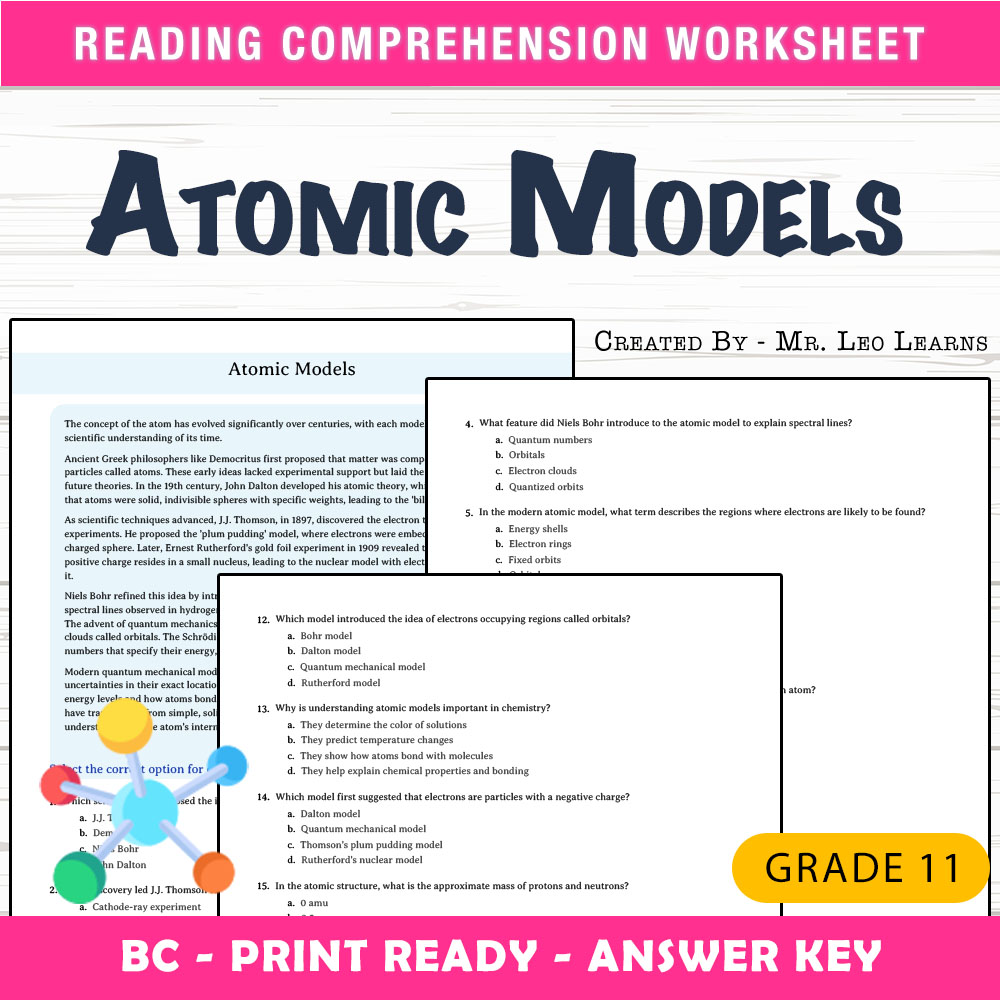
Imagine standing at your classroom podium, watching students diligently work through the complexities of atomic theory. Some struggle to recall the historical progression of atomic models, while others find it hard to connect the scientists' discoveries with their implications. This worksheet provides a clear, straightforward way to reinforce understanding of atomic models, from Dalton's early ideas to the modern quantum model. Designed as a print-and-go resource, it helps streamline classroom assessments and practice activities without added prep time.
What This Resource Helps Students Do
This worksheet is crafted to support students in mastering the evolution of atomic models. It guides them through key concepts by combining a reading passage with multiple-choice questions that challenge their comprehension and critical thinking skills. Students will practice connecting historical discoveries with scientific models, strengthening their ability to recall details and apply their knowledge. The worksheet builds confidence by offering structured questions that reinforce understanding of each scientist's contribution, helping students clarify the progression from the solid sphere to the electron cloud model.
Inside the PDF
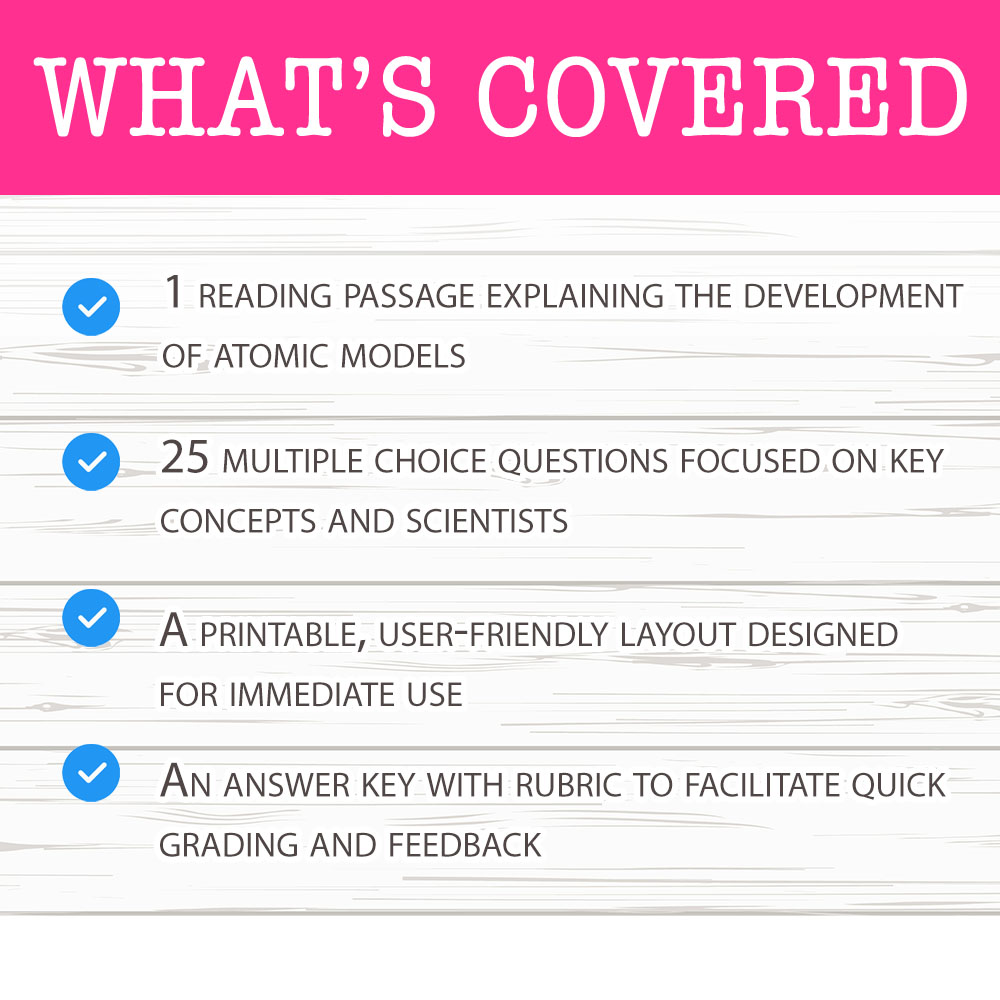
• 1 reading passage explaining the development of atomic models
• 25 multiple choice questions focused on key concepts and scientists
• A printable, user-friendly layout designed for immediate use
• An answer key with rubric to facilitate quick grading and feedback
• Clearly organized pages for efficient photocopying and classroom management
How It Improves Learning
This worksheet enhances learning by breaking down complex historical and scientific concepts into manageable questions, making it easier for students to grasp the evolution of atomic models. The combination of reading and multiple-choice questions promotes active engagement and helps students test their understanding in real-time. As they analyze questions about J.J. Thomson's plum pudding model or Rutherford's gold foil experiment, they develop reasoning skills and deepen their conceptual understanding. The immediate feedback from the answer key allows teachers to quickly assess comprehension and address misconceptions. Overall, this resource encourages independent thinking and reinforces core ideas, empowering students to confidently explain how scientific models of the atom have evolved over time.
Core Skills Students Will Develop
- ➡️ Understanding scientific history and discovery
- ➡️ Applying scientific concepts to identify models
- ➡️ Critical thinking and reasoning
- ➡️ Recall and comprehension of key scientists and experiments
Ways Teachers Use This Worksheet
This worksheet is ideal for use as an in-class activity during a lesson on atomic models. It works well as a quick assessment of understanding, a homework assignment, or as part of small-group review sessions. Teachers can use it to reinforce concepts after detailed instruction or as an early finisher activity for students who complete other work early. Its clear structure also makes it a useful tool for formative assessment, providing valuable insights into student knowledge and areas needing further review.
Why This PDF Saves Time
The resource is carefully formatted for print, requiring no additional preparation. It offers a ready-to-use worksheet that can be immediately photocopied and distributed, saving valuable instructional time. The included answer key ensures quick grading, helping teachers maintain consistency in assessment while providing prompt feedback to support student learning. Its clear layout and straightforward design mean less time spent on planning and more on engaging with students.
In every classroom, a reliable, ready-made worksheet can make a real difference. This atomic models MCQ paper is designed to be a practical, effective tool that helps teachers deliver instruction with confidence and provides students with the opportunity to develop essential scientific reasoning skills. Print it out, introduce it to your class, and watch your students deepen their understanding of this fundamental topic in chemistry. 😊