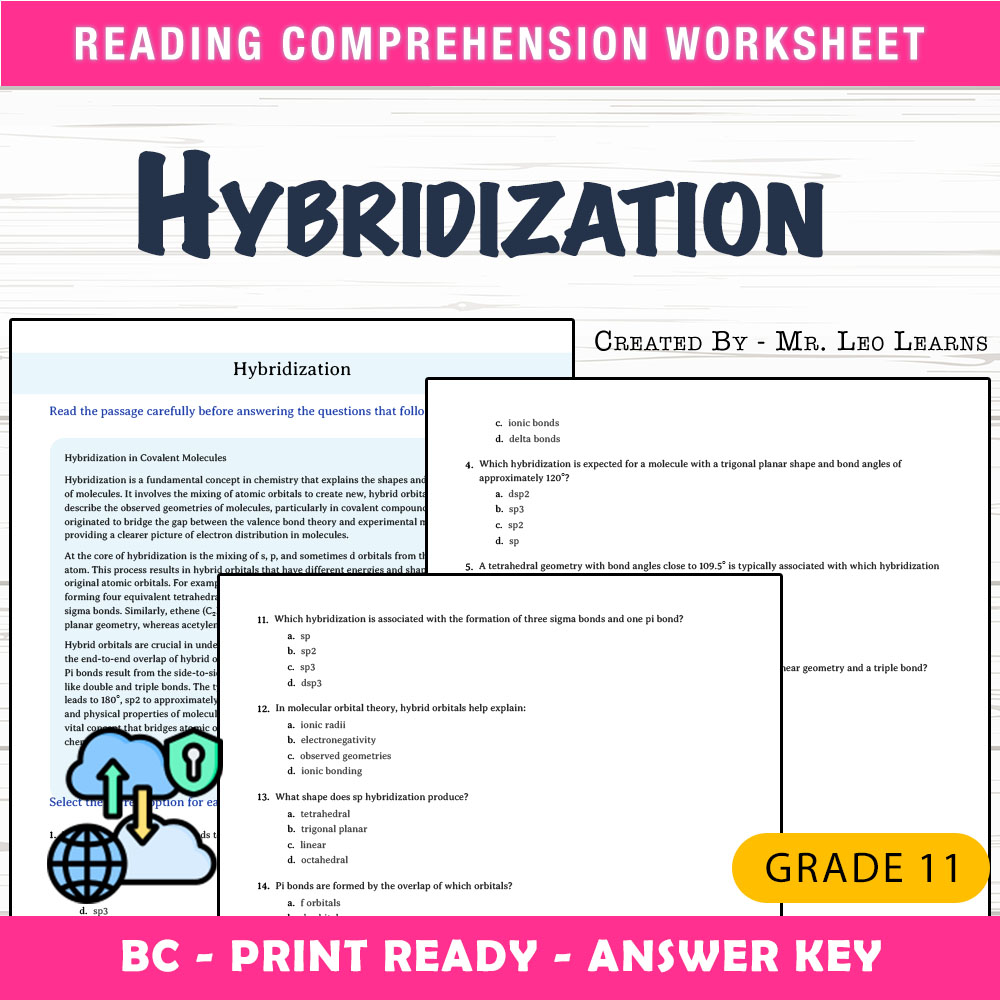
Imagine standing at the front of the classroom, watching students struggle to grasp the complex shapes and bonding properties explained by hybridization in chemistry. You want a straightforward way for students to practice and reinforce this key concept without extra preparation. This worksheet provides a clear, print-ready resource that guides students through understanding hybridization through a series of targeted multiple-choice questions, making it easier to evaluate their grasp of the topic and build confidence.
What This Resource Helps Students Do
This worksheet is designed to help students develop a strong understanding of hybridization, including recognizing different types such as sp, sp2, and sp3, and understanding how these relate to molecular shapes and bonding characteristics. Through a carefully structured reading passage and a set of 25 multiple-choice questions, students analyze concepts like bond angles, molecular geometry, and orbital involvement. They learn to distinguish between hybridizations by applying what they’ve studied, fostering independent critical thinking and reasoning skills. This resource encourages students to connect theoretical knowledge with visual and conceptual understanding, making complex ideas more accessible.
Inside the PDF
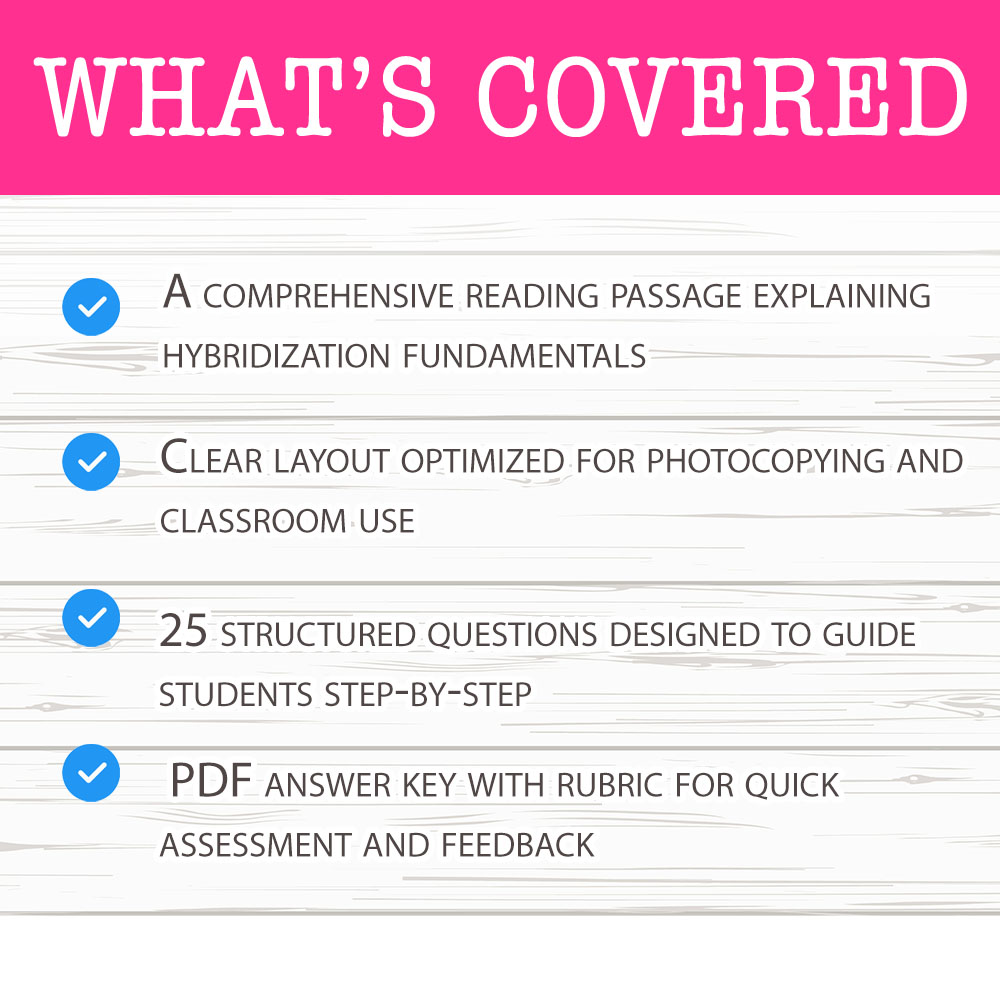
• A comprehensive reading passage explaining hybridization fundamentals
• 25 structured questions designed to guide students step-by-step
• Clear layout optimized for photocopying and classroom use
• PDF answer key with rubric for quick assessment and feedback
• Print-ready format requiring no preparation or additional materials
How It Improves Learning
This worksheet supports student learning by providing a focused pathway to master the core ideas of hybridization. The reading passage offers foundational knowledge, while the multiple-choice questions challenge students to apply concepts critically. As they work through the questions, students build confidence in identifying hybridization types in various molecules and understanding their implications in bonding and shape. The clear structure and immediate access to an answer key allow for efficient review and self-assessment. Teachers can use this resource to reinforce lessons, provide extra practice, or evaluate student understanding with minimal prep time. Overall, it turns abstract concepts into tangible knowledge, helping students progress from confusion to clarity and mastery.
Core Skills Students Will Develop
- ➡️ Understanding and identifying hybridization types
- ➡️ Applying molecular geometry concepts
- ➡️ Analyzing orbitals involved in bonding
- ➡️ Critical reasoning based on molecular properties
Ways Teachers Use This Worksheet
This worksheet is a versatile tool for classroom instruction, suitable for classwork, homework, or assessment review. Teachers can assign it as an independent activity for students to reinforce recent lessons, use it in small-group settings to facilitate discussion and peer support, or incorporate it into quizzes to gauge student understanding. It also works well as early finisher work or as part of station rotations. Its straightforward format makes it easy for teachers to implement without lengthy preparation, while still providing meaningful practice that enhances student learning.
Why This PDF Saves Time
The print-and-go format means you can distribute the worksheet immediately without any extra formatting or preparation. Its clear layout ensures easy photocopying and classroom management. The included answer key with rubric helps you quickly assess student responses, providing a reliable and consistent evaluation method. This resource is designed to save valuable planning time, allowing you to focus on instruction and student engagement while ensuring students receive quality practice that aligns with their learning goals.
End your lesson with confidence, knowing this ready-to-print worksheet provides a practical and effective way to help students deepen their understanding of hybridization. It’s designed to be classroom-friendly, straightforward, and supportive of student success — encouraging mastery through clear questions and the freedom to practice at their own pace. 😊