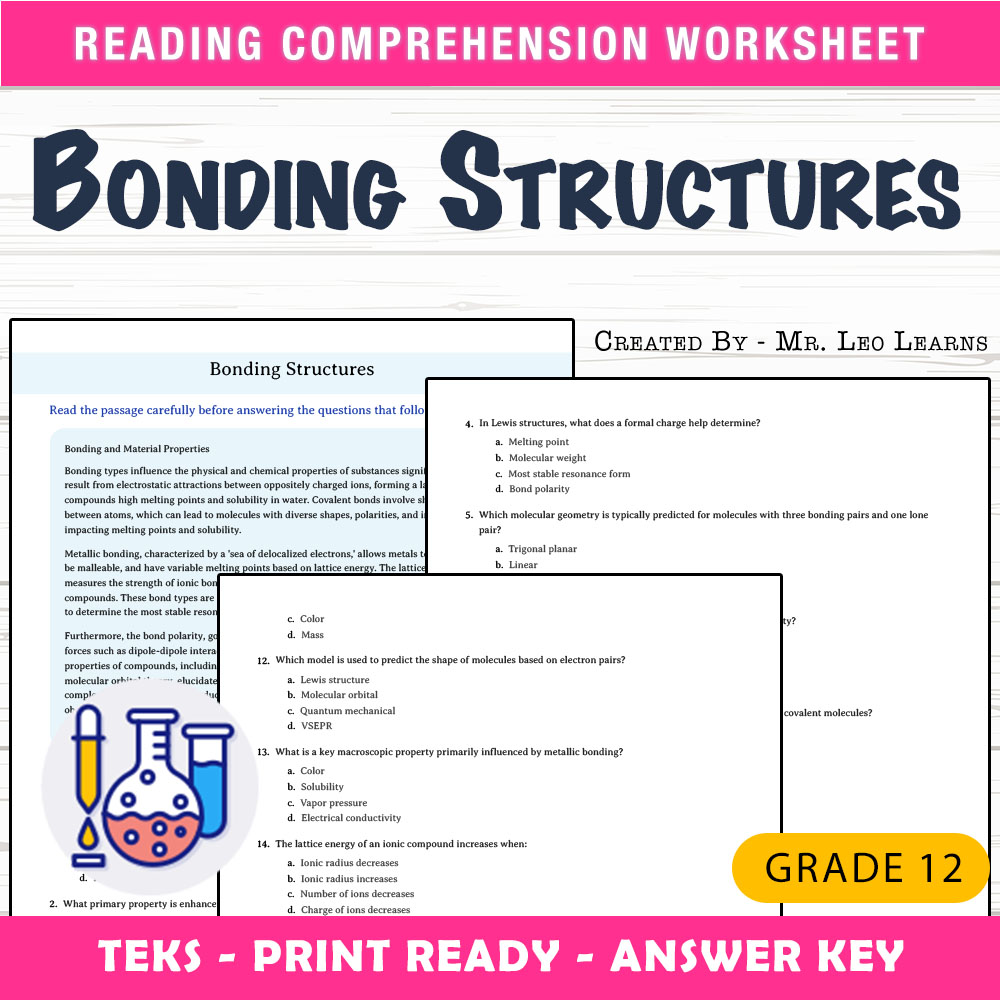
Imagine standing at the front of your classroom, watching students carefully work through understanding the complex nature of chemical bonds. Some struggle to distinguish between ionic and covalent bonds, while others are unsure how bond types influence a substance's properties. This is a common challenge in teaching high school chemistry, especially when trying to connect abstract concepts with real-world applications. The Bonding Structures worksheet provides a clear, print-ready tool that helps students grasp these fundamental ideas through structured questions and practice. It offers a straightforward way to reinforce learning, making abstract concepts more tangible and accessible for all learners.
What This Resource Helps Students Do
This worksheet guides students through the basics of chemical bonding by encouraging active engagement with key concepts. It fosters independent critical thinking as students analyze different bonding types, their properties, and their significance in various substances. The reading passage affords context, helping students connect theoretical explanations with practical examples, while the accompanying multiple-choice questions reinforce understanding of bond types like ionic, covalent, and metallic bonds. The resource is designed to build confidence by gradually increasing the complexity. It also supports self-assessment, allowing students to check their grasp of the material independently and clarify misconceptions while they work through each question.
Inside the PDF
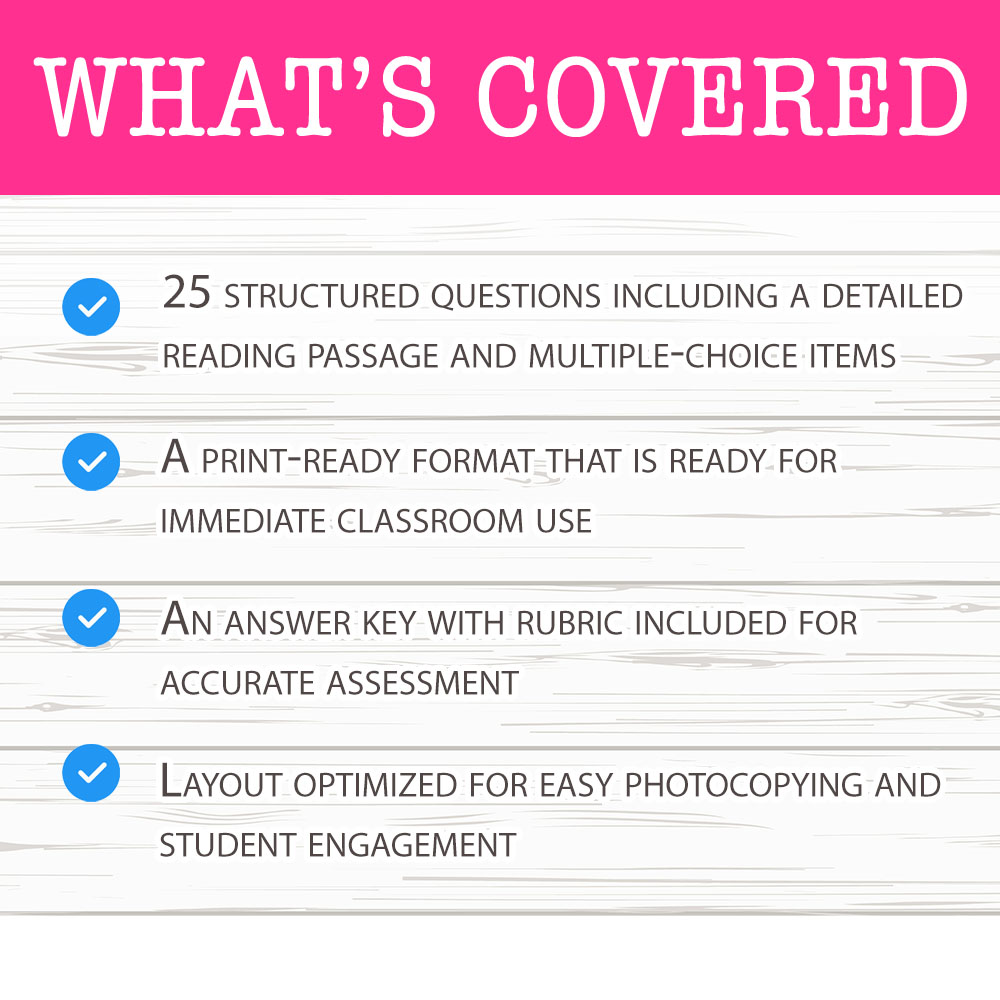
• 25 structured questions including a detailed reading passage and multiple-choice items
• A print-ready format that is ready for immediate classroom use
• An answer key with rubric included for accurate assessment
• Layout optimized for easy photocopying and student engagement
How It Improves Learning
This worksheet enhances student understanding of bonding concepts by breaking down complex ideas into manageable steps. The reading passage contextualizes the types of chemical bonds, making new vocabulary familiar and meaningful. Multiple-choice questions reinforce key points, encouraging students to think carefully and reason through their choices. As students work through the questions, they develop the ability to identify different bond types and understand their impact on properties like melting points, solubility, and conductivity. Teachers can easily track progress and identify misconceptions through the structured questions, enabling targeted intervention. Overall, this resource bridges the gap between learning theory and application, nurturing confident, informed learners.
Core Skills Students Will Develop
- ➡️ Understanding different types of chemical bonds
- ➡️ Applying properties of ionic and covalent compounds
- ➡️ Analyzing factors that influence bond formation
- ➡️ Improving scientific reasoning and interpretation skills
Ways Teachers Use This Worksheet
This worksheet is a versatile classroom resource suitable for a variety of instructional contexts. Teachers can assign it as classwork to reinforce lesson concepts, or as homework to extend understanding beyond the classroom. It is also ideal for review sessions before tests or quizzes, providing a structured way to assess student comprehension. Small-group discussions and targeted remediation can be supported by using the questions together, fostering collaborative learning. For students who finish early or need extra practice, this worksheet offers meaningful extension work that promotes independent analysis. Its straightforward format ensures it integrates smoothly into daily lesson plans, saving time while enriching student learning experiences.
Why This PDF Saves Time
This resource is designed for immediate use without additional preparation. The print-ready format allows teachers to distribute copies instantly, reducing planning time. Its clear layout ensures consistency across multiple classes or lessons, helping maintain high-quality assessment standards. The included answer key with rubric supports quick grading and feedback, freeing teachers to focus on instruction rather than prep. Overall, the PDF’s straightforward design makes it a reliable, efficient tool to support structured learning without any need for customization or additional material development.
With this worksheet, teachers can confidently facilitate meaningful lessons on chemical bonding that inspire curiosity and deepen understanding. It’s a ready-made, classroom-friendly resource that helps students learn about bonding structures with clarity and confidence. 😊