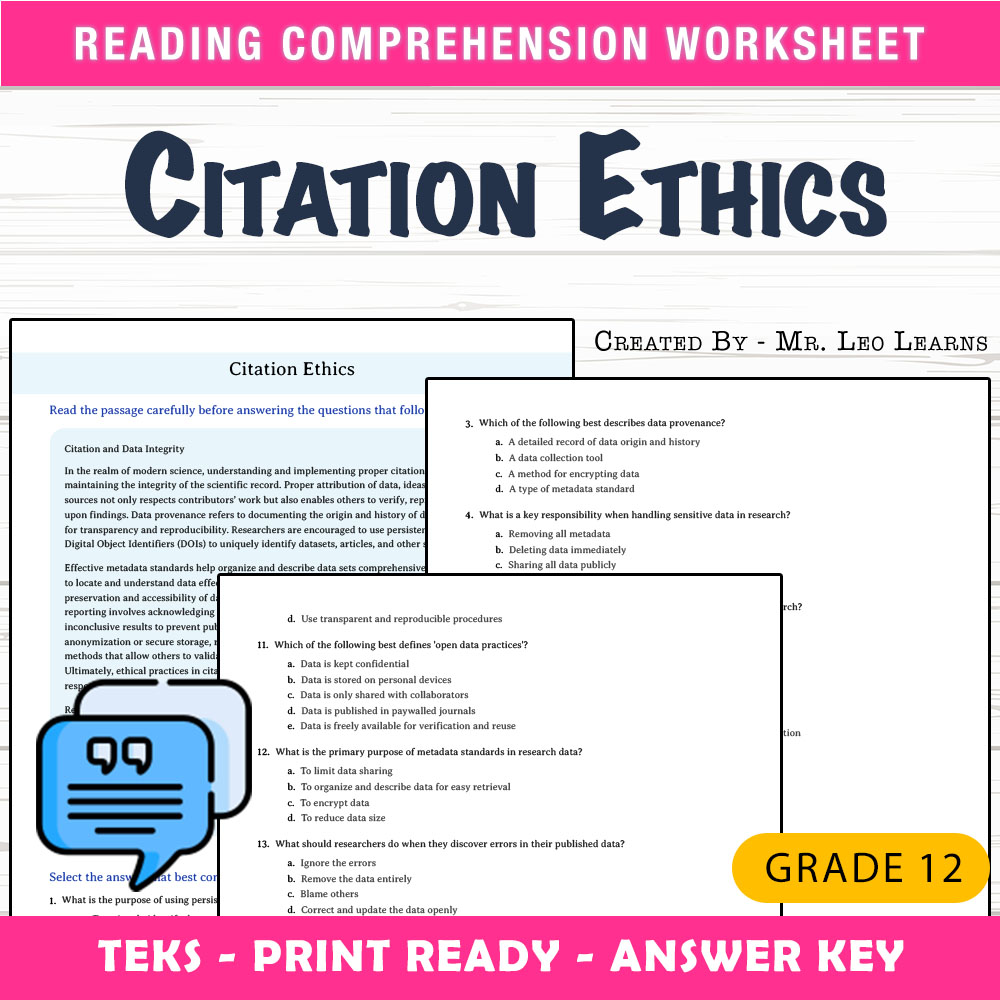
Imagine standing in a busy classroom, students engrossed in their science projects. Some struggle with understanding the importance of proper citation, while others are unsure of how to ethically attribute sources in their research. You want a clear, straightforward way to guide them through complex concepts like citation ethics and responsible data management, ensuring they develop good scientific habits from the start. This worksheet offers an organized, print-ready resource that simplifies these crucial skills, making it easier for teachers to foster integrity and honesty in student research.
What This Resource Helps Students Do
This worksheet is designed to support students in mastering essential principles of citation ethics, with a focus on responsible referencing, understanding persistent identifiers like DOIs, and the significance of reporting all results, including negative or inconclusive findings. It guides learners through reading comprehension, critical thinking about ethical practices, and applies their understanding in multiple-choice scenarios. The step-by-step questions help students develop confidence in their ability to identify and explain ethical standards in scientific research, reinforcing responsible scholarly behavior. The worksheet encourages independent review and reflection, making complex topics accessible and relevant to their ongoing science education.
Inside the PDF
• 25 structured questions designed for clear understanding and gradual learning
• A print-ready format that requires no additional preparation or digital tools
• An answer key with rubric included for easy grading and assessment
• Layout optimized for photocopying and classroom distribution
How It Improves Learning
This worksheet helps students grasp the importance of citation ethics in a practical way, moving beyond theory to real-world application. The reading passage sets a foundational understanding, while the multiple-choice questions challenge students to analyze ethical considerations such as the purpose of persistent identifiers and the value of reporting all research outcomes. Using this resource, students build their ability to reason about responsible research practices, fostering integrity and transparency in their scientific work. The structured questions aid in clarifying complex topics, encouraging thoughtful reflection, and promoting independent mastery of citation standards. Teachers can use this worksheet to reinforce key ethical concepts, leading to more confident and conscientious science learners.
Core Skills Students Will Develop
- ➡️ Understanding the importance of citation ethics in scientific research
- ➡️ Recognizing how to properly attribute sources
- ➡️ Comprehending the role of persistent identifiers like DOIs
- ➡️ Analyzing ethical considerations related to reporting results
Ways Teachers Use This Worksheet
This worksheet serves many practical classroom purposes. It can be assigned as part of a lesson on scientific ethics, used for independent practice after instruction, or incorporated into assessments to evaluate understanding. Teachers often include it in homework assignments, small-group activities, or review sessions. It’s also a helpful resource for early finishers and as reinforcement following classroom discussions about research integrity and responsible citing. Overall, it provides a flexible, classroom-friendly tool that supports consistent, standards-based instruction.
Why This PDF Saves Time
Designed with busy teachers in mind, this printable worksheet streamlines lesson preparation. Its clear, organized layout means you can print and distribute immediately without additional setup. The included answer key and rubric facilitate quick feedback and assessment, saving valuable time during grading. Its print-and-go format ensures curriculum consistency, so every student receives the same high-quality resource that reinforces essential scientific ethics standards without the need for complex digital tools or lengthy prep work.
With this worksheet, you can confidently guide your students through the core principles of ethical research in science, knowing you’re providing a reliable, classroom-ready resource that fosters responsible science habits and academic integrity. It’s a practical, supportive tool designed to help your students succeed with confidence. 😊