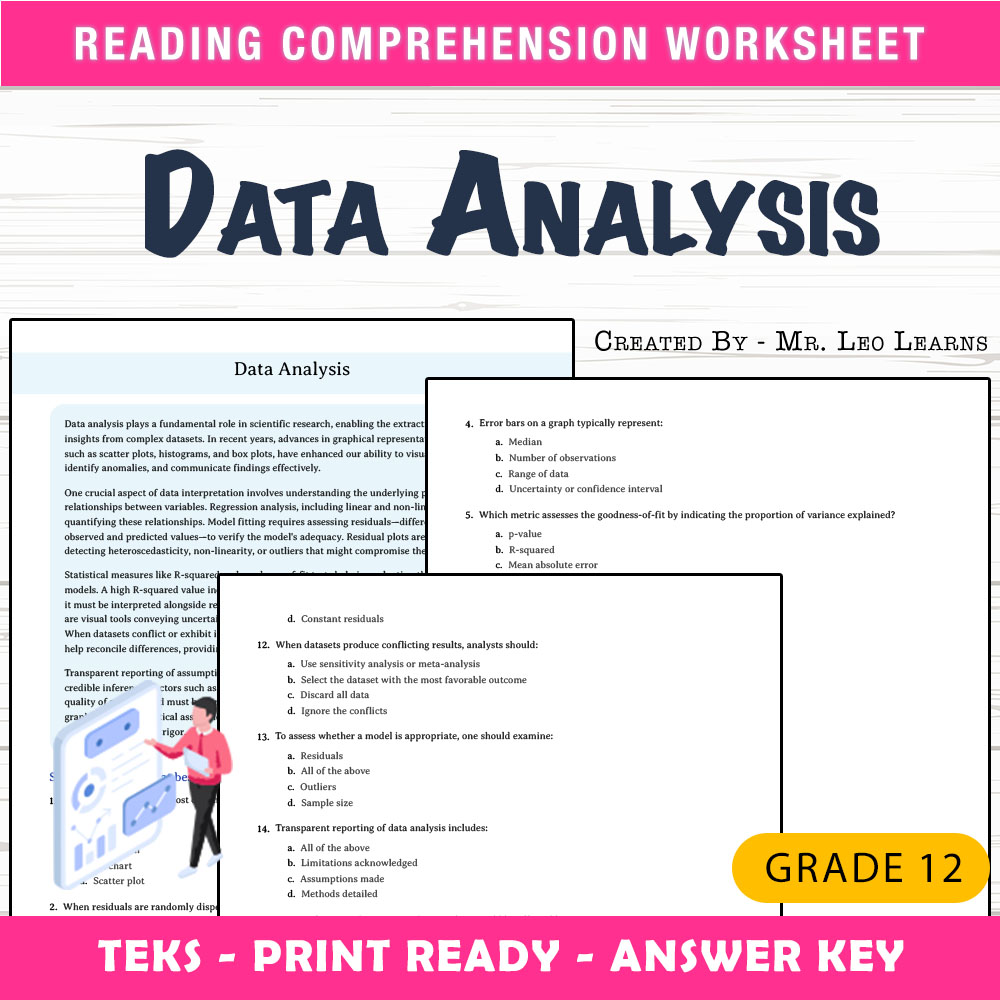
Imagine standing in front of your classroom, observing students grappling with understanding how data analysis informs scientific conclusions. You want a straightforward way to assess their grasp of interpreting data visuals, residuals, and the significance of statistical tools. This Grade 12 Science worksheet provides an accessible, print-ready resource that supports both teaching and independent student practice, focusing on data analysis concepts aligned with TEKS standards.
What This Resource Helps Students Do
This worksheet is designed to help students develop their ability to interpret data, analyze graphical representations, and draw informed conclusions from various data sets. It guides students through understanding the purpose of different graphical tools, such as scatter plots, and interpreting residual plots accurately. By working through carefully constructed multiple-choice questions, students reinforce their skills in recognizing patterns, understanding the role of residuals, and applying critical reasoning to data-related scenarios. The structured format encourages independent learning, allows for self-assessment, and incrementally builds their confidence in data analysis techniques essential for scientific research.
Inside the PDF
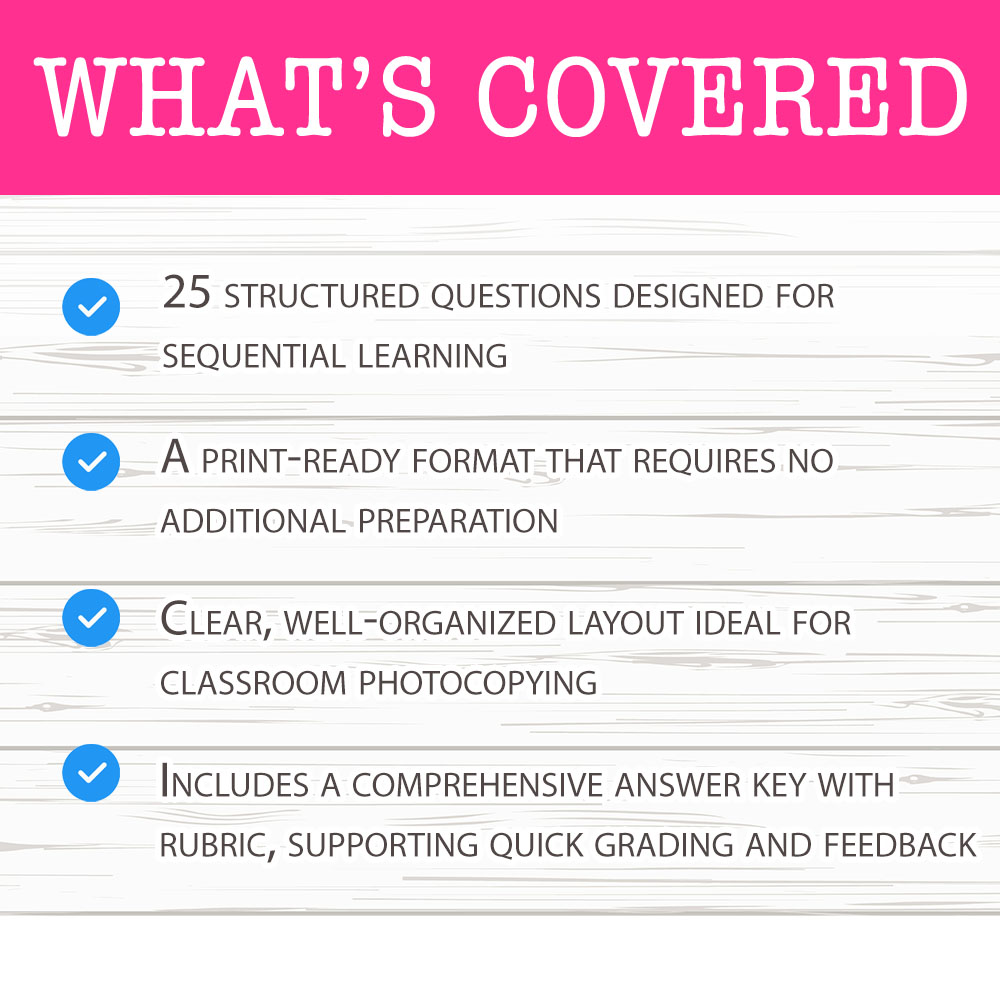
• 25 structured questions designed for sequential learning
• A print-ready format that requires no additional preparation
• Clear, well-organized layout ideal for classroom photocopying
• Includes a comprehensive answer key with rubric, supporting quick grading and feedback
How It Improves Learning
This worksheet enhances learning by providing students with focused practice on key concepts in data analysis, helping to clarify common misconceptions. The multiple-choice questions challenge students to think critically about data visualization and the interpretation of residuals, fostering deeper understanding through application. The clear layout and answer key facilitate instant feedback, enabling students to identify areas for improvement. As students work through each question, they build reasoning skills, develop confidence in handling data, and become more capable of drawing accurate conclusions from complex information. Teachers can use this resource to reinforce instruction, assess understanding, or guide small-group discussions with minimal prep time.
Core Skills Students Will Develop
- ➡️ Interpretation of graphical data, such as scatter plots and residual plots
- ➡️ Understanding residuals and their significance in regression analysis
- ➡️ Critical thinking in analyzing data for patterns and trends
- ➡️ Applying statistical concepts to real-world data scenarios
Ways Teachers Use This Worksheet
This worksheet serves multiple practical purposes in the classroom. It can be used during class as a quick formative assessment to gauge students’ understanding of data analysis concepts. It’s also suitable for homework, allowing students to practice independently outside of class time. Teachers may incorporate it into assessment review sessions or small-group work to reinforce skills through targeted practice. Additionally, it can be distributed to early finishers or used as a quick review before upcoming tests, providing flexible, low-prep support to ensure student comprehension and confidence in data analysis techniques.
Why This PDF Saves Time
This resource offers a simple, print-and-go format, eliminating the need for extensive preparation or formatting. The clear structure and layout make photocopying quick and easy, ensuring consistency across multiple classes. Teachers can rely on this worksheet as a structured, reliable assessment or practice tool that is immediately ready to use, saving valuable planning time while providing a meaningful learning experience for students.
Overall, this Grade 12 Science data analysis worksheet is a practical, classroom-friendly resource designed to support meaningful, independent student learning. It encourages clarity, reasoning, and confidence, helping your students master critical data concepts with ease. Prepare to see improved understanding and more robust discussions about data in your science classroom! 😊